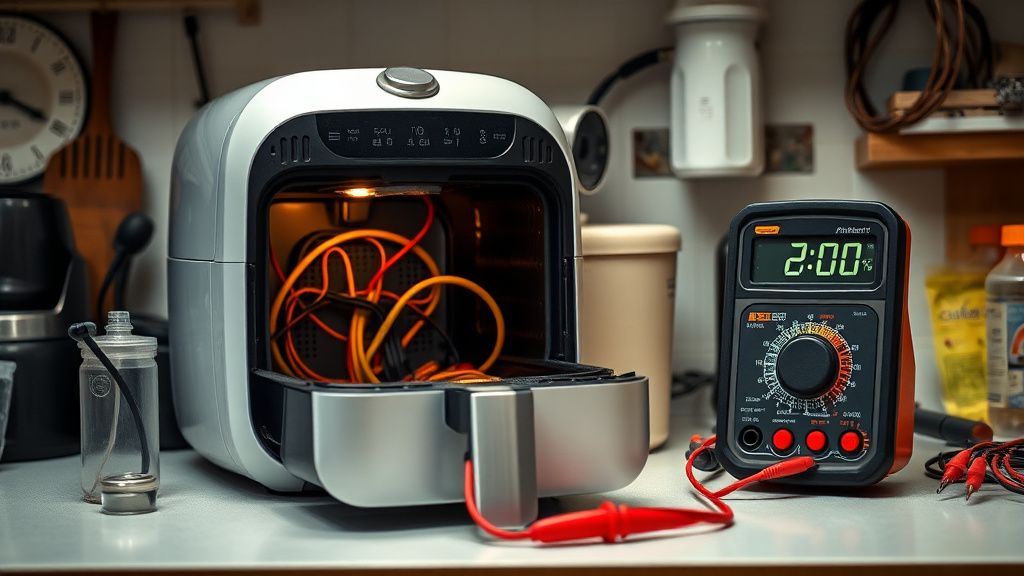
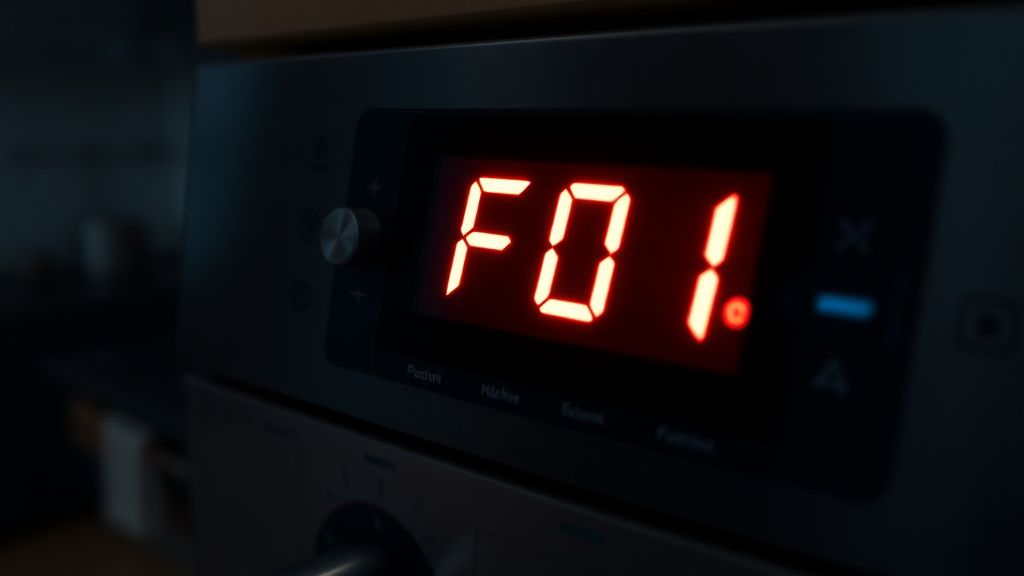
If you are staring at an "F01" error on your Philips Premium Airfryer XXL display, stop hunting for a reset button that doesn’t exist. This code is a hard-coded thermal system failure indicating the appliance can no longer detect the heating element’s temperature, usually due to a disconnected NTC thermistor, a blown thermal fuse, or a main PCB logic gate failure, similar to how other Philips Airfryer errors related to thermal sensors might manifest. You are likely facing a physical hardware degradation issue, not a software glitch.
The Operational Reality of "Planned Obsolescence" in Consumer Countertop Appliances
After fifteen years of peeling back the plastic chassis of everything from high-end espresso machines to smart vacuums, you start to see patterns. The Philips Airfryer is a masterclass in thermal engineering—until it isn't. When the "F01" code flashes, it isn't just a number; it’s the result of a closed-loop control system failing to receive a voltage feedback signal from the heating chamber.
In the industry, we call this the "thermal dead zone." You’ve pushed the unit to 200°C hundreds of times. Every cycle creates thermal expansion and contraction, which vibrates the wiring harnesses and puts micro-stress on the NTC sensor leads. Eventually, the solder joint breaks or the insulation around the thermal fuse becomes brittle and cracks.
Deconstructing the Heating Element and NTC Thermistor Failure
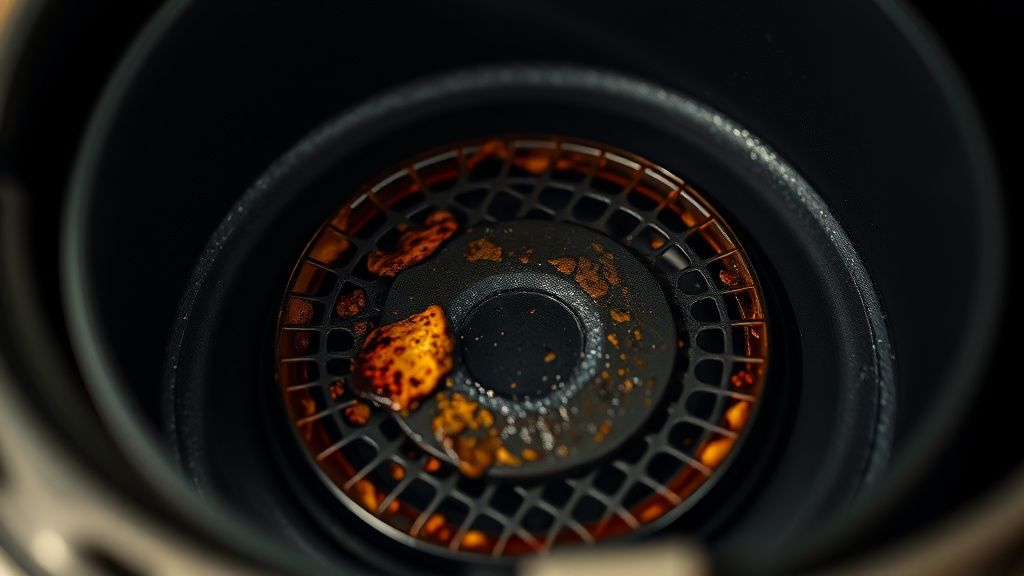
The logic behind the F01 error is strictly safety-oriented. If the microprocessor on the control board doesn't see a change in resistance from the NTC (Negative Temperature Coefficient) thermistor, it assumes the sensor is shorted or open-circuited, a common symptom also seen when a Breville Air Fryer displays an E1 error related to its thermal sensor. It shuts down immediately to prevent a fire hazard.
Unlike the old-school manual dials where you could just bypass a fuse, modern digital airfryers use pulse-width modulation (PWM) to control power. If the PCB doesn't "trust" the temperature data, it refuses to engage the relay. You can’t "patch" this with a firmware update. This is a physical failure of the sensor-PCB interface.
Field Report: Why the "Repairability Index" Fails the Home User
I recently monitored a thread on a popular DIY repair forum regarding this specific error. The consensus was a mix of desperate "unplug it for an hour" advice—which works only if the PCB has a residual charge that needs clearing—and the harsh reality: the unit is essentially a sealed box.
"I spent three hours tearing down my XXL because of the F01 code. The plastic tabs are designed to be broken during disassembly. Once you're inside, the thermistor is buried under a layer of heat-shielding insulation that literally disintegrates when touched. Philips didn't build this for a home tech to fix; they built it for a global supply chain where the unit is cheaper to recycle than to repair." — Anonymous user, r/ApplianceRepair
This sentiment highlights the gap between engineering goals and user reality. The goal is a perfectly crisp fry; the reality is that the internal environment is a high-heat, high-vibration hellscape.
The Thermal Fuse Conflict: Safety vs. Longevity
There is an ongoing industry debate about the placement of thermal fuses. Many engineers argue that placing the fuse directly on the heating coil casing is the only way to meet EU and US safety standards for fire prevention. However, this positioning makes the component susceptible to premature failure from constant heat soak. When the fuse goes, you lose the continuity of the circuit. The F01 code is the machine's way of saying it has been "bricked" to protect your home, a critical failure often requiring troubleshooting thermal sensor failures, much like with an Instant Vortex Plus E2 error.
Analyzing the Power Board and PCB Logic Failure
Sometimes the issue isn't the sensor itself, but the soldering on the power board. The high-amperage draw required by an airfryer (often pulling upwards of 1700W) creates significant heat at the relay points. Over thousands of cycles, cold solder joints develop.
When you see F01, check the following:
- The Relay Click: Does the machine click when you set the timer? If there is no click, the main relay is not engaging, often due to an open circuit in the thermal loop.
- Cable Integrity: The wires feeding the heating element often suffer from "brittle-wire syndrome" due to extreme heat cycles.
- The Moisture Trap: Believe it or not, humidity from cooking can create micro-corrosion on the PCB headers. A simple cleaning with high-purity isopropyl alcohol (99%) can sometimes restore connectivity, but this is a temporary fix for a deeper hardware rot.
The "Workaround" Culture: Why We Try to Cheat the System
The internet is full of "tricks" to bypass F01. You’ll see videos of people bridging sensors or tricking the thermostat into reading a constant resistance value. Do not do this.
When you bypass a safety-critical sensor in an appliance that generates enough heat to melt solder, you are effectively turning your kitchen counter into an incendiary device. The F01 error is a functional barrier. If you attempt to force the machine to heat by bypassing the thermistor, you lose all over-temperature protection. If the PWM controller fails to switch off, the casing will warp and potentially ignite.
Community Backlash and the Right to Repair
The frustration with Philips and similar manufacturers is palpable. Users are tired of "disposable appliances." The lack of official schematics or spare parts availability—especially for the internal control boards—fuels a growing subculture of hobbyists who create their own wiring diagrams and 3D-print replacement parts.
However, the industry defense is equally strong: "Liability." A manufacturer cannot allow an untrained consumer to replace a heating control relay. If that repair fails and causes a kitchen fire, who is liable? This legal standoff is the primary reason why your airfryer is effectively a "black box" system.
Step-by-Step Diagnostic Protocol for the Serious Technician
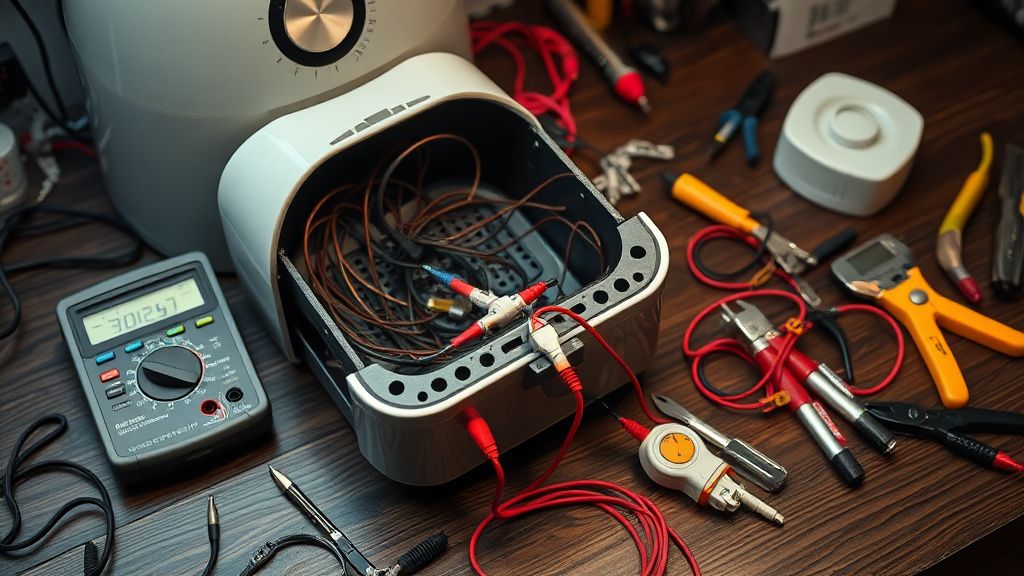
If you are determined to open your unit, approach it with the knowledge that you are voiding your warranty and potentially creating a safety risk.
- De-energize: Pull the plug. Capacitors in these units can hold a charge for several minutes.
- Chassis Extraction: Use a spudger to pry the top shroud. Be prepared to lose some plastic clips; they are the sacrificial lambs of the design.
- Continuity Check: Use a multimeter in "Continuity" mode. Check the thermal fuse (usually a small, silver cylinder wrapped in heat-resistant tape near the top). If it reads "OL" or infinite resistance, it is blown.
- Sensor Ohm Test: The NTC sensor should show a changing resistance value as it warms up in your hand. If it stays at a static 0 or shows infinite resistance, the sensor is dead.
- PCB Inspection: Look for "burnt" discoloration on the underside of the main board, specifically near the power trace going to the heating relay.
Industry Outlook: The Future of Smart Cooking Appliances
Are we moving toward a future where our appliances report their own failures directly to the manufacturer? We already see this with some "smart" IoT-connected models. But for the standard Premium Airfryer XXL, the lack of telemetry means the user is left in the dark.
The industry is caught in a paradox: they want to build robust products, but the market demands low prices and high aesthetic appeal. This forces engineers to use cheaper polymers and outsourced PCB manufacturing, which invariably leads to the kind of heat-related failures we see in the F01 code.