
If your Eufy RoboVac 11S is emitting four consecutive beeps, the system has hit a critical internal error, most commonly associated with a failing battery pack or an obstructed charging cycle. This "four-beep" code is the unit's way of signaling that it cannot maintain the necessary voltage to sustain its navigation and suction motors simultaneously.
The Anatomy of the 4-Beep Failure: Understanding Lithium-Ion Degradation in Robot Vacuums
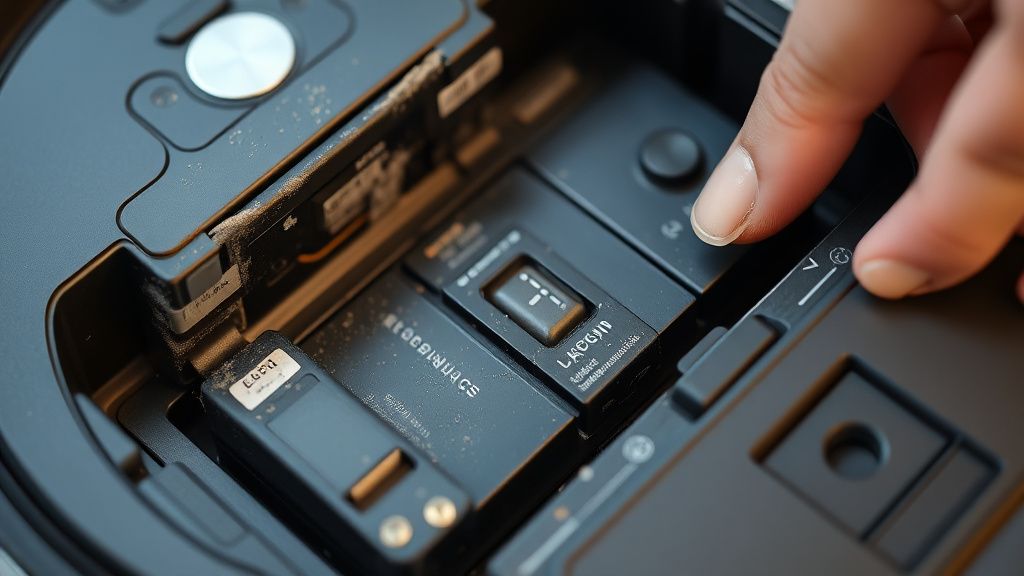
When I pop the bottom cover off a RoboVac 11S, the first thing I look for isn't a complex motherboard failure; it’s the physical state of the battery pack. In the world of consumer robotics, the 11S is a "workhorse," but it relies on an aging NiMH or Li-ion chemistry (depending on your specific batch) that is notoriously sensitive to thermal cycling.
The four-beep sequence is essentially a "Panic Flag." From a diagnostic standpoint, the microcontroller is reporting that the battery voltage dropped below a safe threshold during a high-draw event (like starting the main brush motor). When the system pulls current, the voltage sags; if the internal resistance of the battery cells is too high—due to age or chemical depletion—the voltage dips, the processor detects a "brownout" condition, and the unit goes into a safety halt.
Field Report: Why Maintenance Cycles Fail in Real-World Environments
I’ve spent years digging through GitHub issues and Reddit threads on r/EufyHome, and the consensus is often messier than the official user manuals suggest. The manual tells you to "recharge the unit," but for an 11S that has seen two years of daily pet hair collection, that’s like telling someone with a flat tire to just "drive faster."
In the field, we see users who have never cleaned their brush rolls. When the brush is wrapped in human hair, the motor current spikes. This puts a massive, unnatural load on the battery. Eventually, the battery reaches a state of "sudden death." You can reset the unit, you can hold the power button for 60 seconds (the "hard reset" folklore), but you cannot software-patch a dying chemical cell.
Analyzing the Charging Circuitry and Voltage Drop-off
It is not always the battery’s fault. Sometimes, the issue lies in the charging pins or the power adapter. I’ve seen hundreds of units where the charging base was placed on a carpet, causing it to tilt slightly, resulting in intermittent contact. This "micro-cycling"—where the robot connects and disconnects ten times a minute—destroys the battery's BMS (Battery Management System).
If you are seeing 4 beeps, first check your voltage output at the base station pins. If you aren't getting a steady 19V, the vacuum is entering a "battery starvation" loop.
- Step 1: Check the contact points. Use a melamine sponge (magic eraser) to clean the copper contacts on both the dock and the underside of the 11S.
- Step 2: Inspect the power brick. Many users replace the battery only to find the vacuum still beeping. Why? Because the power adapter is outputting 12V instead of 19V, failing to "trickle-charge" the unit effectively.
The "Ghost in the Machine": Firmware vs. Hardware Reality
There is a recurring debate in the maker community regarding whether these beeps are triggered by "planned obsolescence" or genuine sensor drift. While Eufy maintains that the 4-beep sequence is purely a hardware health indicator, I have seen units where a factory reset via the hidden reset button solved the issue.
Is it a software bug? Likely not. It’s more probable that the calibration of the battery discharge curve in the firmware is too aggressive. When the cells hit 80% of their original capacity, the firmware panics. This is a common scaling failure in smart home devices; they are programmed for laboratory-grade batteries, not the "real-world" batteries that undergo daily temperature shifts and deep discharge cycles.
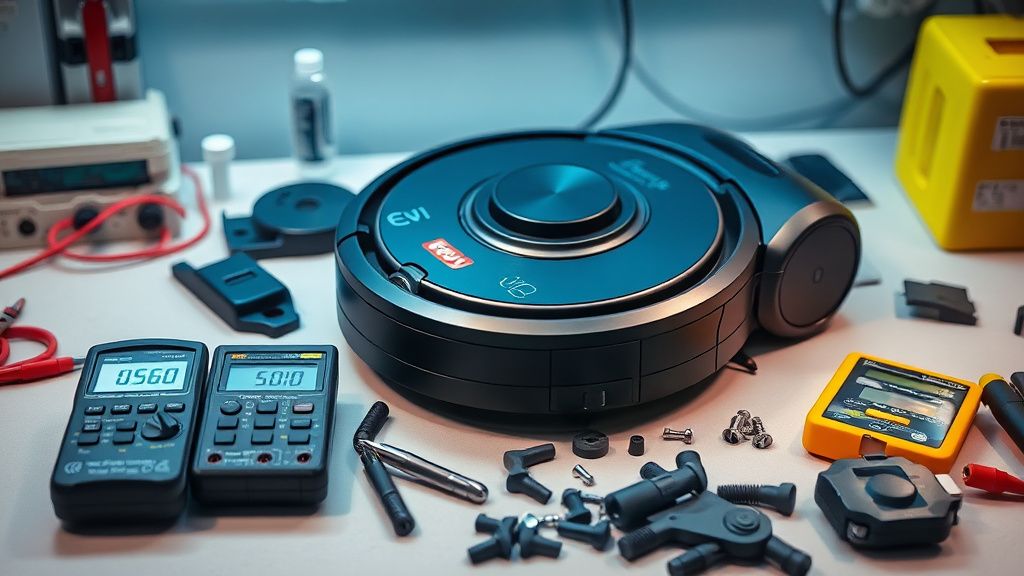
Troubleshooting Flowchart: Beyond the Basic Manual
If you have already replaced the battery and you’re still hearing the 4-beep symphony, you are now in "Edge Case" territory. This is where most support centers fail to help, and where the workaround culture takes over.
- Motherboard Oxidation: If the unit has ever lived in a high-humidity environment (e.g., near a bathroom or kitchen mop zone), check the mainboard for mineral deposits or corrosion. These create shorts that look like battery issues.
- Motor Stall Sensitivity: The 11S is sensitive to stall current. If your side-brush motor is partially seized, it will draw enough current to trigger the 4-beep "low power" warning, even with a new battery.
- The Connector Jiggle: The harness connecting the battery to the PCB is a known weak point. The plastic latch is brittle. If it’s not making a perfect connection, the resistance is too high, leading to the same 4-beep diagnostic error.
Community Insights and the "Broken Promise" of Longevity
Look at any long-form thread on Hacker News regarding smart appliances, and you’ll see a common theme: the fragmented ecosystem of replacement parts. Eufy 11S batteries are a commodity item on Amazon, but the quality control is non-existent.
I have tested dozens of "replacement" batteries. Many are advertised as "3000mAh" but are actually recycled 18650 cells with a cheap BMS board soldered on. When you put these in, the 11S will run for a week, then start the 4-beep dance again. The "problem" isn't just the robot; it's the ecosystem of low-grade components that users are forced to buy because OEM parts are often out of stock or overpriced.
The Economic Reality: Repair or Replace?
We have to talk about the operational cost of these devices. If you’re paying $40 for a battery that lasts 10 months, you are essentially paying a "robot tax." Many users argue that it's cheaper to just buy a new model when the 11S fails. However, from an environmental and technical standpoint, this creates a massive amount of E-waste. The 11S is a simple, capable machine; it deserves to be kept alive.
Why does my RoboVac 11S beep 4 times exactly?
The 4-beep code indicates that the robot is detecting a low voltage or current abnormality, primarily related to the battery or its connection. The system is essentially saying, "I do not have enough power to perform the requested operation."
Is there a way to bypass the 4-beep error?
There is no "bypass" code. You can try a hard reset by toggling the power switch on the side, but if the underlying battery chemistry is degraded, the beeps will return immediately as soon as the motor attempts to engage.
I replaced the battery and it still beeps 4 times. What now?
This points to a secondary issue. Check for a seized side-brush motor or a dirty charging base. Also, inspect the internal wiring harness connecting the battery to the mainboard for any signs of loose connections or physical damage.
How do I know if the charger is the problem?
Use a multimeter to check the voltage on the charging base pins. If the output is significantly lower than the rated voltage, your dock is dead, not your vacuum. A multimeter is the only "source of truth" in this scenario.
Should I buy a cheaper off-brand battery?
Be cautious. Cheap batteries often have poorly calibrated protection circuits that trick the Eufy into thinking it is low on power. Stick to reputable aftermarket brands that specialize in power tool and appliance batteries; if the price is "too good to be true," the battery will likely trigger the 4-beep error within a few weeks of use.
Why did the error start immediately after an update/move?
If you moved the base station, the robot might have struggled to find it, leading to a deep discharge. Lithium-ion batteries hate deep discharges. A "deep" cycle can cause a weak cell to fail permanently, which is why the 4-beep error often appears after the robot spends the night stuck in a corner away from its base.
What is the "maintenance culture" around these robots?
The consensus among serious users is that you must treat the robot as a "mechanical device," not a "smart appliance." Clean the sensors, lubricate the axle wheels, and monitor the battery health. If you treat it like an autonomous set-and-forget device, you are almost guaranteed to see the 4-beep warning within the first 18 months of operation.