
The Ninja Foodi 8-in-1 series represents the bridge between convenient consumer kitchen tech and industrial-grade thermal management—or at least, that’s the marketing pitch. In reality, it is a complex electro-mechanical assembly that lives in a brutal environment: high heat, grease vapor, and the constant thermal cycling of a forced-convection oven. When you see that "E1" error code flashing on the LED display, you aren't just looking at a software hiccup; you are looking at a localized failure of the internal thermistor circuit, signaling that the unit has lost its ability to reliably communicate its internal temperature to the microcontroller (a problem also seen with the Cosori Dual Blaze E1 Error).
The E1 error is a classic NTC (Negative Temperature Coefficient) thermistor fault, similar to other thermal sensor failures seen in appliances like the Instant Vortex Plus E2. If the unit detects an open circuit or a resistance value that falls outside of the expected baseline, it triggers a hard safety shutdown. This is a liability-driven design choice: a malfunctioning thermal sensor in a 1,760-watt heating appliance is a fire hazard.
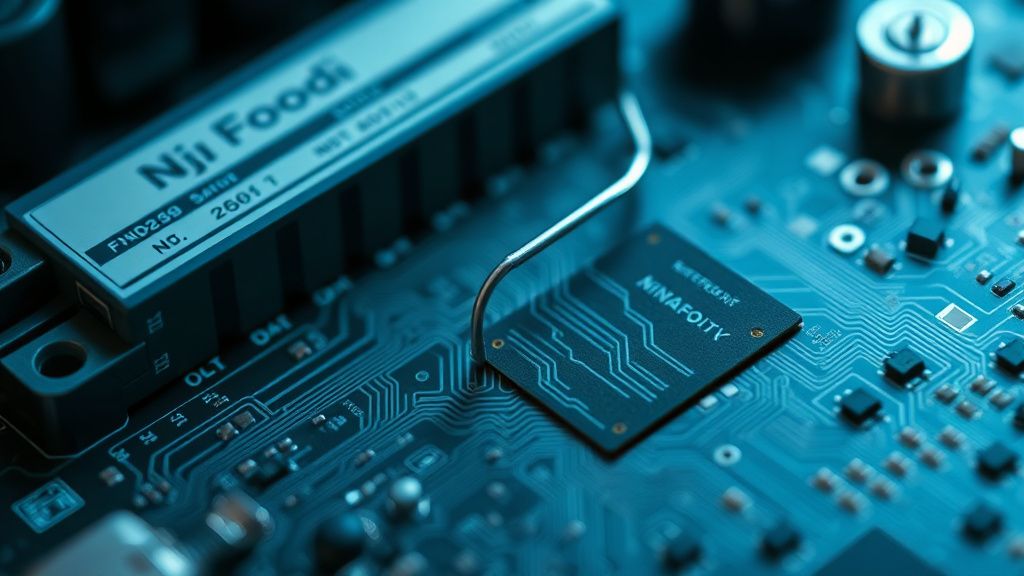
The Operational Reality of Thermal Sensor Degradation and PCB Stress
The engineering compromise in modern air fryers, including the Ninja Foodi line, is dictated by cost-to-scale. The logic board is often positioned too close to the heat source, or the shielding is insufficient for the humidity produced by cooking frozen, water-heavy foods. Over time, the constant expansion and contraction of the sensor leads cause the delicate soldered joints to fatigue.
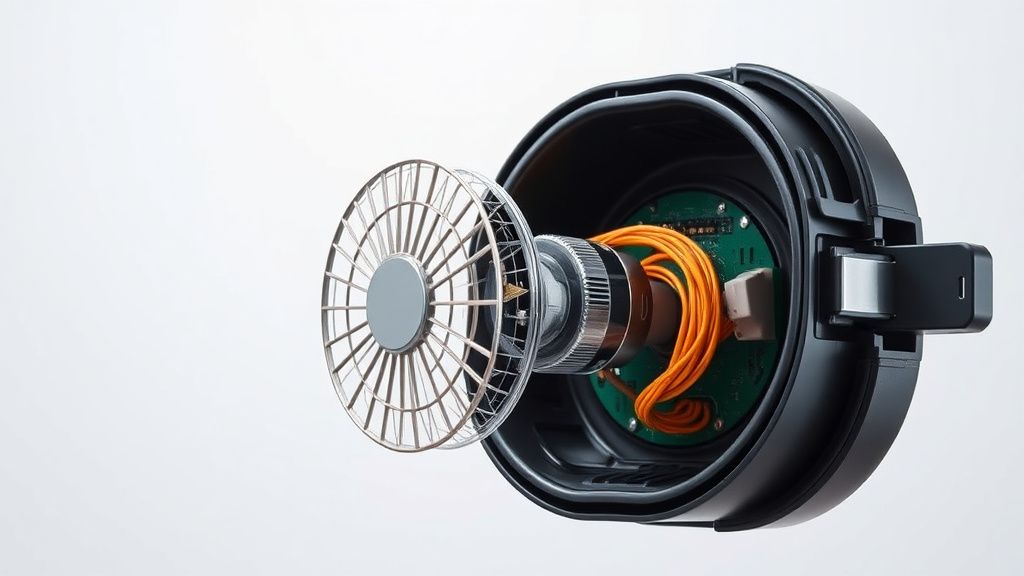
On forums like r/NinjaFoodi or specialized repair Discord servers, users often describe this as the "sudden death" of their machine. It works perfectly for 18 months, then, during a standard air-fry cycle, the display blinks "E1" and the cooling fan runs at 100% capacity in a desperate attempt to mitigate what the CPU perceives as a thermal runaway event (a scenario that highlights the importance of addressing fan failure and overheating prevention in air fryers).
Why Troubleshooting the Thermistor (NTC) Circuit is Essential
If you are staring at this error, do not immediately discard the unit. The failure is rarely the logic board itself, but rather the path to the sensor.
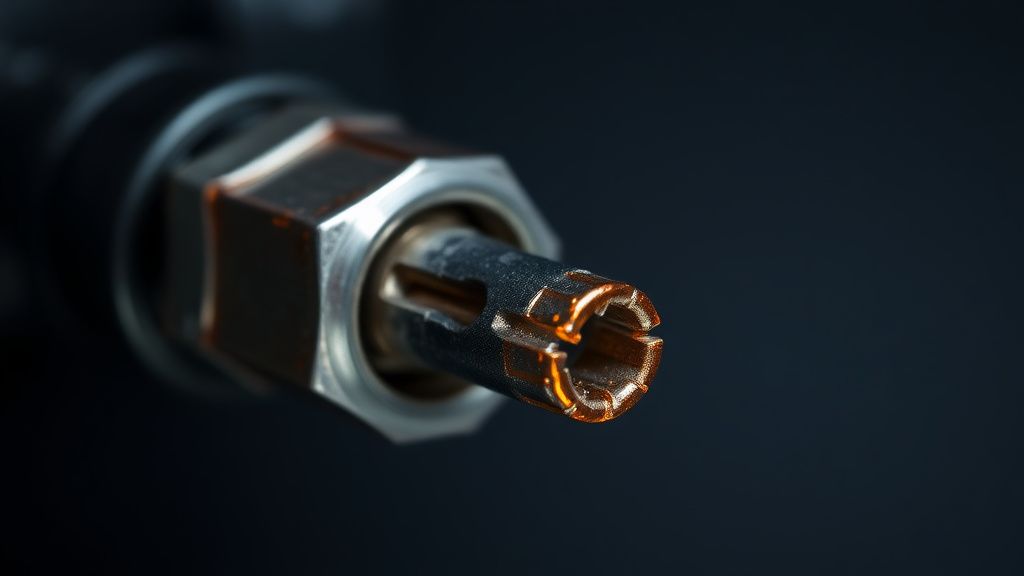
- The Connector Oxidation: The physical Molex-style connector that bridges the sensor wire to the main PCB is notorious for accumulating a layer of oxidation or cooking oil film, which increases electrical resistance.
- Wire Fatigue: The lead wires connecting to the heating element housing are constantly vibrated by the convection fan. These wires eventually develop internal fractures.
- Sensor Calibration Drift: Sometimes, the thermistor isn't broken; it’s just lying. If it has been exposed to extreme moisture, the NTC element may provide an out-of-spec resistance, forcing the firmware to trigger an "out of bounds" safety check.
Real Field Reports: The "Fixing it vs. Replacing it" Dilemma
When I pull a unit apart on my workbench, I often see the evidence of the "workaround culture." I have seen units held together with thermal paste hacks and bypassed safety loops that honestly make me wince.
Report #1 (Reddit user u/KitchenTechFix): "Had the E1 on my 8-in-1. Researched the sensor replacement. Found that the aftermarket sensors on eBay are almost universally garbage. They don't match the resistance curves of the OEM components. I ended up stripping a donor unit to get a genuine thermistor."
Report #2 (Repair Shop Log): "Consumer brought in a Ninja Foodi with E1. Traced it to a corroded crimp terminal near the fan housing. Cleaned the contact with DeoxIT and re-crimped. Error cleared. Cost: 5 minutes of labor. Total waste of hardware if they had binned it."
Technical Analysis: The Engineering Counter-Criticism
There is a massive debate regarding the design philosophy of the Ninja Foodi. Critics argue that the unit is "designed for the warranty period." If you open the chassis, you will notice the cable management is minimal, and the proximity of the high-voltage lines to the low-voltage sensor cables is borderline risky.
The industry controversy here involves planned obsolescence through serviceability. By not offering official replacement parts—or by proprietary-locking their sensors—manufacturers force a circular economy nightmare. You cannot easily source an official thermistor from SharkNinja. You are stuck searching for "compatible parts" on sites like AliExpress, where quality control is effectively nonexistent. This is a design choice that intentionally makes the E1 error a terminal condition for the average user, despite the fact that the underlying hardware failure takes only a few minutes to fix with the right schematic.
Diagnostic Steps and Workarounds
If you are determined to fix the E1 yourself, you must first eliminate the "phantom fault."
- The Power Cycle Reset: Sometimes the firmware gets hung. Unplug the unit for at least 30 minutes. This allows the capacitors on the control board to fully discharge and potentially resets the firmware logic.
- The Physical Inspection: You must remove the outer casing. Note that Ninja utilizes tamper-resistant screws (often security Torx). Be careful; the internal insulation is often made of brittle ceramic fiber.
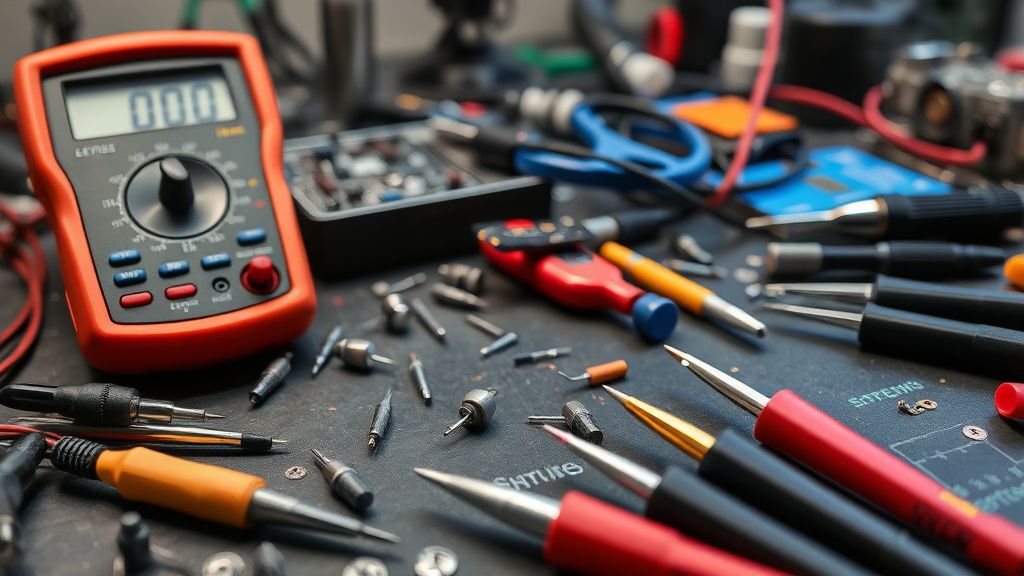
- Continuity Testing: Use a multimeter in the Ohms/Resistance setting. You should measure the resistance of the sensor at room temperature. If it reads "OL" (Open Loop) or infinite resistance, your sensor is dead. If it reads a constant, stable value (typically 50k to 100k Ohms, though this varies by model), the sensor is fine and the issue lies in the wiring harness or the PCB socket.
The Ecosystem Friction: Why Repair is Harder Than It Should Be
The fragmentation of the air fryer market creates a support nightmare. Because companies iterate on these models every 6-12 months, the specific revision of your board might differ from the one shown in a YouTube video.
- The Firmware Trap: Some newer units have "hard-coded" error logging. If the system logs three E1 faults, it may enter a permanent "Service Required" lock-out mode that requires a proprietary factory reset tool to clear, even if the hardware is fully repaired. This is the ultimate "dark pattern" in consumer appliances.
Industry Trends and Future Proofing
What we are seeing is a shift away from modular design. As air fryers become more "smart" with app connectivity and Wi-Fi, the E1 error is being joined by software-related connectivity errors. The complexity is increasing, but the repairability is decreasing.
When you purchase a high-end air fryer, you aren't just paying for the heating performance; you are paying for the expectation that the company has built a reliable sensor array. The Ninja Foodi is a marvel of efficiency, but it sits at the edge of what a mass-produced, low-cost PCB can handle in terms of thermal abuse.
Why does my Ninja Foodi show E1 immediately after turning it on?
An immediate E1 error indicates that the control board has performed a POST (Power-On Self-Test) and detected that the thermistor circuit is already open or shorted. It does not wait for heat-up; it knows instantly that the sensor is not returning a valid resistance value.
Can I just bypass the thermistor?
Absolutely not. The thermistor provides critical feedback to the microcontroller to prevent the heating element from running indefinitely. Bypassing it would turn your air fryer into an uncontrolled fire hazard.
Where can I buy an authentic replacement sensor?
You generally cannot. Ninja does not sell the thermistor as a standalone spare part. You are forced to scavenge from a "for parts" unit or buy third-party generic sensors that may be improperly calibrated.
Is the E1 error always a permanent hardware failure?
Not always. If the error is intermittent, it is likely a loose connection or a crimp point that has fatigued. If the error is solid and persistent, a component failure (the NTC thermistor itself) is the most probable cause.
Why do some users report the error disappears after moving the unit?
This usually confirms a loose wiring connection. Vibrations from the convection fan can cause oxidized or loose contacts to lose connectivity. When the unit is moved or bumped, the connection may temporarily bridge, allowing it to boot until the next vibration cycle breaks it again.
Balancing Expectations: The User Perspective
At the end of the day, users feel betrayed when an appliance costing several hundred dollars fails due to a two-dollar component. The "planned obsolescence" debate is not just a conspiracy theory; it is an operational reality. When the cost of professional repair—including diagnostic fees and shipping—exceeds 50% of the cost of a new unit, the system inherently pushes the consumer toward the trash bin.
If you decide to engage in the "workaround culture," prioritize safety above all else. Use high-temp rated wire, heat-shrink tubing, and never bypass a thermal fuse. If the board is truly toast, consider the unit a source of spare parts—fans, housings, and baskets—and keep the cycle going. That is the only real way to combat the disposable nature of current consumer electronics.