The "E2" error code on your Instant Vortex Plus isn’t a mystery; it’s a cry for help from a thermal sensor that has lost its reference point, similar to how an E1 error indicates a sensor fault in your Instant Vortex Plus air fryer. In plain English, the internal probe is reporting a temperature reading that doesn’t align with the expected resistance curve, usually indicating a blown thermal fuse, a disconnected thermistor wire, or a failing heating element relay.
The Anatomy of the Instant Vortex Plus Thermal Shutdown
When you stare at that "E2" blinking on the glass panel, you aren't just looking at a software glitch. You are looking at the result of a hard-coded safety threshold. In the world of countertop appliances, thermal management is a balancing act between high-wattage resistance heating and low-voltage control logic.
The Vortex Plus uses a NTC (Negative Temperature Coefficient) thermistor to track heat. As the temperature rises, the resistance drops. The mainboard (the "brains") constantly monitors this voltage drop. When the resistance falls outside the expected range—either because the heating element has gone open-circuit or the thermal fuse has tripped to prevent a fire—the system triggers the E2 fault.
The "Disposable" Design Philosophy vs. The Repair Reality
I have spent 15 years tearing these things down. If you talk to a corporate PR rep, they will tell you these machines are "sealed units." In reality, they are held together by a combination of JIS (Japanese Industrial Standard) screws and aggressive plastic clips that are designed to break the moment you try to pry them open. This is a deliberate design choice known as "serviceability hostility."
The Instant Vortex Plus, like most of its competitors in the sub-$200 range, is engineered for a lifespan of 18 to 24 months of heavy usage. When it hits the E2 error, the manufacturer’s support line will almost certainly suggest a factory reset—holding the "Temp/Time" button for 5 seconds—which works exactly 0% of the time if the hardware is actually fried.
Field Report: The Thermal Fuse Trap
I recently disassembled a Vortex Plus that had been throwing the E2 error for three weeks. The user had been trying to "work around" the error by unplugging and plugging the unit back in, hoping the logic board would reset.
Inside, the thermal fuse—a $2 component—had blown because of a buildup of grease and debris around the intake fan, which caused the airflow to stagnate, a common issue that often necessitates a fan motor repair for Instant Pot Vortex Plus E1 or E2 errors. The heating element was perfectly fine, but the thermal link had sacrificed itself to prevent the plastic casing from melting. The tragedy here is that the machine is essentially totaled by a safety mechanism. Because the thermal fuse is integrated into the high-heat wiring harness, most repair centers will tell you the entire "heating assembly" must be replaced, effectively making the repair cost 80% of a new unit.
Troubleshooting the Heating Element and Wiring
Before you reach for the screwdriver, understand that you are working with a device that manages 1500+ watts of power. If you bypass safety sensors, you are building a fire hazard.
- The Hard Reset Illusion: As mentioned, hold the Temp/Time buttons for 5-10 seconds. If the error clears, it was a momentary logic lag. If it returns immediately upon selecting a program, you have a physical component failure.
- The Airflow Obstruction: Check the rear vents. If they are caked in carbonized oil, the thermistor is reading localized heat pockets, an issue that can lead to significant problems like fan failure and overheating, causing E4 errors in appliances like the Cosori Dual Blaze air fryer. Clean the intake with a soft brush and isopropyl alcohol (ensure the unit is unplugged).
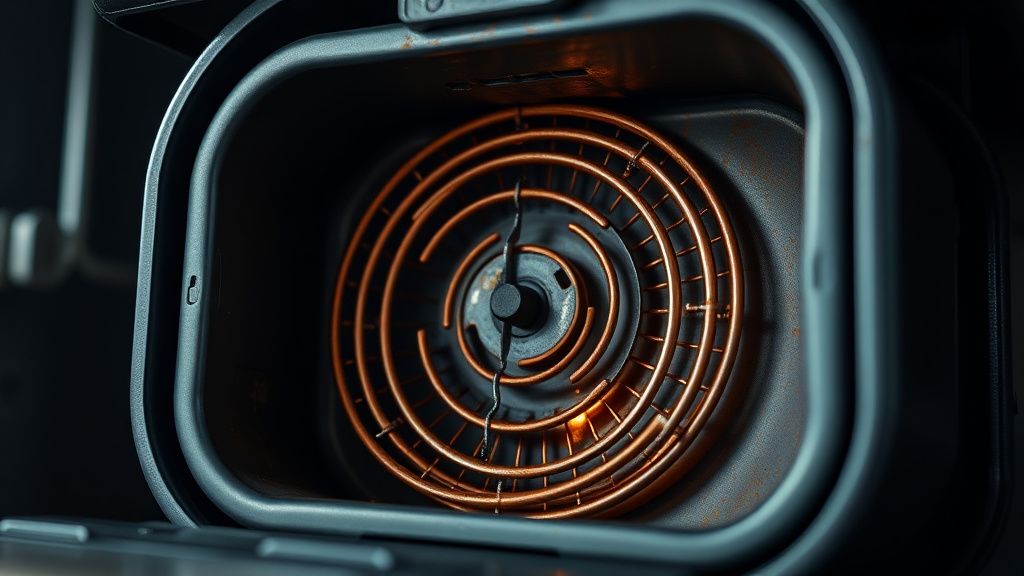
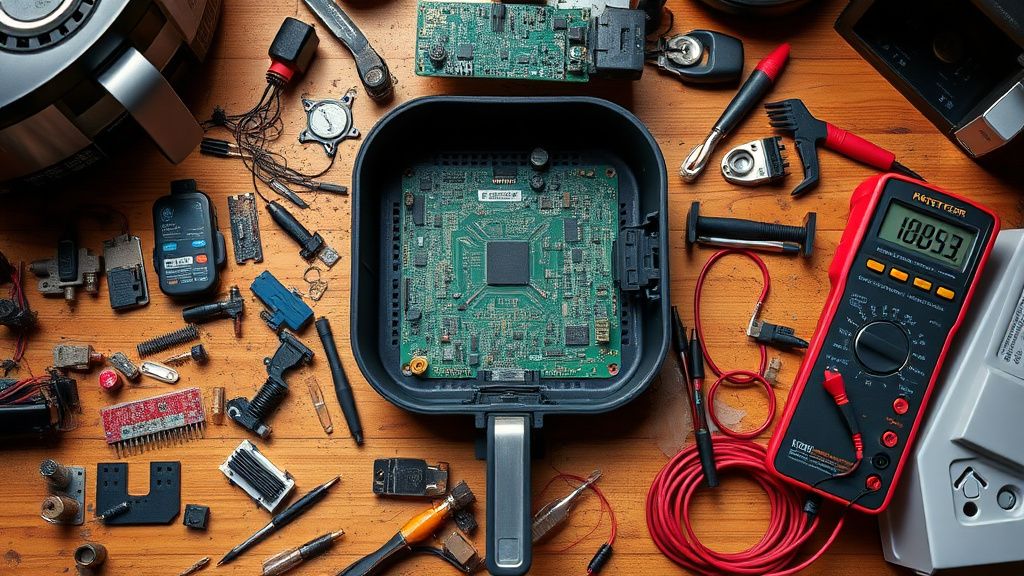
- The Internal Resistance Test: If you have a multimeter, you need to check the heating element’s continuity. You will need to remove the top casing.
- Unplug the unit.
- Remove the screws hidden under the rubber feet.
- Release the plastic tabs (expect a few to snap—it's part of the process).
- Locate the heating coil terminals. Set your multimeter to Ohms (Ω). A healthy element should show a low resistance value (usually 15-30 ohms). Infinite resistance (OL) means a broken element.
Counter-Criticism: Why Modern Appliances Fail Faster
There is a massive debate in the appliance repair community regarding the "Smartification" of air fryers. Critics argue that adding touchscreens and Wi-Fi modules increases the failure surface area. When a simple resistive heating element is tied to a complex digital control board, the board often fails before the heater does.
Industry insiders note that manufacturers prioritize "aesthetic consistency"—the look of the brushed stainless steel—over internal structural integrity. The E2 error is a byproduct of this; when you pack high-heat components into a cramped, plastic-heavy chassis, thermal fatigue is inevitable. The "right to repair" movement has been fighting to force these companies to provide schematic diagrams, yet we are still relying on community-sourced teardowns on Reddit and DIY forums.
The "Workaround" Culture: Is it Safe?
I frequently see threads on r/AirFryer or DIY Discord servers where users suggest bridging the thermal fuse. Do not do this.
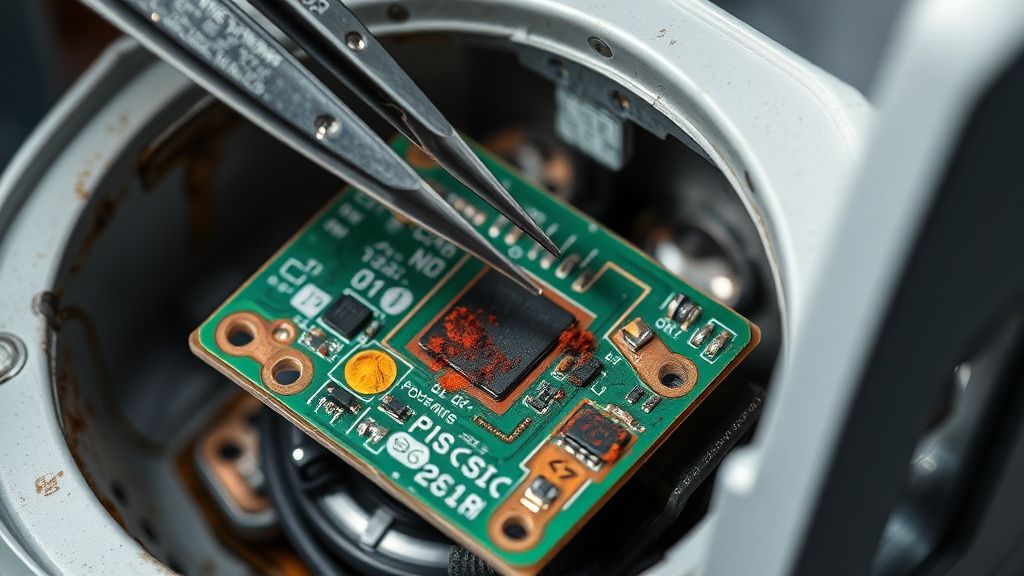
When a component fails, the machine is telling you the thermal envelope has been breached. If you bypass the fuse, you remove the only thing standing between a 400-degree oven and your kitchen countertop. The "E2" error is annoying, but it is also a reminder that your device is trying to prevent a home fire. If you find that the heating element has continuity but the error persists, the issue is almost certainly a cold solder joint on the main control board—a classic sign of lead-free solder fatigue.
Operational Reality: When to Bin It
Sometimes, the cost-benefit analysis doesn't favor a repair. If you are looking at replacing the entire heating assembly, the main control board, and potentially the internal wiring harness, you are spending more than the unit's market value.
- When to fix: If it’s just a loose spade connector or a localized grease buildup blocking the fan.
- When to recycle: If the E2 error occurs due to a catastrophic failure of the mainboard's logic chip, or if the heating element has completely corroded through.
Deep Technical Analysis: The Thermistor Curve
The thermistor inside your Vortex Plus acts as a gatekeeper. It follows a specific Beta-curve. When the unit is cold, the resistance is high. As the heating element warms the air, the resistance drops.
The mainboard is programmed to expect a specific rate of change. If the heating element is failing (e.g., developing "hot spots" where the nichrome wire has thinned), the air temp won't rise at the programmed rate. The software detects this delta and throws the E2 error as a protection measure against thermal runaway.
This is why you can’t just "trick" the system with a resistor. The logic board is performing real-time derivative calculus on the temperature change. If the data doesn't look like a standard heating curve, the machine shuts down.
of Troubleshooting Steps If you decide to proceed with an inspection, follow this logical flow:
- The External Check: Clean the vents. Check for proper voltage at the wall outlet.
- The Logic Reset: The standard hold-button factory reset.
- The Internal Audit: Gain access to the heating chamber. Inspect for physical debris.
- The Continuity Check: Use a multimeter on the heating element and the thermal fuse (the thermal fuse is usually wrapped in heat-shrink tubing on the live wire).
- The Board Inspection: Look for bulging capacitors or scorched PCB traces—common victims of power surges.
Why does my Vortex Plus keep showing E2 even after I cleaned it?
The cleaning only addresses external blockages. If the error persists, you have an internal electrical failure. The thermal sensor itself may have degraded, or the heating element has developed a resistance spike that the logic board identifies as a fault. At this stage, physical testing with a multimeter is required.
Is the E2 error covered under the standard warranty?
Usually, yes, if you haven't opened the unit. Instant Brands generally treats E2 as a "major component failure." If your unit is less than a year old, do not open it. Contact their support, provide your serial number, and push for a replacement. Once you break the security seals, the warranty is effectively void.
Can I replace the heating element with a generic one from another brand?
Do not attempt this. Air fryer heating elements are impedance-matched to the wattage of the unit's power supply and the control board's firmware. A mismatch will cause the unit to throw a new error code or, worse, overheat and melt the internal housing. Only use OEM-spec replacement parts if you can source them.
Why is the E2 error so common on the Vortex Plus series?
It is an engineering compromise. The unit is designed to be lightweight and compact, which results in high internal heat density. The thermistor has to operate in a very harsh environment. Over hundreds of cycles, the repeated thermal expansion and contraction causes the wiring to weaken, leading to the E2 trigger.
Can I use the unit if the E2 error comes and goes?
No. An intermittent E2 error is the hallmark of a failing electrical connection or a dying sensor. Continuing to use it is a gamble. Electrical components that are failing typically result in increased heat at the connection point (arcing), which is how many small appliance fires start.
The Final Verdict on Reliability
The Instant Vortex Plus is a capable machine, but it operates on a razor-thin margin of reliability. Its internal components are not designed for the same 10-year lifespan as a commercial-grade oven. When you see that "E2" flash on your screen, don't view it as a failure of your maintenance, but rather as an inherent limitation of modern mass-produced consumer appliances.
If you choose to fix it, do so with the understanding that you are repairing a system that was built to be replaced, not maintained. Keep your area clean, monitor for the early signs of fan failure, and always respect the electrical hazards present in any high-wattage heating appliance. The truth is, the "E2" error is the system doing exactly what it was programmed to do: tell you it can no longer guarantee your safety. Listen to it.