
Quick Answer: The Ninja Foodi lid error typically triggers when the pressure lid's float valve, silicone seal, or sensor contacts are dirty, misaligned, or moisture-logged. In most cases, a full sensor reset — removing the lid, cleaning the float valve housing, drying the contacts, and performing a hard power cycle — resolves the error within 5 minutes without any tools or service calls, much like how you would address other common appliance faults if your Ninja Foodi is not preheating.
You pull your Ninja Foodi out after a weekend of heavy cooking. You hit the pressure cook button. The unit beeps, flashes a lid error, and locks you out completely. No explanation. No useful error code. Just a blinking display and the quiet, infuriating implication that somehow you did something wrong.
This happens more than Ninja's support documentation admits, proving that even high-end smart home appliances run into troubleshooting hurdles, similar to when your Roku starts buffering. It's not always a hardware failure; often, you just need a reset procedure, just as you might need to factory reset a Google Home Mini that has become unresponsive. It's usually a cascade of small problems — residue buildup on the float valve, a slightly warped silicone gasket, condensation on the lid sensor contacts — that the machine's logic board interprets as "lid unsafe, shutdown everything." The system is designed to fail safe. Which is fine in theory. In practice, it means your dinner gets held hostage by a sensor that's reading a 2mm misalignment as a catastrophic pressure risk.
Let's fix that, or troubleshoot other common kitchen woes like when your Breville Barista Pro has a flashing drop icon. But more importantly, let's talk about why this keeps happening—because if you don't understand the root behavior, you'll be back here doing this reset as often as you might need to force a descale cycle on a Keurig K-Supreme.
Why the Ninja Foodi Lid Sensor Fails: The Operational Reality Behind the Error
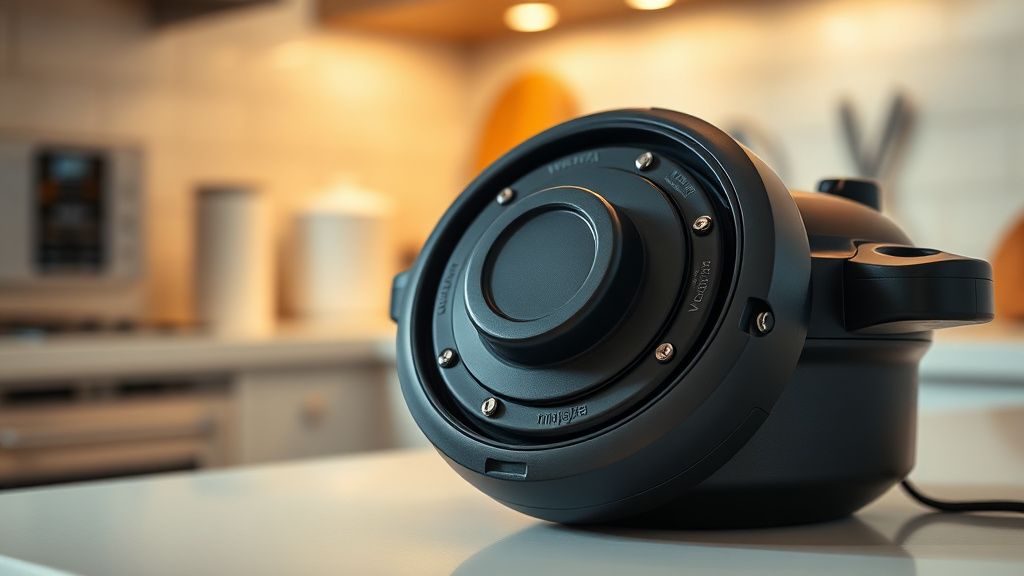
The Ninja Foodi — specifically the models using the TenderCrisp pressure lid (OP300, OP301, OP302, OP305, OP400, OP401, the 8-quart XL variants, and several of the Dual Zone adjacent designs) — uses a multi-layered lid detection system. It's not a single switch. There are at least three independent feedback points the control board checks before it allows a pressure cook cycle to begin:
The mechanical lid latch switch — a physical microswitch that trips when the lid locks into the bayonet mount. These switches are rated for a certain number of cycles. They wear out. On high-use units, you'll start seeing intermittent false negatives around the 18-24 month mark.
The float valve position sensor — this is the one that kills most people. The float valve is a small weighted pin that rises when the pot reaches pressure. But the sensor that reads its position is a reed switch or optical interrupt (depending on the hardware revision), and it's positioned directly above a steam vent path. Steam → condensation → mineral deposits from tap water → sensor reads valve as "down" even when pressure should have lifted it.
The lid contact strip — on newer Foodi variants, there's a conductive strip along the inner lid rim that completes a low-voltage circuit when properly seated. If this strip is oxidized, coated in cooking spray residue, or physically bent from aggressive lid removal, the circuit reads open and the board throws a lid error.
The firmware doesn't distinguish well between these three failure modes, a frustration common in many modern devices, whether you are dealing with a faulty appliance or trying to fix PS5 error code CE-108255-1. It throws one error state. Which means you're doing diagnostic guesswork without a multimeter and a service manual, both of which Ninja doesn't publish publicly.
This is, frankly, a design compromise. The Foodi was engineered to compete with the Instant Pot on price and features while adding the air frying lid. That dual-lid architecture created a mechanical complexity that single-lid pressure cookers don't have. You've got two lids, two hinge systems, two sets of seals, and twice the surface area for user error and sensor fouling. The engineering team clearly knew this — early units had a simpler two-point detection system, and somewhere around the OP400 generation, they added the third contact strip, presumably after too many pressure incidents with partially seated lids. That safety addition also created a new failure vector. Classic engineering tradeoff.
The 5-Minute Sensor Reset: Step-by-Step
This isn't magic. It's systematic elimination of the most common fault conditions. Do these in order. Don't skip steps.
Step 1 — Complete Power Isolation (60 seconds)
Unplug the unit from the wall. Not just turning it off — physically unplug it. Hold the power button for 5 seconds after unplugging to drain any residual charge from the capacitors. Wait 60 seconds minimum. The control board has a non-volatile memory state that sometimes holds a fault flag even through a soft reset. Physical power removal for >45 seconds clears it.
This alone fixes the error in maybe 15% of cases. Usually after a power surge or brown-out event where the board logged a fault that doesn't actually correspond to a current hardware problem.
Step 2 — Float Valve Cleaning and Inspection (90 seconds)
Remove the pressure lid completely. Flip it over. Find the float valve — it's the small circular pin, usually silver or red-tipped, that sits in its own little housing near the edge of the lid. Push it from the bottom. It should move freely up and down with almost no resistance. If it sticks, hesitates, or makes a scratchy sound, you've found your problem.
Remove the float valve by gently pushing it up and out from the inside (on most models it's held by a small silicone cap on the exterior). Clean the valve pin itself with a toothpick or a dry toothbrush — not soap and water initially, because moisture in the valve housing is often the actual error trigger. Dry clean first. If there's visible mineral scale (white chalky deposits), then a brief soak in white vinegar for 10 minutes followed by thorough air drying works. Don't reassemble until it's completely dry.
Reinstall the float valve. Test the movement again. It should drop under its own weight when you tilt the lid.
Step 3 — Silicone Gasket Inspection and Reset (60 seconds)
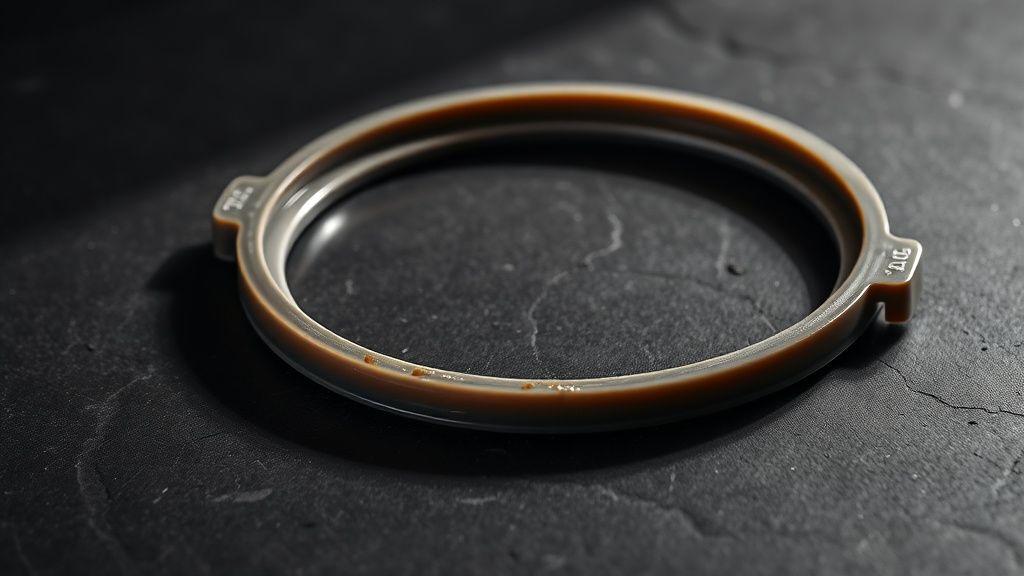
The silicone sealing ring sits in a channel around the inside of the lid. Pull it out completely. Look for:
- Deformation — if the ring has taken a permanent oval or flat-spot shape from being stored in the lid, it won't seat correctly
- Odor absorption — silicone absorbs cooking odors, and while this doesn't directly cause the error, heavily saturated gaskets often indicate old, brittle silicone that's lost its dimensional consistency
- Missing sections or tears — obvious but worth checking
- Residue in the channel — the groove the gasket sits in collects drippings. Clean it with a damp cloth and dry it.
Flex the gasket ring by hand. It should spring back to a perfect circle. If it holds a distorted shape, it's overdue for replacement. Ninja sells them for around $8-12 depending on model. This is the most commonly replaced consumable on the Foodi. If yours is more than 18 months old and gets regular use, just replace it preemptively.
Reseat the gasket into its channel, making sure it's uniformly seated all the way around. Low spots in the gasket seating can cause the lid to sit 1-2mm proud of proper position, which is enough to trigger the contact strip fault.
Step 4 — Contact Strip Cleaning (45 seconds)
On models with the conductive contact strip (primarily OP400 series and newer), locate the thin metallic or conductive rubber strip along the lower rim of the pressure lid's inner surface. It's easy to miss — it looks like a decorative trim piece.
Using a dry microfiber cloth, wipe the entire circumference of this strip. Then wipe the corresponding contact surface on the pot's upper rim. Cooking spray, oil vapor, and steam deposits create an insulating layer over time that raises the contact resistance above the board's threshold for "closed circuit."
If the contacts look oxidized (dark or greenish discoloration), a single pass with a pencil eraser — yes, literally a pencil eraser — mechanically cleans the oxidation layer without introducing moisture. It's the same technique electrical engineers use on PCB contacts and it works on these too.
Step 5 — Lid Reinstallation and Power-On Sequence (45 seconds)
Reinstall the lid with deliberate, even pressure. Don't just drop it on. Place it flat, align the arrows (most models have alignment indicators), and rotate it clockwise until you feel and hear the click. On some units the click is subtle — you're listening for a definitive mechanical engagement, not a soft thud.
Plug the unit back in. Do not press any buttons for 10 seconds. Let the board run its POST (power-on self-test). The display will cycle through initialization. After the display settles, attempt a pressure cook cycle set to LOW for 0 minutes — this is a standard sensor validation test that pressurizes the system just enough to confirm all three sensors are reading correctly without wasting food or time.
If the error clears: you're done.
If the error persists: see below.
When the 5-Minute Reset Doesn't Work: Escalating Diagnosis
This is where it gets more complicated and also where Ninja's support structure gets frustrating.
The Microswitch Failure Scenario
If you've done the full reset and the error persists with a clean, properly seated lid and float valve, the mechanical latch microswitch is a strong suspect. You can test this theory by opening the lid, then very slowly and deliberately closing it while watching for any tactile change in resistance near the latch point. A working switch will have a subtle "give" point when it actuates. A failed switch feels the same all the way through.
Replacing this switch requires partial disassembly of the lid housing. The screws are typically Phillips or JIS under a water-resistant adhesive plug. Once inside, the microswitch is a standard SPDT sub-miniature unit (common in electronics, available on DigiKey or Mouser) but desoldering and resoldering it requires basic soldering skills and a fine-tip iron.
Most people won't do this. They shouldn't have to. This is a $150-300 appliance. But it's the reality of where the Ninja Foodi sits economically — it's priced too high to throw away, too low to justify a $75 service call, and Ninja doesn't have a widespread repair center network anyway.
The Reddit community around r/ninjacooker and r/Instapot (yes, Foodi users end up there too) has documented this failure mode extensively. A thread titled "OP401 lid error, nothing works, switch fix" from 2022 has over 340 upvotes and a detailed photo walkthrough of the microswitch swap. That kind of community documentation fills the gap Ninja's official support doesn't.
The Firmware Ghost Fault
Less commonly, the fault state can become semi-permanent in the board's EEPROM. This happens after voltage spike events or repeated power interruptions during cooking cycles. The board logs a safety fault and certain firmware versions don't provide a user-accessible way to clear it.
Some users in the Foodi community have reported that a "factory reset" sequence — holding the START/STOP button and the KEEP WARM button simultaneously for 10 seconds while the unit is plugged in — clears the fault log on specific firmware versions. This isn't documented by Ninja officially. It circulates in community channels and appears to work on some OP300 and OP305 units. It does not work universally. Attempting it won't damage the unit.
If you're running a unit still within the 1-year warranty (or extended warranty), this is the point to contact Ninja support. Their replacement policy is generally responsive for confirmed hardware defects, and they've been known to send replacement lids or full replacement units under warranty without requiring the defective unit to be returned first, at least in US markets. That policy isn't consistent globally.

The Broader Problem: Why Air Fryer and Combo Cooker Sensors Fail Systematically
This isn't a Ninja-specific issue. It's a category problem.
The air fryer and multi-cooker category exploded between 2018 and 2023, with unit sales growing dramatically year-over-year across multiple markets. What that growth produced was an enormous installed base of appliances that are now aging out of warranty simultaneously. The Foodi, the Instant Pot Duo Crisp, the Cosori pressure air fryer, the Cuisinart CDF — all of them use similar sensor architectures. All of them have lid sensor failure modes in the 18-36 month range.
The economics of appliance engineering in this price range push manufacturers toward MEMS sensors and reed switches over more robust Hall effect sensors or inductive proximity sensors. The cheaper components work fine in controlled testing environments. They fail under real-world conditions: high humidity, thermal cycling, cooking vapor, mechanical wear, user cleaning habits (people submerge lids in dishwashers when the manual explicitly says not to), and the simple reality that millions of units means even a 0.3% annual sensor failure rate represents tens of thousands of frustrated users.
The appliance repair industry has effectively collapsed for products in the $100-400 range. There's almost no infrastructure for it. iFixit has some teardowns. A handful of YouTube channels do component-level repairs. But the official manufacturer path is "contact support → get replacement." There's no Ninja authorized repair network. There's no publicly available service manual. The firmware isn't flashable by end users (at least not without voiding warranties and considerable technical effort).
What fills the gap is community knowledge. r/ninjacooker, various Facebook groups, YouTube repair channels — these are where real diagnostic knowledge lives. Ninja's own knowledge base is written for tier-1 support calls and doesn't go deeper than "try cleaning the gasket and contact us if the problem persists."
Preventive Maintenance: Stopping the Error Before It Starts
Understanding the failure modes makes the prevention straightforward, even if it requires building habits most people won't maintain.
After every use:
- Remove the float valve and wipe it down. Takes 20 seconds. The mineral deposit problem is a cumulative one — it builds over weeks of use. Wiping the valve after each high-water cooking session resets the buildup cycle.
- Wipe the lid rim contact surfaces with a dry cloth.
- Store the lid inverted (not locked onto the pot) to prevent the gasket from taking a compression set.
Monthly:
- Remove the gasket completely and inspect it. Hand-wash with dish soap and water, rinse thoroughly, air dry completely before reinstalling. Silicone degrades faster when it's holding residue against itself continuously.
- Push-test the float valve. It should fall under gravity.
- Wipe the contact strips with a dry microfiber cloth.
Every 6 months or at first sign of any gasket deformation:
- Replace the silicone gasket. These are cheap. The lid error that results from a worn gasket costs you time and frustration that's disproportionate to the $10 fix.
The frustrating part is that none of this is communicated effectively in the Ninja Foodi user manual. The manual covers "cleaning" in general terms. It doesn't explain why specific components need maintenance, which means users don't prioritize it, which means sensors fail at rates that generate Reddit threads and support backlog.
Real Field Reports: What's Actually Happening Out There
The Foodi community reports on lid errors break into fairly predictable clusters:
Cluster 1 — New unit errors (under 3 months use): Usually a gasket that shipped slightly off-spec or a float valve that arrived with machining residue. The reset procedure works. Sometimes a replacement gasket is needed. Ninja's warranty response here is generally good.
Cluster 2 — Post-heavy-use errors (6-18 months): Float valve mineral buildup and gasket compression set. This is the most common cluster. The 5-minute reset with proper float valve cleaning resolves most of these. Preventive maintenance habits prevent recurrence.
Cluster 3 — Dishwasher damage errors (variable timing): Users who put the pressure lid or its components in the dishwasher. The high heat and water pressure distorts the gasket, forces water into the float valve housing and contact areas, and can short the contact strip circuit. The manual says don't do this. Many people do it anyway. Recovery success rate is lower — often requires gasket replacement plus extended drying time.
Cluster 4 — Post-firmware-update errors: Several users on Reddit and Ninja's own community forum reported lid errors appearing after connecting their units to the Ninja app and receiving a firmware update. Thread "OP401 lid error after update, was working fine before" from