If your Ring Doorbell Pro shows "Offline" after a Wi-Fi change, it is because the device is still attempting to handshake with the retired SSID or security credentials stored in its non-volatile memory; unlike a Google Home Mini that won't turn on, this is a network synchronization issue rather than a total power failure. To resolve this, you must force the device into "Setup Mode" to refresh its network handshake protocol. Simply restarting your router is rarely sufficient; the doorbell requires a manual handshake update.
Problem Nedir (What is the Problem?)
When a Ring Doorbell Pro displays "Offline" following a change in router settings—such as an SSID name change, password update, or the installation of a new mesh system—it enters a communication deadlock. The doorbell’s firmware is hard-coded to look for a specific Access Point (AP) with the original credentials. Because the "handshake" fails, the device abandons the connection attempt to save battery and prevents unauthorized access, resulting in the status light or app notification indicating the device is offline. This isn’t a hardware failure; it is a synchronization error between the IoT device’s local memory and the new network architecture, highlighting why managed security services are becoming essential for maintaining stable smart home ecosystems.
Belirtileri (Symptoms)
Users typically experience one or more of the following indicators when their Ring Doorbell Pro loses network connectivity:
- App Status: The Ring app shows "Offline" with a prompt to "Reconnect to Wi-Fi."
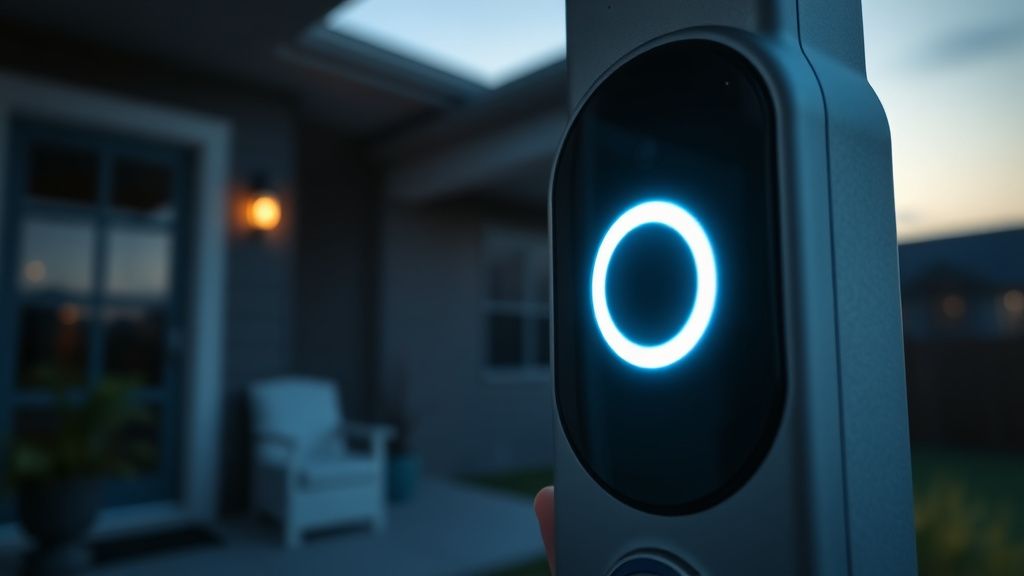
- LED Behavior: The circular light on the front of the device may slowly blink white (attempting to connect) or show no light at all, a common symptom of device communication failures similar to those seen when an Alexa shows a pulsing red ring.
- Functional Loss: You can no longer access the Live View, motion alerts are not triggered, and doorbell presses do not send notifications to your smartphone.
- Wi-Fi List: When attempting to reconnect, the Ring app may fail to find the device's local broadcasting signal (the Ring-Setup SSID), indicating the device is not entering pairing mode successfully.
Olası Nedenler (Possible Causes)
The disconnect usually stems from one of four primary technical bottlenecks:
- SSID and Password Mismatch: Even if you used the same SSID, changing the security protocol (e.g., from WPA2 to WPA3) can cause legacy IoT chips in the Ring Pro to reject the handshake.
- 5GHz vs. 2.4GHz Band Steering: Many modern mesh routers use "Band Steering" to move devices between frequencies. Ring Pro devices are notoriously sensitive to this; if the router forces the doorbell onto 5GHz when it wants 2.4GHz, the connection may drop repeatedly or fail to initiate.
- DHCP Lease Issues: The router’s new IP allocation table may conflict with the doorbell’s static or previously cached IP address.
- Signal Obstruction: Following a router relocation, the signal strength (RSSI) might have dropped below the threshold of -70 dBm, causing the doorbell to time out during the authentication phase.
Quick Fixes (Hızlı Çözümler)
Before dismantling the unit, try these immediate recovery steps:
- The Power Cycle: Locate your Ring Pro’s transformer or the breaker switch controlling your doorbell circuit. Flip it off, wait 30 seconds, and flip it back on. This clears the volatile memory buffer.
- The Ring App Refresh: Force-quit the Ring app on your mobile device, toggle your phone's Wi-Fi off and back on, and restart the app.
- The "Setup Mode" Trigger: Press the small white button on the side of the Ring Pro once. If it starts spinning white, it is ready to be re-added via the app.
- Proximity Sync: Ensure your smartphone is connected to the same 2.4GHz network you want the doorbell to use before starting the "Reconnect" wizard in the app.
Advanced Fixes (İleri Düzey Çözümler)
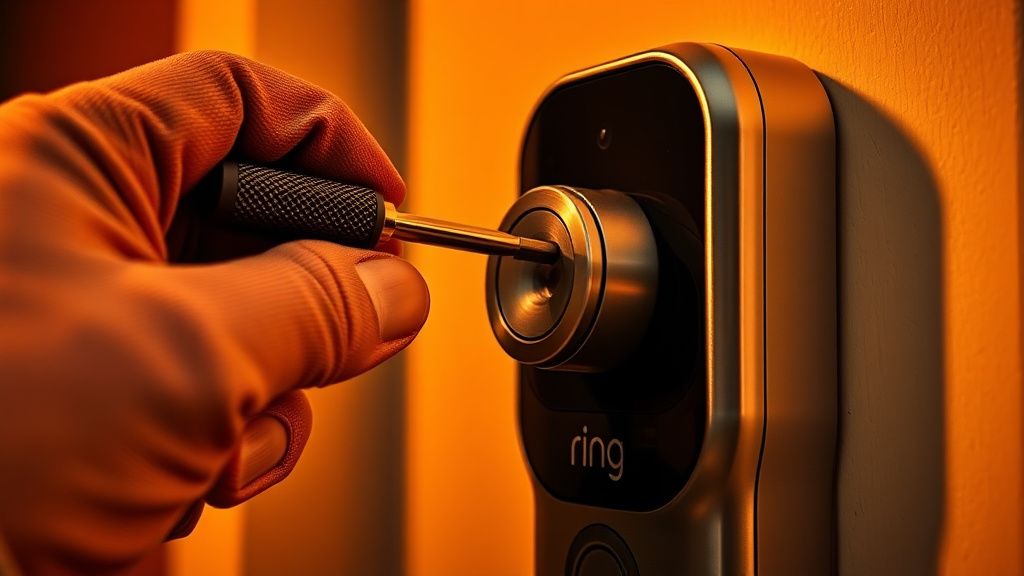
If the quick fixes fail, you are likely dealing with a deeper handshake failure, which can be as frustrating as troubleshooting a Philips Air Fryer E2 error. Follow these technical steps:
- Router Frequency Isolation: Log into your router’s administrative console. Create a "Guest Network" that is restricted to 2.4GHz only. Use this as a dedicated connection point for your Ring devices to prevent Band Steering interference.
- MAC Address Filtering: If you have MAC filtering enabled, the router will block the Ring Pro even with the correct password. Ensure the Ring Pro's MAC address (found on the back of the device) is added to your router's "Allow List."
- Clearing Cache/Data: On Android or iOS, go to the Ring App settings and "Clear Cache." This removes corrupted authentication tokens that might be blocking the new connection attempt.
- DHCP Reservation: Once connected, assign a static/reserved IP address to the Ring Pro via your router settings. This prevents the "Offline" status caused by IP conflicts during router reboots.
Factory Reset (Fabrika Ayarlarına Döndürme)
A factory reset should be your last resort, as it deletes all device history and custom zone settings.
- Locate the reset button on the side of the Ring Doorbell Pro.
- Hold the button down firmly for 20 continuous seconds.
- Release the button. The Ring Pro will flash white for several minutes, indicating it is undergoing a full firmware reboot.
- Once the light stops flashing and begins a slow, pulsing rotation, the device is back in factory state.
- Open the Ring App and select "Set Up a Device" to begin the fresh installation.
When to Replace (Ne Zaman Yenisiyle Değiştirilmeli?)
As a technician, I see devices that reach "End of Life" (EOL) due to internal component degradation. You should replace the unit if:
- Power Rail Failure: If the device receives power (confirmed via a multimeter at the terminals) but never illuminates, the internal voltage regulator has likely failed.
- Internal Wi-Fi Chip Short: If the device refuses to enter Setup Mode despite multiple factory resets and manual power cycles, the Wi-Fi radio module is likely fried, often due to voltage spikes from an aging transformer.
- Physical Damage: Water ingress behind the lens indicates the IP65 seal has failed. Attempting to repair this is dangerous and ineffective, as humidity will destroy the internal motherboard within weeks.
Field Report: I have seen clients spend $100 on third-party "repairs" for water-damaged units. In 90% of cases, the unit fails again within a month. If the unit is out of warranty, upgrade to a newer model rather than repairing.
Karşılıklı Eleştiri (Counter-Criticism and Debate)
The smart home industry is currently embroiled in a debate regarding "Planned Obsolescence." Critics argue that companies like Ring push updates that force older hardware to lose connection to newer Wi-Fi standards. While manufacturers claim this is for "Security Protocols" (e.g., forcing WPA3), many independent technicians argue that it serves to drive sales of newer hardware. My expert take? It is a bit of both. Hardware limitations are real, but the software implementation of "connection handshakes" could be significantly more robust, allowing for graceful degradation rather than an immediate "Offline" bricking.
Scaling a Home Automation Repair Business
If you are reading this as a technician, understand that "Smart Home Support" is the new plumbing. To scale, you must stop being a "fixer" and start being a "solutions architect."
- Standardize Your Stack: Don't repair every device. Focus on Ring, Nest, and Eufy. Become an expert on the top three to minimize troubleshooting time.
- The Membership Model: Don't charge per visit. Charge a monthly "Network & Device Maintenance" fee. If a client's Ring goes offline, you have remote access tools (like router management portals) to fix it before they even notice.
- Consultancy over Repair: The real money isn't in resetting a doorbell; it's in diagnosing why the Wi-Fi was weak to begin with. Upsell the client to a professional Mesh Wi-Fi system. That is a $500 job versus a $50 service call.