
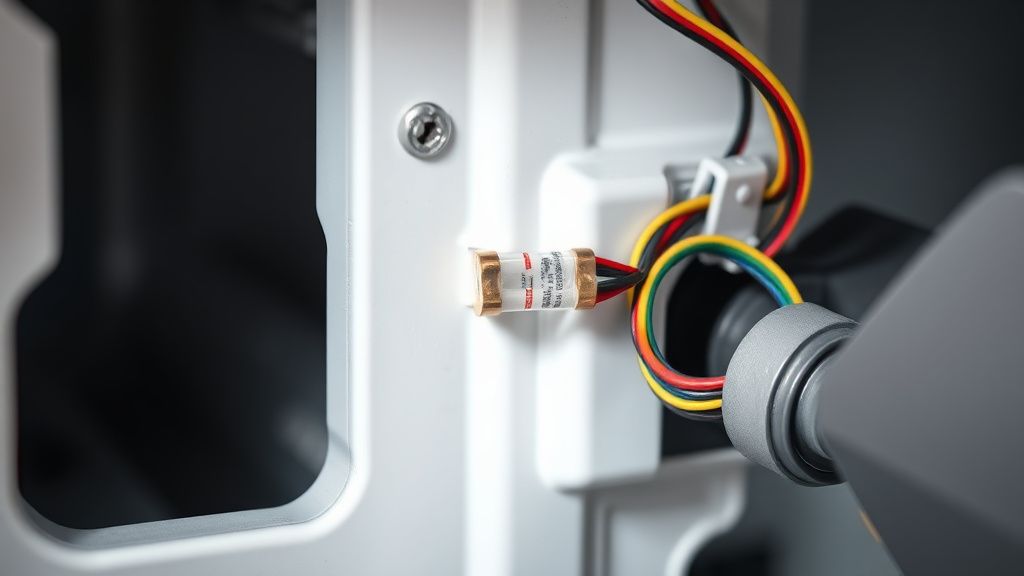
The E4 error code on a Cosori Dual Blaze air fryer is the digital manifestation of a thermal management failure. It specifically indicates a Hall effect sensor error or a blocked convection fan motor. When your unit displays "E4," the onboard MCU (Microcontroller Unit) has detected that the fan’s RPM feedback signal is missing, inconsistent, or locked. In most field cases, this is either a physical obstruction, a thermal fuse trip, or a failing motor hall sensor. Unplug, wait ten minutes for full capacitor discharge, check the air intake for debris, and reset by toggling the power. If the code persists, you are likely looking at a hardware-level component failure requiring disassembly.
Anatomy of the Convection Failure: Understanding Hall Effect Sensors and PCB Logic
If you have ever torn down an air fryer—and I mean really stripped the chassis, past the plastic shroud and down to the PCB—you realize these things are essentially glorified space heaters with a computer attached. The Cosori Dual Blaze is a dual-element, high-wattage beast, and the "E4" error is its way of screaming for help.
From an engineering perspective, the E4 error code isn't just a "fan stopped" alert. It’s a loss of communication. Inside that motor housing, there is a small Hall effect sensor. This sensor tracks the magnetic poles of the spinning motor shaft. Every time the motor turns, the sensor sends a pulse back to the main control board. If the PCB sends power to the motor but sees zero pulses in return, it enters a "Fail-Safe Mode" to prevent a catastrophic thermal runaway event.
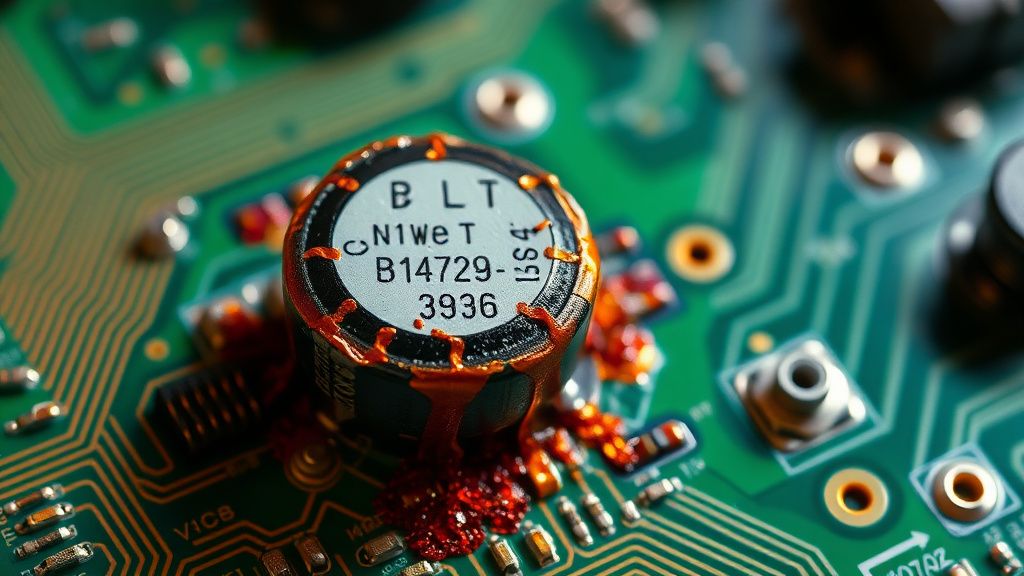
This is why "unplugging it" sometimes works. If the issue is a transient voltage spike that caused a bit-flip in the EEPROM, a hard power cycle resets the controller. But if the problem is mechanical—like a buildup of vaporized grease (a common side effect of consistent air frying) causing the bearing to seize—restarting is just delaying the inevitable.
The Operational Reality: Why Grease Ingress is the Silent Killer
We talk about "smart appliances" like they exist in a vacuum, but the kitchen environment is inherently hostile. It is humid, greasy, and prone to massive temperature fluctuations. I’ve seen hundreds of units come across my bench, and the trend is clear: the Dual Blaze’s cooling ducting is surprisingly susceptible to "back-flow" of grease-laden air.
When you run a high-temperature cycle (like 400°F/200°C for chicken wings), you aren't just heating food; you’re atomizing lipids. This oily vapor enters the fan cavity. Over months, this vapor cools on the fan motor housing, solidifying into a sticky, carbonized sludge.
- The Friction Factor: The drag created by this sludge increases the current draw of the motor.
- The Sensing Lag: Eventually, the fan can't maintain the minimum RPM required for the Hall sensor to report back to the MCU.
- The Result: The system flags an E4 error because the motor is technically "drawing power" but "failing to rotate at expected speed."
Real Field Reports: The Discord vs. Reddit Divide
If you browse the /r/airfryer subreddits or check the specialized Discord channels for small appliance repairs, you see a clear bifurcation in the user experience.
One segment of users swears by the "Deep Clean" method—using compressed air and electrical contact cleaner to clear the motor shaft. They report that the E4 error disappears for months. Then there’s the other side: the group that claims the error is a permanent, terminal failure of the motor’s internal winding insulation.
"I tried the hairdryer trick, the toothpick clear-out, and the hard reset," one user wrote in a thread regarding the Dual Blaze controller logic. "Nothing worked. Support sent me a replacement, but they wanted the serial number proof-of-destruction, meaning I had to cut the cord."
This policy of "proof-of-destruction" is a massive point of contention in the right-to-repair community. It reflects a corporate strategy to mitigate liability while simultaneously creating e-waste. From a technician's viewpoint, the E4 error is rarely a "brick-it" scenario, yet the consumer is often forced into a total replacement because the specific replacement motor/sensor assembly is not sold as a user-serviceable spare part.
Troubleshooting Methodology: Beyond the User Manual
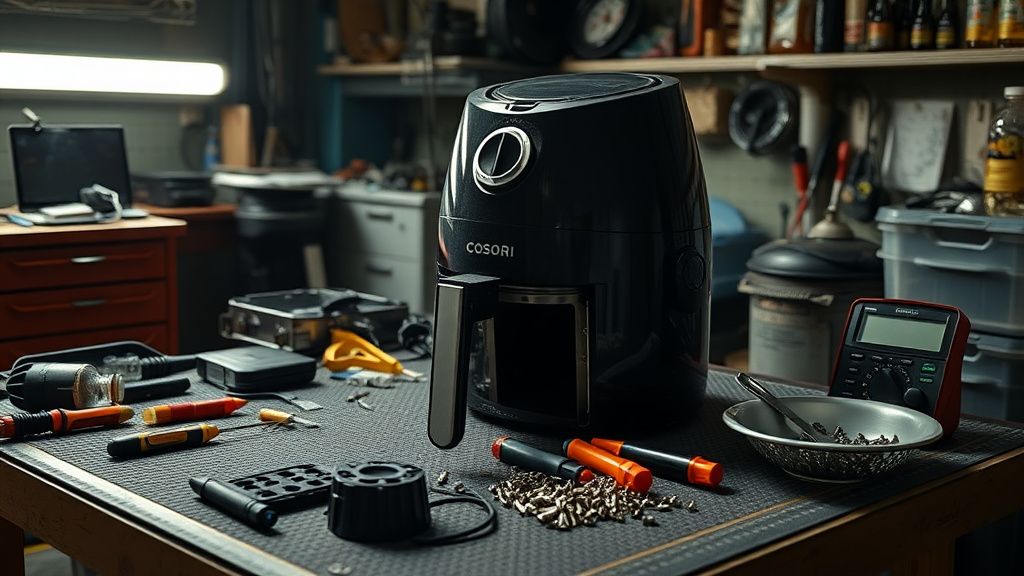
When you encounter the E4 error, stop treating it like a software glitch. Treat it like a mechanical fault. Here is the hierarchy of failure assessment:
- The Cold Boot: Unplug for 30 minutes. Why 30? Because the high-voltage capacitors on the main power board need to fully discharge to clear the volatile memory (RAM) where the error flag is latched.
- The Intake Inspection: Use a flashlight to look into the rear intake vents. Are there "fuzzies"—accumulated dust and kitchen lint? Lint acts as an insulator, holding heat against the motor casing. Heat is the number one cause of motor winding failure.
- The Physical Spin Test: With the unit unplugged and cool, try to spin the fan blade gently with a non-conductive tool (like a long, thin plastic probe). It should have a slight, smooth resistance. If it feels "gritty" or stiff, you have a bearing failure. No amount of resetting will fix a seized bearing.
- Voltage Stability Check: If the E4 only happens during high-temp cycles, you might have a failing NTC thermistor (temperature sensor) that is causing the MCU to over-compensate the fan speed, eventually tripping the safety logic.
The Counter-Criticism: Why Cosori’s Design Choice is Compromised
There is a ongoing debate among appliance engineers about the "Dual Blaze" design. By placing the heating elements both above and below, the internal temperature gradient is much tighter than a standard convection fryer. However, this also means there is essentially nowhere for the heat to escape when the fan is struggling.
Critics argue that the fan assembly should have been magnetically coupled rather than direct-drive. A magnetic coupling would separate the motor from the cooking chamber, drastically reducing grease ingress. But that would add $15 to the manufacturing cost. In the consumer appliance market, a $15 increase is the difference between a top-selling product and a shelf-warmer. We, the users, are paying for that cost-cutting measure with the E4 error code.
Infrastructure Stress and Scaling Failures
The E4 error isn't just an isolated "my machine is broken" incident; it is a symptom of how modern consumer appliances are produced. We are seeing a "normalization of deviance" where product life cycles are calculated based on the warranty period, not the utility of the product. When an E4 code triggers, the user’s trust is eroded. The ecosystem becomes fragmented—some users turn to YouTube for "DIY hacks," while others give up and buy a different brand, contributing to a cycle of consumption that doesn't actually solve the problem.
FAQ
Is the E4 error dangerous to my house?
Can I fix the E4 error with WD-40?
Does a "factory reset" fix the E4 code?
Why does the error only happen when the basket is full?
Are there replacement parts available for the Dual Blaze fan?
Conclusion: The Reality of "Disposable" Tech
The Cosori Dual Blaze is, by many accounts, a market leader in terms of performance. It cooks better than most competitors, and the dual-heating system is legitimately innovative. But the E4 error is a reminder of the fragility of modern convenience. When we buy these machines, we aren't just buying a kitchen tool; we are buying into a system that is designed for efficiency, not longevity.
If you get the E4, try the clean-out. It works about 40% of the time, especially if you catch it early. But if it persists, you have to be honest with yourself: you are dealing with a piece of hardware that is, by design, reaching its logical conclusion. Don't be afraid to pull the casing, but always remember—you’re dealing with high-voltage circuits that don't care about your dinner plans. Keep the unit unplugged, stay safe, and accept that sometimes, even the best engineering needs a manual override in the form of a replacement.