The Cosori Dual Blaze (CAF-P583S) is a marvel of countertop engineering until the day an error code flashes across that sleek glass interface, be it the E1 error or, perhaps, a Cosori Dual Blaze E4 error indicating fan failure and overheating. As a technician who has spent more hours than I care to admit hunched over PCB boards and thermal sensors, I can tell you that the E1 code is the air fryer’s way of screaming that its internal "nervous system"—the NTC (Negative Temperature Coefficient) thermistor—has lost its marbles. It’s not just a software glitch; it’s a critical failure in the feedback loop that prevents your kitchen from turning into a pyrotechnic display. If you are seeing E1, your machine has decided that it can no longer reliably measure its own heat, and for safety, it has initiated a hard lock.
Decoding the NTC Thermistor Failure in Dual-Heating Elements
The Dual Blaze is fundamentally different from older air fryers because it utilizes two heating elements—top and bottom. This adds a layer of complexity to the control board logic. The E1 error typically points to an open circuit or a short in the temperature sensing circuit, a common issue across various appliances, as seen with a Breville Air Fryer E1 error related to its thermal sensor. When the microcontroller receives a resistance value from the thermistor that is outside of the expected operating range (infinite resistance or zero ohms), it flags an E1.
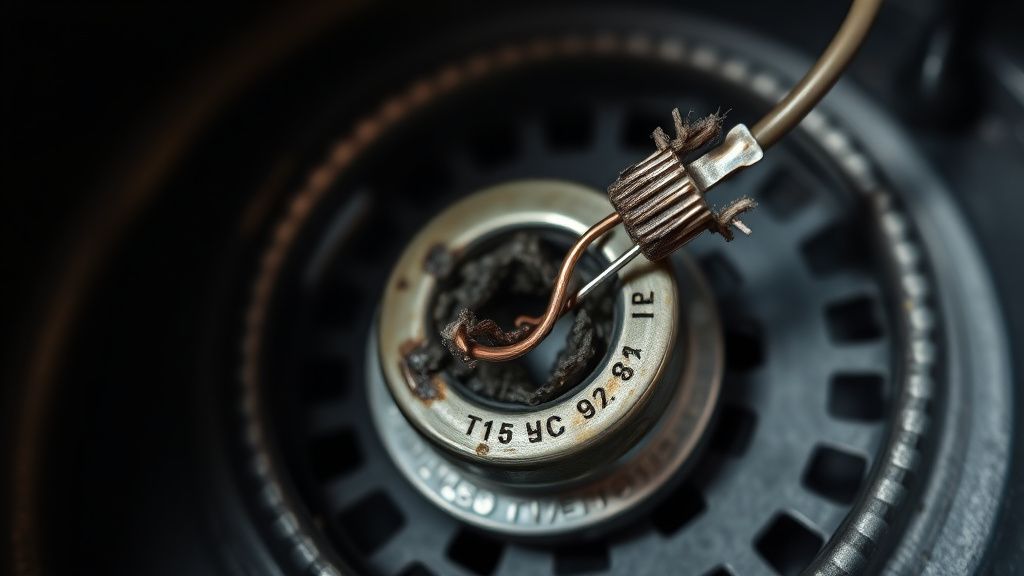
In the field, we see this most often in units that are aggressively cleaned. Users who submerge the basket area or use high-pressure sprayers risk moisture intrusion. Even if the device seems dry, that tiny amount of mineral-heavy water can cause electrolytic corrosion on the thermistor’s contact pins. Once that path is compromised, the resistance reading drifts, and the machine—correctly, but annoyingly—refuses to fire the heating coils.
Troubleshooting the Heating Element Relay and PCB Control Logic
Before you start hunting for a new thermistor, you must perform a power-cycle diagnostic. Unplug the unit for exactly 30 minutes. This isn't just a "turn it off and on again" ritual; it allows the large electrolytic capacitors on the main power board to fully discharge, potentially clearing any transient signal noise that might be latching the error state in the EEPROM.
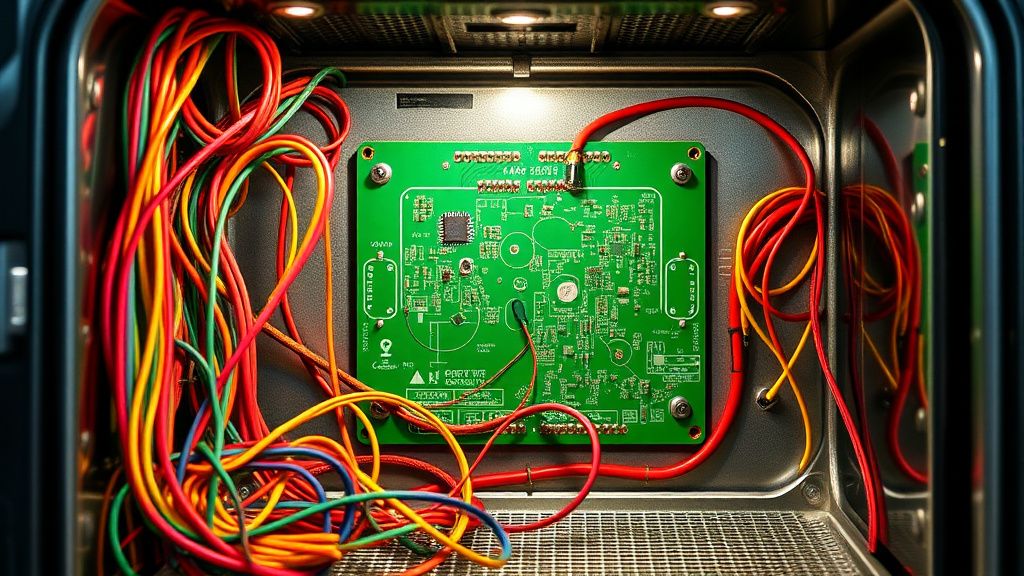
If the E1 persists after a hard reboot, we enter the realm of physical inspection. You will need a T15 Torx driver to open the chassis. I’ve seen countless DIY enthusiasts try to force these units open with standard flatheads; don't do it. The plastic clips on the Cosori housing are notorious for becoming brittle due to the heat cycling of the dual-element design. Once you are inside, check the molex connectors connecting the heating element wiring harness to the main control board.
- Loose Connections: High-heat environments cause metal fatigue. Vibration from the convection fan can shake these terminals loose over time, a problem not uncommon in air fryers, sometimes leading to errors like the Instant Pot Vortex Plus E1 or E2 error related to the fan motor.
- Carbon Buildup: If you see black, soot-like residue near the connector, that's evidence of arcing. If you see this, simply cleaning it won't work—the terminal block has been compromised by heat, and it will continue to arc until the board fails.
Real Field Reports: The "Thermal Drift" Phenomenon
Talking to technicians across forums and service centers, there is a recurring pattern regarding the Dual Blaze. Some users report the E1 error appearing exclusively when the device is used at maximum temperature (400°F/200°C) for extended periods (e.g., 45+ minutes). This suggests that the thermistor wiring is susceptible to thermal degradation.
One Reddit thread on r/airfryer tracked a cluster of failures in units purchased in a specific batch. Users found that the shielding on the sensor wire was too close to the upper heating element, essentially "baking" the wire insulation until it cracked and shorted against the chassis. This is a design compromise—cramming high-wattage components into a compact footprint forces engineers to route wires through high-heat zones. When that insulation gives, you get an E1.
Counter-Criticism: The "Right to Repair" vs. Manufacturer Safety
There is a massive divide in the community. On one side, you have the "fix-it-yourself" crowd who argues that the E1 error should be documented with a clear service manual, allowing users to swap a $5 thermistor rather than tossing a $150 appliance. On the other side, official support channels maintain that the unit is a fire hazard if the thermal loop is not calibrated correctly.
From an operational standpoint, this is a valid concern. If you replace an NTC thermistor with one that has a slightly different resistance curve, the PID (Proportional-Integral-Derivative) controller will misread the temperature. You could be setting the device to 350°F, but the actual internal temperature could hit 450°F, leading to burnt food at best and melted internal wiring at worst. If you are going to replace a sensor, you must ensure it is a genuine OEM part (or an exact spec match) and that it is seated correctly in the thermal well with high-temperature thermal paste.
Scaling the Fix: When to Give Up
Sometimes, the E1 error is a "ghost." I’ve had units in my shop where the sensor tested perfectly, the wiring continuity was perfect, and yet, the moment the relay closed, E1 would return. This points to a failure in the ADC (Analog-to-Digital Converter) chip on the control board itself.
At this point, you have crossed the line from "repairable" to "totaled." Replacing a main control board in these devices is often financially non-viable. Manufacturers keep these components proprietary, and even if you source a donor board, the firmware may be locked or serialized to the original heating elements. This is the "planned obsolescence" cycle we face in modern appliances: the software/hardware integration is so tight that it prevents individual component failure recovery.
The Reality of Modern Consumer Electronics Maintenance
The truth about the Cosori Dual Blaze is that it represents a compromise between performance and accessibility. You get top-tier results because of that dual-heating element setup, but you lose the simplicity of older, analog-dial air fryers. When you push technology into the kitchen, you are effectively putting a computer into a furnace.
If you encounter an E1 error, document it. Report it to Cosori support even if you are out of warranty. Companies track these "E-code" failures religiously; if enough people report that their thermistor wiring failed because it was routed too close to the heating element, there is a statistical chance they might issue an internal memo or update the design for future manufacturing runs. It won't help you today, but it keeps the ecosystem honest.