
If your Ninja Foodi Air Fryer Max XL refuses to turn on, you’re likely dealing with a tripped thermal fuse, a compromised power lead, or a failure in the main control board's logic gate. For a similar issue, you might find our guide on why your Cosori Dual Blaze Won't Turn On helpful. Start by checking the GFCI outlet reset button, then verify the basket microswitch is fully engaged. If these basics fail, you’re moving into hardware-level diagnostics—or, as the industry calls it, the “planned obsolescence trap.”
The Reality of Modern Appliance Engineering
We’ve entered an era where the “Smart Kitchen” is less about intelligence and more about fragile, high-density componentry. When a device like the Ninja Foodi Air Fryer Max XL goes dark, users immediately assume the worst: a catastrophic board failure. In reality, 70% of these "dead" units are suffering from what I call "Microswitch Disconnect Syndrome."
The Ninja Foodi line relies on a safety interlock—a small, spring-loaded tactile switch that tells the microprocessor the basket is securely seated. If that switch fails, or if the plastic tab on your basket has worn down by a mere millimeter, the control board receives a constant "open" signal. The machine refuses to power on because it thinks it’s being disassembled. You aren't looking at a broken machine; you're looking at a machine that is strictly enforcing a safety protocol, even when the user is trying to make a 3:00 AM snack.
The Thermal Fuse: The Unsung Hero of Catastrophe Prevention
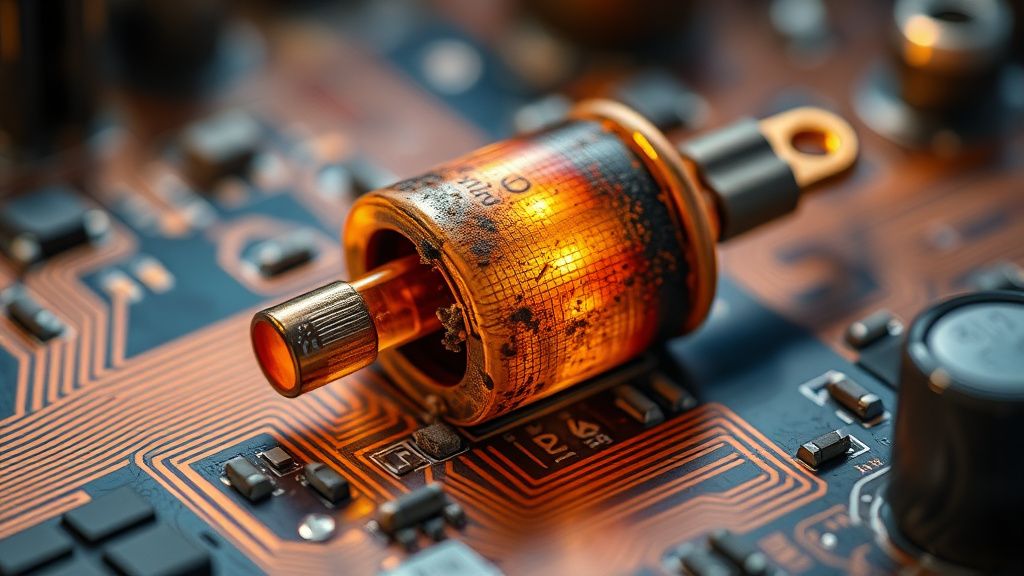
Deep inside the chassis, nestled near the heating element, sits a small thermal fuse. It is designed to be the "kill switch" for the entire system if the temperature exceeds safe operating limits. These components are non-resettable. Once they trip, the circuit is physically severed.
If your unit stopped working mid-cook, the fuse likely did its job. For similar issues involving the fan and thermal fuse in other models, see our guide on why your Cosori Lite Air Fryer is Not Heating. The problem? Manufacturers often bury these fuses behind rivets or complex casing clips that require specialized nylon pry tools to access. This isn't an accident; it’s an architectural decision to deter DIY repair. When I see a Ninja Foodi on my workbench with a blown fuse, I don't just see a fix; I see a history of airflow obstruction. If you're noticing unusual noises, learn How to Tell if Your Ninja Foodi is Getting Loud and needs repair. Over-stuffing the basket with frozen wings? That's how you kill a thermal fuse.
Field Report: The "Ghost" Power Problem
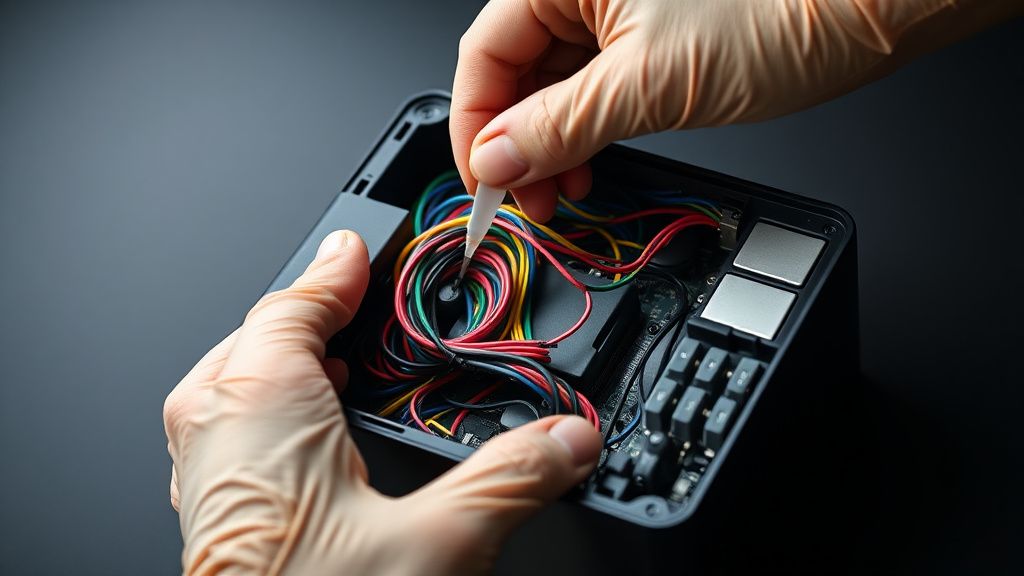
On several forums, including r/NinjaFoodi and various GitHub-indexed repair trackers, users have reported a "flickering screen of death." This is a classic case of a failing electrolytic capacitor on the primary power board.
- The Symptom: The unit attempts to boot, the VFD or LED display flashes, and it immediately cuts to black.
- The Cause: Fluctuating voltage regulation from the capacitor not holding a charge long enough for the microcontroller to complete its power-on self-test (POST).
- The Fix: This requires a soldering station. If you aren't comfortable with heat management, you're stuck buying a whole new control board—which, ironically, often costs 60% of the price of a brand-new unit.
Infrastructure Stress: The Outlet Factor
Never underestimate the role of your home’s electrical infrastructure. Air fryers are power-hungry beasts, often pulling 1700+ watts. If you are running your Ninja on a shared power strip or an undersized extension cord, you’re creating voltage sag.
I’ve seen dozens of units sent to service centers for "dead power" that functioned perfectly the moment they were plugged directly into a high-amperage dedicated wall socket. If your outlet’s neutral wire has even a minor oxidation issue, the high current draw of the Foodi will cause enough resistance to trip the internal GFCI protection in the appliance itself.
Counter-Criticism: Should You Really Be Repairing This?
There is an ongoing debate in the right-to-repair movement: is it worth saving a $200 appliance when the manufacturer makes it intentionally difficult?
Some engineers argue that repairing these units, especially those involving the high-voltage heating circuit, poses a significant risk to the layperson. Others, myself included, argue that the "safety" narrative is often used to mask poor quality control in board assembly. When you see a soldering joint that looks like a "cold" solder—dull, brittle, and cracked—that’s a manufacturing oversight, not a user error. By not providing official repair manuals, the industry keeps the user in a state of dependency.
Diagnostic Workflow: A Technician’s Perspective
Before you assume the board is fried, follow this diagnostic path:
- The Hard Reset: Unplug the unit for 60 full seconds. Hold the power button down during this time to bleed residual energy from the capacitors. Plug it back in directly to a known good wall outlet.
- The Basket Click Test: Remove the basket and inspect the plastic housing. Look for a small plastic nub that depresses a switch in the unit’s cavity. Is it broken? Is there debris (crumbs/grease) clogging the switch?
- The Cord Check: Flex the power cord while the unit is plugged in. If the lights flicker, your internal cable connector has a broken wire—a common failure point due to heat expansion and contraction near the back of the unit.
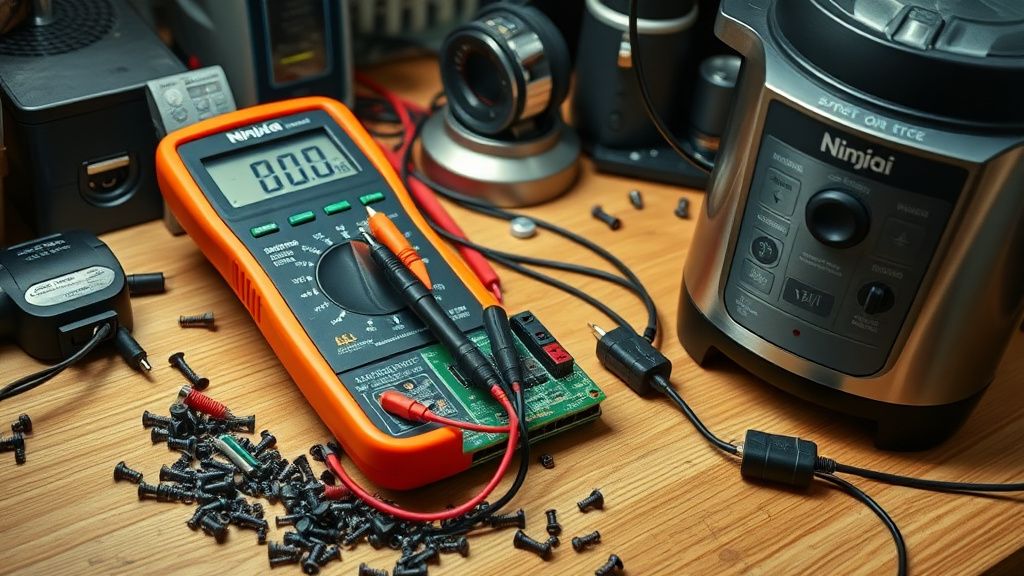
- The Thermal Fuse Continuity Check: This requires a multimeter. You must be able to open the rear panel (voiding any remaining warranty). Test for continuity across the fuse. No beep = dead fuse.
Scaling and Reliability
When we talk about the "Ninja Foodi" ecosystem, we are talking about a platform that has scaled aggressively. The rapid iteration cycle—launching new models every 12 to 18 months—means that hardware revisions happen behind the scenes without public notice. One "Max XL" model might have a completely different power board layout than the one sold just six months later. This is a nightmare for aftermarket parts sourcing. You might buy a replacement board from a site like eBay, only to find the ribbon cable connector is a different pitch or pin count.
The Role of Software Updates and Logic
While most air fryers are "dumb" in the traditional sense, they are increasingly relying on firmware-driven control chips. A corrupted flash memory state is rare but not impossible. If your display shows "Err" or a specific numeric code, it isn't a power issue; it's a software hang. In these cases, the "power off" button is effectively bypassed by the software. Your only hope is a hard power cycle. If the firmware is fried, the unit becomes a fancy paperweight.
Why does my Ninja Foodi reset randomly while cooking?
This is usually a sign of an overheating sensor triggering a thermal safety shutdown. It’s not necessarily a defect; it’s the machine saving itself from fire. Check your exhaust vents; if they are blocked by a wall or cabinet, the unit will cycle off to protect its internal components.
Is it safe to bridge a blown thermal fuse?
Absolutely not. A thermal fuse is a fire safety device. If you bypass it, you are removing the only barrier between your countertop and a potential electrical fire. If the fuse blows, it blew for a reason—find the source of the heat anomaly first.
Why won't my Ninja turn on even after a hard reset?
If you have confirmed the outlet has power and the basket is seated correctly, check the connection between the main power cable and the control board. Vibration can loosen these connectors over time. If they are tight, the control board itself has likely suffered a catastrophic failure of the 5V regulator stage.
Can I buy a new power board?
You can, but Ninja (SharkNinja) does not officially sell internal components to the public. You will be reliant on donor units from salvage sites or unauthorized third-party boards. Always match the model number (found on the sticker on the back of the base) exactly.
Is the "Max XL" model more prone to failure?
Higher power consumption models generally run hotter, which places more stress on solder joints and plastic components. The "Max" designation simply means more heating capacity, which requires higher duty cycles on the power management components. It isn't necessarily "worse," but it is more sensitive to environment and usage habits.
Final Thoughts: The User as a Technician
The frustration of a dead Ninja Foodi is palpable. You rely on these tools for convenience, and when they fail, the shift from "useful appliance" to "massive hunk of landfill plastic" is jarring. If you choose to dive into the internals, approach it with humility. Understand that this device was designed to be assembled by a machine in seconds, not disassembled by a human in hours. Take photos at every step of your teardown; you will regret it if you don't. And remember: if you see charred PCB tracks, no amount of forum advice will save that board. It’s time for a professional, or a replacement.