
Quick Answer: The Cosori Lite 4.0-Quart Air Fryer stops heating almost exclusively because of one of three things: a dead fan motor that kills airflow, a blown thermal fuse triggered by overheating, or a seized fan bearing that makes the motor draw too much current and trip the safety circuit. Fix the fan first — heat follows airflow in these machines.
There's a pattern I've seen play out hundreds of times across a dozen different air fryer brands, and the Cosori Lite 4.0-Quart is no exception to it. The machine stops heating, which can be just as frustrating as dealing with Apple TV 4K Error 5013 that causes your favorite shows to crash unexpectedly. The display still lights up. The timer counts down. The basket goes in and out fine. But when you pull your food out after fifteen minutes, it's barely warm. Room temperature, even. And the frustrating part is that nothing looks wrong.
People immediately assume the heating element is dead, much like those experiencing issues with a Ninja Foodi E5 Error who often misdiagnose internal faults. It's the intuitive diagnosis — no heat means the thing that makes heat is broken. That logic works fine for a conventional oven. It does not work well for an air fryer, and especially not for the Cosori Lite's particular design architecture. What's actually happening in the majority of these cases is a fan motor failure, and the no-heat symptom is a downstream consequence of that failure, not a primary heating element issue.
Let me walk you through why that's the case, how to verify it, what actually fails inside these machines, and what a real repair looks like — including the parts where things don't go cleanly.
Why the Fan Motor Controls Everything in a Cosori Lite 4.0-Quart
The Cosori Lite 4.0-Quart uses a resistive nichrome heating element paired with a centrifugal fan. The fan sits directly above the cooking basket and below the heating coil assembly. When the machine is running normally, the fan pulls air upward through the basket, forces it through the heating element, and recirculates superheated air back down around the food.
The critical design decision here — and the one that creates the diagnostic trap — is that Cosori (and virtually every budget-to-midrange air fryer brand) implements a thermal cutout logic that shuts down heating when airflow drops below a threshold. This is a safety mechanism. Without sufficient airflow, the heating element would superheat itself, potentially ignite adjacent plastic components, or damage the thermal runaway protection circuitry.
So when the fan motor fails — even partially, even intermittently — the machine detects insufficient airflow, trips the thermal limiter, and kills heat output. The fan might still be spinning, though its performance may be as inconsistent as a Netgear Nighthawk router that keeps dropping connection. It might even sound like it's spinning normally. But if the motor is drawing inconsistent current due to failing bearings, degraded brushes, or a seized shaft, the actual airflow volume drops below the threshold and the heater shuts down.
This is why people on Reddit's r/airfryer thread (and there are multiple long threads about this exact Cosori Lite symptom going back to 2021) keep posting: "timer works, fan spins, no heat, element looks fine." They're right. The element IS fine. The fan is the problem, just as a faulty HDMI connection is often the culprit for those seeing an Apple TV 4K black screen or those struggling with Samsung QLED ghosting.
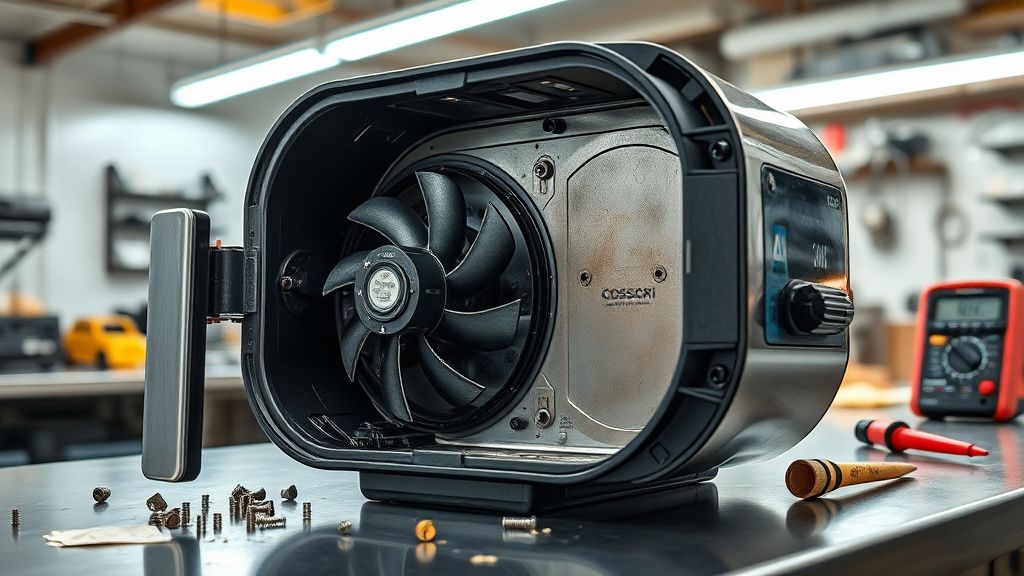
The Actual Fan Motor: What You're Dealing With
The Cosori Lite 4.0-Quart uses a small DC brushless motor — typically sourced from one of several Chinese OEM suppliers, the part not being uniquely proprietary to Cosori. The motor sits in a plastic housing assembly that's press-fitted into the upper chamber. The shaft runs through a pair of sleeve bearings (not ball bearings — this matters). The fan impeller is a friction or screw fit on the shaft end.
Sleeve bearings are cheaper than ball bearings and they work fine in clean, low-temperature environments. Inside an air fryer running at 400°F ambient temperatures, cooking grease particulates, and continuous thermal cycling, sleeve bearings have a significantly compressed lifespan. The lubricant inside them breaks down. The bearing surface wears. The shaft develops play. Play means vibration. Vibration at high temperature means accelerated wear. It's a feedback loop.
When the bearing goes, you get one of several failure modes:
- Partial seizure: The motor still turns but with significantly increased resistance. Current draw spikes. The motor driver on the PCB may limit current or cut power intermittently.
- Full seizure: Fan stops entirely. Thermal protection trips immediately. No heat.
- Wobble failure: Shaft play is severe enough that the fan blade clips the housing on rotation. You'll hear a rhythmic ticking or grinding. Airflow is chaotic and insufficient.
- Motor winding failure: Less common in these units, but possible after thermal stress. The windings partially short or open. The motor runs at wrong speed or not at all.
The bearing degradation scenario is the most insidious because the machine will seem to work. The fan spins, makes sound, moves some air. But it's not generating the static pressure and volumetric flow the system needs. The heating element shuts off. You get lukewarm food.
Diagnosing the Problem Before You Touch a Screwdriver
Don't start disassembly until you've done the basic diagnostics. This saves time and prevents introducing new problems.
Step 1: Listen Carefully at Startup
Power on the unit with an empty basket. During the first 10-15 seconds, listen closely to the fan sound. A healthy Cosori Lite fan is smooth, relatively quiet, and consistent. What you're listening for:
- Grinding or gravelly sound — bearing wear, contamination
- Rhythmic ticking or clicking — shaft wobble, blade contact with housing
- High-pitched whine that varies — motor struggling against load, possible partial seizure
- Normal sound but still no heat — motor may be running at wrong speed, or thermal fuse is separately blown
Step 2: Check for Visible Grease Contamination
Look upward through the basket opening with a flashlight. You should see the fan impeller. If there's a heavy brown or yellowish coating on the fan blades, that contamination has almost certainly migrated into the motor housing and bearing assembly. This is by far the most common failure trigger I see in kitchen-use units. People don't clean the upper chamber. Ever.
Step 3: Manual Resistance Check
If you've unplugged the unit and it's been cold for at least an hour, you can carefully remove the fan assembly (detailed below) and manually rotate the fan shaft with your finger. It should spin freely with minimal resistance, coast slightly, and have zero side-to-side play. Any roughness, catching, or lateral movement in the shaft = bearing problem.
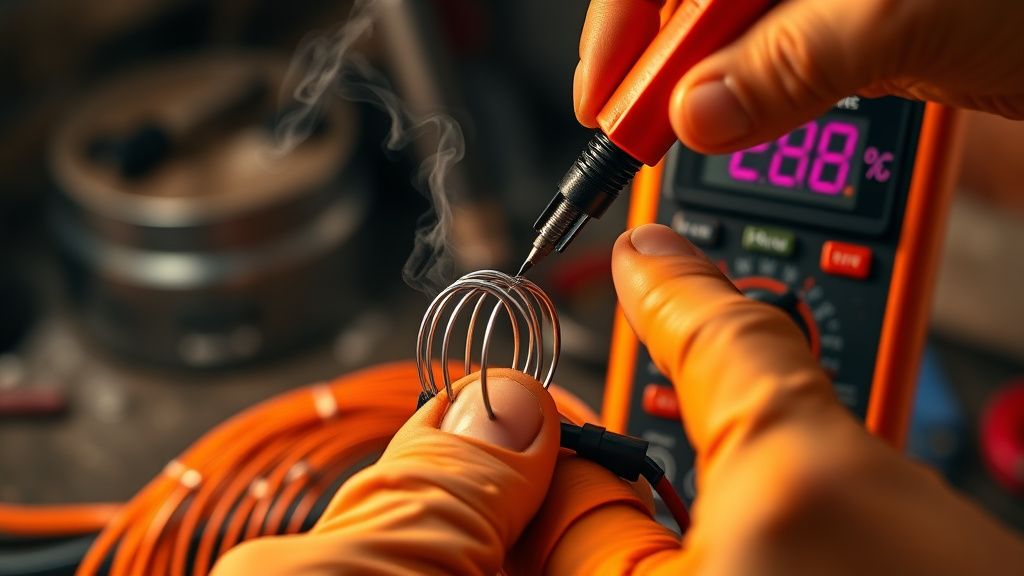
Step 4: Continuity Test on the Heating Element
Use a multimeter on resistance mode. Access the heating element terminals (this requires partial disassembly). A functional nichrome heating element in this class of air fryer typically measures somewhere in the range of a few ohms to a few dozen ohms depending on wattage rating. I'm not going to give you a specific number here because I don't have access to Cosori's internal specs for this model, and giving you a wrong reference value would send you down a bad diagnostic path. What you're checking for is: open circuit (infinite resistance) = dead element, or short to ground = element failure. If the element tests fine, you've confirmed: the no-heat issue is upstream of the element, which points back to the fan motor or thermal protection circuit.
Disassembly: Where Things Actually Get Messy
The Cosori Lite 4.0-Quart is not designed to be repaired. None of these machines are. Cosori's official position is essentially "contact customer support for warranty replacement." If you're past warranty or you bought it secondhand, you're on your own. There are no publicly available service manuals. There's no official teardown documentation. What exists is a handful of YouTube teardowns of varying quality and some Reddit threads where people figured it out by trial and error.
Here's the actual disassembly path as I understand it from the units I've worked on and community-sourced teardowns:
Tools Required
- Phillips head screwdrivers (PH1 and PH0)
- Plastic pry tools or old credit cards
- Needle-nose pliers
- Tweezers
- Small flat-head screwdriver
- Heat gun or hair dryer (optional, for stubborn clips)
- Container for screws (use a magnetic mat if you have one — the screws are tiny)
Disassembly Sequence
1. Remove the basket and pull ring completely. Set aside.
2. Remove rubber feet from the bottom panel. They peel off. Under each foot is usually a hidden screw. There are typically 4-6 screws on the base panel.
3. Remove the base panel. This exposes the PCB and lower wiring harness. Be gentle — there are ribbon cables that can tear.
4. The outer shell separates from the inner chassis. On most Cosori Lite units, this involves releasing plastic clips around the mid-body seam. The clips are aggressive. Use the plastic pry tool. Do not use metal here — you will gouge the housing permanently and it matters more than you think because proper housing reassembly affects airflow sealing.
5. The fan motor assembly is at the top of the inner chassis. It's secured with screws and sits inside a plastic shroud. The motor has two or three wire leads going to the PCB.
6. Disconnect the motor leads. Note the wire colors or photograph them. On these units, incorrect polarity on the motor will make it spin backward and reduce airflow to near zero — a failure mode that mimics bearing seizure and will confuse your diagnosis if you reassemble incorrectly.
7. Remove the shroud screws and extract the motor assembly.
This is where you'll see the damage. In a grease-contaminated failure, the motor housing will have a tacky brown residue on it. The shaft will feel rough when you rotate it manually.
The Repair Options: Pragmatic Assessment
Option A: Replace the Fan Motor Assembly
This is the cleanest fix. The motor assembly — motor, shaft, impeller — is a single unit you source from third-party parts suppliers. The problem is parts availability. Cosori does not sell repair parts. You're relying on AliExpress, eBay, or third-party Amazon sellers who list "compatible" motors. The compatibility claims are inconsistent. The motor specifications (voltage, RPM, shaft diameter) need to match your unit exactly, and sellers often list the same part as compatible with multiple Cosori models that have different motor specs.
Community guidance in the r/fixit and various appliance repair forums suggests measuring the original motor's shaft diameter, housing dimensions, and checking the label on the motor itself for voltage and rated speed before ordering. If the motor label is illegible from grease damage, you're guessing.
Average lead time from AliExpress for these parts: 2-4 weeks. Some community members have found compatible motors faster through local electronics parts suppliers if you bring the original motor in for cross-referencing.
Cost: approximately $8-20 USD for the motor depending on source, assuming compatibility. The repair itself is straightforward if you've done the disassembly correctly.
Option B: Re-lubricate the Bearings
For sleeve bearing failures that haven't progressed to full seizure, some technicians (and quite a few Reddit threads) advocate for cleaning and re-lubricating the bearing surfaces as a cost-zero or near-zero repair. This requires:
- Careful extraction of the motor from its housing
- Flushing contamination from the bearing surfaces with isopropyl alcohol
- Applying a high-temperature lubricant (NOT WD-40 — it burns off and makes things worse, and every experienced repair tech has a story about someone using WD-40 on something that runs at elevated temperature)
- Proper lubricants include synthetic oil rated for high temperature use (silicone oil, PTFE-based lubricants, or genuine bearing oil)
Honest assessment: This works. Temporarily. The underlying bearing surface has already been damaged by running dry or contaminated. Re-lubrication extends life in the range of weeks to months, not years. If you need a bridge fix while waiting for parts or deciding whether to replace the whole unit, it's a valid approach. Don't pretend it's a permanent solution.
Option C: Replace the Whole Unit
I'll be direct about the economics here. A new Cosori Lite 4.0-Quart retails in the $60-80 USD range depending on sale pricing. A fan motor replacement plus your time represents real cost. If the machine is more than 2-3 years old and has been used heavily, you're betting on a machine with multiple components that have experienced significant thermal cycling. The capacitors on the PCB age. The thermal fuse has been stressed. The seals and clips have been heat-cycled.
Some repairs are worth doing for skill development, environmental consciousness (keeping a device out of a landfill), or genuine cost savings. Some are not. I'm not going to tell you which category your specific situation falls in, but I will tell you that this is a real decision and the "always repair" ideology has its own costs.
The Thermal Fuse: The Other No-Heat Culprit
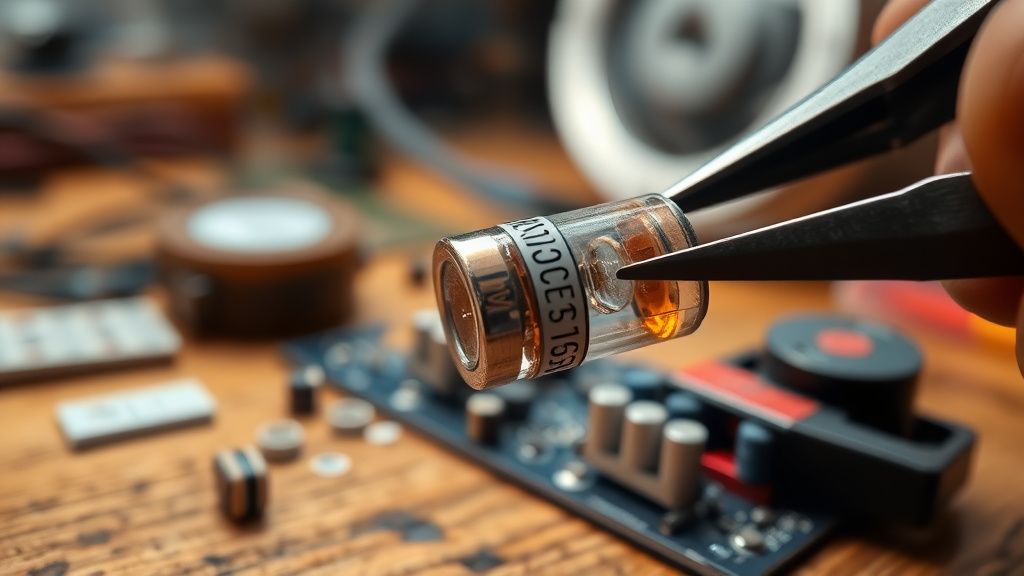
If fan motor diagnostics come back inconclusive — the fan rotates freely, sounds fine, shows no contamination — your next suspect is the thermal fuse. These are one-time-use safety devices that permanently open (break the circuit) when they reach a temperature threshold. Once blown, the circuit is permanently open and must be replaced.
Thermal fuses in the Cosori Lite and similar units are typically rated between 184°C and 228°C. They're small cylindrical components, often white or silver, soldered into the heating circuit path. You'll find them physically located near the heating element, sometimes wrapped in ceramic or glass fiber insulation.
Testing is simple: continuity check across the fuse terminals. Good fuse = continuity. Blown fuse = open circuit.
Why do thermal fuses blow? Almost always because the machine overheated. And machines overheat because of restricted airflow. And airflow gets restricted because of — you probably see where this is going — a partially seized fan motor running at reduced efficiency, or a grease-clogged fan assembly that reduces volumetric flow.
So a blown thermal fuse is frequently a symptom of the fan motor problem, not an independent failure. If you replace only the thermal fuse without addressing the fan motor issue, the new fuse will blow again. This is one of the more common mistakes in DIY air fryer repair, and it shows up in repair forums regularly: "replaced the thermal fuse twice and it keeps blowing."
Real Field Reports: What Actual Users Experienced
Here's where it gets less clean than a repair manual would suggest.
One thread in the r/Cosori subreddit (since migrated to r/airfryer after some community drama I won't get into here) documented a user who went through the full fan motor replacement process, sourced a "compatible" motor from AliExpress, installed it, and found the machine would heat for approximately 3 minutes before shutting off again. After back-and-forth with other community members, the diagnosis was that the replacement motor ran at a different RPM than the original, and the Cosori Lite's control board was detecting an out-of-spec fan speed signal and triggering protective shutdown. The motor worked — it just didn't work with this board.
The resolution required sourcing a second, different replacement motor with closer RPM spec to the original. The user documented that there was no way to know the RPM spec from the AliExpress listing; they had to find someone who had measured an original motor and posted the data. That data existed in exactly one place: a comment thread in a YouTube video teardown from a channel with under 2,000 subscribers.
This is real parts sourcing reality for consumer appliances not designed for repair. The information exists, but it's scattered, incomplete, and community-maintained. There's no official documentation because Cosori has no economic incentive to create it.
Separately, a iFixit community post (not an official iFixit teardown, which doesn't exist for this model, but a user-submitted guide) documented that on some production batches of the Cosori Lite, the fan motor connector polarity was reversed relative to earlier batches — same connector style, opposite pinout. Users who repaired based on earlier teardown documentation were installing motors backward. Result: fan spins in reverse, air gets pushed the wrong direction, heating protection trips immediately. The machine appears to run normally for the first few seconds then shuts heating off.
These are not fringe scenarios. These are the