
Quick Answer: The Ninja Foodi Dual Zone Air Fryer E5 error code signals an overheating fault — specifically, the thermal protection circuit tripping when internal temperatures exceed safe operating thresholds. Fix it by unplugging immediately, letting the unit cool for 30–45 minutes, clearing blocked vents, and checking for drawer misalignment before restarting.
Look, I've pulled apart more air fryers than I care to count, ranging from deep-cleaning a Dyson V15 Pulsing? Here Is How to Fix Your Vacuum’s Suction Issues to repairing kitchen staples. The E5 on a Ninja Foodi Dual Zone isn't the worst fault code you'll ever see on a consumer appliance, but it's also not the harmless hiccup that Ninja's support page makes it sound like. There's a difference between "it threw an E5 once and never did it again" and "this thing E5s every third cook cycle and I'm about to throw it through a window." Both scenarios exist. The fix path is different for each of them.
Let me walk you through what's actually happening inside that machine, why the thermal circuit behaves the way it does, what causes it to trip incorrectly (yes, that happens), and when you need to stop poking at it and call for a warranty replacement.
What the E5 Error Code Actually Means on a Ninja Foodi Dual Zone Air Fryer
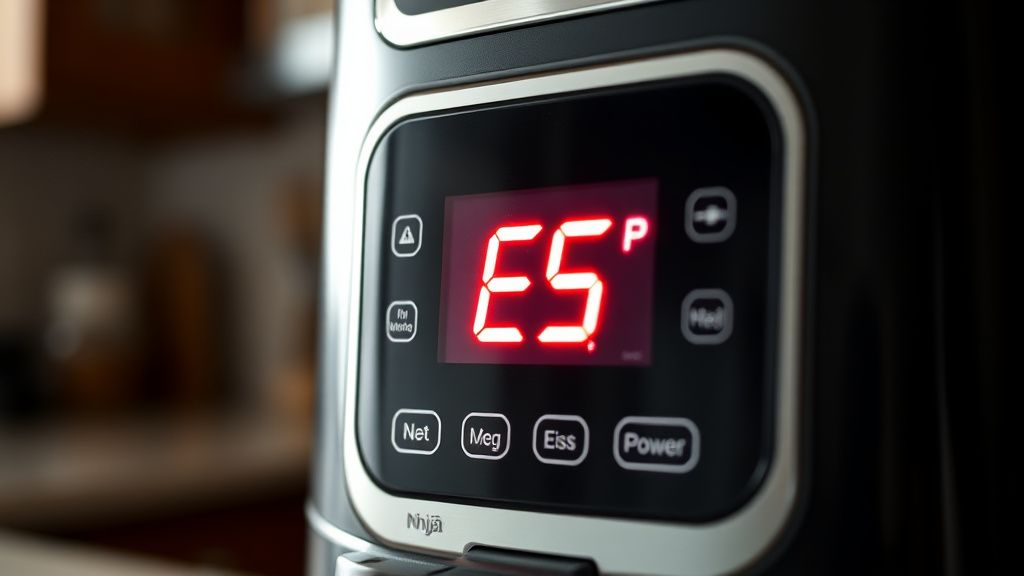
The Ninja Foodi Dual Zone — specifically the AF300UK, AF400UK, DZ201, DZ401 series and their regional variants — uses a thermal cutoff system that's pretty standard across the industry. Inside each drawer zone, there's a thermistor (a temperature-sensing resistor) that feeds real-time temperature data to the main control board. When that thermistor reads a value that crosses the upper threshold — typically in the range of around 230–260°C internal cavity temperature, though Ninja does not publish exact threshold specs publicly — the board throws the E5 fault and kills the heating element.
That's the design intent. Protect the unit from cooking itself.
What makes E5 tricky on the Dual Zone specifically is that you have two independent heating zones sharing a single chassis and a single exhaust architecture. Zone A and Zone B both exhaust through the same rear vent grid. If Zone A is running hard at 200°C on a long roast cycle while Zone B is simultaneously pushing high-temp chips at 220°C, the combined thermal load on the internal cavity can push temperatures in ways that a single-zone unit never would. The thermal protection system wasn't originally designed for that combined load scenario in some early firmware revisions — something that Ninja quietly acknowledged in a firmware update pushed in 2022 for the AF400 series without much public fanfare.
Why Thermal Cutoff Systems Behave Inconsistently
Here's the part that drives users insane on Reddit threads like r/airfryer and r/ninjacooking: the E5 doesn't always trip at the same point. One day you can run both zones at max temp for 40 minutes with no issue. Next day, same recipe, E5 at minute 18.
This is normal for PTC (Positive Temperature Coefficient) thermal protection behavior. The thermistor's resistance curve isn't perfectly linear, and over time — especially with grease accumulation near the sensor — the baseline resistance drifts. So the board "sees" a higher temperature than actually exists. You're not actually overheating. The sensor is lying.
This is a known failure mode in cheap-to-mid-range thermistors used in consumer kitchen appliances, much like the thermal failures described in Why Your Gaggia Classic Pro Isn't Heating: A Repair Guide for Common Thermal Failures. It's not unique to Ninja. DeLonghi, Philips, Cosori — they all have variations of this problem. The difference is how the control board interprets borderline readings, which is a common theme in smart home tech support, such as when your Nest Thermostat E74 Error: Why Your HVAC Power Keeps Failing or your Philips Hue Bridge Offline? How to Fix Persistent Network Sync Errors.
Early production runs of the DZ201 had essentially no hysteresis on the thermal cutoff logic. If the thermistor hit threshold, the board tripped. Period. No "is this sustained? Is this a spike?" check. Later firmware versions softened this slightly but Ninja has never publicly documented what exactly changed.
Step-by-Step: How to Actually Fix the E5 Error
Step 1 — Immediate Shutdown and Thermal Reset
Pull the power cord from the wall. Not the power button. The cord. You want a hard reset of the control board, not a soft standby state.
Leave it unplugged for a minimum of 30 minutes. I know the guides say 20. I've seen units that were genuinely borderline hot still showing elevated thermistor readings at 20 minutes because the rear vent area retained heat longer than expected. 30–45 minutes is the real number for a full thermal soak-down.
Don't cover the unit. Don't put it in a cabinet. Leave it in open air, rear vents facing outward.
Step 2 — Inspect the Exhaust Vents
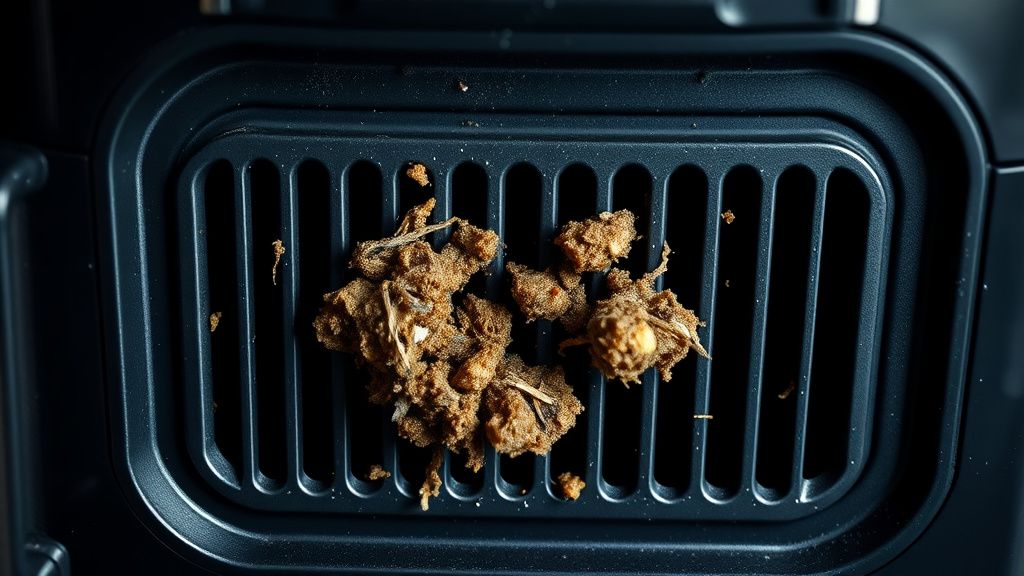
The rear vent grid on the Dual Zone units — particularly the AF400UK and DZ401 — is a rectangular honeycomb pattern approximately 8cm × 12cm. In a real kitchen environment, this vent accumulates:
- Grease vapor condensation — especially if you cook fatty proteins like chicken thighs, bacon, or sausages regularly
- Household dust and lint — the fan creates negative pressure that pulls ambient air through gaps
- Bread crumbs and fine food particles — particularly if the drawer basket isn't lined
Partially blocked vents are responsible for a significant percentage of nuisance E5 trips. The unit isn't overheating because the heating element is malfunctioning. It's overheating because it can't exhaust the heat it generates.
Clean the vent grid with a soft brush and a damp cloth. For built-up grease, a small amount of diluted dish soap on a toothbrush works fine. Make sure the unit is unplugged and completely dry before any restart attempt.
Field note: I've seen Dual Zone units where the vent was 40% blocked with compressed grease and lint and the owners had no idea. They'd been getting intermittent E5s for two months and assumed it was a firmware bug. Clean the vent. Seriously.
Step 3 — Check Drawer Seating and Basket Alignment
This one gets missed constantly. Both the left and right drawers need to be fully seated. The Dual Zone's control board uses a physical micro-switch to confirm drawer seating status. If a drawer isn't fully seated — even by a few millimeters — the airflow path inside the cavity is disrupted. Hot air recirculates internally instead of flowing through the food and exhausting. Internal temperature spikes. E5.
Pull both drawers out completely. Check the runner rails for debris. Re-seat both firmly until you hear or feel the latch engage. On the AF400 series, the left drawer runner has a tendency to accumulate grease near the rear stop point, which causes the drawer to sit approximately 3–4mm short of full engagement. This is enough to trigger the fault under sustained high-temp operation.
Step 4 — Check for Overcrowding
The Dual Zone's temperature management assumes a certain airflow resistance through the basket load. When you pack a basket so tightly that air can't circulate — dense layering of frozen chips, whole chicken pieces packed edge-to-edge — the air recirculates under the heating element without moving through the load efficiently. Element temperature climbs. Thermistor eventually trips.
This isn't always user error. The marketing for these units shows fairly loaded baskets. The thermal engineering doesn't always agree with the marketing photography.
Step 5 — Firmware Check
Ninja has pushed firmware updates for several Dual Zone models that addressed thermal management logic. For units with Wi-Fi connectivity (certain DZ series variants sold through specific retailers), you can check for firmware updates through the Ninja app. For non-connected units, there's no user-accessible firmware update path, which is a genuine problem — Ninja has acknowledged this limitation in support interactions but has not provided a public solution for offline units as of this writing.
If you have a non-connected unit and you're experiencing repeated E5 faults after addressing all the physical causes above, the firmware revision on your unit may predate the thermal management fixes. Your realistic options at that point are warranty claim or replacement.
When the E5 is Not a Simple Thermal Trip — Deeper Hardware Faults
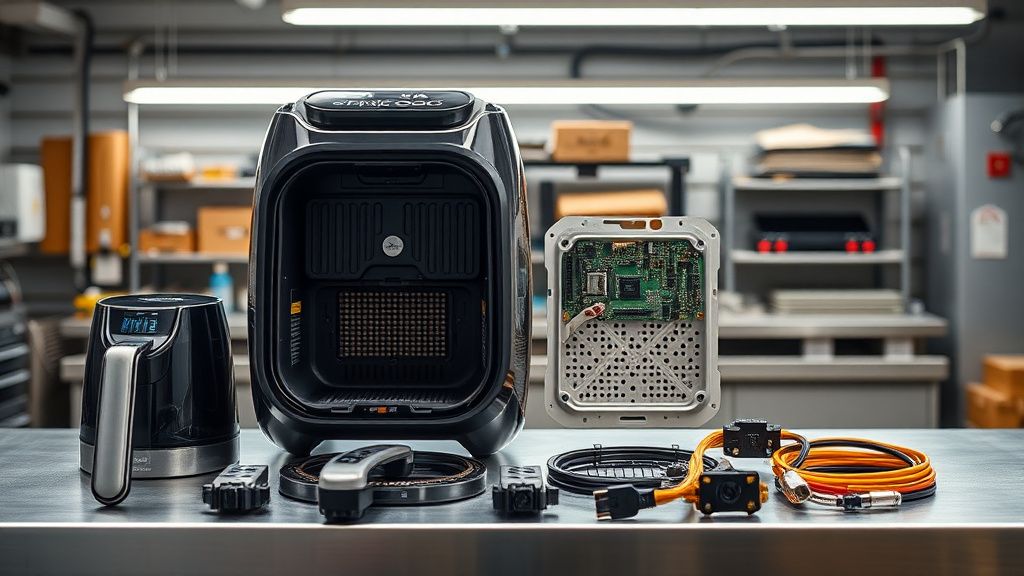
If you've done everything above — cleaned vents, reseated drawers, reduced load, let it cool fully — and the E5 returns within 10–15 minutes of a fresh cook cycle at moderate temperatures (say, 180°C, single zone, lightly loaded basket), you're looking at one of a few hardware scenarios:
Thermistor Drift or Failure
The thermistor itself has drifted out of spec. This happens faster in units that see daily high-temperature cooking, especially in kitchens with high ambient temperatures or poor ventilation. The fix is thermistor replacement — but sourcing the correct NTC thermistor for your specific unit variant and accessing it requires disassembly that will void your warranty if it's in-spec.
On the Dual Zone, the thermistors are located inside each drawer cavity, mounted on a small bracket near the heating element assembly. They're connected to the main board via a 2-pin JST-style connector. The thermistor itself is a standard NTC type, but the specific resistance-temperature curve needs to match what the control board expects, or you'll get spurious readings in the other direction — the board thinking the unit is cool when it's actually overheating, which is a worse problem.
Community users on the Ninja Foodi subreddit and in the Ninja Kitchen Facebook groups have documented replacement attempts with varying success. The consistent finding: if you don't match the exact thermistor spec, you create a new problem. There's no publicly available Ninja service documentation specifying exact component values. Some users have measured the original thermistor and found values consistent with common 100kΩ NTC types, but this is community reverse-engineering, not official spec.
Control Board Logic Fault
Less common, but real. The control board itself — specifically the thermal monitoring circuit — can develop a fault that causes it to misinterpret normal thermistor readings as overheating. This usually presents as an E5 that triggers almost immediately on power-on, before the unit has had any chance to heat up.
If your unit throws an E5 within 2–3 minutes of starting a cook cycle on a freshly cooled, clean machine, suspect the board, not the thermal environment.
Replacement control boards for Dual Zone units are available through third-party parts suppliers (eBay, Amazon marketplace sellers, some appliance parts specialists), but pricing can be close to the cost of a refurbished unit, which makes the economics questionable unless you're comfortable doing the repair yourself and the unit is otherwise in good condition.
Heating Element Partial Failure
A failing heating element can draw inconsistent current, creating thermal hot spots that trip the thermistor even when average cavity temperature is within normal range. This is relatively rare in Ninja units within their normal service life, but it does happen — particularly in units that have been run hard for 2+ years with regular high-temperature use.
A partially failing element often presents with other symptoms before the E5 becomes frequent: uneven browning, longer preheat times, one zone feeling noticeably less powerful than the other. If you've been noticing these and the E5 follows, the element is the likely culprit.
Real Field Reports: What Users Are Actually Experiencing
The gap between Ninja's support documentation and what users report in practice is... notable.
On r/airfryer, threads about the E5 on Dual Zone units consistently fall into two categories. First category: users who resolved it with the standard thermal reset and vent cleaning, never saw it again, moved on. Second category: users dealing with recurring E5 faults on units under 18 months old, who have gone through multiple support interactions, replacement units, and continued to experience the same error on the replacement.
One thread from 2023 — still searchable — had a user document six separate Ninja customer service interactions over four months for a persistent E5 fault on a DZ401. They received two replacement units. The second replacement had the same issue. Ninja's final response was essentially to offer a discount on a newer model, which is not the resolution you want when you've already spent money on a product that doesn't work reliably.
This isn't a majority experience. But it's not an outlier either. There's a subset of Dual Zone units — likely a specific production batch or component sourcing window — that has a higher-than-normal E5 fault rate. Ninja hasn't made any public statement about this. The pattern is visible in Amazon review data (filtering for 1–2 star reviews mentioning "E5" across a specific time window shows a cluster), but correlating this to production dates requires data that Ninja doesn't publish.
Counter-Criticism: Is the E5 System Actually Doing Its Job?
Here's the uncomfortable counterpoint that doesn't get enough attention in the "how to fix E5" content that floods Google results:
The thermal protection system is working as designed in many of these cases. The E5 isn't always a fault. It's sometimes the correct response to a genuine overheating condition that the user created.
Running both zones at maximum temperature (240°C) simultaneously for extended periods in a kitchen with poor ambient ventilation — say, a small flat with no extractor fan and windows closed in summer — genuinely can push internal temperatures into the danger zone. The E5 in that scenario isn't the machine failing. It's the machine protecting itself and your kitchen.
The issue is that Ninja's user interface provides essentially no proactive information about thermal load status. There's no temperature indicator, no warning that you're approaching the thermal limit, no reduction in heating power as a soft warning. It's binary: fine, then E5. From a UX standpoint, that's a failure of design even if the underlying thermal protection is working correctly.
A more sophisticated implementation would progressively reduce heating power in both zones as aggregate thermal load approaches threshold, notify the user, and only hard-trip the fault if the load continued to climb. Some higher-end commercial convection units do exactly this. Consumer air fryers, even at the £200-250 price point, generally don't bother.
Warranty and Support Reality
Ninja UK offers a 1-year guarantee as standard, extendable to 2 years with registration. In the EU, statutory warranty rights extend to 2 years from purchase. In the US, it's the standard 1-year limited warranty.
The warranty claim process for E5 faults is — let's be honest — inconsistent. Users who contact Ninja support with an E5 fault on a unit less than 12 months old generally report a straightforward replacement process. Users contacting support for units 13–23 months old with registered extended warranties report a more friction-heavy process: troubleshooting scripts, requests for video evidence of the fault, sometimes multiple escalation calls before a replacement is approved.
The support scripts Ninja's customer service team follows for E5 faults don't appear to differentiate between a first-occurrence E5 (likely thermal reset resolves it) and a recurring E5 pattern (potentially indicating hardware fault). You'll walk through the same vent-cleaning and drawer-seating script whether it's your first E5 or your fifteenth. This frustrates users who have already done all the basic steps and are calling because nothing worked. It's not malicious — it's just how tiered consumer support scripts work. But it wastes time and erodes trust.
If you're going to contact Ninja support for an E5 fault, document the following before you call:
- How many times the E5 has occurred
- What temperature settings and zone configuration were active when it occurred
- Whether the fault persists after a full 45-minute thermal reset
- Whether the fault occurs on a freshly cleaned unit with a lightly loaded basket at moderate temperature
That documentation moves you through the tier-1 script faster and gets you to an actual decision about replacement sooner.
Preventive Maintenance: Stopping E5 Before It Starts
If you own a Dual Zone and haven't seen an E5 yet, some straightforward habits keep it that way:
- Clean the rear vent grid monthly if you cook fatty foods regularly. Every 6–8 weeks minimum for light use.
- Never push both zones to maximum temperature simultaneously for extended runs — 200°C in Zone A and 200°C in Zone B is a far more sustainable thermal load than 240°C in both.
- Ensure 15cm clearance behind the unit for exhaust. The manual says 10cm. In practice,