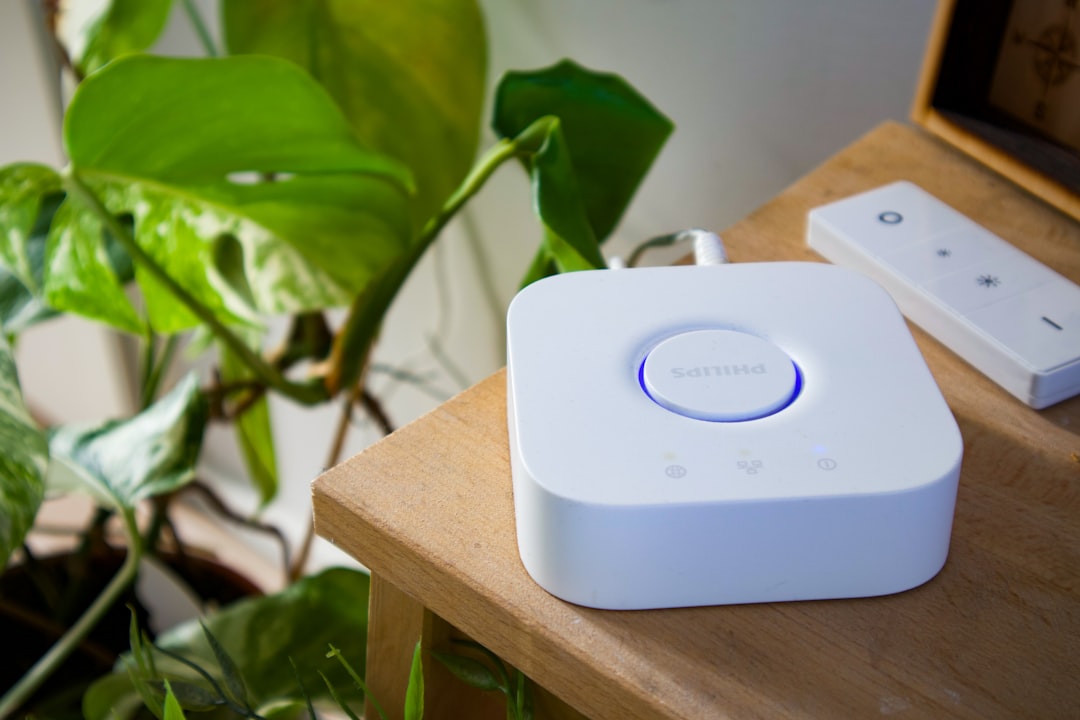
Quick Answer: Philips Hue Bridge sync errors almost always trace back to three root causes — blocked UDP ports (specifically 1900 and 2100), firewall rules eating discovery packets, or a misconfigured DHCP reservation that quietly shifts the Bridge's IP address overnight. Fix the network layer first. The app problems usually follow.
If you've spent any time in the r/Philips_Hue subreddit or plowed through the Hue developer forums, you already know the pattern. Someone posts a screenshot of the "Bridge not found" error, a common frustration similar to when a Cosori Pro II E1 error interrupts your kitchen routine. Twenty replies come in. Half say "did you try restarting it?" The other half go deep into AP isolation settings and IGMP snooping. The original poster disappears. The thread stays open for years, collecting replies from new people hitting the exact same wall.
This isn't a simple device. The Hue Bridge looks like a simple device — a white hockey puck with three ports on the back — but the networking assumptions baked into its firmware are surprisingly rigid, and they were designed for home networks that increasingly don't exist anymore. Mesh routers, VLANs, aggressive IoT isolation, guest network segmentation — all of these have become normal in the last six years, and every single one of them can silently kill Hue Bridge discovery or sync without throwing a meaningful error message.
Let's actually talk about what's happening under the hood.
How the Hue Bridge Actually Discovers Itself on Your Network (and Why It Fails)
The Bridge uses UPnP/SSDP (Simple Service Discovery Protocol) for local discovery. When your phone or hub opens the Hue app and tries to find the Bridge, it sends a UDP multicast packet to 239.255.255.250 on port 1900. The Bridge is supposed to hear that, respond, and announce itself. If anything in your network blocks that multicast — and a lot of things do — the discovery never completes. The app just spins.
Port 1900 is the obvious one people know about. What fewer people realize is that the Bridge also uses port 2100 for its internal sync protocol with light bulbs, and port 80/443 for the REST API that every third-party integration (HomeKit, Home Assistant, SmartThings, Alexa) depends on. Block any one of these, and your symptoms change depending on which piece breaks.
Here's the operational breakdown most forum posts miss:
- Port 1900 (UDP): SSDP multicast discovery. Block this and the app can't find the Bridge at all.
- Port 2100 (UDP): Zigbee coordinator communications, also used in some firmware versions for inter-device sync. Block this and lights respond but scenes won't commit reliably.
- Port 80 (TCP): Local REST API. Block this and third-party integrations die silently.
- Port 443 (TCP outbound): Cloud connectivity for remote access and firmware updates. Block this and you lose remote control and get stuck on old firmware.
- Port 443 (TCP, inbound to meethue.com): OAuth flows for the Hue developer API. Block this and third-party apps lose authorization tokens.
The maddening part: the official Hue error messages don't distinguish between these failures. "Bridge not found" is the same error whether your firewall is eating multicast, your IP changed, or the Bridge firmware update bricked its network stack. You're supposed to figure out which layer broke.
The DHCP Reservation Problem Nobody Talks About Enough
I've seen this scenario more times than I want to count. Someone sets up their Hue Bridge, everything works fine for months. Then one day the lights stop responding to automations. The Hue app still shows the lights. Third-party integrations—Home Assistant, particularly—start throwing "bridge unreachable" errors at 2 AM, which can be just as aggravating as troubleshooting a Home Assistant Green that won't boot or dealing with persistent QuickBooks Online sync failures.
What happened? The router reassigned IPs during a reboot cycle. The Bridge had been sitting at 192.168.1.47 based on a DHCP lease that expired. After the router rebooted, 192.168.1.47 went to something else. The Bridge is now at 192.168.1.89. The Hue app reconnects because it uses cloud-assisted discovery as a fallback. Home Assistant doesn't, because the integration was configured with a hardcoded IP. Now your automations silently fail at 2 AM every time your router reboots.
The workaround is straightforward but requires actually going into your router:
1. Find your Bridge MAC address (labeled on bottom of unit, format: XX:XX:XX:XX:XX:XX)
2. Log into router admin panel
3. Navigate to DHCP Reservations (sometimes called "Static DHCP" or "Address Reservation")
4. Add entry: [Bridge MAC] → [Chosen IP, e.g., 192.168.1.50]
5. Reboot Bridge
6. Confirm IP assignment in router lease table
Choose an IP outside your DHCP pool to avoid conflicts. If your router gives out 192.168.1.100–200, put the Bridge at 192.168.1.50. This is not a "nice to have." For any home with third-party integrations, this is mandatory infrastructure.
AP Isolation: The Silent Killer of Every Local Discovery Protocol
Modern mesh systems — and I've torn apart enough Eero, Google Nest WiFi, Orbi, and Deco units to have strong feelings about this — ship with AP isolation either enabled by default or toggled on by whatever "IoT network" or "smart home device" preset the router manufacturer decided was good security hygiene.
AP isolation means devices on the same network segment can't talk to each other directly. It routes everything through the gateway instead of allowing peer-to-peer lateral communication. From a security standpoint, this is smart. From a Hue Bridge standpoint, this completely breaks SSDP discovery because the multicast packets from your phone never reach the Bridge.
The Hue Bridge is wired (ethernet) by design. Your phone is on WiFi. With AP isolation enabled, the multicast from your phone gets dropped before it reaches the Bridge, because the router sees no reason to bridge that traffic. The Bridge never hears the discovery request.
Check for AP isolation under:
- Eero: Network → Advanced → "Enable AP isolation" toggle
- Google Nest WiFi / Wifi Pro: App → Settings — often hidden, requires factory reset to change
- TP-Link Deco: More → Advanced → Wireless → AP Isolation
- ASUS routers: Wireless → Professional → "Set AP Isolated" per band
- Netgear Orbi: Advanced → Advanced Setup → Wireless Settings
Field note: Google Nest WiFi Pro is genuinely problematic here. There are threads on the Google support forums (going back to late 2022) where users discovered that the device-level isolation toggles weren't actually respecting changes made through the app. Some users reported that the only fix was a factory reset of the mesh nodes after changing isolation settings. This is exactly the kind of thing that makes smart home setups feel held together with duct tape.
IGMP Snooping and Multicast: The Advanced Layer Most Guides Skip
If you're running a managed switch — UniFi, Netgear Prosafe, anything with a web UI that gives you VLAN and multicast controls — you've entered a different level of complexity. IGMP (Internet Group Management Protocol) snooping is a feature that controls how multicast traffic propagates through a switch. When it's misconfigured, multicast traffic either floods every port (bad for performance) or gets silently dropped (bad for UPnP).
The specific issue with Hue Bridge: IGMP snooping on some switches requires an IGMP querier to be present on the network segment. Without a querier, snooping-enabled switches age out their multicast group tables and eventually stop forwarding those multicast packets. The Bridge's SSDP announcements disappear. Discovery breaks.
For UniFi networks specifically, this is a known headache documented in dozens of community.ui.com threads. The fix varies:
Option A: Enable mDNS/Bonjour gateway in UniFi controller
(Networks → [Your Network] → Advanced → Enable multicast DNS)

Option B: Add an IGMP querier IP to the network segment
(Networks → [Your Network] → IGMP Snooping → Querier IP)

Option C: Disable IGMP snooping entirely on the VLAN where the Bridge lives
(Less elegant, but works for simple home setups)
The community consensus on Hacker News threads about UniFi + Hue setups is roughly: "works great until you actually try to do VLANs, then you're in for a weekend." That's not hyperbole. UniFi + Hue + HomeKit across VLANs with proper isolation is legitimately advanced networking that requires understanding traffic flows most residential users have never needed to think about.
Real Field Reports: When Firmware Updates Break the Stack
The Hue Bridge firmware update history is... instructive. The update that shipped in early 2022 (version 1.50.x) introduced a regression where some users on dual-band networks with band steering found that the Bridge's discovery responses started arriving on the wrong interface, causing the Hue app on iOS to intermittently fail to connect even with the correct IP. The issue was reported in the Hue developer forums under a thread titled "1.50.1550080080 - Bridge discovery unreliable on dual-band setups" that accumulated over 60 replies before a hotfix arrived.
The pattern here is consistent: Hue firmware updates don't go through a meaningful beta process visible to end users. They push, and if something breaks, users find out via app reviews and forum posts. There's no rollback mechanism exposed to end users. If an update breaks your setup, your options are:
- Wait for a hotfix (timeline: unknown)
- Factory reset and hope the new firmware is better
- Work around it with static IP + direct API calls
This is an institutional problem. Signify (the Philips lighting spinoff that owns Hue) has been better than some competitors about acknowledging issues, but the firmware release cadence and communication around breaking changes remain opaque.
"nobody documented this properly" — recurring complaint in developer.meethue.com threads about changes to the clip/v2 API behavior after firmware updates, particularly around entertainment area sync and gradient light strip endpoints.
The HomeKit and Home Assistant Conflict Zone
Here's a real operational conflict that emerges at scale: HomeKit uses Bonjour/mDNS for local discovery on port 5353. Home Assistant uses its own discovery mechanisms. The Hue Bridge supports both. Your router may be doing something interesting with mDNS traffic that you don't realize.
When both HomeKit and Home Assistant are actively polling the Bridge API — which happens if you've integrated the Bridge into both platforms — you can hit rate limiting on the Bridge's REST API. The Bridge v1 API has a documented limit of roughly 10 commands per second total across all applications. If your Home Assistant instance is polling state aggressively (common with automations that check bulb state frequently), and HomeKit is doing its own polling cycle, you can saturate the API. The symptom is intermittent command failures: you tell a light to turn off, it doesn't, you try again, it works. Classic race condition behavior.
The fix isn't more bandwidth. It's reducing polling frequency:
# Home Assistant configuration.yaml
# Increase scan interval to reduce API pressure
hue:
  bridges:
    - host: 192.168.1.50
      scan_interval: 10  # default is 5 seconds; try 10-15
This is documented in Home Assistant GitHub issue #47829 and related issues, where maintainers acknowledged the rate limiting interaction with multiple concurrent API consumers.
Counter-Criticism: Is the Hue Bridge Architecture Actually a Problem?
There's a real debate worth having here. Some smart home integrators argue that Hue's proprietary Zigbee coordinator + Bridge architecture is a fundamentally outdated model. Matter/Thread (the new smart home interoperability standard backed by Apple, Google, Amazon, and the Connectivity Standards Alliance) is supposed to eliminate exactly this type of hub-specific discovery complexity by standardizing on mDNS and a common commissioning flow.
The counter-argument from the pro-Hue camp: the Bridge works extraordinarily well within its design parameters. If you run it on a simple flat network with a DHCP reservation and your firewall isn't doing anything exotic, the Bridge is rock-solid. The 99% case works. The problems appear at the edges — VLANs, mesh networks with aggressive isolation, multiple integration platforms, custom firmware routers. These are edge cases from Signify's perspective even if they represent a growing percentage of technically literate users.
There's something to this. The people who hit Hue Bridge sync errors in 2024 are disproportionately the people with UniFi setups, Raspberry Pi-based Home Assistants, multiple hubs, and custom network configurations. The user with a Comcast-supplied router and a Hue app on their phone doesn't hit these problems. The question is whether Signify should optimize for that user's experience (they've been doing this) or start accommodating the growing cohort who treat their home network like a small enterprise (they've been slow here).
The Hue Bridge v2 (the square one) added Thread border router functionality and Matter support, which is Signify's bet on the future. But the actual rollout of Matter for Hue lights has been slow and, frankly, inconsistent. Thread + Matter should eliminate port configuration issues by design. In practice, as of 2024, it still requires the Bridge, still requires the same network basics, and the Matter implementation has its own bug history.
Port Forwarding vs. Local Only: Don't Confuse the Two
One misconception that appears constantly in support threads: people trying to set up port forwarding on their router for the Hue Bridge. This is almost never the right move for home use and can create a security hole.
The Hue Bridge remote access model uses cloud relay — your Bridge connects outbound to Signify's servers over port 443, and remote commands route through that cloud tunnel. You don't need to forward any inbound ports for remote access to work. In fact, exposing the Bridge REST API (port 80) to the internet is actively dangerous because the local API has no brute-force protection on the API key.
If someone on a forum tells you to forward port 80 to your Hue Bridge for remote access, close the tab.
The only legitimate use case for port-related router configuration for Hue is:
- Ensuring outbound 443 is not blocked (relevant in corporate-style firewall setups)
- Allowing inbound 1900 UDP multicast within LAN segments (relevant in segmented networks)
- mDNS proxy/repeater setup for HomeKit across VLANs
Systematic Troubleshooting: The Actual Checklist
When a Bridge sync error hits, here's the order that saves time:
Layer 1: Physical
- Is the Bridge getting DHCP? Check router lease table. Confirm current IP.
- Is the ethernet cable seated? (Sounds stupid. I've fixed three service calls with this.)
- Are the Bridge LEDs indicating normal operation? Solid blue = OK. Alternating = firmware update in progress. Red = no network.
Layer 2: Network
- Is AP isolation enabled on the WiFi the phone is using? Disable it and test.
- Is IGMP snooping misconfigured on any managed switch? Check multicast forwarding.
- Does the Bridge have a DHCP reservation? It should.
Layer 3: Firewall/ACL
- Are UDP 1900 and multicast traffic allowed between the phone subnet and the Bridge subnet?
- Are TCP 80 and 443 outbound allowed from the Bridge?
Layer 4: Integration Conflicts
- Is Home Assistant polling too aggressively? Check scan interval.
- Are multiple platforms simultaneously hitting the REST API? Check Bridge API logs at
http://[bridge-ip]/api/[api-key]/config.
Layer 5: Firmware
- When did the Bridge last update? Recent regression?
- Can you test with a direct HTTP call to rule out app-layer issues?
# Direct API test — replace with your Bridge IP and API key
curl http://192.168.1.50/api/[your-api-key]/lights
# If this returns light data, the Bridge is fine. Problem is in the app

<p class="text-xs text-muted-foreground italic mt-8 border-t pt-4">Bu makale affiliate linkleri içermektedir.</p>