
If your Jura E8 is flashing a "Grinder Blocked" error, or perhaps an Error 8 indicating a jammed brew group, stop jamming the machine with re-starts. You are likely fighting a buildup of coffee oils and moisture, not a mechanical gear failure. Unplug the unit, remove the bean hopper, and vacuum out the residual grounds. If the burrs are seized, you must clear the chute manually before the motor thermal fuse trips permanently.
The Mechanics of Failure: Why the Jura E8 Grinder Jam is Not Just a Bug
In my fifteen years of tearing down automated bean-to-cup systems, I’ve learned that a "Grinder Blocked" notification—much like when a DeLonghi Magnifica S grinder is not working—is rarely about the motor’s death. It is almost always a failure of the environmental control within the grinder chamber. Jura machines, specifically the E8 line, are precision instruments. They operate with tight tolerances—tolerances that are often betrayed by the sheer variability of human coffee habits.
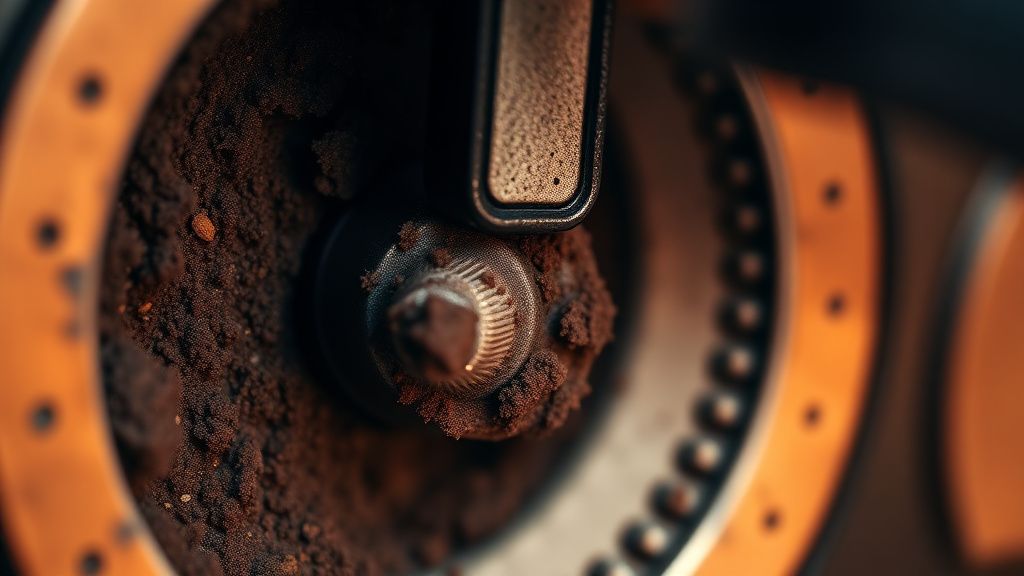
When a user pours dark roast, oily beans into an E8, they are effectively pouring liquid sandpaper and glue into a high-speed mechanism. The oils coat the ceramic or hardened steel burrs, attracting fine dust (the "fines"). Over time, this mixture turns into a paste that hardens like concrete when the machine cools down. When you hit the "Brew" button, the motor experiences a resistance spike. The firmware senses an over-current draw—a standard safety protocol—and shuts down the grinder to prevent a fried control board (PCB).
Navigating the Internal Ecosystem: Understanding the E8’s Safety Architecture
The Jura E8 doesn't have a "smart" enough sensor to know that you're using beans that are too oily; it only knows that the rotor isn't spinning at the expected RPM. When the resistance hits a threshold defined by the factory's firmware, it throws the error. Many users, fueled by caffeine-deprived frustration, attempt to "force" the machine by cycling the power. This is the worst thing you can do. Every failed start sends a surge of electricity through a stalled motor, increasing the likelihood of the thermal fuse blowing. Once that fuse goes, you aren't just cleaning the grinder—you’re soldering a new component onto the power rail.
Real Field Reports: The "Dark Roast" Conundrum
I’ve handled hundreds of these tickets in the workshop. Last month, a customer brought in an E8 that had supposedly "died" after only six months of use. The customer insisted the machine was defective. Upon disassembly, I found the grinder chute packed solid with a crusty, black substance, akin to how clogged spouts can prevent a Gaggia Accademia from pouring. The user had been using "triple-roasted" artisanal beans that left enough residue to simulate a clogged drain pipe.
The industry reality is that Jura doesn't calibrate these grinders for the oily, second-crack beans popular in third-wave coffee shops. They calibrate for consistent, dry, medium-roast beans. When you stray from that, you are entering "void the warranty" territory, even if the warranty doesn't explicitly state it.
Step-by-Step Recovery: Beyond the Factory Reset
If you’re staring at the error message now, do not try to reset the software. The software isn't the problem; the physical blockage is.
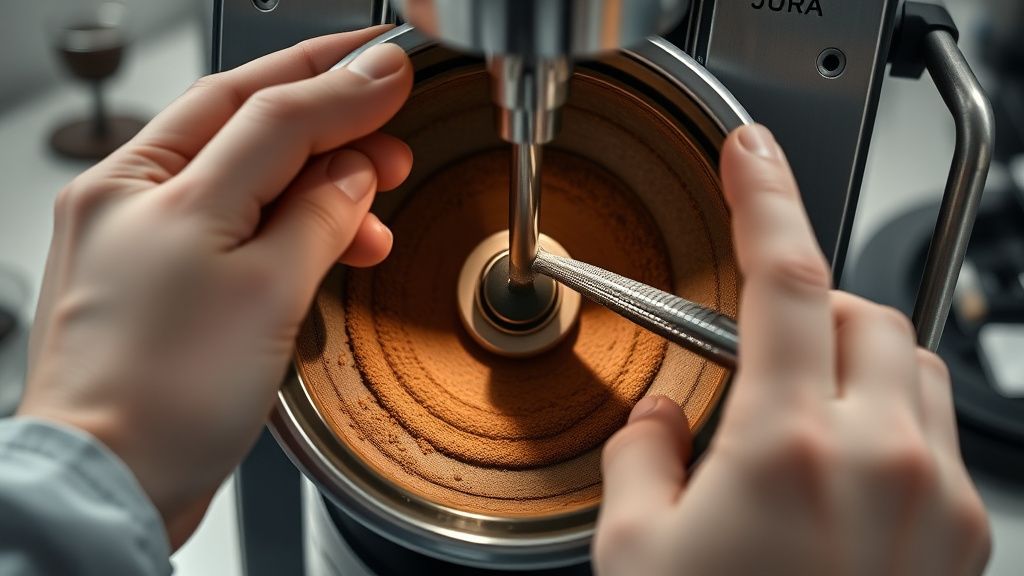
- The Vacuum Protocol: Remove the bean hopper. Vacuum the throat of the grinder until you see the top burr clearly. Do not use water. Water in a grinder is the fastest way to turn your expensive Jura into an expensive paperweight.
- The Manual Adjustment: Some E8 models allow for minor burr adjustments. If yours is accessible, turn the adjustment collar to the coarsest setting. This relieves pressure on the burrs.
- The "Dry Run" Attempt: After clearing the visible debris, turn the machine on. If it attempts to grind, listen for a hollow, high-pitched sound. If you hear a deep, mechanical hum with no sound of beans being crushed, you still have a solid mass at the bottom of the chute.
The Hidden Costs: Why Maintenance Cycles Fail
There is a massive disconnect between marketing material and operational reality. Jura suggests the "Clearyl" filter and periodic cleaning cycles, but those clean the brew unit, not the grinder. The grinder is a separate, largely unmaintained subsystem in the eyes of the casual owner.
Professional operators know that grinders need to be vacuumed out at least once a month. The average home user? They don't do it for two years. By the time they realize the grinder needs attention, the oil has oxidized, hardened, and fused with the plastic housing. This creates a "sticky" environment where the burrs have to exert three times the torque to rotate.
Counter-Criticism: Is the Jura E8 Design Flawed?
There is a vocal segment of the community on subreddits like r/superautomatic that claims the Jura E8 grinder design is inherently flawed. They argue that the housing doesn't provide enough heat dissipation, causing the oils to migrate from the beans into the motor shaft faster than in competing brands.
Is it a flaw? Or is it a trade-off? By keeping the grinder integrated and compact, Jura achieves an incredibly quiet, consistent grind that is difficult to replicate in modular machines. However, that compactness makes it a maintenance nightmare. If you value silence and footprint over serviceability, the E8 is a masterpiece. If you expect a machine you can repair with a screwdriver and a YouTube video in ten minutes, you are going to be disappointed.
Engineering Compromise and the "Right to Repair"
Jura is notoriously protective of its internal components. They don't sell replacement burr sets to the public. You can't just walk into a parts shop and buy a new grinder assembly for the E8. You are steered toward authorized service centers. This creates a secondary market for "reconditioned" parts that are often sourced from broken units. This policy has created a culture of "workaround" engineers—people who buy cheap, broken Jura units on eBay just to strip the grinders out of them.
Long-term Reliability Strategies: How to Prevent the Next Jam
If you manage to clear your current blockage, here is the protocol to keep it from happening again:
- Bean Selection: Look at your beans. If they are shiny, they are oily. If they are oily, they will eventually clog your E8. Mix them 50/50 with a drier, lighter roast if you refuse to give them up.
- The Weekly Vacuum: It takes two minutes. Pull the hopper, set your vacuum to a medium-low setting, and remove the fines that settle at the bottom of the chute.
- Avoid Overloading: Don't fill the hopper to the brim. The weight of a full hopper can sometimes cause the beans to bridge over the grinder opening, leading to inconsistent feeding and potential stalls.
The Myth of the "Self-Cleaning" Grinder
There is a persistent myth that the "cleaning tabs" used by Jura machines also clean the grinder. They do not. They only clean the brew group and the internal plumbing. When you run a cleaning cycle, you are rinsing the path that the coffee takes after it has already been ground. The grinder itself remains a dry, high-friction zone. Do not confuse "brewing cycle cleaning" with "grinder maintenance."
Sıkça Sorulan Sorulan (FAQ)
Is it safe to use a toothpick to dislodge the coffee grounds in my E8?
Avoid metal tools. If you must poke at the obstruction, use a wooden or plastic skewer. A metal tool can scratch the ceramic burrs or, worse, cause a short circuit if you accidentally touch an electrical contact near the motor.
Why does the error return after I've cleaned the chute?
If the error returns immediately, the motor's internal thermal protection might still be active, or there is an accumulation of "fines" deeper in the chute that you haven't reached. Try using a can of compressed air after vacuuming to blow out the fine particulate trapped in the motor housing gaps.
Can I change the coffee bean grind size while the machine is off?
Never adjust the grind size while the machine is idle. The grinder must be running while you adjust the collar. Changing it while it's stopped can cause the burrs to lock together as they try to force the adjustment, which is a leading cause of the "Grinder Blocked" error.
Will changing my coffee beans to a dry roast prevent this permanently?
It significantly reduces the probability, but does not eliminate it. Even dry beans produce "fines"—the ultra-fine dust that occurs during the grinding process. Over hundreds of cycles, these fines will build up in the chute regardless of the bean's oil content.
Is the Jura E8 grinder motor replaceable by a DIY user?
Technically, yes, but it requires significant experience in dismantling the outer casing of the machine, which is held together by specialized oval-head screws. If you are not comfortable with internal electronics and cable management, leave it to a professional.
Why is the Jura service center so expensive?
You aren't just paying for the part; you're paying for the specialized labor required to re-calibrate the grinder after installation. Misalignment of the burrs by even a fraction of a millimeter will result in an inconsistent grind or, inevitably, another jam.
Does the "Grinder Blocked" error mean my motor is burnt out?
Not usually. A burnt-out motor will typically smell like ozone or acrid plastic. If you don't smell anything, the machine is likely just in a safety-lock state because the current draw exceeded the expected range.
How do I know if the burrs are worn out?
You will notice a drastic increase in the time it takes to brew a cup of coffee. The machine will struggle to reach the desired quantity of ground coffee in the brew chamber, often leading to a "Grounds Container Empty" message even when you just emptied it, because the grinder couldn't deliver enough volume.