
The E3 error on an Instant Pot Vortex Plus is, for most users, the exact moment the "set-it-and-forget-it" convenience dream hits the hard wall of planned obsolescence and mechanical fatigue, much like when users encounter an Instant Pot Vortex Plus E1 or E2 error related to the fan motor. In the field, we see this as a classic thermal management failure, often due to issues that might also manifest as an E4 error related to a thermal sensor in a Philips Airfryer. It means the convection fan motor is failing to report its RPM back to the main control board, usually due to a seized bearing, a fried Hall effect sensor, or a loose ribbon cable connection. You are likely staring at a paperweight; the fix requires a full chassis teardown, manual lubrication, or a complete motor assembly swap.
The Operational Anatomy of Air Fryer Convection Systems
When an air fryer goes into its "E3" state, it isn't just a random code; it is a safety trip. The logic board sends a signal to the fan motor to spin; if the motor doesn't provide a return signal or draws too much current (indicative of a mechanical seize), the microcontroller cuts power to the heating element to prevent a fire, a common issue also seen as an E4 error with fan failure and overheating in other air fryers.
From a repair technician's perspective, these units are surprisingly fragile. They are essentially high-wattage heating elements coupled with cheap, high-speed DC motors housed in plastic casings that aren't designed for the thermal expansion cycles they endure. The E3 error is the "check engine" light for an air circulation system that has been choked by carbon buildup or heat-stressed solder joints.
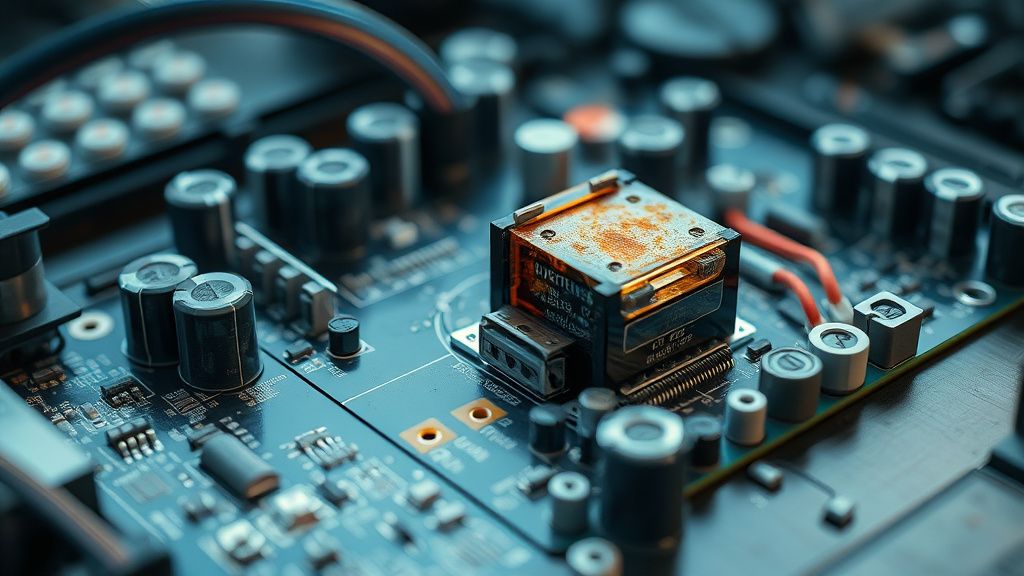
Field Report: The Anatomy of a Motor Seize
I remember a specific case from a Reddit thread on r/InstantPot—a user had been running back-to-back batches of frozen wings. The grease vapor buildup wasn't just on the walls; it had migrated up the drive shaft into the fan motor bearings. Once the unit cooled down, the solidified grease acted like glue. Upon the next startup, the motor stalled, drew an excessive current spike, and—click—the E3 error code triggered the safety latch.
This isn't a "software bug." This is a physical system succumbing to the environment it was designed to operate in. When we tear these down, we don't just see a broken motor; we see a design contradiction where the air intake is positioned too close to the oil-heavy exhaust path.
The Troubleshooting Hierarchy: From Reset to Teardown
Before you grab your screwdriver, we have to rule out the "glitch" category. Firmware in these units is notoriously rudimentary.
- The Hard Power Cycle: Unplug the unit. Leave it unplugged for at least 30 minutes. Some capacitors on the power supply board retain enough charge to keep the error loop alive.
- The Thermal Reset: Ensure the unit hasn't been blocked by proximity to a wall. If the internal thermal fuse didn't pop, the unit might just be complaining about ambient heat buildup in the housing.
- The "Mechanical Thump": It sounds primitive, but a gentle tap on the side of the housing—while the unit is unplugged—can sometimes dislodge a fan blade that has snagged on carbonized debris.
If these don't work, you are moving into the "dirty" work of a deep hardware teardown.
Internal Component Analysis and Circuit Board Vulnerabilities
The E3 error usually points to a disconnect in the feedback loop. Inside the casing, there is a small PCB dedicated to monitoring the fan. We often find that the wiring harness connecting this board to the main processor becomes brittle due to the extreme heat flux in the upper chamber.
- The Ribbon Cable Trap: These cables are thin, poorly shielded, and prone to oxidation.
- The Hall Effect Sensor: This is the most common point of failure. If the magnet on the fan shaft is cracked or the sensor itself has suffered from heat fatigue, the motor could be spinning perfectly fine, but the board will still report an E3.
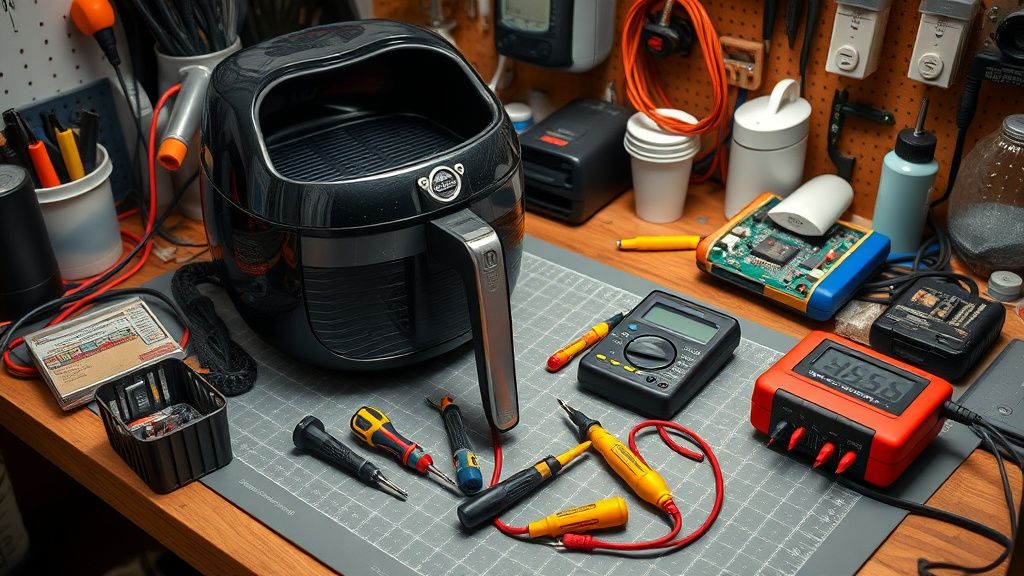
The "Workaround" Culture: Why Official Repairs Are Often Illogical
If you call the manufacturer, you’ll be offered a "replacement unit" if you're under warranty. If you’re out of warranty, you are on your own. This has birthed a massive community of "DIY hackers" on forums like GitHub and various appliance repair Discord channels.
The industry consensus? They aren't built to be serviced. The screws are often non-standard (security Torx), and the plastic clips holding the outer shell together are designed to snap off if you apply too much pressure. This is a design choice, not a mistake. It forces a "rip-and-replace" cycle, which contributes to the mounting electronic waste crisis that many repair professionals find ethically troubling.
Debating the Reliability of Vortex Plus Architecture
There is a massive debate among technicians regarding the "Smart" features of these appliances. Many argue that adding a digital display and an unnecessary UI layer to a device that is essentially a fan and a heating element is an exercise in engineering hubris.
- Pro-Feature Argument: The sensor suite allows for better energy management and prevents the device from burning your house down.
- Anti-Feature Argument: A simple analog dial would never throw an E3 error. It would just break, and you'd know exactly which part to replace without needing to consult a service manual that doesn't exist.
The truth lies in the middle: the E3 error is a symptom of a consumer product trying to mimic industrial-grade performance on a budget consumer hardware platform.
A Step-By-Step Guide to Replacing the Fan Assembly
If you are determined to fix your unit, you need a T20 Torx driver, a plastic pry tool, and a donor motor (or a new OEM part).
- Safety First: If you touch the capacitors on the main power board without discharging them, you will get a nasty shock. Use a discharge tool.
- Accessing the Ceiling: You must remove the top cover. There are hidden screws under the rubber feet. Use your pry tool cautiously; the plastic is likely heat-brittled and will crack if you force it.
- The Wiring Audit: Check the red/black/white leads for signs of charring. If you see brown spots on the insulation, you have a short.
- The Motor Swap: Remove the central fan housing. If you can spin the fan freely by hand after removal, the motor is seized. If it doesn't spin, the internal bearings are gone.
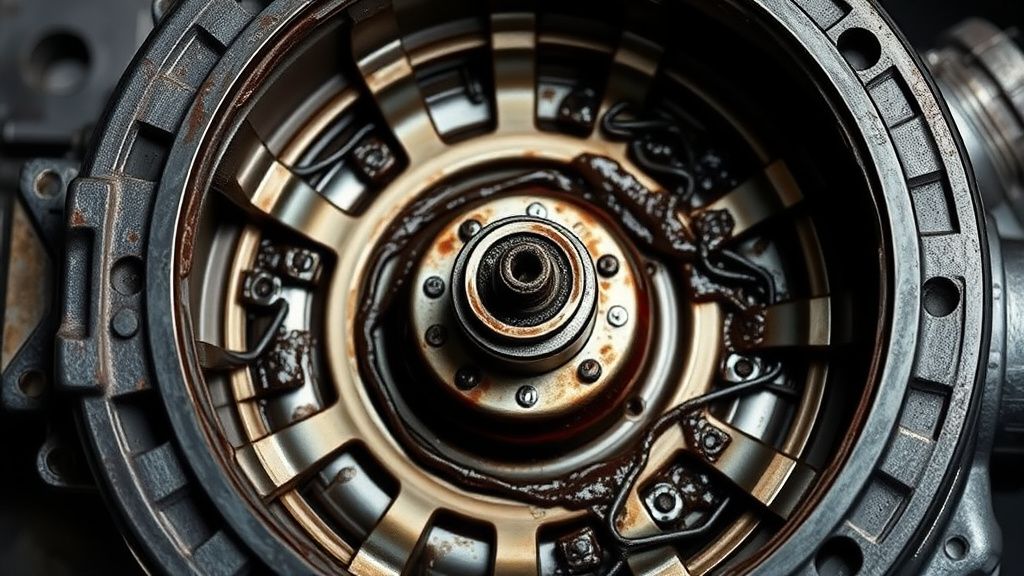
The Role of Lubrication and Maintenance
Can you prevent the E3 error? Only partially. High-speed, high-heat environments are hostile to lubrication. Using a high-temperature silicone-based lubricant on the fan shaft before it seizes can extend the life of the unit, but most users don't have the technical inclination to strip their air fryer down every six months for "servicing."
Economic and Institutional Realities
Why are these machines so prone to failure? It comes down to cost-cutting. The motors used in most sub-$200 air fryers are generic components sourced from the cheapest possible supplier. They are rated for X hours of operation, and they rarely exceed those hours by any significant margin. When an entire industry is racing to the bottom on price, the fan motor—the only moving part—is the first thing to be downgraded to a cheaper alloy or a less robust plastic.
FAQ
Why does my Instant Pot Vortex Plus show E3 right after the preheat cycle?
Is the E3 error a permanent failure?
Can I just bypass the fan sensor?
Are there any software resets that work for E3?
Where can I find replacement parts for the fan motor?
Final Reflections on the "Right to Repair"
The E3 error is a microcosm of the modern consumer electronics landscape. We are buying highly capable devices that are "closed systems." When they break, the path of least resistance is to toss them in a bin and buy a new one, which is exactly what the manufacturers prefer. As a technician, I see the waste every day. Every time I pull a unit apart to fix an E3, I see a perfectly good heating element and a functional exterior shell, all destined for a landfill because a $10 motor failed and the company made it impossible to swap it without a engineering degree and a set of custom tools.
If you decide to fix your unit, do it not just to save money, but as an act of defiance against a disposable economy. Just be careful with those capacitors—they bite harder than the repair itself.