
If your Ninja Foodi Max Dual Zone is flashing a fan-related error code—typically manifesting as an "E01" error, "E02," or an unresponsive convection motor—you aren't looking at a simple software glitch. You are looking at a mechanical failure in a high-heat, high-vibration environment. The fix usually involves inspecting the thermal fuse, clearing air intake debris, or replacing the cooling fan assembly. It is not for the faint of heart.
The modern kitchen has become a graveyard of over-engineered appliances. Ten years ago, if your oven stopped working, you checked the heating element. Today, if your Ninja Foodi Max throws a fan error, you are dealing with a dual-zone logic board, multiple NTC thermistors, and a proprietary firmware stack that treats airflow resistance as a catastrophic safety event. I’ve spent the better part of a decade pulling these apart on my workbench, and the reality is that the "Fan Error" is rarely just a bad fan. It’s a symptom of a machine fighting its own design limitations.
The Anatomy of Airflow Failure and Convection Motor Degradation
When the sensors in your Ninja Foodi detect that the fan isn't hitting a specific RPM within a set time window, the system kills the power to the heating elements. This is a safety feature, not a bug. However, the implementation is notoriously aggressive.
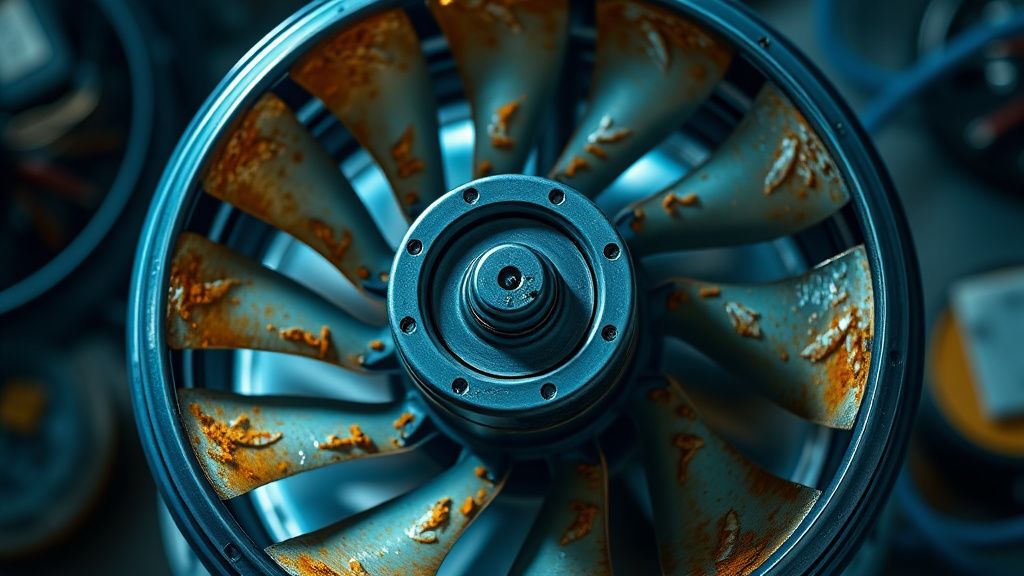
The primary cause for the "Fan Error" in the Dual Zone series is thermal paste migration or bearing seize in the convection motor. Unlike a standard oven, the convection fan here is located in a high-temperature zone that is constantly subjected to vaporized oils and microscopic food particulates. Over time, these particulates find their way into the motor shaft, increasing friction.
Why Your Thermal Overload Switch is Tripping
The system uses a thermal overload switch to prevent the unit from melting its internal plastic housing. If you notice the fan error happens primarily when running both zones on "Max Crisp" or "Dehydrate," the issue isn't the fan failing; it’s the airflow being restricted. Users on Reddit’s r/NinjaFoodi constantly report that using oversized parchment paper liners acts like a shroud, forcing the heat back into the electronics bay. The logic board senses the thermal runaway and shuts the fan down to prevent a fire.
The Hidden Costs of Proprietary Firmware Updates
There is a persistent theory in repair circles that later firmware revisions changed the tolerance levels for the motor’s back-EMF feedback. When the motor hits a certain age, its resistance changes. If the firmware is too "smart," it interprets this natural aging as a mechanical fault, effectively bricking the unit. We see this in other smart home appliances, but in a kitchen appliance, it feels like planned obsolescence.
Real Field Reports: The "Workaround" Culture
If you visit the forums or look at GitHub repositories dedicated to home appliance repair, you’ll find a cottage industry of "workarounds." Many users have discovered that simply blowing compressed air into the intake vents during a cold cycle can sometimes "jumpstart" a sluggish fan.
However, this is a stop-gap. In one case study from a user on a prominent DIY forum, the "compressed air fix" worked for three weeks until the motor mount physically cracked due to heat cycles. The material choice—often high-heat-resistant plastic that eventually becomes brittle—is the system's true Achilleas' heel.
- The "Grease-Trap" Effect: In units used in households that cook high-fat meats (like chicken wings or bacon) without regular deep cleaning, the grease vapor condensates on the internal circuitry. This creates a conductive path that can trick the control board into thinking the motor is drawing too much current (Over-Current Protection).
- The Component Quality Debate: There is an ongoing debate among repair technicians regarding the brand of micro-motors used in the Ninja Foodi line. Some argue that the MT-series motors are under-specced for the weight of the steel fan impellers, leading to premature bearing failure.
Identifying the Sensor Disconnect: NTC Thermistor Issues
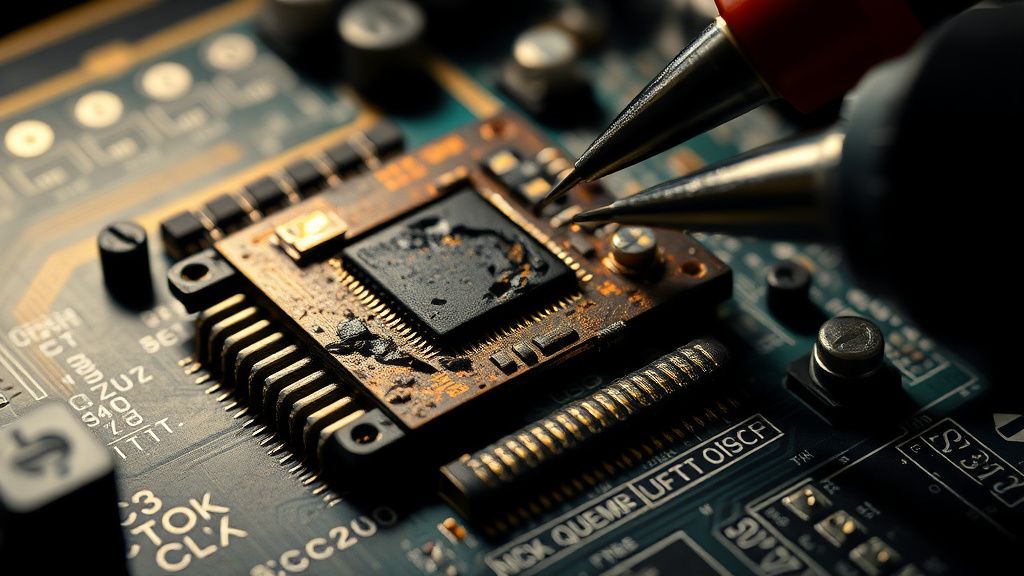
If you’ve verified that your fan spins freely when pushed by hand while the unit is unplugged, your problem is likely electrical. The unit relies on NTC (Negative Temperature Coefficient) thermistors to monitor both the chamber temperature and the exhaust temperature. If one of these sensors drifts out of calibration, the unit will enter a "failsafe" mode, shutting down the fan to prevent what it perceives as an overheat.
Troubleshooting the Ribbon Cable
The ribbon cable connecting the control panel to the base is a common failure point. I’ve seen dozens of units where the "Fan Error" was triggered simply because the ribbon cable had loosened from its header due to the constant vibrations of the convection motor. It’s not a mechanical error at all; it’s a connection error that the system is too poorly programmed to diagnose correctly.
The Economics of Repair vs. Replacement
When an air fryer goes down, the manufacturer’s support desk typically offers a "replace, don't repair" policy. This isn't just about customer service; it’s about liability. Opening a sealed, high-wattage appliance carries inherent risks that most companies aren't willing to have a consumer assume.
However, from an environmental perspective, this is a disaster. Most "fan errors" can be fixed with a $15 motor and a T20 Torx screwdriver. But the industry forces a $200 replacement cycle. The adoption friction here is high—people don't want to fix things, they want them to "just work." When they don't, the internet discourse turns into a cycle of brand bashing, which obscures the fact that these machines are essentially compact, high-powered convection ovens operating in environments they were never truly designed to survive long-term.
Steps for the DIY Technician
If you are determined to fix your Ninja Foodi Max, follow these steps with the unit unplugged for at least four hours to allow the high-voltage capacitors on the board to discharge.
- Check for Obstructions: Before tearing the shell off, inspect the rear exhaust vents. If you've been using the unit against a wall, the backpressure might have cooked the sensor.
- The Manual Spin Test: Unplug the unit. Reach into the basket and gently turn the fan blades. They should spin with a smooth, consistent resistance. If they "stick" or grind, your bearings are gone.
- The Shell Extraction: This is where most people quit. The Ninja Foodi uses a combination of security Torx screws and plastic friction clips. You will break a clip. Accept this now.
- PCB Inspection: Look for "fried" components near the motor header. If the board is discolored, the motor shorted and took the triac or the control chip with it. At this point, the unit is usually junk unless you are proficient at SMD soldering.
The Philosophy of "Right to Repair" in Kitchen Tech
The frustration users feel when they see an E01 code is justified. We are seeing a move toward "locked" hardware ecosystems where the appliance is smarter than the user, yet lacks the diagnostic reporting to tell the user what is actually wrong. A "Fan Error" is a lazy error code. It tells you nothing about why the fan failed. Was it voltage? Was it heat? Was it a disconnected wire?
We need better transparency in these UI/UX designs. A true repair-friendly system would output an error log code (e.g., "E01: RPM < 500 @ 200C") rather than a generic alphanumeric label.
FAQ
Is it safe to continue using the air fryer if the fan error code disappears after a restart?
Why does my Ninja Foodi show a fan error only when the basket is loaded?
Can I replace the fan motor with a generic part from an electronics hobby shop?
Is the "Fan Error" related to the quality of the non-stick coating?
Why don't manufacturers provide detailed service manuals for these units?
The reality of these systems is that they are fragile ecosystems. They rely on constant, clean airflow to keep the electronics from cooking themselves. When that balance is disrupted by grease, debris, or simple motor fatigue, the machine enters a state of panic. Don't be surprised when your $200 air fryer decides it has had enough; just be prepared to either dive into the technical mess of fixing it or accept that in today's market, these are effectively disposable goods.