
The "red light of death" on a Nespresso Vertuo Next is not just a hardware warning; it is a manifestation of a fundamental tension between high-design aesthetics and the brutal reality of thermal-fluid engineering. When that indicator starts blinking—usually in a chaotic, semi-rhythmic pulse—it is the machine’s way of saying it has lost the plot. Whether it’s a sensor timeout, a descaling lock, or a firmware-induced panic attack, the result is the same: you have no coffee, and you are staring at a piece of expensive, non-functional countertop art.
The Anatomy of the Error: Why the Vertuo Next Fails
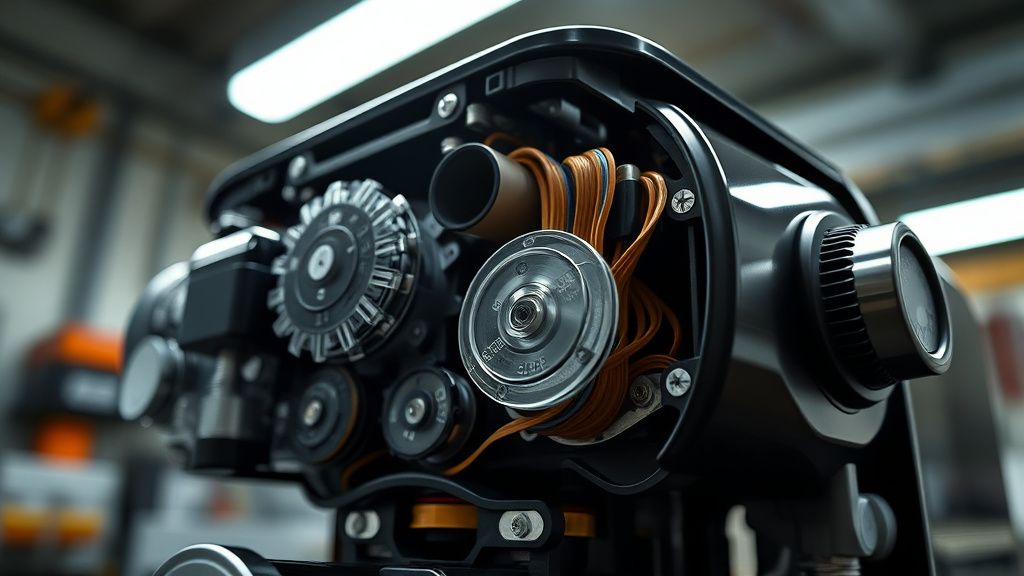
The Vertuo Next is, internally, a masterpiece of mass-market mechanical compromise. Unlike the older, tank-like Original Line machines, the Next was engineered to be thinner, lighter, and more integrated into the "smart home" ecosystem. This meant shifting from robust metal actuators to high-density plastics and complex optical sensors that track barcode reading—the "Centrifusion" technology—in real-time.
When the light blinks, it usually indicates that the machine’s internal logic controller (PLC) has hit a feedback loop it cannot resolve. The primary culprits are usually the NTC thermistor sensing an erratic temperature, the optical sensor failing to read the capsule rim, or the flow meter reporting zero water movement despite the pump’s best efforts.
Step 1: The Forced Reset (Clearing the RAM)
Before you start tearing screws out, perform a hard reset. This isn't just "turning it off and on again"; it’s a factory-state handshake.
- Leave the machine plugged in but open the head.
- Press the button 5 times in quick succession (within 2 seconds).
- The light will blink orange/yellow to confirm the reset command.
- Close the head and wait for a solid white light.
If this doesn't work, the logic board is likely stuck in a "protect" state because the sensor threshold is permanently exceeded.
Step 2: The Optical Sensor and Barcode Reader Calibration
The "heart" of the Vertuo system is the barcode scanner. If the machine cannot verify the coffee blend, it will refuse to pump, triggering the error light. Dust accumulation on the laser lens is a common failure point.
- The Field Fix: Take a lint-free cloth and a drop of white vinegar or specialized cleaning solution. Clean the circular glass lens located inside the capsule holder.
- The Reality: If you’ve used dark roast pods that tend to leave oily residue, that residue vaporizes and coats the lens during the brewing cycle. Over 6 months, this creates a translucent film that renders the barcode illegible to the machine.
Step 3: Flow Meter and Airlock Clearing
The Vertuo Next is notorious for airlocks. If the machine hasn't been used in a week, the air pocket in the line makes the flow meter think it's running dry.
- The Workaround: If you hear the pump whining but the light stays red, try "priming" the line. Tilt the machine slightly while pressing the button, or force a descaling cycle even if the light isn't requesting one.

Step 4: Descaling: The Hidden "Software" Requirement
Nespresso's software is programmed to eventually disable functionality unless a descaling cycle is performed. This is a classic planned obsolescence trigger that users confuse with a mechanical failure.
- The Contradiction: Many users complain that the machine refuses to enter descaling mode, a common issue similar to when a Philips LatteGo gets stuck on a persistent Calc-Clean loop. This happens because the machine enters a "Critical Error" mode first. You must perform the Hard Reset (Step 1) before you can enter the Descaling Mode (hold button for 7 seconds).
Step 5: The "Head-Lock" Actuator Failure
This is the most frustrating failure point. The Vertuo Next uses a motorized locking mechanism for the brew head. If the micro-switch inside the locking lever isn't triggered, the machine refuses to initiate the brewing process.
- Engineering Compromise: To keep costs down, the locking motor uses a plastic worm gear. With thermal expansion from the heater, this gear often slips. If you hear a "grinding" noise when closing the lid, the blinking red light is a symptom of a mechanical jam, not a flow issue.
Real Field Reports: What the Community Says
Looking at the Reddit r/Nespresso threads and various FixIt forums, the consensus is grim. One user noted: "The machine is a dream when it works, but I’ve gone through three units in two years. Each time, it’s the red light, and the service center just sends a refurbished unit that shares the same design flaw."
The operational reality here is fragmentation. Nespresso, under pressure from corporate parent Nestlé to keep the "Vertuo" ecosystem closed, has made the machines increasingly difficult to repair by the end-user. The proprietary screws (torx-security) and the lack of a published service manual force users into a support nightmare.
Counter-Criticism: Why Modern Coffee Appliances are Becoming "Disposables"
Critics in the tech space—often seen on Hacker News—argue that the Vertuo Next represents the "IoT-ification of garbage." By integrating sensors that can brick a simple appliance based on a software check, the manufacturer has effectively turned a physical good into a leased service.
When you see a blinking red light, you are experiencing the asymmetry of power. You paid for the machine, but the manufacturer maintains the ability to decide when that machine is "unhealthy."
How do I know if my machine is truly dead or just needs a reset?
If the light blinks white, it’s usually an operational issue (water, capsule, heat). If the light blinks red or a mix of red/orange, you are looking at a system error. If you perform a hard reset and the light pattern does not change to a steady state, the internal motherboard has likely suffered a voltage spike or a hardware-level sensor failure that exceeds the user-repair threshold.
Is the blinking red light related to the "leakage" issue common in Vertuo Next?
Yes, they are often linked. Leakage occurs at the head seal. That fluid eventually drips into the housing of the motor and the circuit board. Once water contacts the main logic board, it triggers a short-circuit, which the machine perceives as an "error." If you see water pooling under your machine, the red light is not a software problem; it is the death rattle of the main board.
Can I bypass the barcode reader to use third-party pods?
The Vertuo system is a closed-loop system. The barcode is not just for blend recognition; it is a digital handshake between the pod and the pump. While there have been attempts at "foil stickers" to trick the sensor, they rarely work long-term because the flow meter also cross-references the expected water volume for that specific barcode.
Why does the machine ignore my commands after I update the app?
The Vertuo Next connects via Bluetooth to the Nespresso app. In several documented instances (visible in App Store review cycles), a firmware "improvement" intended to optimize water temperature ended up making the startup sequence hypersensitive to voltage fluctuations. If your home grid has "noisy" electricity, the machine will report a power error and refuse to start.
Is it worth repairing, or should I replace it?
From a technical standpoint, the Vertuo Next is designed to be replaced, not repaired. The labor cost to open the chassis, diagnose the specific faulty sensor, and source the proprietary component usually exceeds the cost of a "refurbished" replacement unit offered under warranty. If your machine is out of warranty, you are better off salvaging the parts or pivoting to a more reliable, manual machine.
The Final Verdict: Maintenance vs. Reality
To keep your Vertuo Next running, you must stop treating it like a standard kitchen appliance. It is a computer that happens to boil water. The "maintenance" required involves monthly descaling (even if it's not prompting you), wiping the barcode lens every 20-30 cycles, and ensuring the machine is unplugged during electrical storms to prevent logic board fry-outs.
The irony of the situation is that the more "smart" features Nespresso adds to the Vertuo line—connectivity, precision brewing, auto-recognition—the more points of failure they introduce. Every sensor is a point of breakage; every software check is a potential lockout. When the light blinks red, it’s not just a request for service; it’s a reminder that in the world of modern appliances, the user is the customer, but the manufacturer is the gatekeeper.