If your Breville Oracle Touch is cold, you are likely staring at a $2,500 paperweight. Start by checking the thermal fuse and the triac on the PCB. Often, a simple descale or a reset of the thermal safety switch hidden near the steam boiler fixes the issue without needing to replace the expensive dual-boiler assembly.
The Breville Oracle Touch (BES990) is a masterclass in "aspirational engineering." It promises the convenience of a super-automatic with the soul of a manual espresso machine, but underneath the brushed stainless steel chassis lies a fragile web of PID controllers, solenoid valves, and proprietary sensors that hate hard water. When the heating element stops pulling current, you aren’t just dealing with a "broken heater"; you are dealing with a logic board that has likely detected a catastrophic fault—or a mechanical safety device that has tripped to prevent your kitchen from becoming a pressurized bomb.
The Anatomy of the Breville Dual Boiler Heating Failure
In my 15 years of bench work, the "no heat" complaint on the Oracle Touch usually boils down to a failure in one of three areas: the NTC thermistor, a thermal cutout (TCO), or the solid-state relay (SSR) on the PCB.
The machine uses two separate stainless steel boilers: the steam boiler and the brew boiler. If only one is failing, you have a specific component failure. If both are cold, you are looking at a power delivery issue or a total system lockout caused by the logic board failing to initialize the heating phase.
Understanding Thermal Cutouts and the 'Reset' Protocol
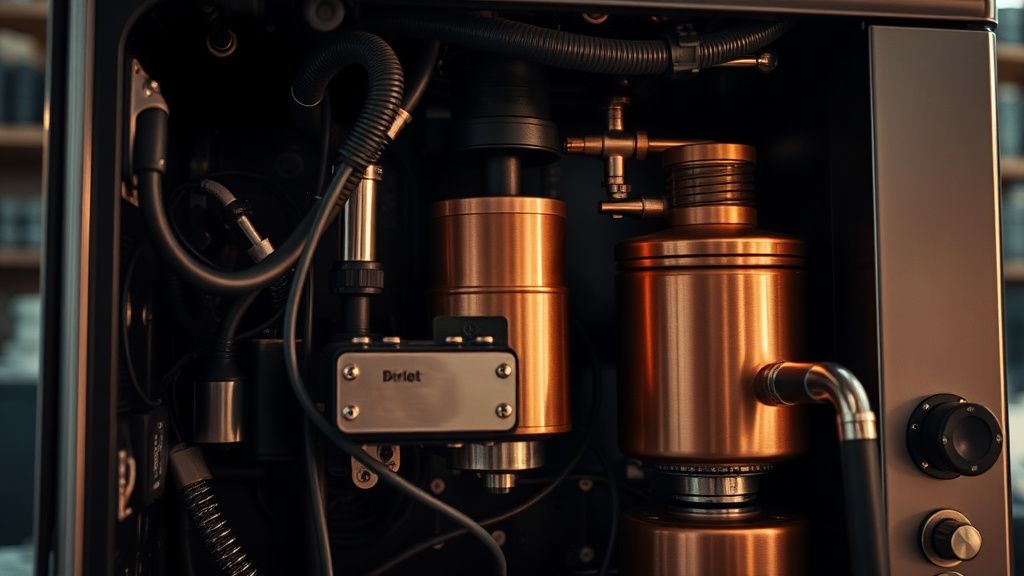
The most frequent culprit is the thermal safety switch (TCO). This is a physical, bimetallic disk that cuts power if the boiler exceeds its temperature threshold. Here is the operational reality: sometimes these switches get "sticky" or trip due to a momentary spike in voltage or scale buildup.
To access it, you have to strip the machine down. You’ll need a T10 and T20 Torx driver. Don't use a standard screwdriver; you will strip the fasteners, and Breville’s proprietary screw heads are a nightmare to source replacements for once ruined. Once the side panels are off, look for the small button on the side of the boiler assembly. If you hear a soft "click," you’ve reset the TCO. If the machine heats up for a day and then stops again, you aren't fixing the symptom; you are ignoring a calcified boiler that is overheating because the water isn't circulating properly.
Real Field Report: The Case of the 'Ghost' Scale
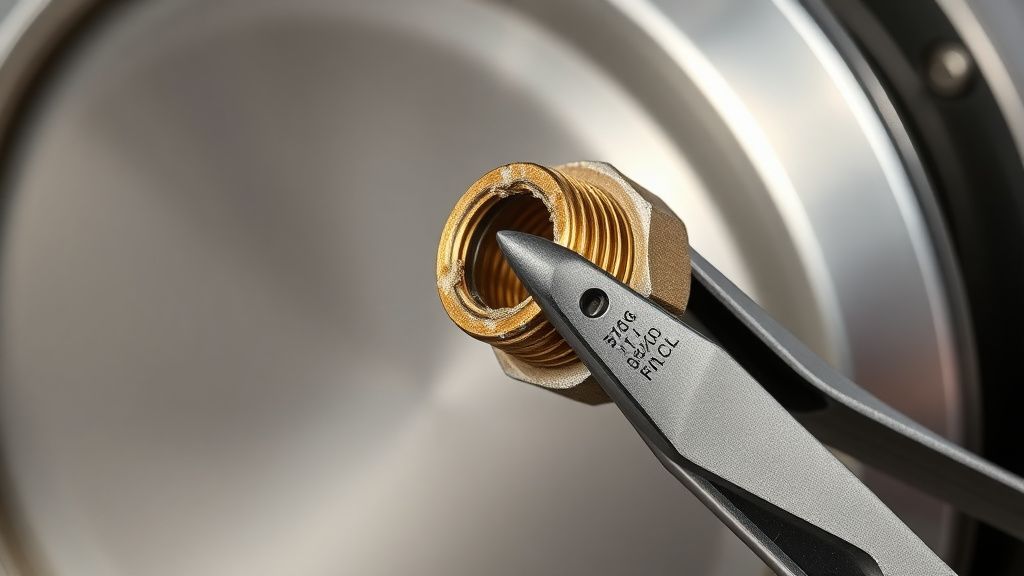
I once worked on a unit that had been serviced twice under warranty. The user swore the machine was "clean," but when I pulled the steam boiler, I found a calcification layer so thick it looked like limestone stalactites inside the inlet port.
The NTC sensor was reporting a "Ready" state to the software, but the heating element was physically insulated by a layer of scale. The PID controller was essentially trying to heat a block of mineral deposits rather than water. The lesson here? If you aren't using distilled water mixed with Third Wave Water minerals, or at least a high-quality BWT filter, the Oracle Touch will eventually kill itself. The software is too smart for its own good—it trusts the sensors, and when the sensors are coated in calcium, the PID loop runs wildly, leading to rapid relay failure.
PCB Failure: The Silent Killer of Modern Appliances
When the triac on the main PCB blows, it’s usually because the solenoid valve associated with the boiler has shorted. This is a common "cascading failure." A leaking O-ring inside the solenoid drips water onto the electrical connectors below. The resulting short circuit sends a surge back to the logic board, frying the triac that modulates the heating element.
This is where the DIY crowd gets stuck. You can test the triac with a multimeter, but soldering a replacement onto a multilayered, surface-mount PCB is not a hobbyist task. If you don't have a high-quality reflow station, don't touch it. I’ve seen boards ruined by "fix-it-yourselfers" who used 40-watt soldering irons meant for plumbing projects.
The Controversy of Proprietary Software and 'Locked' Systems
There is a massive debate on forums like Home-Barista and the r/espresso subreddit regarding Breville’s "Service Mode." If you look at the internal logs of an Oracle Touch, you will see a history of "Heater Timeout" errors.
The industry reality is that Breville designs these machines for a 3-to-5-year lifecycle. When the heaters fail, the labor cost for a certified technician to perform a teardown, scale-clearing, and component replacement often nears 60-70% of the cost of a new unit. This creates a market pressure where users are forced to abandon perfectly good chassis for a newer model. It’s a systemic, built-in obsolescence that masks itself as "advanced thermal management."
Step-by-Step Diagnostic Hierarchy
If your machine isn't heating, do not start by buying parts. Follow this systematic approach to isolate the fault:
- Check the Voltage: Verify the wall outlet is actually delivering power. It sounds stupid, but GFCI outlets often trip when a machine with this much draw (1800W) kicks in.
- Hard Reset: Unplug the machine for 24 hours. Let the capacitors on the main board bleed out. Occasionally, the machine’s logic gets stuck in a "safety lock" loop.
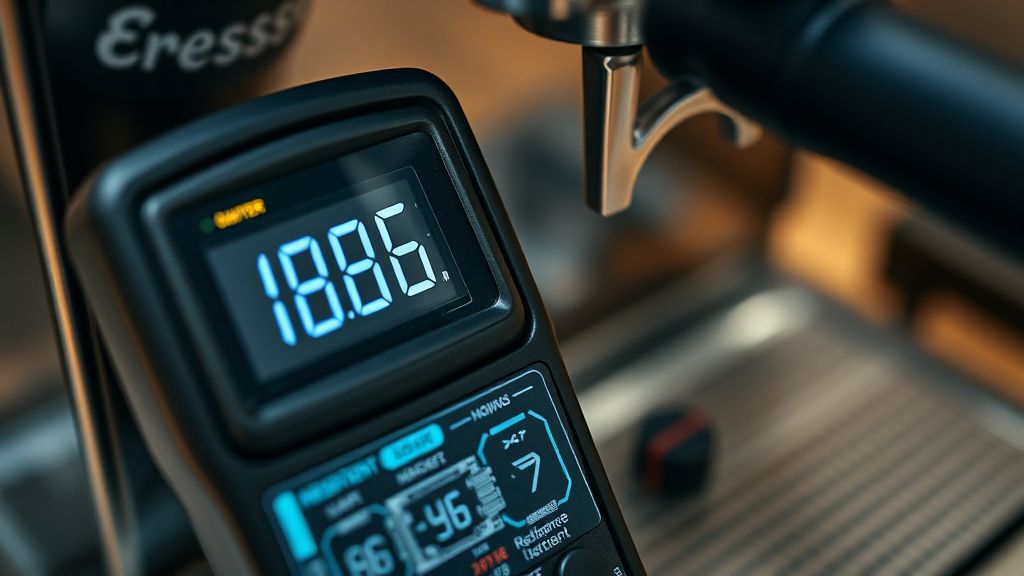
- Resistance Testing: With the machine unplugged, use a multimeter on the pins of the boiler heating element. You should see a resistance in the range of 10-20 ohms for a 120V model (higher for 220V). If you see "OL" (Open Loop), the heating element is dead. It is a sealed unit; you must replace the whole boiler.
- TCO Inspection: Use a continuity tester on the thermal fuse. If the circuit is open, the fuse is blown.
- Relay Click Test: Turn the machine on in a quiet room. You should hear a distinct click from the PCB shortly after power-on. That is the relay engaging the heater. No click? The logic board is telling the relay not to fire.
The Failure of 'Ease of Use'
The irony of the Oracle Touch is that it claims to offer a "barista-quality" experience with zero friction. Yet, the moment the internal pressure or temperature sensors drift out of tolerance, the machine becomes a black box of frustration. Users are given a touchscreen interface that tells them nothing about why the machine isn't heating—only that it is "heating" forever or simply reporting an error code that isn't in the manual.
When I talk to my peers in the industry, the consensus is that Breville has done a poor job of documenting service codes for the end-user. By obscuring the error logs, they effectively gatekeep the repair process. If you want to dive deeper into how to bypass these errors, you’ll spend more time on Chinese parts suppliers and obscure GitHub repositories than actually making coffee.
Maintenance as an Operational Reality
If you manage to fix your boiler, don't fall into the trap of thinking it’s invincible. The Oracle Touch is a complex hydraulic system. Every time you pull a shot, you are cycling heat, pressure, and moisture. If you are not performing the "Clean Me" cycle with the appropriate tablets, you are accelerating the buildup of scale that acts as a thermal insulator.
For the heavy users: the vibration pumps in these machines are also high-failure items. If you hear a change in pitch (from a deep hum to a high-pitched rattle), that pump is working harder to push water through a clogged boiler. Listen to your machine. It’s talking to you long before the heating element gives up.
Why does my Oracle Touch display a "Heating" message indefinitely?
This usually indicates that the machine’s PID controller is not seeing a temperature increase within a set time window. It’s likely a blown thermal fuse, a failed heating element, or a loose connection to the NTC sensor. The machine stays in a "safety loop" because it refuses to heat further if it suspects the sensor is faulty.
Can I replace just the heating element on the boiler?
No. Breville uses a bespoke dual-boiler assembly where the heating element is brazed directly into the boiler casing. You must replace the entire boiler unit. It is an expensive part, and you will need to transfer the solenoids, sensors, and fittings from the old boiler to the new one.
Is there a workaround for the 'Error 01' code?
Error 01 is generally a communication fault between the UI board and the main control board. Often, it isn't related to the heater itself, but rather a corrupted firmware state or a loose ribbon cable. Try a factory reset through the "Advanced Settings" menu, but back up your custom drink profiles first, as they will be wiped.
Why is my steam boiler failing more often than the brew boiler?
The steam boiler operates at higher temperatures and pressure, which accelerates scale precipitation significantly. The minerals in your water bond to the metal faster at higher temps. If your steam power is weak, that boiler is likely already partially choked with scale.
Should I use vinegar to descale my Oracle Touch?
Absolutely not. Vinegar is too acidic and can damage the internal seals and the chrome-plated components within the solenoid valves. Use a dedicated citric acid-based descaling solution or, better yet, follow the manufacturer's official maintenance schedule with their proprietary powder.
The "messy reality" of the Breville Oracle Touch is that it is a high-performance machine built with consumer-grade reliability metrics. It is designed to look perfect on a countertop, but it is fundamentally a high-maintenance piece of laboratory equipment. If you approach it with the mindset of a tinkerer—expecting to have to open the hood, inspect the connections, and clean the sensors—it can last a lifetime. If you expect a "plug-and-play" appliance that never needs an intervention, you will eventually find yourself with a cold boiler and a very expensive piece of kitchen decor.
When you get to the point of replacing the boiler, take photos. Lots of them. The cable routing in the Oracle Touch is notoriously tight, and there are several ground wires that look like they could go anywhere, but will cause a chassis-short if they aren't returned to their original anchor point. Respect the machine, keep it clean, and keep your tools handy. That is the only real way to keep an Oracle Touch alive.