
The "Error: Grinder Too Fine" message on a Jura Z10 is essentially the machine’s way of admitting it has hit a brick wall. It’s not just a sensor reading; it’s a collision between Jura’s obsession with high-pressure extraction and the reality of mechanical wear. You’ve likely reached this point because the burr assembly is clogged, the motor torque is peaking, or—more commonly—you’ve been using oily, dark-roast beans that have turned your grinding chamber into a sticky, carbonized graveyard.
Understanding the Pulse of the P.E.P. (Pulse Extraction Process) and Grinder Health
When you see this error, your Z10 is protecting its own core. The P.E.P. system is designed to force water through coffee at very specific timing, but if the resistance at the brew unit exceeds a factory-set threshold—detected by the hall effect sensor on the grinder motor—the firmware throws a hard halt. It’s a safety protocol to prevent the motor from burning out or the gear train from stripping.
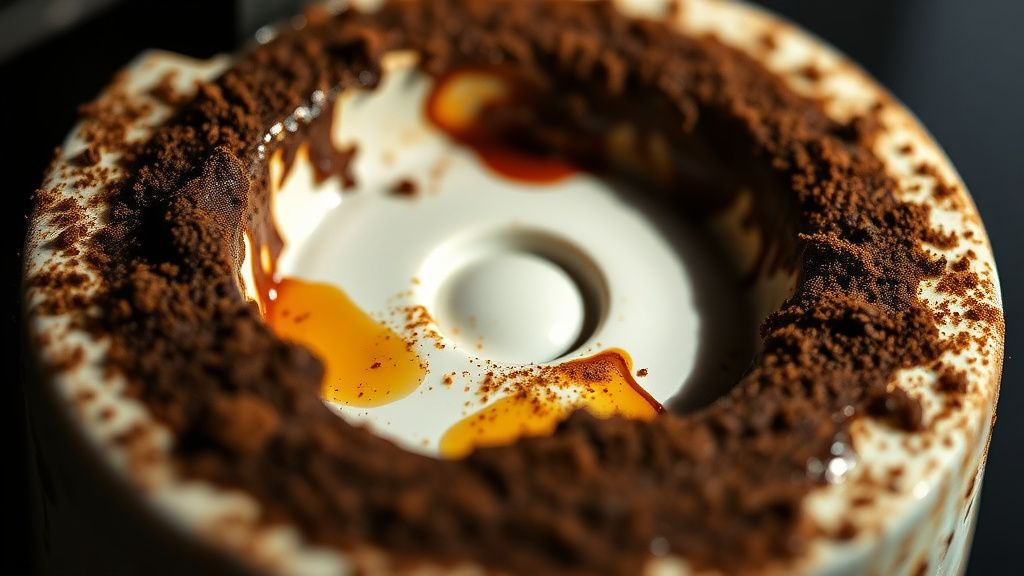
In my fifteen years of tearing down these units, I’ve noticed a pattern. The Z10 is a "smart" machine, but it lacks a "smart" sensor for bean quality. It assumes you are using a standard medium roast. If you toss in a high-oil, oily "French Roast" bean, the burrs get coated in a film that effectively shrinks the grind setting. You aren't grinding finer; you're grinding through sludge.
Decoding the Grinder Motor Assembly and Resistance Benchmarks
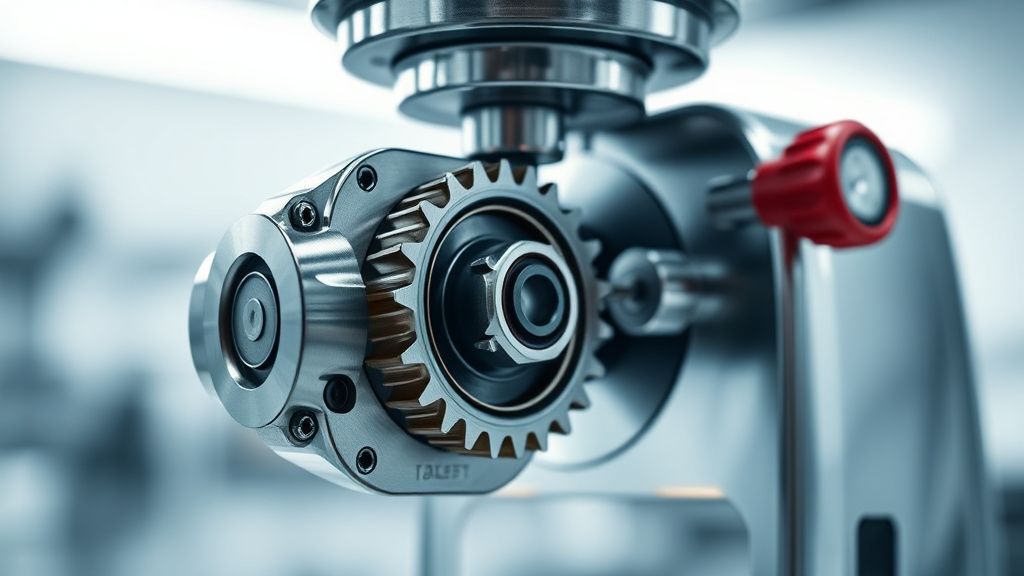
The Jura grinder motor isn’t just a simple DC unit; it’s an integrated assembly with a planetary gearbox. When the "Too Fine" error triggers, it’s usually because the current draw on the motor is too high.
- Mechanical Resistance: The burrs are physically stuck. This happens if debris (a rock, a piece of wood from poor quality sourcing) gets wedged between the discs.
- Sensor Calibration Drift: Over time, the internal counter for grind rotations gets out of sync.
- The "Jura Secret": The Z10 uses a software-controlled grind adjustment mechanism. If the stepper motor that moves the burrs closer together misses a step, it can jam the mechanical adjustment nut.
Field Report: The "Oily Bean" Paradox
I recently serviced a Z10 in a corporate office setting where they insisted on using a local boutique coffee that looked like it had been dipped in motor oil. After 400 cups, the machine was throwing "Grind too fine" every third morning.
The reality? The oil from the beans had created a viscous paste inside the lower burr carrier. The coffee particles weren't flowing out through the chute; they were adhering to the wall of the grinder housing. The machine thought it was grinding "too fine" because it felt the resistance of a compacted block of coffee, not individual grounds.
Technician's Note: Stop buying oily beans for super-automatics. If your bean has a sheen on it, do not put it in a Jura. You are asking for a $400 repair bill for the sake of a specific flavor profile.
Step-by-Step Diagnostic and Physical Intervention
Before you start taking a screwdriver to your $3,000 appliance, you need to rule out the basic software hiccups.
- The Hard Reset: Unplug the machine for 30 minutes. Let the capacitors drain. Sometimes, the logic board keeps the error state in a "soft-latch" loop.
- The Empty Grinder Purge: If the machine allows you to enter the menu, set the grinder to the coarsest setting. Run it empty. If the motor sounds high-pitched or struggles, you have a mechanical blockage.
- Vacuuming the Hopper: Most people don't do this. Get a high-powered vacuum with a slim nozzle. Remove the beans. Pull out the debris.
The "Grind Too Fine" Maintenance Protocol
If the software reset fails, you are looking at a teardown. This is where most people void their warranty. If your machine is under 2 years old, do not do this. Send it to an authorized center. If you are out of warranty, proceed with caution.
- Step 1: Accessing the Burrs. You’ll need a specialized oval-head security driver. Don’t try to use needle-nose pliers; you’ll strip the bolts.
- Step 2: Assessing the Burr Condition. Inspect the ceramic or steel edges. If they are chipped, you’ve hit a stone. Replace the entire set. Don’t try to sharpen them.
- Step 3: Cleaning the Chute. The exit chute is the most overlooked failure point. It creates a bottleneck. If the chute is blocked with old, wet grounds, the grinder will always report that it is grinding too fine, because the backpressure from the clogged chute simulates a fine grind resistance.
Industry Controversies and The Right to Repair
There is a massive, simmering tension between Jura’s "sealed unit" philosophy and the user base’s "right to repair." Jura maintains that their machines are precision instruments that require factory-level calibration. They argue that if you touch the grinder adjustment, you will never get a perfect extraction again.
Reddit communities and independent forums (like CoffeeStack Exchange) are filled with users who claim that Jura’s "Too Fine" error is a dark pattern—an artificial software lock designed to drive traffic toward their premium service centers. While there is no empirical evidence of a "planned obsolescence" kill-switch, the design choices certainly discourage DIY repair.
Engineering Compromises in Modern Super-Automatics
Why can’t they just make a grinder that doesn't jam? The constraint is space. To get the performance of a professional portafilter machine into a footprint that fits under a kitchen cabinet, engineers have to minimize the tolerances between the burr and the exit chute.
High-end Jura models use a "multi-level" grinder (the Aroma G3 or the newer versions) that is incredibly efficient but extremely sensitive to moisture and oil. When you scale down a commercial grinder to 1/10th of its size, you lose the ability to handle debris efficiently. It’s a trade-off. You get convenience and "smart" UI, but you pay for it in maintenance sensitivity.
Analyzing the "Workaround Culture"
Because service is expensive and slow, a workaround culture has emerged. I see people on Discord forums suggesting "burr alignment shims" or "overriding the hall effect sensor."
Warning: Do not override the sensors. If you bypass the error-detection software, you will eventually cause the grinder motor to lock up so hard it blows a fuse on the PCB. A $100 grinder repair becomes a $600 logic board replacement. The "hack" is never worth the risk on a machine this complex.
Economic Impact and User Frustration
The "Too Fine" error is the leading cause of "brand fatigue" among Jura owners. A user spends $3,000, feels like a barista, and then sees an error screen they don’t understand. The support friction is immense. Most users are forced into a shipping cycle where the machine is away for 3 weeks, costing $200 in shipping and diagnostics, only to find out they were using the wrong beans.
This leads to a paradox: The more expensive the machine, the more the user expects it to be "bulletproof." But in reality, the more advanced the machine (with more sensors and tighter tolerances), the more "fragile" it becomes in a domestic setting.
Can I just use "Grind Adjustment" software to fix this?
No. The "Grind Too Fine" error is a physical feedback loop detected by the motor's power consumption. No amount of software adjustment can bypass a physical obstruction. If the motor is drawing too many amps because the burrs are blocked, the machine will not let you override it.
Why does this happen even with light roast beans?
If it happens with light roasts, the issue is likely a buildup of "fines" (micro-dust) in the exit chute or a failing grinder motor. Over time, the motor's internal bushings wear out, increasing electrical resistance. It's essentially "grinder fatigue."
Is it safe to use a vacuum to clean the grinder?
Yes, it is the recommended way to clear the chamber. Use a vacuum with a soft brush attachment. Never use water, compressed air, or "grinder cleaning tablets" unless the manufacturer explicitly allows it in your specific manual. Most Jura manuals suggest cleaning only with a vacuum.
If I replace the grinder, do I need to recalibrate?
Yes. After a major mechanical component replacement, the machine often requires a "service reset" via a specialized Jura service tool (usually restricted to authorized technicians) to tell the firmware that the baseline resistance values have changed.
Why do some people say the Z10 is "over-engineered"?
It is. The Z10 uses a cold-extraction system and a highly complex motorized grind adjustment. This adds multiple points of failure that don't exist in simpler, more manual machines. It is the price of admission for "push-button" convenience.
Final Thoughts on Operational Reality
The Jura Z10 is a marvel of engineering, but it is not a tool for the casual, low-maintenance user. It requires a relationship. You must monitor your bean oil content, you must keep the chute clean, and you must accept that when it throws a "Grind too fine" error, it is telling you a painful, mechanical truth. Ignore it, and you're paying for a service center vacation. Fix it, and you're back to your morning latte. The machine isn't broken—it's just demanding a level of care that most of us aren't used to providing to our kitchen appliances.