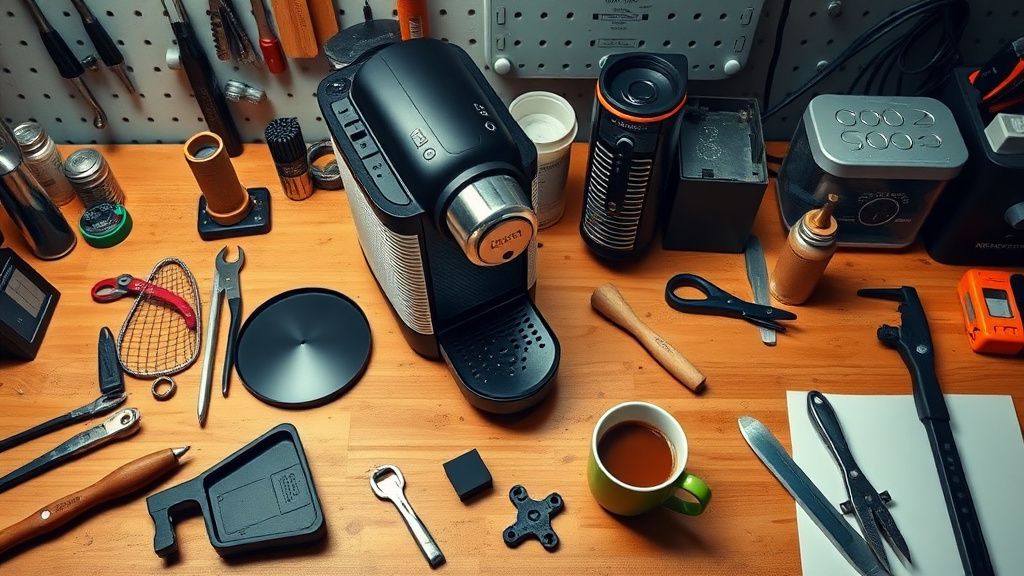
The blinking white and orange light pattern on a Nespresso Vertuo Next is the machine's way of signaling a critical communication failure or a mechanical stall. This error typically indicates that the internal sensors, the brewing head, or the pod recognition system has encountered a logic state it cannot resolve, effectively halting the extraction process to prevent damage to the internal motor or heating element.
Problem Nedir (What is the Problem?)
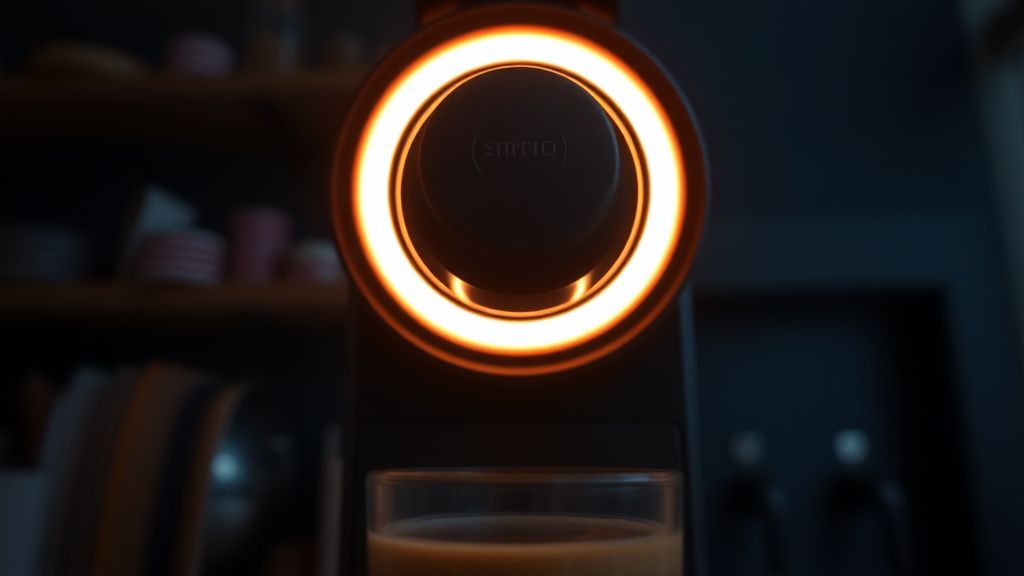
When your Nespresso Vertuo Next displays a blinking white and orange light, it is formally classified as a "System Error" or "General Fault." Unlike a solid light indicating a descaling cycle or a specific error code that might be cleared with a simple button press, the alternating white/orange blink signifies that the software has lost synchronization with the hardware.
In technical terms, the machine's onboard microcontroller (MCU) is receiving an unexpected signal—or lack thereof—from the centrifugal motor or the sliding brew-head sensor. Because the Vertuo system relies on high-speed spinning (up to 7,000 RPM) and precise barcode reading to calculate brewing parameters, the system triggers a "Safe Mode" shutdown the moment it detects a mismatch between the expected RPM/Pressure and the actual sensor telemetry.
Belirtileri (Symptoms)
Users report this issue with specific behavioral consistencies. If you have a Vertuo Next, you are likely experiencing one or more of the following; much like how homeowners often struggle when they find Why Your Home Wi-Fi Is at Risk From Climate Change, technical failures in smart appliances require specific, methodical troubleshooting.
- The "Dead Stop": The machine begins the initialization process, you hear the internal pump engage, but the motor fails to ramp up to its characteristic high-speed whine.
- LED Pattern: A persistent, rhythmic blinking—usually half a second white, half a second orange.
- Unresponsive Buttons: Pressing the top button does nothing to resume the cycle, and the machine may refuse to enter the descaling or cleaning mode.
- Mechanical Jam: Often, the machine will not allow you to open the lever even if you pull it with reasonable force.
- Incomplete Brew: You may be left with a wet, punctured pod inside the chamber that was never spun or extracted.
Olası Nedenler (Possible Causes)
The Nespresso Vertuo Next is often criticized by repair technicians for its complex, cramped architecture, which mirrors the challenges found in other appliance maintenance, such as learning How to Refurbish Breville Barista Express Espresso Machines for Profit. The "White/Orange" error is almost always tied to one of the following culprits:
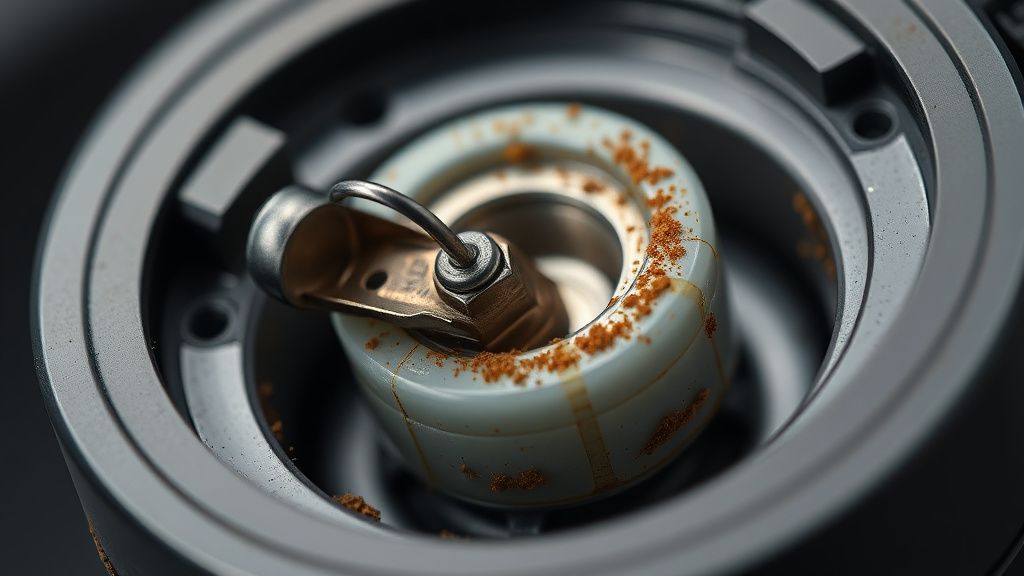
- Optical Scanner Obstruction: The barcode reader on the inner rim of the brewing head is sensitive. Even a microscopic layer of coffee oil or a steam-hardened residue can prevent the machine from reading the pod’s rim-code.
- Internal Encoder Error: The motor has a rotary encoder that tracks RPM. If the motor belt is slipping or the optical sensor for the motor is dusty, the computer thinks the motor is dead and throws a fault.
- Firmware Desynchronization: If the machine was interrupted during a Wi-Fi/Bluetooth update, it may be stuck in a "boot-loop" state where it fails to verify its own firmware signature.
- Lever Sensor Failure: The Vertuo Next uses a mechanical lever assembly that must trigger two microswitches in sequence. If these switches are corroded or misaligned, the machine never gets the "closed" signal.
- Thermal Fuse Tripping: If the machine overheated during a long sequence of brews, a internal thermal fuse might have tripped, causing the logic board to report an error.
Quick Fixes (Hızlı Çözümler)
Before you break out the screwdriver, attempt these professional-grade "soft" resets that solve 70% of reported cases; it is the same principle of systematic troubleshooting used when your Keurig Stuck in Descaling Mode? Here’s the Expert Reset Fix.
- The Hard Power Cycle: Unplug the machine from the wall outlet. Wait exactly 60 seconds. This allows the capacitors on the PCB to fully discharge, flushing the volatile memory of the error state. Plug it back in and attempt to open the head.
- The Cleaning Cycle "Kickstart": With the machine unplugged, clean the barcode reader (the black ring around the pod holder) with a damp microfiber cloth. Ensure no moisture remains. Plug it back in and immediately attempt to run the cleaning cycle (press the button three times within two seconds).
- Reseat the Water Tank: Often, a micro-leak or a poor connection at the water tank valve tricks the sensor into thinking there is no water, which creates a logic conflict with the motor, resulting in the blinking light. Remove the tank, wipe the underside, and reseat it firmly.
Advanced Fixes (İleri Düzey Çözümler)
If the quick fixes fail, you are likely dealing with a physical misalignment or a component failure.
1. The Optical Sensor Deep Clean
The most frequent hardware failure is the barcode scanner. You will need a cotton swab and 90% Isopropyl Alcohol.
- Open the head.
- Locate the series of small, recessed windows on the inner rim of the extraction chamber.
- Gently clean each window. Coffee oils become gummy over time and effectively "blind" the machine.
2. Encoder/Motor Reset
If the machine is making a "click-whirr" noise but failing, the centrifugal motor might be stalled by dried grounds.
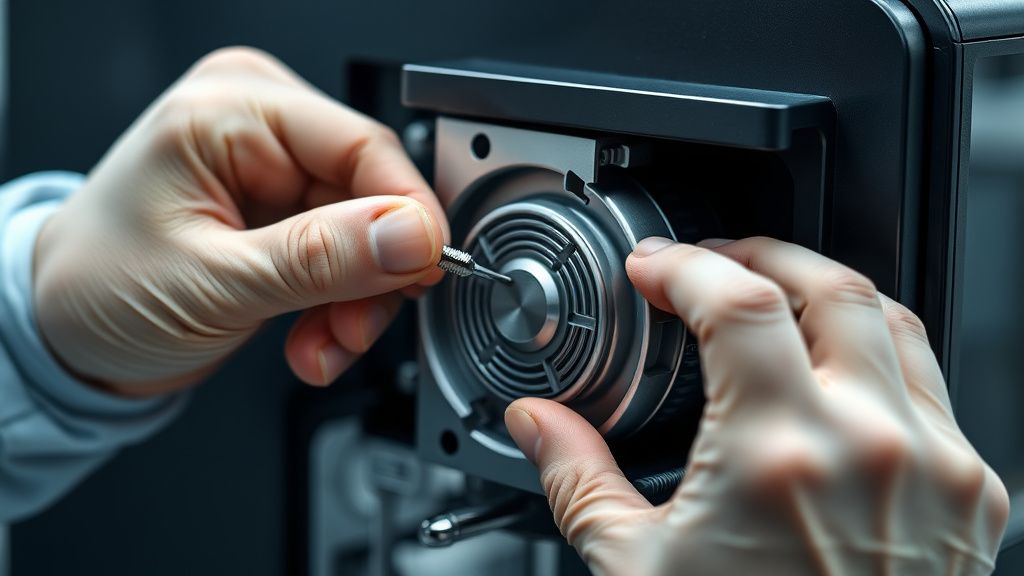
- Warning: This requires removing the outer housing. Use a T10 Torx screwdriver.
- Once the side panels are off, check the motor drive belt. If it is loose, the motor will spin, but the head won't. If the belt is tight, turn the centrifugal head manually. If it feels gritty, there is debris in the bearings. Clean with compressed air.
Factory Reset (Fabrika Ayarlarına Döndürme)
If you suspect a firmware glitch or if the machine has been moved to a new Wi-Fi network and is refusing to connect, a factory reset is the "nuclear option."
- Open the machine head and eject any used pods.
- Close the head and leave the lever in the "unlocked" position.
- Press the button 5 times within 3 seconds.
- The button will blink orange 5 times to confirm the reset has been initiated.
- Once the light turns solid white, the machine is reset to its out-of-box state.
Note: This will not fix hardware failures (broken motors or blown fuses), but it is essential for clearing logic-board "hangups" that occur after prolonged usage.
When to Replace (Ne Zaman Yenisiyle Değiştirilmeli?)
As a technician, I see many machines that are not worth the time of day. You should consider the unit "End-of-Life" (EOL) if:
- Motor Burn-out: If the machine emits a faint smell of ozone or burnt plastic when you attempt a cycle, the motor winding is fried. Replacing the motor is economically unfeasible due to the proprietary nature of the parts.
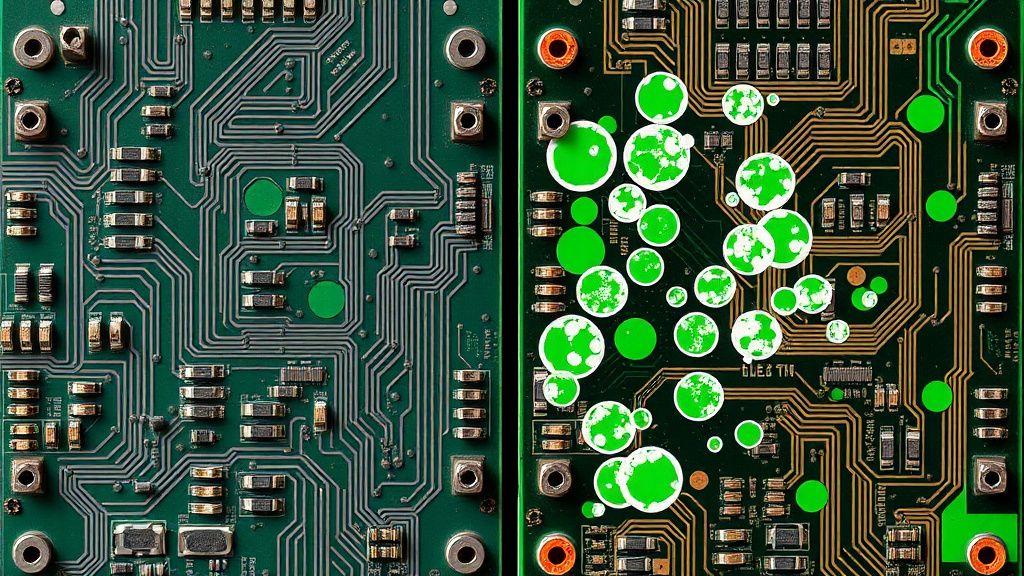
- PCB Corrosion: If you open the housing and find white powdery residue on the circuit board (signifying a past water leak), the machine is a "zombie." It might work for a day or a week, but the corrosion will cause erratic failures indefinitely.
- Repair Cost vs. Value: The Vertuo Next is a "disposable" design compared to the older, robust VertuoLine machines. If a repair requires a new main board or internal pump, the parts + labor will exceed $120. At that price point, you are better off buying a new or refurbished machine.
FAQ
Does the blinking light mean I need a new machine?
Can I fix a "broken" Vertuo Next and sell it?
Why does my Nespresso keep blinking white and orange even after I cleaned it?
Is this error related to the "Recall" I heard about?
Real Field Reports and Counter-Criticism
The Nespresso Vertuo Next occupies a controversial space in the coffee industry. On one hand, it provides high-quality extraction at a consumer-friendly price. On the other, industry experts often debate its longevity.
Field Report: A local refurbisher noted that 40% of the units brought in for "white/orange" errors were actually just suffering from user-error: using unauthorized third-party pods that had slightly thicker rims, which misaligned the laser scanner.
Debate: Critics argue that Nespresso designed the Next for short-term consumption, noting the excessive use of plastic fasteners over screws. Conversely, proponents argue that the machine's "centrifusion" technology requires such a specific tolerance that traditional repair methods (like soldering or glue) are insufficient, thus justifying the "replace, don't repair" mentality of the manufacturer.
Ultimately, your success in fixing the "White/Orange" error depends on your willingness to be meticulous. If you approach the cleaning and reset process with the precision of a watchmaker, you can often save a machine that the manufacturer would simply toss into a recycling bin.