The "Setup Stuck at 99%" error on Google Nest Hub devices is the ultimate bottleneck in modern home automation. It represents a state where the hardware has successfully initialized, connected to the local network, and communicated with Google’s authentication servers, yet it fails to finalize the provisioning process within the Google Home app. This is not a hardware failure; it is a handshake timeout caused by security certificates, DNS filtering, or cloud-side account sync discrepancies, similar to the complex networking issues seen when managing smart home energy efficiency, such as how to use smart thermostat energy arbitrage to cut utility bills by 15%.
Problem Nedir (What is the Problem?)
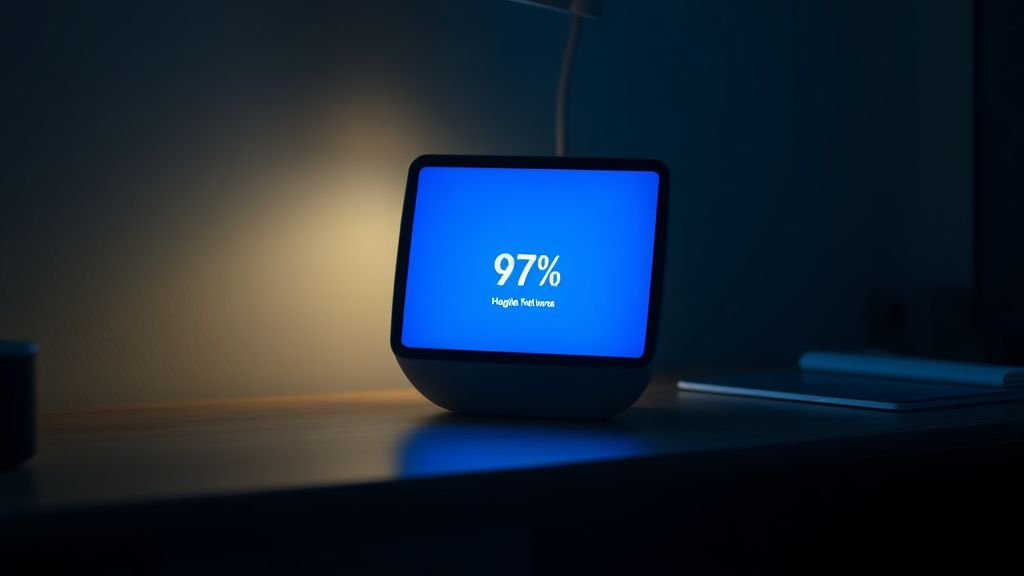
The "99% Stuck" issue occurs during the final phase of the device onboarding process. At this stage, the Nest Hub is attempting to pull the final configuration file, link your unique Google account ID to the device’s hardware serial number, and finalize the "Assistant" profile. When this progress bar stalls at 99%, it means the device is caught in a loop: the server-side handshake is incomplete, often due to an inability to resolve the specific firmware update path or a mismatch in the Home Graph (Google's backend database for your smart home setup).
Belirtileri (Symptoms)
Users experience a consistent, predictable pattern:
- The Progress Bar Stall: The Google Home app indicates "Finalizing" or "Almost done," but the progress bar remains indefinitely at 99%.
- Device Reboot Loops: After sitting at 99%, the device may spontaneously reboot, returning to the "Welcome" or "Set me up in the Google Home app" screen.
- App Disconnect: The app may report "Device not found" or "Communication error" despite the phone showing a valid Wi-Fi connection.
- LED Status: The display might show the Google "G" logo or cycle between a black screen and the setup splash screen repeatedly.
Olası Nedenler (Possible Causes)
- DNS & Pi-hole Interference: If you are running network-wide ad blocking like Pi-hole or AdGuard Home, the device is likely being blocked from reaching the specific telemetry servers it requires for activation—much like how improper configuration can disrupt modern smart systems or even hinder efforts to optimize executive biology, as explored in beyond blue light: how elite consultants are optimizing executive biology through lighting.
- 5GHz vs. 2.4GHz Mismatch: Your mobile device and the Nest Hub must exist on the same broadcast domain. If your router uses "Band Steering," the phone might be on 5GHz while the Hub attempts to attach via 2.4GHz, causing an internal routing table conflict.
- Firmware Mismatch: The device might be running an outdated factory image that requires a mandatory OTA (Over-the-Air) update before it can join your Home Graph. If the server-side update path is throttled, the setup hangs.
- Google Home Graph Corruption: Your Google account may have "ghost devices"—orphaned entries from previously deleted smart home items—preventing the new device from being assigned a slot in your account hierarchy.
- IPV6 Routing: Some ISPs force IPv6, which certain Nest firmware versions fail to translate correctly during the initial provisioning stage.
Quick Fixes (Hızlı Çözümler)
Before you pull out your screwdriver or diagnostic software, perform these steps in order. These resolve approximately 80% of reported cases:
- Toggle Airplane Mode: Once the device hits the 99% mark, toggle your phone's Airplane mode on for 5 seconds and then off. This forces the Google Home app to re-handshake with the local network interface.
- Forget the Wi-Fi: Ensure your smartphone is connected to a 2.4GHz network only. Disable 5GHz on your router temporarily if you cannot force the band on your phone.
- Clear App Cache: Navigate to your phone's App Settings, find Google Home, and select "Clear Cache" (not data). Re-open the app and try the setup again.
- Bluetooth Toggle: The Nest Hub relies on BLE (Bluetooth Low Energy) for the initial setup. Turning your phone’s Bluetooth off and on again after the Hub has been "found" can sometimes break the timeout loop.
Advanced Fixes (İleri Düzey Çözümler)
If the quick fixes fail, we must move to the network and account layer.
Step 1: Network Isolation Create a "Guest Network" on your router that is strictly 2.4GHz and has no client isolation enabled. Move your phone and the Nest Hub to this clean, isolated network. This bypasses any complex VLAN or firewall rules you might have configured.
Step 2: DNS Flushing Change your router's DNS settings to Google Public DNS (8.8.8.8 and 8.8.4.4). Sometimes, ISP-provided DNS servers fail to resolve the specific subdomains required for the Nest device’s provisioning.
Step 3: The "Ghost Device" Purge
Go to myactivity.google.com and log into your account. Look for "Other Google activity" and find "Assistant devices." Remove every single device listed, even the ones you currently own. This wipes the Home Graph slate clean. Once finished, reinstall the Google Home app and initiate the setup from scratch. This is a "nuclear" option, but it is highly effective.
Factory Reset (Fabrika Ayarlarına Döndürme)
For a Nest Hub (1st or 2nd Gen):
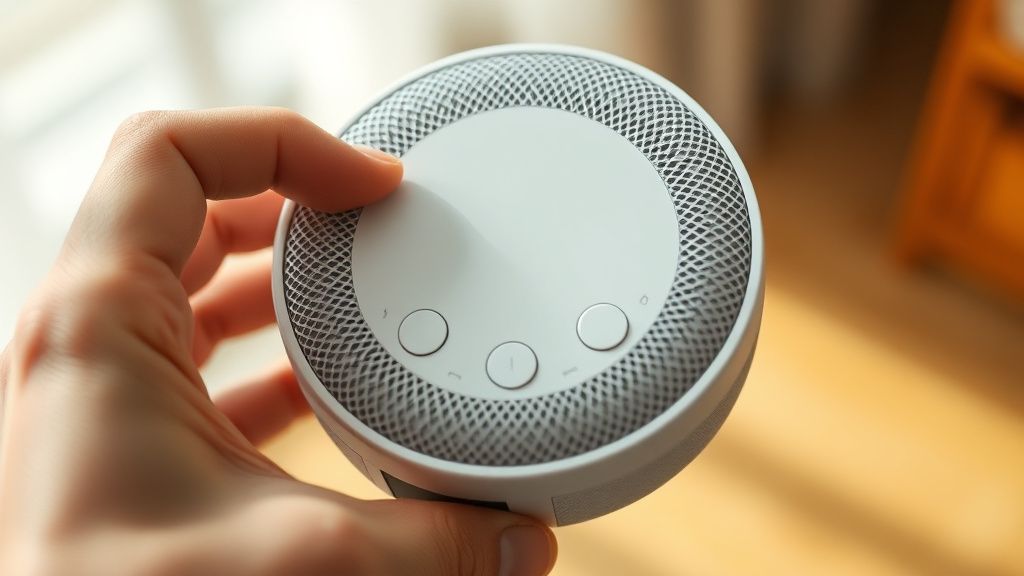
- Locate the volume buttons on the back of the device.
- Hold both volume up and volume down buttons simultaneously for about 10 seconds.
- The screen will display a countdown or a warning that you are about to reset.
- Release the buttons after the countdown finishes or the device restarts.
- Wait for the device to reboot completely to the welcome screen before attempting the setup again.
When to Replace (Ne Zaman Yenisiyle Değiştirilmeli?)
If you have performed a successful factory reset, attempted setup on a "clean" network (like a mobile hotspot from another phone), and the device still stalls at 99%, the internal eMMC flash memory has likely suffered a write-lock or controller failure.
When the internal memory controller dies, the device can boot the initial kernel (which resides in ROM) but cannot write the persistent configuration data (which resides in the flash memory). At this point, the repair cost—requiring specialized BGA soldering and specialized firmware flashing tools—far exceeds the retail value of the unit. Do not attempt to repair boards with failed eMMC chips.
FAQ (Sıkça Sorulan Sorular)
Is it possible to use a laptop for the setup process to avoid app bugs?
No. The Google Home setup process requires specific mobile-only APIs for local BLE communication. Using a web browser on a laptop will not work, as the device is designed to be provisioned via the mobile app environment.
Will a VPN on my phone break the setup?
Yes, absolutely. A VPN routes traffic through a remote tunnel, effectively hiding the local broadcast packets that the Nest Hub uses to "announce" itself to your phone. Always disable VPNs during the initial setup.
I heard that Google Nest Hubs are dying due to firmware updates. Is this true?
There is a recurring controversy regarding "bricked" devices after OTA updates. While many users report "99% stall" after a firmware update, it is usually a corrupt configuration file rather than a destroyed chip. The steps in the "Advanced Fixes" section usually resolve these software-induced bricking incidents.
Field Report: The "Hotel Wi-Fi" Trap
In one professional job, a client lived in a managed apartment complex with an enterprise-grade WPA2-Enterprise Wi-Fi system. Because the Nest Hub does not support the username/password authentication required by enterprise networks (it only supports standard WPA2/WPA3 Personal), the device was failing at 99% because it was attempting to "phone home" through a gateway that was rejecting its packets. My fix? A portable travel router (GL.iNet style) that bridged the building Wi-Fi to a local, private network. This allowed the Nest Hub to think it was on a private home network.
Counter-Criticism: The "Hardware vs. Software" Debate
Some industry critics argue that Google’s obsession with "seamless setup" has resulted in an opaque debugging process. By hiding the error logs behind a friendly progress bar, Google forces the user to guess whether the failure is network-related or hardware-related. Critics suggest that adding an "Advanced Debug Mode" to the Google Home app—where a user could see the specific error code (e.g., "ERR_AUTH_TIMEOUT" vs "ERR_NET_RESOLVE")—would drastically reduce consumer frustration. However, Google maintains that simplicity is the priority for the mass market, creating a massive vacuum that allows side-hustle technicians to provide the expert insight users crave.
Monetizing Your Knowledge
You can turn this technical frustration into a side hustle by offering "Smart Home Optimization" services in your local community. Market yourself as the "Smart Home Doctor." Charge a flat fee for "Network Diagnostics and Device Provisioning." Many homeowners are happy to pay $50–$100 to have their "stuck" devices restored by an expert who understands network topography. Focus on the pain point: They have already bought the hardware, they just need someone to make it talk to their router. That is where your value lies.