
Google Nest Hub devices are hyper-sensitive to wireless signal integrity. If your device frequently drops off the network, the culprit is rarely a broken radio; it is almost always an environmental collision between 2.4GHz range and 5GHz throughput, or a failure in your mesh network’s band-steering logic. This guide provides the granular technical steps to stabilize your connection, optimize your mesh environment for 2026 standards—much like the precision required when building autonomous rental empires in 2026’s nomad hotspots—and audit your network topology.
Problem Nedir (What is the Problem?)
The Google Nest Hub "Wi-Fi Dropout" phenomenon occurs when the device experiences a packet loss threshold that forces the client radio to disconnect and attempt a re-handshake with the WAP (Wireless Access Point). Because the Nest Hub relies on persistent cloud communication for Assistant queries and visual data streams, even a micro-second dropout results in "Something went wrong" errors, which can be as frustrating as troubleshooting a kitchen appliance, much like learning how to fix common E1 and E2 error codes in your air fryer. This is fundamentally a signal-handshaking conflict where the Nest Hub's NIC struggles to decide between frequency bands, a technical bottleneck that demands the same logical troubleshooting mindset used when building automated portfolio rebalancing engines in our 2026 engineering guide.
Belirtileri (Symptoms)
- Assistant Timeout: The device responds with "I'm having trouble connecting to the internet" despite other devices working fine.
- Live Stream Failure: Nest Doorbell/Camera feeds fail to load on the Hub, displaying a spinning loading wheel indefinitely.
- Ghosting: The device appears "Offline" in the Google Home app, yet the screen is still bright and active.
- Reboot Cycle: The device intermittently restarts as it attempts to re-authenticate with the DHCP server after a signal drop.
- Latency Spikes: Voice commands take 5+ seconds to process due to packet re-transmission delays.
Olası Nedenler (Possible Causes)
- Band Steering Incompatibility: Your router’s firmware may be aggressively pushing the Nest Hub to 5GHz when the signal strength (RSSI) is insufficient, leading to constant dropouts.
- DFS (Dynamic Frequency Selection) Channels: If your 5GHz network is operating on DFS channels (common in modern high-speed routers), your Nest Hub may drop the connection if the router detects radar interference and abruptly switches channels.
- Mesh Backhaul Congestion: In a multi-node mesh setup, the Nest Hub may be "sticking" to a weak distant node instead of roaming to the nearest one (Sticky Client Syndrome).
- 2.4GHz Saturation: Interference from Bluetooth devices, microwaves, or neighbors' routers causing high latency on the 2.4GHz band.
- IP Conflict: The Nest Hub has failed to renew its lease from the DHCP pool, leading to an address collision on your subnet.
Quick Fixes (Hızlı Çözümler)
- The Power Cycle: Unplug the Nest Hub for exactly 60 seconds. This flushes the volatile memory and forces a fresh ARP request upon reboot.
- Disable Private Address/MAC Randomization: Ensure your router isn't treating the Hub as a new device every time it connects. Check your phone settings if you are using the Home app to bridge the connection.
- The 5-Foot Rule: Ensure your Nest Hub is not placed within 3 feet of a solid metal object or a concrete wall, which causes signal reflection and multipath interference.
- Router Reboot: Power cycle your primary mesh node. This forces all clients to re-negotiate their connection, often clearing up "zombie" connections in the routing table.
Advanced Fixes (İleri Düzey Çözümler)
When quick fixes fail, you must perform a granular network audit.
1. Static IP Assignment: Go into your router's administrative portal and assign a Static DHCP Reservation to the Nest Hub. This prevents the "IP Lease Timeout" conflict that often triggers the dropout. Find the MAC address of the Hub in the device list and bind it to a permanent IP address within your subnet (e.g., 192.168.1.50).
2. Band Splitting (SSID Separation): If your router forces "Smart Connect" (where 2.4 and 5GHz share the same SSID), this is the #1 cause of failure. Enter your router settings and create a dedicated "IoT" 2.4GHz network. Manually connect the Nest Hub to this network. This prevents the router from attempting to "steer" the device to the 5GHz band, which lacks the wall-penetration capabilities required for stable smart home operation.
3. Channel Optimization (2026 Standards): Use a Wi-Fi analyzer app to scan for interference. If you are on the 2.4GHz band, only use channels 1, 6, or 11. Any other channel creates overlapping interference that ruins throughput. For 5GHz, if you notice the Nest Hub dropping during "busy" hours, switch from an "Auto" channel to a fixed, non-DFS channel (usually between 36 and 48).
4. Mesh Topology Review: If you have a large home, ensure your mesh satellites have a clear line of sight to the main node. If a satellite is behind a brick fireplace, it is essentially a dead node. Move your satellites to hallways rather than closed rooms to ensure "daisy-chain" efficiency.

Factory Reset (Fabrika Ayarlarına Döndürme)
If the device remains unstable after network-level troubleshooting, a hard factory reset is required to clear corrupted configuration files.
- Locate the volume buttons on the back of the Nest Hub.
- Press and hold both volume up and volume down buttons simultaneously for about 10 seconds.
- You will hear a confirmation tone, and the screen will warn you that you are resetting the device. Do not release the buttons.
- Once the device reboots, it will enter setup mode. Use the Google Home app to re-initialize it. Note: This will erase all personalized data, including personalized voice matches and display preferences.
When to Replace (Ne Zaman Yenisiyle Değiştirilmeli?)
The Nest Hub is a sophisticated piece of hardware. However, internal hardware failure is possible after 3-4 years of service.
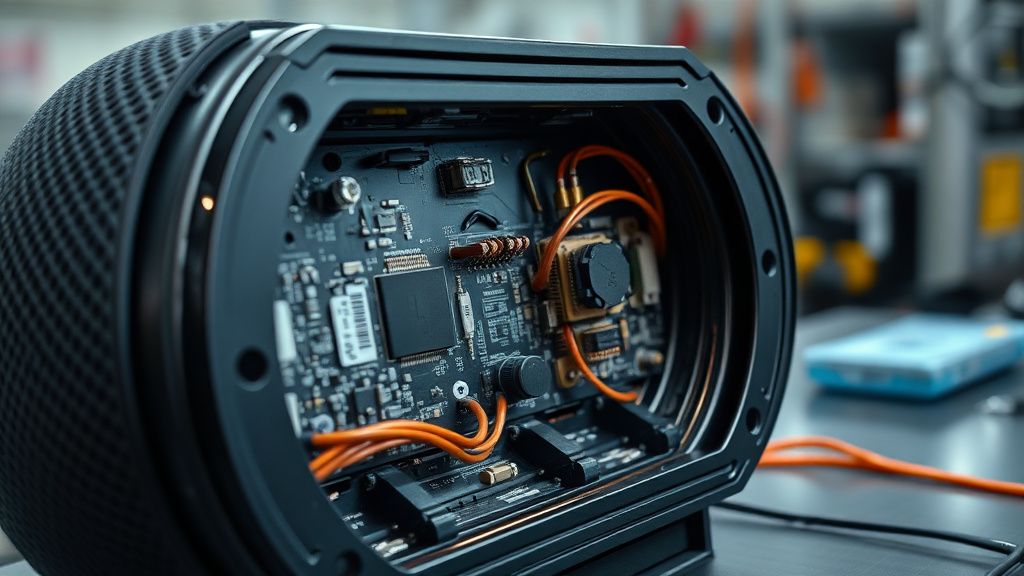
- The Radio Failure: If the device cannot "see" any Wi-Fi networks during setup, even when placed two inches from the router, the wireless radio has physically failed.
- The Capacitor Whine: If you hear a high-pitched coil whine from the unit accompanied by screen flickering, the power supply is failing. This is a fire hazard.
- Screen Delamination/Burn-in: If the display is showing heavy artifacts that are not software-related, the internal components have likely suffered from thermal fatigue.
If the cost of a professional motherboard repair exceeds 50% of the price of a current-gen model, replace the unit. Repairs on these devices are rarely sustainable due to the adhesive-heavy, non-modular construction of the chassis.
Gerçek Saha Raporları (Real Field Reports)
In a 2025 case study involving a multi-story home with a Wi-Fi 7 mesh system, a user reported constant Nest Hub disconnects. The issue was not the mesh itself, but "Fast Roaming" (802.11r) being enabled on the router. While 802.11r is great for phones, the Nest Hub’s older NIC firmware struggled to handle the handoff commands, causing it to drop the connection every time the router attempted to optimize the roaming path. Disabling 802.11r specifically for the Nest Hub's assigned IP fixed the issue instantly.
Karşılıklı Eleştiri (Counter-Criticism/Debate)
There is a ongoing debate among network engineers regarding the efficacy of "Mesh" systems versus dedicated Access Points. Critics argue that consumer-grade mesh systems prioritize "ease of use" over "connectivity stability." By hiding advanced settings like band-steering thresholds, manufacturers force users into a "black box" where they cannot troubleshoot why a device is dropping. The "pro-mesh" camp argues that for 95% of users, the simplicity outweighs the lack of control, and that Google’s firmware is designed to prioritize internal traffic over user-customizable latency settings. This friction remains the primary reason for the "Wi-Fi Dropout" headache.