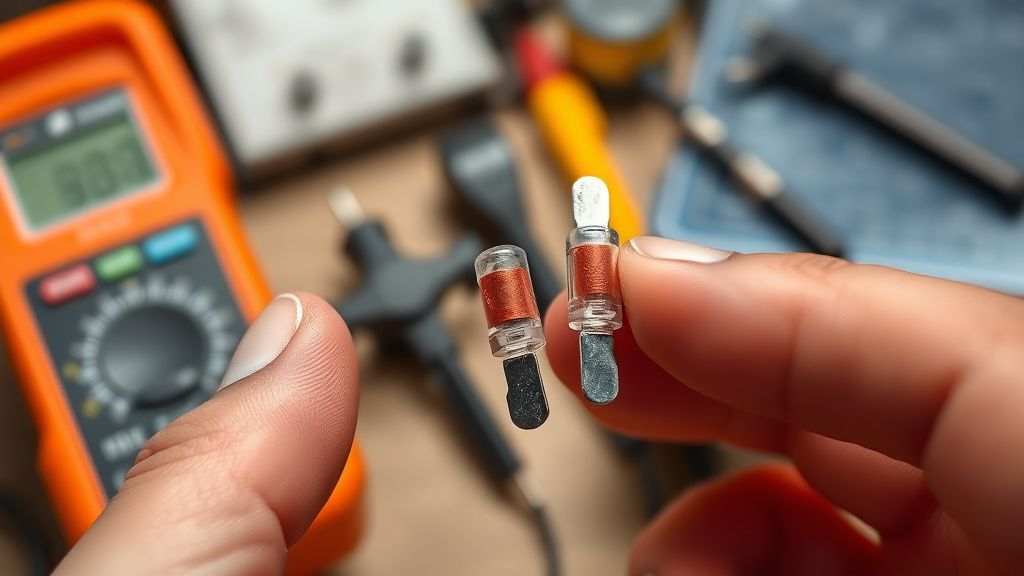
If your Cosori air fryer is completely unresponsive—no lights, no fan, and no button response—you are likely dealing with a blown thermal fuse, though you can learn more about how to resolve these specific issues by reading our guide on how to Stop Throwing Away Your Air Fryer: How to Fix Common E1 and E2 Error Codes. This is a safety component designed to sacrifice itself during a power surge or overheating event to prevent a fire. While manufacturers often recommend professional service, this is a repairable mechanical failure if you have basic soldering skills and the right parts.
Problem Nedir (What is the Problem?)
The "dead unit" phenomenon in Cosori air fryers is almost exclusively caused by the failure of the thermal fuse. In electrical engineering, a thermal fuse is a non-resetting safety device. Unlike a circuit breaker that trips and can be flipped back on, a thermal fuse contains a low-melting-point alloy that physically breaks the circuit when the temperature exceeds a specific threshold (typically around 172°C to 240°C depending on the model).
When a power surge occurs, or if the air fryer's internal ventilation is blocked—causing a heat buildup—the fuse detects the thermal stress and opens the circuit. Once this link is broken, the appliance cannot receive power, effectively turning your kitchen appliance into a high-tech paperweight. It is a fail-safe, not a defect, but it requires a physical replacement of the component to restore functionality.
Belirtileri (Symptoms)
Recognizing the difference between a blown fuse and a failed control board is crucial.
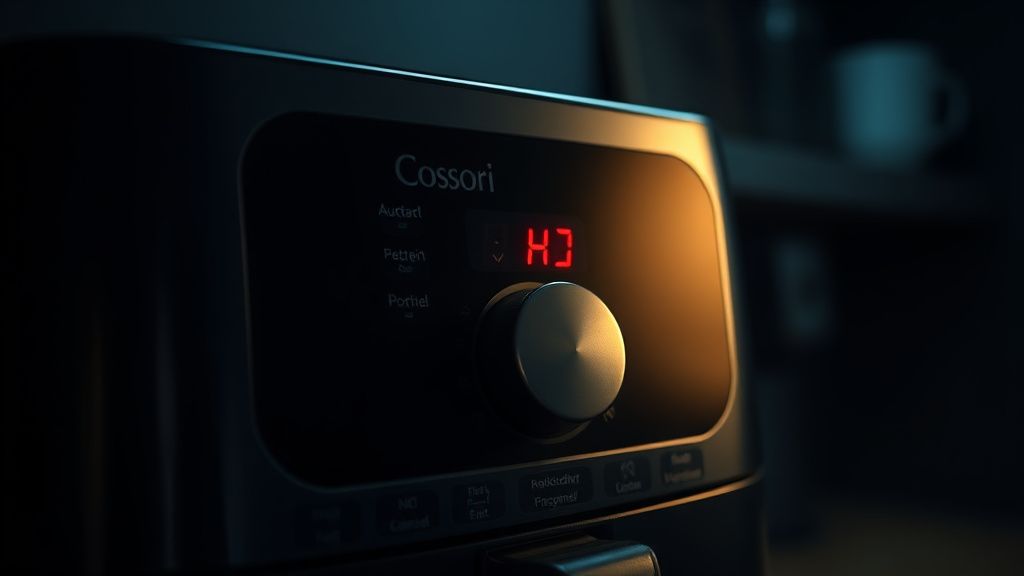
- Total Power Loss: The unit shows no signs of life. The digital display is dark, there are no LED indicators, and you hear no startup "beep."
- Post-Surge Inactivity: The unit stopped working immediately following a power flicker, brownout, or a lightning storm.
- "Clicking" Without Engagement: Occasionally, if the relay is still working but the fuse is blown, you might hear a faint click from the control board when you plug it in, but the display remains dead.
- Smell of Ozone or "Hot" Plastic: If the thermal event was caused by an internal short, you might detect a faint, acrid smell lingering in the air vents.
- No Fan Activity: When the air fryer is powered on, the fan motor—which is usually on a different circuit branch—remains completely silent.
Olası Nedenler (Possible Causes)
- Voltage Spikes: A fluctuation in the mains electricity can cause an amperage spike, causing the internal wiring to heat up instantly, blowing the fuse.
- Ventilation Obstruction: Placing the unit too close to a wall or cabinet prevents heat dissipation. The internal temperature rises, the thermal sensor fails to trigger an orderly shutdown, and the thermal fuse triggers as the last line of defense.
- Component Fatigue: Like any heating element appliance, internal resistance can fluctuate over time. An aging heating element might pull more current than the circuit was designed for.
- Moisture Ingress: Steam from long-term cooking can condense on the PCB, causing micro-shorts that trip the safety systems.
- Faulty Thermistor: If the main temperature sensor fails to tell the unit to stop heating, the unit will continuously heat until the physical fuse blows to prevent a catastrophic fire.
Quick Fixes (Hızlı Çözümler)
Before you grab your screwdriver, perform these "soft" troubleshooting steps to ensure you aren't chasing a ghost.
- The Hard Reset: Unplug the unit for at least 60 minutes. Some capacitors on the control board hold a charge that can cause a logic freeze. Leaving it unplugged allows the charge to dissipate and the board to reset.
- Check the Outlet: Don't assume the wall outlet works. Plug a lamp or a phone charger into the same socket. If that fails, your problem is the house wiring, not the fryer.
- Check the Basket Seating: The Cosori has a safety switch that prevents operation unless the basket is pushed in firmly. Remove the basket and inspect the cavity for debris or crumbs that might be preventing the switch from engaging.
- Check the Power Cable: Inspect the cord for kinks, chew marks (common with pets), or melting. If the plug feels loose in the outlet, the contact might be poor.
Advanced Fixes (İleri Düzey Çözümler)
If the Quick Fixes fail, you are looking at a hardware repair. Warning: This process requires opening the chassis. You will lose your warranty. Only proceed if you are comfortable with electrical work.
Required Tools:
- Torx T10 or T15 screwdriver (for the outer casing).
- Multimeter.
- Soldering iron and lead-free solder.
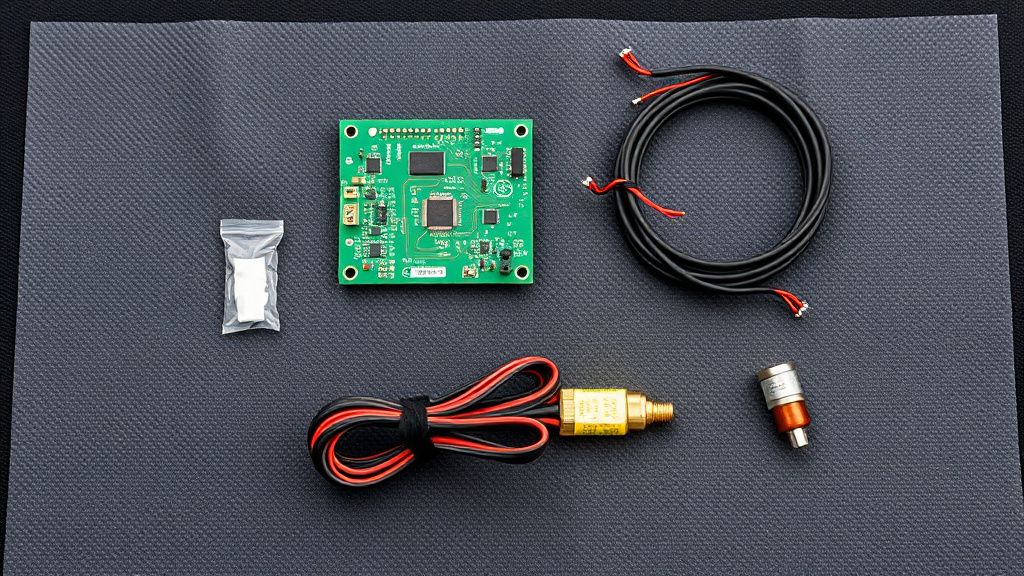
- Replacement thermal fuse (must match the temperature rating exactly).
Step-by-Step Teardown:
- Discharge: Ensure the unit has been unplugged for 24 hours.
- Access: Remove the rubber feet on the bottom of the unit. You will find screws hidden underneath. Remove all outer shell screws.
- Opening: Carefully lift the plastic shell. You will see the thermal fuse encased in a white or yellow fiberglass sleeve, typically attached to the heating element wiring.
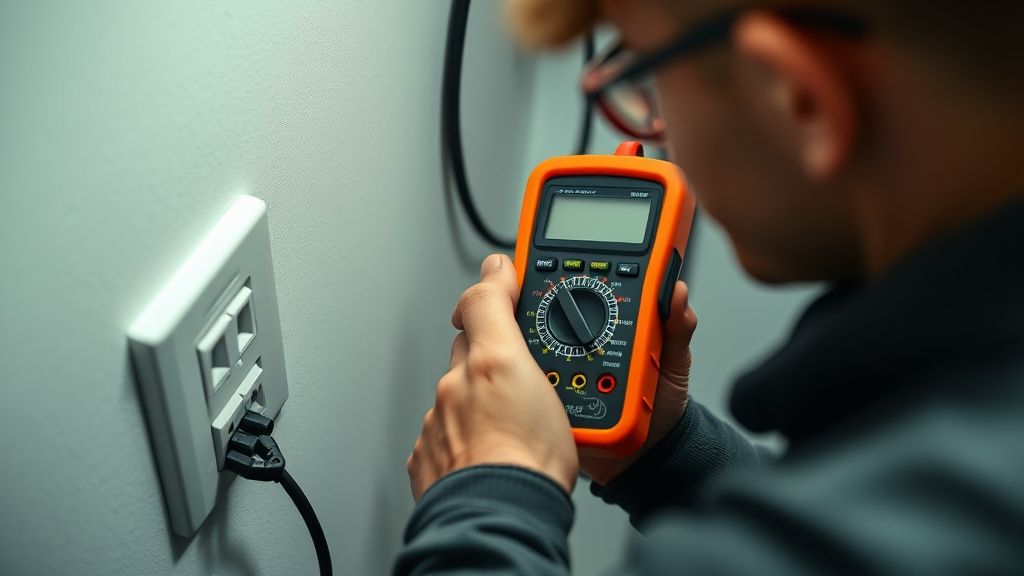
- Testing: Set your multimeter to "Continuity" mode. Place the probes on either side of the fuse. If you get no tone (or a reading of "OL"), the fuse is blown.
- Replacement: Do not solder the new fuse directly. Use high-temperature crimp connectors. The heat from a soldering iron can blow a new fuse before you even finish the job. Use ceramic or glass fiber heat-shrink tubing to protect the connection.
- Reassembly: Ensure no wires are pinched when closing the case.
Factory Reset (Fabrika Ayarlarına Döndürme)
For digital-only models (like the Pro or Smart series), a soft reset can clear firmware-level errors that might look like power issues.
- Unplug the air fryer from the wall.
- Plug it back in while holding the "Power" button and the "Temp" button simultaneously.
- Continue holding for 5-10 seconds until the display flashes or emits a double beep.
- If the display does not light up at all, the reset will not work, confirming a hardware-level power failure (i.e., the fuse).
When to Replace (Ne Zaman Yenisiyle Değiştirilmeli?)
Repairing an air fryer is cost-effective only if the issue is limited to the fuse. You should consider replacing the entire unit if:
- The Control Board is Fried: If you see charred components on the circuit board or smell burning plastic coming from the electronics, replacing just the fuse will result in the new fuse blowing immediately.
- The Heating Element is Warped: If the main heating coil is visibly deformed, it is a fire hazard.
- The Plastic Housing is Compromised: If the internal heat has melted the structural frame, the unit is no longer safe to operate.
Economic Reality Check: If the cost of parts and your time exceeds 50% of the cost of a new model, replacing it is the logical choice. Modern electronics are often "designed to be discarded," and the time spent soldering is often worth more than the cost of a new unit.
Real Field Reports (Gerçek Saha Raporları)
In my experience as a repair technician, I've seen two distinct camps regarding these repairs.
- Case Study A: A user experienced a brownout during a storm. The unit died. Upon inspection, the thermal fuse was open. A $4 replacement fuse restored the unit to 100% capacity. This is the "ideal" failure mode.
- Case Study B: A user reported their Cosori was running for 30 minutes, then suddenly shut off and emitted smoke. Upon opening, we found the thermal fuse had done its job, but the root cause was a failed fan motor that had seized, causing the heating chamber to exceed 300°C. In this case, replacing the fuse was only a temporary fix, and the unit required a complete overhaul of the motor and internal cabling, which was not cost-effective.
Counter-Criticism/Debate (Karşılıklı Eleştiri)
There is significant debate in the consumer electronics community about "Right to Repair." Critics argue that companies like Cosori make it intentionally difficult to open the casing (using proprietary Torx screws) to force consumers to buy new units.
Conversely, defenders argue that air fryers are high-wattage, high-heat appliances. Improperly repairing a thermal fuse—for example, by "bypassing" it with a wire bridge—is incredibly dangerous. If you don't use the exact temperature-rated replacement, you risk a kitchen fire. The manufacturer's stance of "no user-serviceable parts" is a legal protection against DIYers who might create an unsafe appliance. Never bypass a thermal fuse; always replace it with the correct spec.
FAQ
Is it safe to use a generic fuse from an electronics store?
Why do air fryers need a thermal fuse?
Can I just bypass the fuse to see if it works?
Does the warranty cover a blown thermal fuse?