
The 2026 landscape for Micro-SaaS isn't about building a unicorn; it’s about architecting a durable, cash-flowing asset that can be packaged and sold on private exchanges like Acquire.com or Flippa with the precision of a mid-market M&A deal. The era of "build-it-and-they-will-come" is dead, replaced by a ruthless focus on churn mitigation, technical debt management, and EBITDA-centric operations, a shift mirroring how businesses are now optimizing for the future of life insurance and longevity preservation. To survive, you must engineer for the exit from the first commit.
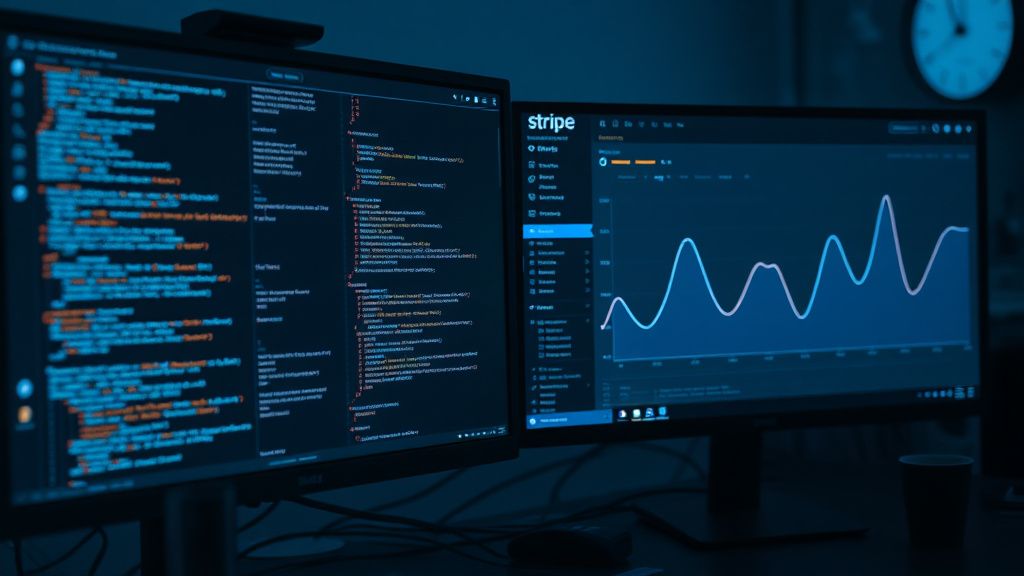
The Architectural Mandate: Avoiding "Legacy Debt" by Design
In 2026, the biggest mistake a solo founder makes is assuming "code is code." On private exchanges, buyers are not looking for features; they are looking for operability. If a buyer pulls your repo and finds a monolithic spaghetti-pile of hardcoded environment variables and manual database migrations, your valuation multiple drops from 4x SDE (Seller’s Discretionary Earnings) to 1.5x—or they simply walk away.
Modern Micro-SaaS architecture requires a "modular-by-default" approach, much like how top professionals are moving toward human mentorship over rigid, automated course structures to ensure long-term adaptability. By utilizing headless CMS structures and micro-frontends, you ensure that if a core service like authentication or payment processing needs an overhaul, it doesn't trigger a week of regression testing.
"Technical debt isn't just bad code. It's a tax on your exit valuation. Every hour you spend monkey-patching a feature instead of building a clean API integration is an hour you are effectively paying the buyer to fix your mess later." — Commentary from a top-tier acquisition broker on Hacker News.
The Operational Reality: The "One-Person-Shop" Trap
There is a dangerous fetishization of the "solopreneur" who does everything: coding, support, marketing, and accounting. While this works for the bootstrapping phase, it creates an "Operational Single Point of Failure" (OSPOF). If you are the only one who knows why the Lambda function fails, your business is a liability, which is particularly relevant in an era where the AI employment crisis is shifting focus toward UBI to solve structural economic dependencies.
To optimize for exit, you must document your "Standard Operating Procedures" (SOPs) as strictly as you document your code, applying a strategic mindset similar to navigating a 2026 Roth IRA conversion for maximum long-term tax efficiency. Use Notion, Obsidian, or Loom to capture every workflow. If a potential buyer can’t figure out how to reset a customer’s password without your intervention, you have built a job, whereas successful firms today are mastering AI-driven algorithmic arbitrage in logistics to create truly hands-off, scalable value.
Financial Engineering: Moving Beyond "Revenue First"
Private exchange buyers are allergic to "vanity metrics." They don't care about your Twitter follower count or your total signups. They care about:
- LTV/CAC Ratio: If it costs you $100 in ads to acquire a user who pays $10/month and churns in three months, you are burning capital, not building value.
- Churn Analysis: Voluntary vs. Involuntary churn. If 20% of your users drop off because their credit cards failed and your dunning process is non-existent, you are throwing money into a black hole.
- Net Dollar Retention (NDR): Can you upsell existing users? This is the single strongest indicator of a SaaS platform's long-term health.
In 2026, the best Micro-SaaS platforms are built on "B2B niches where the software is a vitamin, but turns into a painkiller." Avoid B2C apps where users have zero switching costs, keeping in mind that even niche ventures like AI-driven geo-dropshipping require significant barrier-to-entry moats to remain profitable in 2026. If your user can cancel your subscription as easily as they skip a Netflix movie, your asset is volatile and your exit valuation will reflect that.
Gerçek Saha Raporları: Where Things Fall Apart
- The "API Dependency" Disaster: A developer built a specialized SEO tool on top of a major search engine's undocumented API. When the parent company deprecated the v1 endpoint, the SaaS platform became a hollow shell overnight. The founder tried to sell on a private exchange, but the buyer’s due diligence team uncovered the dependency and rescinded the offer mid-contract. Lesson: Never build your core value proposition on a platform you don’t control.
- The Scaling Wall: A Discord-based project management tool scaled from 500 to 5,000 users. The database, designed for a small scale, began timing out during syncs. The founder spent six months in "firefighting mode," losing 40% of the customer base. By the time they reached the exchange, the revenue trend was downward, killing any chance of a premium exit.

The Counter-Criticism: Is "Exit-First" Killing Innovation?
There is a growing chorus of developers who argue that building exclusively for exit creates a "beige" ecosystem. When everyone optimizes for low churn and high margins, we stop seeing experimental, creative, or high-risk software.
Critics point out: "When we treat software as a commodity to be flipped every 24 months, we lose the long-term stewardship of tools. We end up with a graveyard of 'zombie SaaS' platforms, each owned by private equity firms that just squeeze the last drop of margin out of the software without adding a single line of value."
This is a valid concern. The "Micro-SaaS Flip" culture is essentially a financialization of the hobbyist developer space. It forces founders to prioritize features that "look good to a buyer" (e.g., adding an unnecessary AI wrapper) over features that users actually need.
The Due Diligence Nightmare
When you finally list on an exchange, be prepared for an audit that feels like a colonoscopy. Buyers will demand:
- The "Tech Stack Manifesto": A clear explanation of why you chose your stack and how it will scale.
- Customer Cohort Data: Not just totals, but vintage-based retention.
- Legal Clarity: Ensure your LLC or corporate structure is clean. Do you own the IP? Are your contractors under "work-for-hire" agreements? If not, the deal will die in the legal review phase.

Strategies for "Exit-Ready" Development
- Containerize Everything: If I can't spin up your production environment in 10 minutes with
docker-compose up, I’m not buying it. - Automated Testing is Non-Negotiable: A test suite isn't for you; it's for the buyer's peace of mind. It proves the system behaves as expected under stress.
- Third-Party Dependency Audit: List every API, CDN, and SaaS service your app relies on. If you are using a legacy service with poor support, migrate away before listing.
- Clean Up the "Dark Patterns": Buyers hate software that feels "spammy." If your growth strategy relies on hidden recurring charges or difficult cancellation paths, you’re not selling a SaaS; you’re selling a regulatory risk.
The Emotional Component: Why Founders Stall
The biggest invisible friction in selling a Micro-SaaS is the "Founder Identity Crisis." You have lived, breathed, and cried over this codebase. You know every bug and every quirk. When a buyer comes in and critiques your architecture, it feels personal.
Self-correction: Detach. You are not the code. You are the architect of a system. If the buyer wants to change the UI or pivot the market, let them. Once you receive the wire transfer, your responsibility ends. Don't be the founder who tries to "consult" for the buyer for six months post-exit; it rarely ends well for either party.
Scalability vs. Maintenance
Many founders confuse "growth" with "stability." If your SaaS is growing at 20% MoM, but your server costs are growing at 30% MoM, you have a broken business model. Before selling, you must achieve "OpEx efficiency." This means automating customer support with LLMs, refining your database queries to reduce cloud compute costs, and pruning inactive features that drain your maintenance budget.