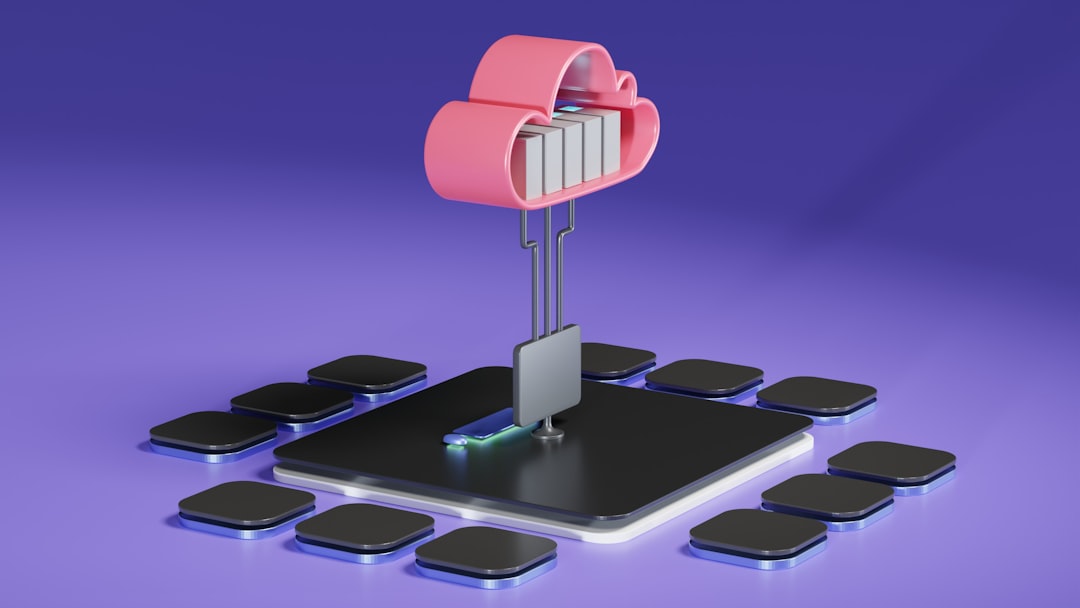
The era of the "unicorn hunt"—the singular, monolithic product designed to capture an entire market—is functionally dead for the solo-founder or small-team entrepreneur. In 2026, the blueprint for sustainable software revenue has shifted toward Autonomous Micro-SaaS Clusters (AMSC), a strategy complemented by mastering tools like those explored in the 2026 DeFi Yield Guide: How to Balance Profits and New Tax Rules. This model isn't about building one massive platform; it’s about deploying a swarm of hyper-focused, low-maintenance micro-tools that share a common data layer, user identity infrastructure, and automated marketing engine. By distributing risk across five or ten small revenue streams, you create a system that can absorb the failure of any single node while compounding the authority of the whole cluster.
The Operational Architecture: From Monolith to Swarm
The primary trap that kills most SaaS projects isn't a lack of features; it is the "Scaling Debt" that accumulates when a single application grows too complex, similar to the operational pivots discussed in Why Top CEOs Are Ditching Digital Tools for Analog Clarity. In an AMSC model, you deliberately constrain each product to solve exactly one problem for one specific subset of users.
The Stack Strategy: You cannot manage ten products if you have ten different architectures. The secret to the 2026 cluster is a Unified Shared-Service Layer.
- Unified Auth: Don’t build login for every app. Use a centralized OIDC (OpenID Connect) provider. When a user creates an account on your "PDF-to-Excel" tool, they are automatically recognized by your "CSV-Cleanup" tool.
- Shared Infrastructure: Containerize everything. Using a common orchestration layer (like Nomad or a managed K8s subset) allows you to move compute resources between products based on traffic spikes. If "App A" is quiet at night, its idle compute is automatically shifted to support the background processing for "App B."
Real Field Report: The "CSV-SaaS" Collapse of 2025
Observation from the trenches: In early 2025, a prominent indie-hacker cluster attempted to centralize their database into a single multi-tenant Postgres cluster. While efficient, a single migration bug in "App C" triggered a locking scenario that took down the entire cluster. The takeaway? Decoupled data stores with shared identity is the only way to ensure "Autonomous" actually means autonomous. Never let a schema change in one product act as a SPOF (Single Point of Failure) for your entire revenue stream.

Why Users Actually Stay (And Why They Leave)
The market today is saturated with "wrapper" SaaS. Users are suffering from subscription fatigue. If your micro-SaaS doesn't provide an immediate, tangible "Aha!" moment—usually within 30 seconds of landing—it will fail.
- The Power of Integration: A standalone micro-SaaS is a commodity. An integrated cluster is a workflow ecosystem. If your "Email Parser" talks to your "CRM Data Entry" tool without the user needing a Zapier subscription, you have built a moat that your competitors cannot cross, mirroring the strategic shift described in Why DAO-Governed Affiliate Programs Are Changing Passive Commerce.
- The Churn Paradox: Most micro-SaaS founders obsess over new features. In reality, users churn when your UI gets "cluttered." Maintain a strict policy: If a feature doesn't provide 80% of your power users with immediate value, it belongs in a separate micro-tool or shouldn't exist.
Scaling Revenue via Micro-Affiliates
In the 2026 landscape, growth is not driven by Facebook Ads; it is driven by cross-pollination, much like how you can Build and Sell AI Browser Extensions for a 5x Profit in 2026 to leverage existing audience segments. Each tool in your cluster should contain a "hidden" upsell path. When a user finishes their task in Tool A, offer a one-click integration to Tool B. Because the user is already authenticated via your shared service, this creates a seamless path to secondary revenue.
Counter-Criticism: The "Complexity Tax" Debate
There is a growing chorus of skeptics in the indie community—notably on forums like Hacker News—who argue that the AMSC model is just a fancy name for "tech debt accumulation." The criticism is valid:
"Every time you build a new micro-SaaS, you aren't just building a product; you are signing up for five years of support, security patching, and dependency updates. If you have 10 products, you aren't an entrepreneur; you are a junior DevOps engineer for 10 broken websites."
This is the hidden cost. If you don't automate your CI/CD pipelines to handle bulk updates across all products, you will spend 90% of your time patching security holes rather than shipping value.

Engineering for Autonomy: The 2026 Technical Debt Framework
To avoid the maintenance trap, your tools must be "set and forget." This requires extreme discipline in your tech stack.
- Serverless-First, Where Possible: If your product can run on Vercel or Cloudflare Workers, do it. The cost of maintaining a persistent Linux server is not just the VPS fee—it is the human time spent auditing SSH logs, updating kernels, and monitoring uptime.
- Automated Regression Testing: If you are managing a cluster, you cannot manually check every form submission. Your GitHub Actions pipeline must include integration tests that spin up a headless browser to test the full purchase flow of every product every time a push is made to the shared library.
- The "Kill Switch" Strategy: Be ruthless. If a micro-SaaS in your cluster isn't covering its own hosting costs after three months of iteration, shut it down. The cluster model thrives on the survival of the fittest. Don't fall in love with your code.
The Human Element: Managing the "Lone Wolf" Mentality
The psychological burden of managing multiple revenue streams is real. Many founders report a sense of "context-switching vertigo." To survive, you must treat your cluster as a product portfolio, not a series of tasks. Spend Monday on Product A, Tuesday on Product B, and Wednesday on Infrastructure. Do not attempt to support all products simultaneously. Your users can wait 24 hours for a support ticket resolution.

Managing Customer Support as a System
When you have ten micro-SaaS apps, your support inbox will be a nightmare if you use ten different email accounts.
- The Hub-and-Spoke Inbox: Use a help-desk tool that supports multiple brands under one login.
- AI-First Triage: Train a local LLM or use a cost-effective API to summarize tickets. If the issue is a bug, auto-tag it in your GitHub repository. If it is a feature request, file it in your roadmap backlog. By 2026, if you are answering "How do I reset my password?" manually, you are failing the efficiency test.
Final Thoughts: The Evolution of Sustainability
The 2026 Micro-SaaS Cluster is not a "get rich quick" scheme. It is a slow, methodical build of digital assets. The goal is to reach a point where your monthly recurring revenue (MRR) is distributed across enough products that losing one client, or even one entire product niche, doesn't threaten your survival. It is about building a system that is robust enough to handle the chaos of the internet, but simple enough to be run from a laptop in a cafe.
FAQ
Is it really possible for a single person to manage 5+ micro-SaaS products?
How do you handle the SEO fragmentation issue?
What happens when a platform (like Stripe or AWS) changes their API?
package.json for all 10 apps, and redeploy. You must treat your internal code as a product for your other products.