Governance staking in 2026 has evolved from a simple "lock tokens to vote" mechanism into a complex financial layer. By staking governance tokens, users now capture protocol revenue, participate in yield-generating sub-DAOs, and leverage "vote-escrowed" (ve) assets. It transforms idle voting power into an active yield-bearing instrument, though it carries significant smart contract, liquidity, and regulatory risks—much like how modern traders are mastering cross-border arbitrage in 2026 to mitigate their own unique market exposures.
The promise is alluring: put your tokens to work, steer the protocol’s future, and earn double-digit APY. But look closer at the Discord channels, the GitHub issue trackers, and the "governance wars" that define the current landscape, and you find a system held together by fragile economic assumptions and a constant, underlying tension between "whales" who want liquidity and "delegates" who want long-term sustainability.
The Evolution of the "ve" Model: Beyond Simple Participation
In 2020, Curve Finance popularized the veToken (vote-escrowed) model, forcing users to lock their tokens for years to gain voting weight. By 2026, this has matured into a multi-tiered architecture. You aren't just voting; you are effectively acting as a liquidity provider or a collateral manager for the protocol’s internal treasury.
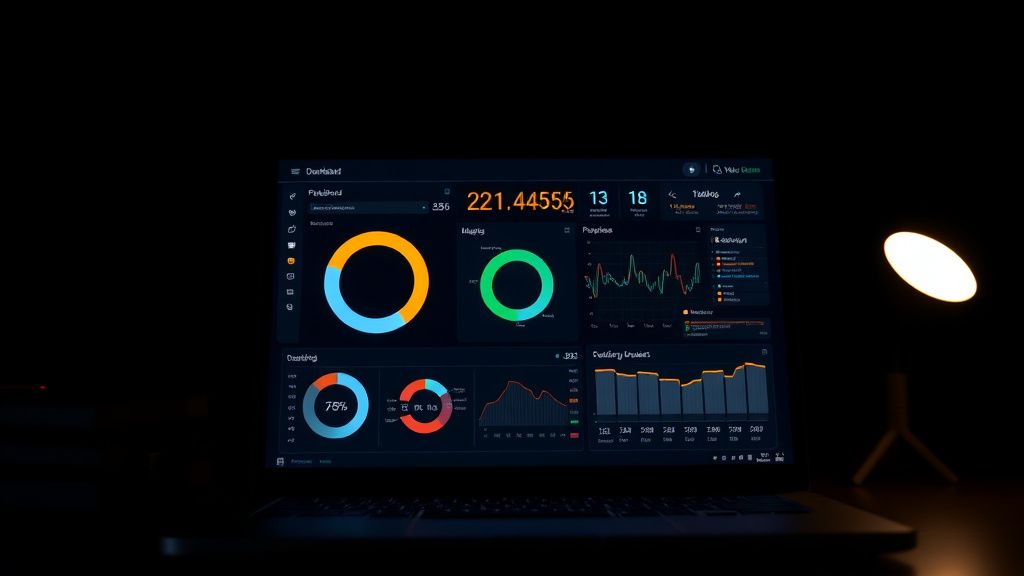
The core mechanism involves "time-weighted" staking. If you stake for four years, your voting power—and by extension, your claim on protocol fees—is amplified. This creates a powerful incentive for long-term alignment, but it also creates a massive "liquidity trap," a challenge that shares similarities with why top exporters are moving to regional warehousing to protect margins in today’s volatile climate. If a protocol suffers from a security exploit or a sudden market crash, you cannot simply dump your position. You are married to the protocol.
Real Field Report: The "Exit Liquidity" Dilemma
Take the case of a mid-sized lending protocol, let’s call it VaultProtocol, which saw 40% of its governance supply locked in Q3 2025. When a critical bug in their liquidation engine was discovered via a GitHub issue thread, the governance stakers—who held the "veto" power—were paralyzed. They couldn't move their funds to protect their principal because the locking period prevented withdrawal.
The result? The community had to vote on a "rescue package" that diluted the token supply by 15%. Those who were "governance staking" saw their APY spike on paper, but their actual purchasing power tanked. This is the reality of 2026: APY numbers are often vanity metrics, just as investors must learn why generic longevity trends are failing your health (and how to fix it) when looking for sustainable, long-term results. They represent the protocol’s attempt to bribe you into not selling when the ship is taking on water.
The Mechanics of Yield: Where does the "Double-Digit" come from?
When you see a 12% or 15% APY on a governance staking dashboard, it is rarely "interest." It is almost always a combination of three things:
- Protocol Fee Distribution: A share of the transaction or liquidation fees paid by users.
- Token Inflation (Emissions): New tokens minted to reward stakers, which effectively taxes the non-staked supply.
- Yield Aggregator Bribes: Third-party protocols (like Convex or Aura-style "meta-governance" layers) that pay you to direct your voting weight toward their pools.
The third point is where the "governance wars" truly happen. Protocol A wants higher liquidity for its specific stablecoin, so it pays "bribes" to governance stakers of Protocol B to vote in a way that directs emissions toward Protocol A’s liquidity pools. If you are a staker, you are essentially a mercenary soldier in an economic war.

The "Governance Tax": Hidden Costs of Participation
You cannot discuss governance staking without addressing the "Gas Tax" and the "Attention Tax." Participating in high-level governance is not free.
- Operational Friction: To maximize yield, you often have to re-stake or adjust your voting bias weekly. If your gas costs on a Layer 2 or Layer 3 network exceed 0.5% of your total yield, the "double-digit" claim is essentially as misleading as ignoring the longevity tax: how genetic screening could create a new wealth divide when planning your future financial health. being eaten by the network's own friction.
- The Delegation Paradox: Many users delegate their voting power to "professional delegates" to save time. However, this creates a principal-agent problem. Does the delegate care about your yield, or are they using your weight to advance their own portfolio’s interests?
On Snapshot and Tally, we see a growing divide between "retail delegators" and "governance whales." The whales often run private Discord servers where they coordinate votes, leaving the average user with nothing but a dashboard that says "Your Vote has been cast."
The "Buggy Backend" Reality
While the UIs are getting sleek—designed by world-class firms to look like high-end fintech apps—the backends are often dangerously complex. In 2025, a major DeFi platform suffered an outage during a vote because the "staking contract" couldn't handle the load of 50,000 users withdrawing their locked position simultaneously.

If you check the GitHub Issues for many top-50 DeFi protocols, you will find constant back-and-forth about "upgradeability" and "proxy patterns." These patterns allow developers to update code without forcing a full migration, but they also introduce a single point of failure: the Multi-Sig key holders. If those keys are compromised, your "governance stake" is essentially held hostage by the admins.
Counter-Criticism: Is it Even Sustainable?
The most vocal critics of governance staking in 2026 argue that it is a "Ponzi-lite" structure. The logic: if the protocol doesn't have real revenue (fees from real users), it is just paying out tokens to people who hold tokens. This creates an inflationary spiral that inevitably collapses once the "bribe" pool runs dry.
Proponents argue that this is simply "capital formation." By forcing users to lock tokens, you stabilize the supply, allowing the protocol to survive its infancy. Yet, the data suggests otherwise. Look at the "Dead Governance" trackers—portals that aggregate protocols where governance activity has dropped by 90% in the last six months. When the yields drop, the stakers leave, the voting weight vanishes, and the protocol becomes a "zombie DAO."
Avoiding the "Yield Trap"
If you are looking to enter this space in 2026, you need to ignore the flashy APY numbers and look at these three indicators:
- Revenue-to-Emission Ratio: If the protocol is paying 20% APY but only generating 2% in real user fees, you are participating in a dilution trap, not a yield investment.
- Lock-Up Duration vs. Volatility: Never lock your tokens for longer than you are willing to hold them if the asset price drops by 50%. Governance staking provides no protection against price volatility.
- Active Delegate Count: If a protocol has 10,000 stakers but only 3 people doing the actual voting, that is a massive centralization risk.
Case Study: The "Governance Capture" of 2025
One of the most infamous moments of the last year was the Protocol X takeover. A shadowy investment fund bought up a massive amount of governance tokens on the secondary market. They used their voting power to pass a proposal that allocated 80% of the treasury to a "new project" they just happened to be the primary investors in.
The community, who had been "staking for yield," woke up to find their locked assets drained of their treasury backing. There was no recourse. The "smart contract" worked exactly as written. This is the ultimate edge-case: when the rules of governance are used to strip-mine the protocol itself.
Sıkça Sorulan Sorular
What is the difference between simple staking and governance staking?
Why do some protocols offer double-digit yields for governance staking?
What happens if I want to withdraw my tokens during a governance crisis?
Are professional delegates worth the cost?
How do I identify a "Zombie DAO"?
Is governance staking legally considered a security?
Final Thoughts: The Reality of 2026
Governance staking is not for the faint of heart. It requires the mindset of an investor, the skepticism of a researcher, and the nerves of a liquidity provider. The infrastructure is maturing, the interfaces are becoming more intuitive, and the "meta-governance" layer is creating new ways to extract value. But never forget that beneath the "Governance as a Service" branding, there is a complex, often fragile system of incentives. You aren't just earning yield; you are deciding the fate of a protocol. Proceed with that weight in mind.