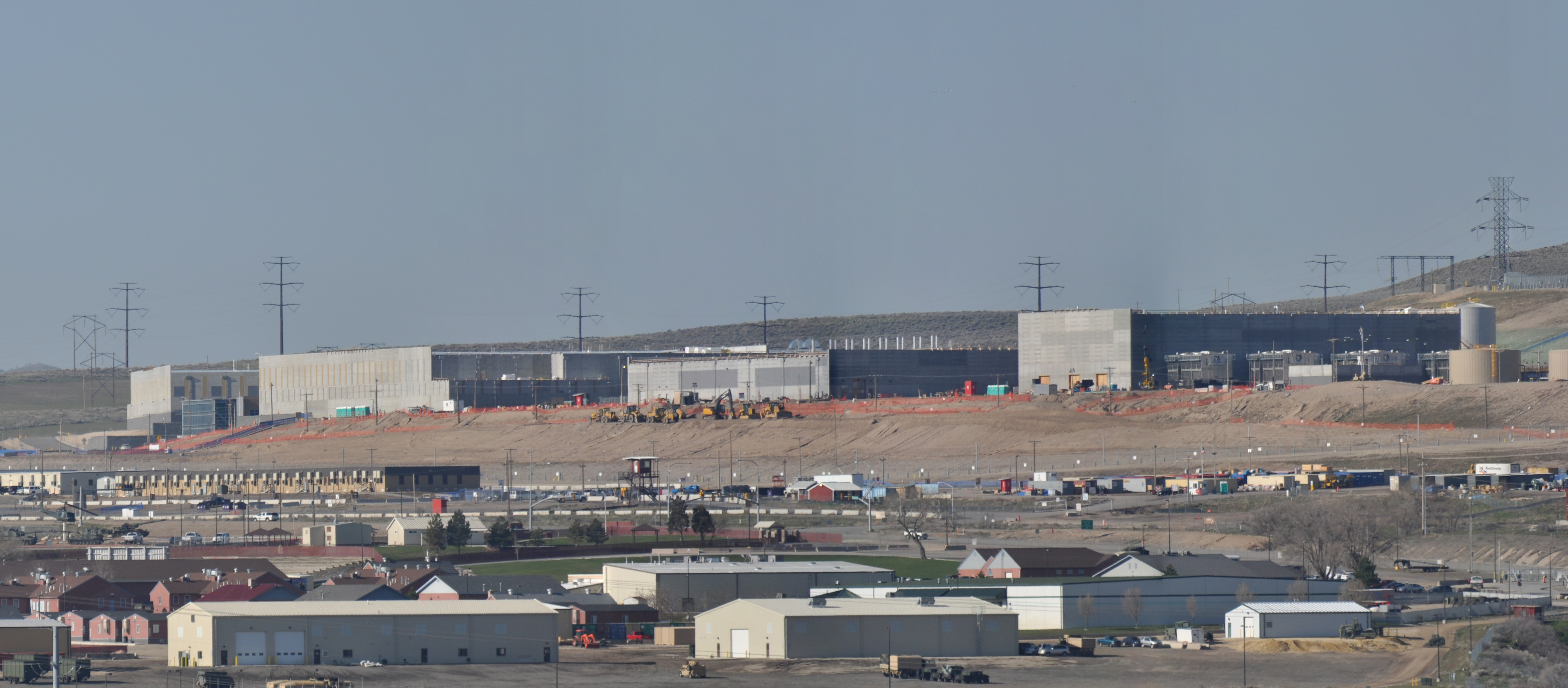
The shift toward fractional ownership in commercial data centers—often marketed as "Colocation REITs" or "Institutional Digital Real Estate"—is less of a sophisticated financial innovation and more of a pragmatic response to the sheer, crushing reality of the AI-driven compute arms race. By 2026, the retail investor’s entry into this space is no longer about buying individual server racks; rather, it mirrors the shift seen in The 2026 Strategy for Building Passive Income Through Music Royalty Portfolios by prioritizing yield-generating exposure to the literal bedrock of the digital economy. However, peeling back the glossy brochures reveals a messy landscape of long-term lease liabilities, cooling-infrastructure obsolescence, and the looming shadow of hyper-scale cloud providers dictating the terms of engagement.
The Mechanism: Why Fractional Ownership Exists
Commercial data centers are capital-intensive machines. We aren't talking about a server room in the basement of a legacy office building; we are talking about 100MW+ campuses that require massive power redundancy, liquid cooling integration, and multi-layered physical security. For the average investor, accessing this asset class was historically locked behind private equity walls, much like how specialized knowledge of Institutional Liquid Staking: The 2026 Strategy for Yield Maximization was once reserved for institutional players.
Fractional ownership, or syndicated investment, works by pooling capital to acquire or construct these facilities, subsequently leasing them out to "anchor tenants"—the hyperscalers (AWS, Google, Microsoft) or high-growth AI labs. Your dividend isn't just "rent"; it is a complex slice of a utility-grade lease.
The Reality of Operational Friction
If you spend time in the forums of Hacker News or dig through the r/DataCenter subreddit, the narrative changes from "stable yield" to "operational nightmare." The biggest misconception investors hold is that a data center is a "set it and forget it" real estate play, much like the naive belief that Why Automated Personal Brands Are Failing in 2026 is a sustainable strategy. It is not. It is an industrial manufacturing site for compute.
When an investor buys a share of a data center REIT or a syndicate, they are betting on the operator’s ability to manage Power Usage Effectiveness (PUE). If an operator fails to optimize for heat dissipation, the energy costs eat the yield. In the real world, this looks like messy maintenance cycles where a cooling pump failure at 3 AM triggers a cascading series of SLA penalties—a risk profile that makes Why Your Business Insurance Might Not Cover AI Mistakes an essential read for any serious tech entrepreneur.
"Every time a cooling unit goes down, my yield isn't just flat; it’s negative for that quarter. The fine print in these institutional contracts often favors the tenant’s uptime requirements over the landlord’s profit margin." — Anonymous REIT Investor, Discord Financial Roundtable, 2025.
Case Study: The "Legacy Rack" Trap
Consider the case of the Metro-Core Data Facility (2022-2025). Investors were lured by 8% dividend projections. However, the facility was designed for traditional CPU-intensive workloads. When the AI boom hit in 2024, the demand shifted to GPU-dense clusters that required twice the power density per rack. The facility could not support the floor loading or the cooling requirements.
The result? The anchor tenant left. The owner had to undergo a massive, multi-million dollar "retrofit" to remain competitive. Investors saw their dividends suspended for six quarters while the capital expenditure (CapEx) ballooned. This is the reality of the 2026 market: Technical Debt is now Real Estate Debt.
The 2026 Landscape: Power Constraints as the New Gold
The single most critical variable for your 2026 strategy isn't the building’s location; it’s the grid connection, just as How to Turn Your Private AI Compute Into a Profitable Business by 2026 emphasizes local hardware infrastructure as the ultimate leverage point. We have reached a point where data center operators are buying power plants just to secure enough electricity to keep their servers humming.
If you are evaluating a fund, stop looking at the "projected occupancy rate" and start looking at the Utility Interconnect Agreement. If they don't have secured, long-term power delivery, the facility is effectively a tomb.
The Counter-Criticism: Why Experts Are Skeptical
There is a growing chorus of analysts in The Information and 404 Media who argue that the retailization of data center investment is a "late-cycle trap." The argument is simple: The hyperscalers are increasingly building their own data centers. As they internalize their infrastructure, the demand for third-party colocation space among the "middle class" of tech companies is thinning.
If your fractional investment relies on leasing space to a mid-tier SaaS company that might be disrupted by a Large Language Model (LLM) tomorrow, your risk is significantly higher than the marketing material suggests. You are, in effect, double-leveraged on both the real estate market and the tech sector's volatility.
Operational Reality Checklist for the Investor
Before committing capital to a fractional data center vehicle, run these internal tests:
- The Cooling Ratio: Does the facility use air-cooling or liquid-immersion? If it’s air, the facility is obsolete for high-density AI chips. Demand a transition plan.
- SLA Transparency: Read the "Force Majeure" clauses. Are the investors shielded from the massive penalties that occur when a facility hits a cooling threshold?
- Tenant Concentration: Is the facility 90% occupied by one tenant? That isn't an investment; it’s a single-point-of-failure bond. You want a mix of enterprise and government clients.
- The "Upgrade" Clause: Who pays for the retrofit when the next generation of H-series or B-series chips arrives in 2027? If the burden falls on the landlord (you), your yield is a fiction.
The "Workaround" Culture: DIY Infrastructure
The most sophisticated players aren't just putting money into funds; they are watching the secondary markets for "stranded assets." These are facilities that were built for crypto-mining or high-frequency trading that have the right power infrastructure but are currently underutilized.
Smart investors are looking for syndicated projects that acquire these distressed assets at a discount and re-provision them for AI inference. This is where the yield is actually hiding in 2026—not in the brand-new, over-priced hyper-scale facilities, but in the tactical refurbishment of existing power-heavy shells.
Economic Impact and Governance
The governance of these fractional entities is often opaque. Unlike public stocks where you have SEC-mandated filings, many fractional platforms operate in the "Reg D" gray zone. You are often treated as a "limited partner" with virtually zero voting power.
If the management decides to take on debt to expand the campus, you have no say. If they decide to pivot the strategy toward a riskier, higher-margin tenant that requires specialized, non-standard infrastructure, you are along for the ride. Governance friction is the hidden tax on your yield.
The Risks of "Platform Decay"
Finally, consider the platform through which you are buying these fractional shares. We have seen a surge in "digital infrastructure marketplaces." Some are well-capitalized fintechs; others are essentially glorified spreadsheets held together by API calls to escrow services.
If the platform itself faces a liquidity crisis or a security breach, your "ownership" becomes an administrative headache that requires legal counsel to disentangle. Always check the Custodial Agreement. Who holds the title? Who manages the tax reporting? If the answer is "the platform handles it internally," proceed with extreme caution.
FAQ
Is fractional data center ownership safer than traditional real estate?
How do I assess the "exit" strategy for a fractional share?
Why do some facilities boast "100% renewable energy"?
What is the most common reason these dividends are cut?
Can I lose my entire principal investment?
Moving Forward with Caution
The 2026 strategy for data center investment is not about chasing the highest yield; it is about finding the highest Infrastructure Integrity. The internet is moving toward a state of constant, high-intensity processing. The facilities that can handle that load without melting down—both literally and financially—are the only ones that will provide consistent dividends. If the pitch sounds too easy, or if the "technological innovation" is the primary selling point, start looking at the power bills. That is where the truth lives.