
Liquid staking has evolved from a niche DeFi experiment into the backbone of institutional capital allocation. At its core, it allows token holders to earn network rewards while maintaining liquidity through derivative tokens. By 2026, the strategy has shifted from basic yield farming to complex, multi-layered risk management, as explored in the analysis of DeFi Yield Farming vs. Fractional Real Estate: Which Offers Better Risk-Adjusted Returns for 2026? Success now requires navigating systemic liquidity crunches and governance-weighted yield fluctuations.
The narrative surrounding liquid staking (LSTs) has shifted dramatically. In 2023, the focus was on the "primitive" itself—can I trade my staked ETH without waiting for the unbonding period? By 2026, the industry has matured, or perhaps, simply become more cynical. We are no longer talking about "passive income," but rather the technical nuances detailed in The Future of DeFi Yield: Why 2026 Strategy Is Moving Beyond Staking. We are talking about high-stakes capital efficiency where the difference between a 4% and a 12% yield is often a matter of how many layers of recursive protocols an institution is willing to risk.
The Operational Reality of the Liquid Staking Stack
Institutional-grade portfolios do not simply "stake." They operate within a stack that resembles a complex clockwork mechanism where the gears are made of smart contracts and the lubrication is liquidity.
A standard institutional setup involves:
- The Validator Layer: High-uptime, bare-metal infrastructure providers (often SOC 2 compliant) that prioritize MEV (Maximal Extractable Value) capture.
- The Abstraction Layer (LST): The tokenized receipt of the underlying assets.
- The Yield Optimization Layer: Protocols that auto-compound or re-stake LSTs into money markets or collateralized debt positions (CDPs).
The friction here is palpable. Every time you "layer" an LST, you introduce a new vector for smart contract risk. The industry mantra, "not your keys, not your coins," has been replaced by, "not your auditor, not your alpha."

The "Slashing" Shadow: A Persistent Engineering Compromise
One of the most persistent issues in liquid staking is the reality of slashing. While protocols promise to "protect" users, the reality is that slashing events are binary disasters. If a validator group fails, the LST de-pegs.
We saw this in the early days with various "decentralized" pools that suffered from cluster failures. Today, institutional players favor "Distributed Validator Technology" (DVT). DVT allows multiple nodes to operate as a single validator, mitigating the single-point-of-failure risk. However, the operational cost of DVT is significantly higher.
The Institutional Paradox: Large-scale portfolios want the decentralization benefit of DVT, but they often lack the technical appetite to manage the fragmentation that comes with it. If a provider's DVT setup requires coordinating across five different data centers, the latency increases, and the "realized" yield drops due to missed attestation slots.
Real Field Report: The "LST Spiral" of 2025
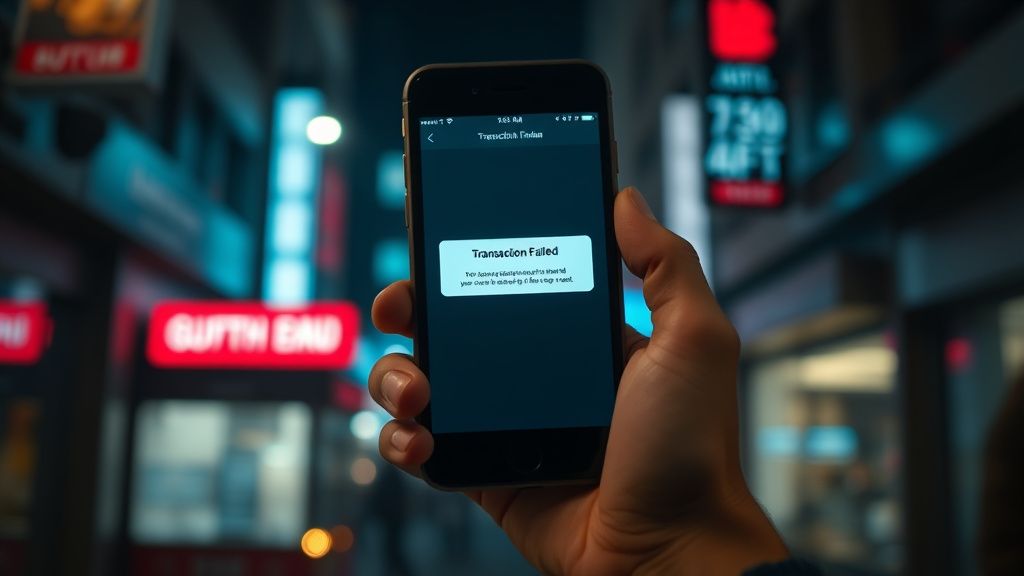
In Q3 2025, a prominent mid-sized protocol experienced a "liquidity evaporation" event. Investors had utilized their LSTs as collateral in a decentralized lending market. When a minor market volatility event occurred, the price of the LST diverged from the underlying asset by 1.2% for three hours.
The cascading liquidations were not triggered by insolvency, but by a "bad price feed" on a secondary oracle. The fallout was immediate:
- Institutional investors who were "set and forget" found their collateral liquidated.
- The governance forums were flooded with "governance attacks" as users tried to vote through a bailout that was technically impossible under the protocol’s rigid smart contract logic.
- The developer team’s response—a dry, 400-word postmortem on GitHub—did little to calm the Discord community, which was currently in full "panic mode."
This event highlighted that even the most "audited" code is still susceptible to the risks discussed in our guide, Is AI Managing Your Money? The Risks and Reality of Autonomous Investing in 2026.e has a "human-in-the-loop" vulnerability. In the end, the protocol had to implement a "circuit breaker" that essentially froze all withdrawals for 24 hours, causing massive outcry among users who viewed liquidity as a fundamental right, not a privilege.
Yield Maximization: The Art of Layering
"Yield Maximization" in 2026 is less about searching for the highest APR and more about searching for the most stable "Delta-Neutral" strategy.
Professional desks are employing Basis Trading on LSTs. Because LSTs often trade at a slight discount to their underlying asset, traders will:
- Buy the LST at a discount.
- Stake it for base network rewards.
- Short the spot asset on a centralized exchange to hedge the price fluctuation.
- Collect the spread.
The risk? Peg stability. If the LST discount widens (e.g., during a market crash), the trader faces margin calls on their short position while holding an asset that has temporarily lost its primary value anchor. This is not a "passive" strategy; it requires active monitoring of peg deviations across multiple DEXs.
The Fragmentation of Governance
Governance is the dark horse of institutional liquid staking. As institutions hold massive amounts of LSTs, they effectively control the voting power of the underlying networks.
This leads to a quiet, often invisible, tug-of-war. Protocols that manage LSTs are frequently bribed by other protocols to direct their "governance weight" to specific liquidity pools.
The Counter-Criticism: Critics argue that this is turning liquid staking into a "plutocracy," where the largest holders—who may not even be the most active community members—determine the future of the network. Many developers are pushing for "Liquid Governance," where users can delegate their vote to specialists. However, the adoption friction is immense. Most institutional investors simply "set and forget" their delegation, effectively outsourcing their democratic power to the protocol’s core team, which often lacks a clear, public accountability mechanism.

Engineering Compromises and the "Tape" Problem
If you look under the hood of most 2026 LST platforms, they are held together by what we call "technical debt glue." The UI is polished, the marketing is slick, and the VCs are happy. But the backend often struggles with "state explosion."
As the number of validators in a set increases, the amount of data the smart contracts must process to maintain the "share price" of the LST increases exponentially. We have seen instances where the "gas cost" to withdraw exceeds the value of the yield generated over a week.
- Workaround Culture: Developers are now building "Sidecar Oracles" that move some of the computation off-chain to save on gas, but this introduces a new trust requirement: the oracle must be incentivized to be honest.
- The Trust Erosion: When a protocol is forced to move to a semi-centralized Oracle model, the "institutional grade" label often becomes performative rather than technical.
Strategies for the Institutional Portfolio
For those building for the long term, the playbook is clear:
- Concentration Limits: Never hold more than 20% of your total LST allocation in a single protocol. The risk is not market volatility; the risk is the "black swan" protocol upgrade.
- Active Oracle Monitoring: Monitor the delta between the LST price and the spot price. If the delta widens by more than 0.5% over a 24-hour period, shift collateral out of that LST’s associated money market.
- Governance Participation: If you are an institutional holder, you must have a governance desk. Letting your voting power go to waste is essentially leaving free alpha on the table, as many protocols provide "boosted yields" to active participants.

The Human Element: Why People Still Flee
Despite the sophisticated "playbooks," why do users still rage-quit?
It’s rarely about the math. It’s about the support nightmare. When a deposit gets stuck in a smart contract, or a bridge update results in a "locked" state, the user is often faced with a ghost town. Discord servers are flooded with spam, GitHub issues are ignored for months, and the "Support" channel is just a bot pointing to a FAQ that doesn't cover "this specific weird case."
The "institutional grade" label is often a facade. Behind the curtain, most of these teams are 15-person startups burning through cash, struggling to keep the code running while the market demands 24/7 liquidity.
FAQ
Is liquid staking truly "liquid" in a market crash?
Why do institutional portfolios prioritize LSTs over native staking?
What is the biggest failure point in the 2026 stack?
Should I trust "Audited" status as an institutional investor?
Is the yield real or is it inflationary?