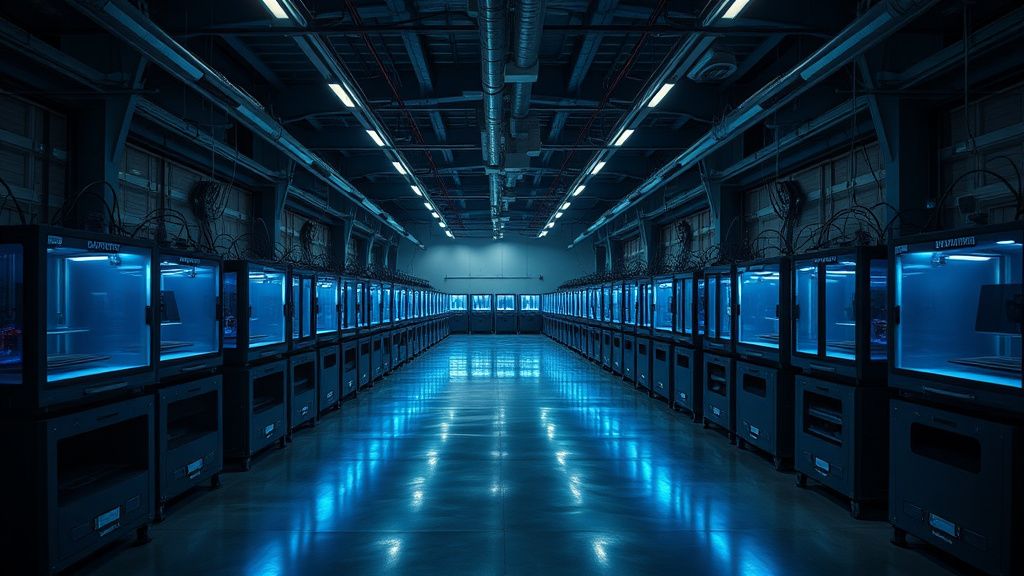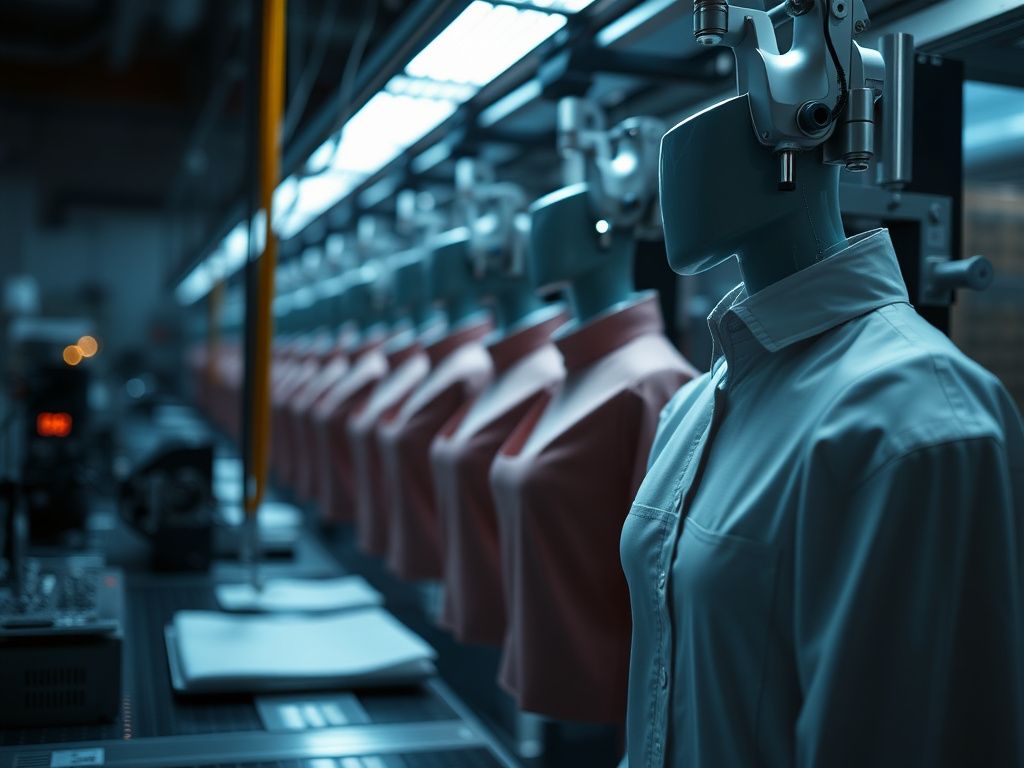
Zero-inventory white labeling leverages decentralized 3D printing networks to bypass traditional garment manufacturing. By utilizing on-demand production, brands eliminate stock risk, drastically reduce waste, and enable rapid iteration. However, success depends on navigating complex supply chain bottlenecks, managing material quality consistency across distributed print nodes, and mastering the high-touch customer lifecycle management required for premium-priced, bespoke-adjacent goods.
The promise of a 7-figure fashion brand built entirely on a server, where inventory is nothing more than a collection of STL files and a distributed manufacturing API, is the ultimate siren song of 2026. For a decade, "Print-on-Demand" (POD) meant cheap cotton tees with direct-to-garment prints. But as we move deeper into 2026, the convergence of high-speed additive manufacturing (AM), advanced thermoplastic elastomers (TPE/TPU), and global decentralized print networks has fundamentally altered the economics of high-end accessories, avant-garde footwear, and modular apparel components.
The Operational Reality: Beyond the Hype
The "zero-inventory" model is often sold as a passive income dream. It is, in reality, a high-intensity operational challenge. You are not just a brand; you are a digital supply chain manager. When you shift from bulk manufacturing to a 3D-printed white-label ecosystem, you lose the economy of scale but gain the economy of velocity.
The technical workflow involves a tight integration between your front-end store (Shopify or headless custom builds) and the manufacturing network (platforms like Fictiv, Protolabs, or specialized decentralized fashion-print DAOs).
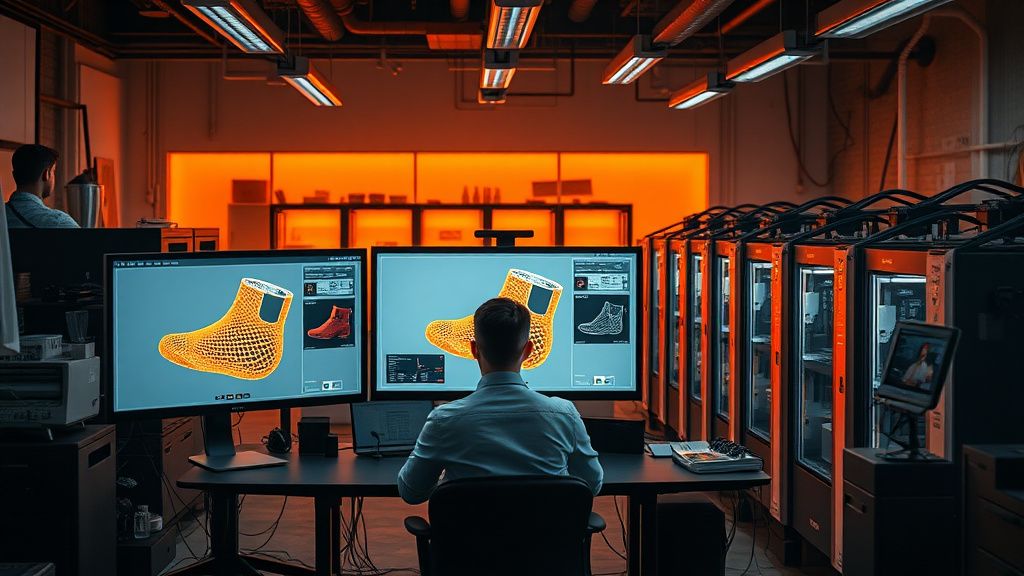
When a customer hits "Order," the system triggers a series of API calls. The STL file isn't just a model; it's a bundle of print parameters: layer height, infill density, material grade (Shore A hardness), and support structure requirements. If one node in your distributed network has a firmware update that changes the extrusion rate, your product profile shifts. This is where most brands fail: they treat the manufacturing network as a monolith. It is not. It is a fragmented, heterogeneous collection of machines with varying calibration drift.
The Hidden Costs of Digital Inventory
While you avoid the costs of warehouse leases and unsold stock (deadstock), you trade them for high Technical Debt and Quality Assurance (QA) Friction.
- Material Fragmentation: Different nodes use different brands of TPU or resin. Even within the same chemical classification, the mechanical properties—tensile strength, elongation at break, and UV resistance—vary. A strap printed in Berlin may feel different than one printed in Seoul.
- Post-Processing Overhead: 3D-printed fashion often requires manual post-processing (support removal, chemical vapor smoothing, dyeing, or hand-finishing). If you aren't doing this in-house, your white-label partner must. This adds labor costs that eat into your margins, often turning a high-revenue brand into a low-profit operation if not meticulously modeled.
- The Shipping Latency Tax: When you print on demand near the customer, you save on international freight. However, if your prints fail—and they do, at rates ranging from 2% to 15%—you have to manage a return/reprint workflow that is far more complex than picking an item off a warehouse shelf.
Real Field Report: The "Sole-Sourcing" Crisis
In early 2025, a mid-sized streetwear brand attempted to scale a 3D-printed sneaker midsole line using a decentralized node system. They marketed a "bespoke fit" based on customer-submitted phone scans. By month six, they were generating $120,000 in monthly revenue. Then, the system broke.
A major supplier of a specific TPU filament discontinued their formulation, forcing nodes to switch to a competitor's resin. The change in "hand feel" and flexibility was subtle but noticeable to repeat customers. The brand saw a 22% spike in return requests within a 30-day window. Because they lacked a centralized inventory of physical master samples for quality control, they couldn't calibrate the new material profiles fast enough. They spent three months in a cycle of "reprint-and-apologize," during which their Discord community turned toxic, calling the brand "unreliable vaporware."
Lesson: Zero-inventory doesn't mean zero-oversight. You need a digital twin of every batch you sell and a mandatory physical "golden sample" sent to you from any new node you onboard before they are allowed to fulfill live customer orders.

Building the Brand Architecture
To reach 7 figures, you cannot just be a "3D-printed brand." You must be a "technical design house." Your value proposition is not the item; it is the parametric adaptability.
- Community Co-Creation: Use platforms like Discord to host "Iteration Cycles." Post a base STL, let your community vote on lattice density or aesthetic surface patterns, then "release" the final file to the network. This builds the brand loyalty necessary to justify the premium price tags required by the high cost-per-unit of 3D printing.
- The "Slow-Fashion" Narrative: Lean into the sustainability angle. 3D printing produces 90% less waste than subtractive manufacturing (cutting fabric). Use this to justify the lead times. Customers who wait 10 days for a custom-printed item feel more ownership over the object than those buying mass-produced stock.
- API-First Brand: Don't use standard e-commerce plugins if you want to scale. Build a custom middleware that monitors the "Print-Health-Score" of your network nodes. If a node consistently produces low-quality output, the API should automatically reroute orders to a higher-rated node.
The Counter-Criticism: Is it Actually Scalable?
Critics—often from traditional textile manufacturing—argue that 3D printing in fashion is a "niche hobby dressed up as an industry." They point to the "durability gap." TPU structures, while comfortable and futuristic, don't have the same cyclic fatigue resistance as injection-molded rubber or high-performance knit fabrics.
"You can sell a $300 3D-printed accessory to a tech enthusiast once. But you won't get the repeat purchase if the structural integrity of the lattice collapses after six months of wear. The industry is ignoring the 'durability ceiling' of additive manufacturing." — Senior Supply Chain Analyst, FashionTech Review.
This is a valid critique. Many 3D-printed fashion items are essentially "wearable prototypes." To achieve long-term success, brands are moving toward "Hybrid Assemblies"—using 3D printing for the complex, modular, or customized parts of a product (e.g., sneaker midsoles, eyewear frames, bag hardware) while using traditional, durable materials for the chassis (e.g., canvas, leather, high-tenacity nylon).
The Economics of the 7-Figure Threshold
To cross the million-dollar mark, you need to solve the "Customer Acquisition Cost (CAC) vs. Unit Economics" trap. 3D-printed goods have high unit costs. If it costs you $80 to print and fulfill an item, and you sell it for $150, your margins are tight. If your CAC is $40 per customer, you have almost no room for error.
The solution is high LTV (Lifetime Value). You achieve this through:
- Modular Upgrades: Sell the "chassis" once, sell "modules" (swappable 3D-printed components) forever.
- Subscription Perks: Give "Pro" members access to limited-edition "Digital Collectible" files that they can print at home (if they own a printer) or order at a discount through your network.

Troubleshooting the Digital Factory
Infrastructure stress is inevitable. When you have a viral launch, your network nodes will struggle.
- Scaling Failure: You have 5,000 orders in 24 hours. Your 12 printing partners are overwhelmed. The print queues are backed up. Your website still says "Ships in 7 days." You are now in a "trust deficit" zone.
- Workaround Culture: Seasoned operators keep a "Shadow Network"—a group of high-capacity, private print shops not listed on public marketplaces. You reserve 30% of their capacity for "crisis overflows." Never rely on a single public print network for more than 50% of your volume.
The Future of the Model
By late 2026, we are seeing the rise of "Localized Micro-Factories." Instead of shipping products, brands will send the encrypted print files to retail "Experience Centers" that house high-speed industrial printers. The customer orders online, walks to the store, and picks up their item, which is printed in the back room while they have a coffee. This is the death of "shipping" and the birth of "instant digital manufacturing."
This model is not for the faint of heart. It requires the precision of an engineer and the vision of a creative director. You are balancing the laws of physics (material strength, heat deflection) with the laws of commerce (margin, retention, brand story).