
Algorithmic royalty investing represents a shift from "betting on hits" to "financing systematic utility." By treating music and IP catalogs as depreciable yet cash-flowing assets, investors now leverage predictive modeling to strip away the emotional volatility of A&R. While the yield can be attractive, the operational reality is a dense thicket of data fragmentation, pipeline failure, and hidden legal friction, often requiring investors to pivot toward more reliable assets as discussed in "The Future of DeFi Yield: Why 2026 Strategy Is Moving Beyond Staking" at https://havamsu.com/en/article/defi-staking-vs-liquid-staking-derivatives-yield-s-56958.
The reality of royalty investing in 2026 isn't about buying the next chart-topper; it’s about acquiring a diversified, fragmented pool of mechanical and performance rights that behave more like high-yield utility bonds than high-growth equity. You are essentially buying the right to collect a tiny percentage of global micro-transactions every time a song is streamed, synced in a commercial, or played in a coffee shop. It is a game of scale, not a game of taste—a principle that mirrors how firms balance risk, whether they are looking into DeFi vs. Private Credit: How Institutional Investors Are Balancing Yield in 2026 (https://parmen.net/en/article/defi-vs-p2p-business-lending-2026-institutional-pl-7229) or managing diverse music rights.
The Anatomy of an Algorithmic Play
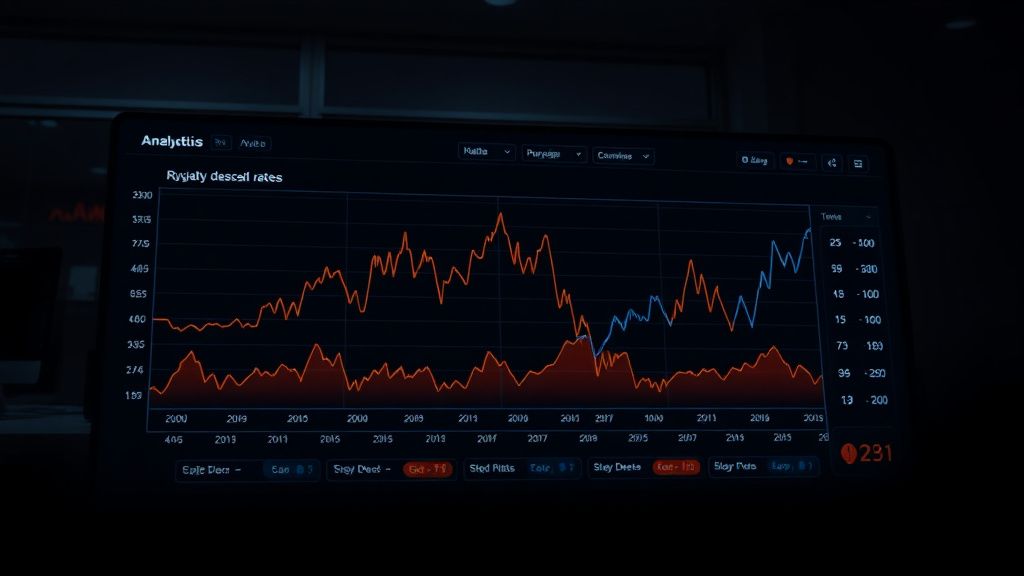
When we talk about "algorithmic" investing, we aren't suggesting that robots alone pick the catalogs. Rather, we are looking at the application of predictive analytics to determine the "decay rate" of an asset’s earning power. Traditional catalogs—those from the 70s and 80s—have a stable, predictable decay curve. Modern pop hits, conversely, often experience a "cliff drop" in revenue after the initial 18-month hype cycle.
The algorithmic approach uses machine learning models to look for "earworm durability." Is the song a seasonal fad, or is it a "bedrock track" that appears on mood-based playlists (e.g., "Chill Lofi Beats")? These playlists are the new radio, and they dictate the long-term viability of a catalog, much like how modern investors are diversifying their portfolios by analyzing why dividend investors are shifting to tokenized PropTech REITs (https://parmen.net/en/article/strategic-migration-proptech-reit-tokens-2026-66925).
Operational Reality: The Data Silo Problem
The biggest myth in royalty investing is that "the money just flows in." In reality, the royalty payment chain is a technical nightmare. Data fragmentation is the industry’s greatest weakness. A single track might have incorrect International Standard Recording Codes (ISRCs) or missing songwriter metadata, causing the revenue to get stuck in a "black box" held by Performance Rights Organizations (PROs).
If you buy a catalog without a forensic audit of the metadata, you are buying a broken pipe. You will find yourself spending 30% of your time on administrative work: fixing wrong splits, chasing down forgotten mechanical royalties in foreign territories, and fighting "double-claim" disputes on YouTube’s Content ID system.
- The Black Box Risk: A significant portion of global royalty income remains unclaimed because of poor documentation. If you aren't prepared to hire specialized data-cleaners, your "passive" income will become an active operations job, which is why many entrepreneurs are learning how to build a sustainable $15k/Month AI Automation Agency by 2026 (https://parmen.net/en/article/ai-automation-agency-blueprint-2026-77211) to streamline their workflows.
- The Reconciliation Gap: Payment statements from distributors (DistroKid, TuneCore, etc.) rarely match the actual performance data in real-time. Expect a 3-to-6-month lag.
The Human Element: Why Users Stop Listening
Algorithm-driven music consumption is governed by "contextual friction." A song’s performance is no longer just about its quality; it’s about its placement in the ecosystem. If a catalog’s tracks are removed from key playlists due to algorithmic updates, the income can evaporate overnight—an example of the fragility also seen when automated personal brands are failing in 2026 (https://parmen.net/en/article/automated-personal-brand-licensing-reality-check-2-35404).
This is the fragility of the "perpetual income" promise. In 2024 and 2025, we saw several high-profile catalog acquisitions underperform because the investors failed to account for "playlist churn." When a curator updates a "Top 50 Pop" list, the older tracks that don’t fit the current sonic trend are purged. If your assets were reliant on that list for 40% of their revenue, your ROI calculation just hit a wall.
Field Report: The "Sync" Mirage
Many investors enter the market hoping to strike gold with a "Sync" deal—getting a song placed in a Netflix show or a Nike commercial. This is, statistically, a bad way to build a sustainable model. Sync royalties are "lumpy." They provide massive one-time spikes but are notoriously difficult to predict.
In late 2025, a small fund attempted to acquire a catalog solely based on the potential for "retro-sync" opportunities. The strategy failed because the catalog lacked the necessary "clearance agility." To get a song synced, you need 100% control over both the Master and the Publishing rights. Most catalogs are cluttered with third-party samples or co-writers who refuse to sign off on commercial usage.
Lesson: Buy for the streaming tail, not the sync spike. If the streaming floor is low, no amount of "sync potential" will save your IRR.
Counter-Criticism: Is This Just a Ponzi of IP?
Critics argue that algorithmic royalty investing is essentially the financialization of nostalgia. By inflating the prices of legacy catalogs, private equity firms have driven yields down to the point where they are barely competitive with high-yield bonds.
- The "Yield Compression" Argument: As more capital enters the music market, the "purchase multiple"—how much you pay for a dollar of annual earnings—has crept from 8x to 15x or higher. At 15x, you are betting on the catalog earning at the same level for 15+ years. Given how fast digital culture moves, that is an incredibly aggressive bet.
- The AI Disruption Risk: What happens to your IP when generative AI models are trained on the "vibe" of your catalog? If a synthetic track can mimic the sound of your assets and capture the "lofi-study-beats" playlist real estate, your investment loses its moat. This is an existential threat that most 2026-era prospectuses conveniently ignore.

The Migration Chaos: Platform Dependencies
The technical infrastructure of royalty distribution is remarkably fragile. In 2025, a major change in the API structure of a leading streaming platform led to a three-week outage in royalty reporting for thousands of independent catalogs. Investors who were relying on these reports for their monthly reconciliation were left in the dark.
This "API fragility" is a persistent issue. When you invest in IP, you are also investing in the stability of the platform hosting it. If a platform decides to lower the payout rate per stream (the "pro-rata" model) in favor of a "user-centric" model, the math shifts instantly. You are always at the mercy of the platform’s business logic.
Navigating the Ecosystem: A Strategic Blueprint
If you are determined to build a portfolio, move away from the "hit" mindset and toward "genre-utility."
- Genre Selection: Focus on genres with "evergreen" consumption. Jazz, Classical, and specific sub-genres of Electronic (like Ambient or Deep House) have much lower decay rates than Urban, Hip-Hop, or Top-40 Pop.
- Rights Consolidation: Never buy a "share" of a song where you don't control the master rights. If you don't control the master, you can't control how the music is licensed, which effectively turns you into a passive observer rather than an active owner.
- Metadata Forensics: Before closing a deal, hire a third-party auditor to scrape the ISRC databases. Compare the distributor’s reports against the PRO statements for the last 36 months. If they don’t match within a 5% margin, there is a fundamental accounting error you should avoid.

The Reality of Maintenance: The Workaround Culture
Since there is no "perfect" software to manage these assets, veteran investors have built an elaborate "workaround culture." This involves custom-built SQL databases that aggregate CSV exports from various distributors, cross-referenced with public API data from Spotify and Apple Music.
This is not a "passive" investment. It is a data-management business. If you aren't prepared to write or commission scripts that clean your royalty data, you will be bleeding value to "stray" royalties that never make it to your bank account. The most successful investors in this space act more like data scientists than music lovers.
How do I know if an IP catalog is overpriced?
You measure the purchase multiple against the "decay slope." If a catalog is earning $10,000 a year and the seller wants $150,000 (15x multiple), ask yourself: "Will this earn $10,000 in 2036?" If the music is ephemeral (trendy pop), the answer is almost certainly no. A healthy multiple for non-legacy pop is often closer to 4x–6x.
What is the biggest hidden cost in music investing?
Legal and administrative overhead. Clearing disputes, managing PRO registrations, and performing forensic metadata audits can easily consume 10-15% of your annual revenue if you don't have an automated pipeline. Most investors underestimate this "human in the loop" requirement.
Can I really compete with private equity firms?
You cannot compete on scale, but you can compete on "niche intelligence." Private equity buys the broad, expensive, well-documented hits. The real alpha is in the "long tail"—catalogs of 500-1,000 tracks that are too small for the big funds to bother with, but which have stable, predictable, and neglected revenue streams.
How does AI-generated music affect my royalty portfolio?
AI is currently a "volume" threat. It floods the ecosystem with low-quality, derivative content that can dilute the overall pool of available attention. However, it also creates a premium for "human-verified, high-value" IP. The market is trending toward a "verified" tier where listeners pay for music with known human provenance.
What is the worst-case scenario for a royalty investor?
Platform bankruptcy or radical changes to the payout model (the "pro-rata" disaster). Additionally, the failure of the original distributor to properly register the work, leading to a permanent loss of revenue as the "black box" claims period expires. Always check the "age of the catalog"—the older it is, the more likely the administrative work has been completed correctly.