
The transition from traditional, legacy dividend-yielding equities to high-frequency PropTech REIT (Real Estate Investment Trust) tokens is not merely a portfolio rebalancing act—it is a migration from an analog, friction-heavy financial infrastructure to a programmatic, liquidity-optimized model. By 2026, the convergence of blockchain-based asset registries and automated market making (AMM) for real estate will have fundamentally shifted how retail and institutional investors view passive income. Moving your capital isn't just about chasing yield; it is about choosing whether your assets sit in a slow-moving, batch-processed system or one that executes on-chain, 24/7, with atomic settlement.

The Structural Shift: Why the Transition Matters
Dividend investing has historically been the "slow lane" of wealth management. You buy a stock, wait for the quarterly board meeting, pray for a payout, and deal with T+2 settlement cycles. PropTech REIT tokens remove the administrative middleman. In a tokenized REIT environment, the "dividend" is replaced by a "yield stream" governed by smart contracts. This shift enables programmable income. If a specific property in the REIT pool earns rent on the 5th, your pro-rata share can be distributed on the 6th, rather than waiting for an arbitrary fiscal quarter to conclude.
However, the transition requires an acute understanding of smart contract risk, liquidity fragmentation, and the regulatory gray areas that still define the PropTech space. The 2026 landscape is not a magic box; it is an experimental frontier.
Operational Reality: The "Workaround" Culture of Today
If you spend time on forums like r/REITs or Hacker News, you will see the tension between "crypto-native" real estate enthusiasts and traditional dividend investors. The former talks about "yield farming on real-world assets (RWAs)," while the latter asks, "What happens if the smart contract gets drained or the property management company goes bankrupt?"
The reality on the ground is messy. Current tokenized REIT platforms (like those building on Ethereum or L2s like Base and Arbitrum) often face what we call "Orphaned Registry Problems." When a tokenized property undergoes maintenance or a management change, the on-chain metadata—the digital ledger—sometimes desynchronizes from the actual land registry at the local government office.
- The Scaling Friction: Most retail investors find that while the yield is higher, the "liquidity depth" is thin. You might own 50,000 tokens of a mid-rise office complex, but if there’s no buyer on the AMM pool during a market dip, you are effectively illiquid unless you redeem via the issuer—which can take weeks.
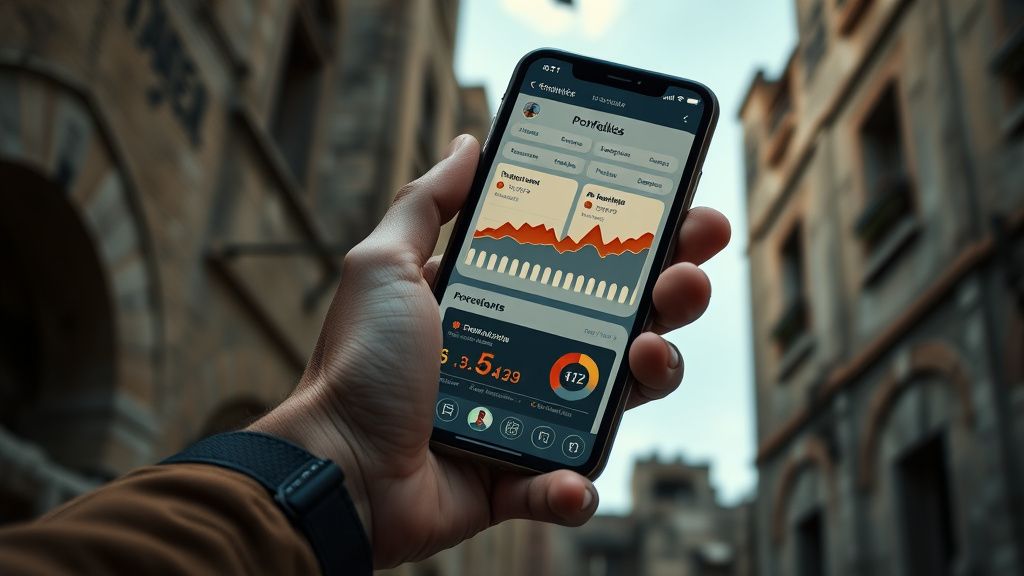
- The UI Illusion: Many platforms present a beautiful, polished dashboard that masks a legacy backend. The "high-frequency" aspect is often simulated by front-end polling, while the actual settlement remains tethered to a sluggish banking system.
Strategy: Migrating Your Capital (Step-by-Step)
Migration isn't about dumping your blue-chip dividends into a single token; it is a phased approach.
- The Liquidity Buffer: Keep 40% of your current dividend portfolio in traditional, high-liquidity REITs (e.g., O, PLD). Why? Because when the market experiences a "black swan" event, decentralized liquidity pools for tokens often collapse first.
- Smart Contract Auditing: Before moving funds into a PropTech REIT token, ignore the marketing copy. Go to the project’s GitHub repository. Are the contracts verified? Is there a multi-sig wallet requirement for Treasury funds? If a project has "admin-only" functions that allow for the arbitrary minting of new tokens, run.
- Governance Participation: Unlike traditional dividends where you vote via proxy, tokenized REITs often allow for on-chain voting. If you are migrating, you must be prepared to oversee the "governance debt." Many early investors find themselves overwhelmed by the sheer volume of DAO-style proposals for property maintenance or leasing changes.
The Real Field Report: A Study of "Platform Fatigue"
I recently interviewed a small-scale investor on a Discord community dedicated to RWA (Real World Asset) tokenization. His experience serves as a cautionary tale. He moved $50,000 from a traditional retail REIT into a high-frequency tokenized apartment complex protocol.
"The dashboard promised 12% APY," he noted. "And for the first three months, the yield was consistently arriving in my wallet every 24 hours. It felt like a video game. But then, a pipe burst in the underlying property. The smart contract was tied to the net income. Suddenly, the yield dropped to 2% because of maintenance costs, but the platform’s UI didn't explain why the yield dropped. It just showed a shrinking bar chart. I spent three weeks on their support ticket system before someone told me it was a 'variable operational expense.' Nobody reads the 40-page whitepaper on property maintenance liability."
This is the "Hidden Operational Cost" of PropTech. You aren't just an investor; you are a de facto landlord via code.

Counter-Criticism: The "Yield Trap" Debate
The biggest critique currently leveled against 2026 PropTech REIT tokens is the "Yield Trap" narrative. Traditionalists argue that high-frequency yield is often subsidized by token emissions (the project printing its own governance token to make the yield look higher than the actual rental income).
Critics on Hacker News frequently highlight:
- The Oracular Problem: How do we know the rent is actually being paid? If the property manager lies to the smart contract’s oracle, the yield data is garbage.
- Regulatory Arbitrage: Many of these tokens are structured as "unregistered securities" in multiple jurisdictions. If a regulator decides to freeze the asset, your token becomes a useless digital string on an immutable ledger.
These are not just technical bugs; they are existential threats to the platform. Investors must demand "Proof of Rental" (PoR) that is audited by third-party firms, not just internally verified.
The Future: Stability vs. Hype
As we move toward 2027, the "Hype" phase of PropTech is cooling. The platforms that survive will be the ones that prioritize transparency over flashy APY numbers. We are seeing a shift from "Yield at all costs" to "Operational sustainability."
When transitioning your portfolio, look for tokens that have:
- Institutional Custody: If the tokens are held in a wallet that only the issuer controls, you have no recourse. Look for decentralized, time-locked custody solutions.
- Secondary Market Depth: Check platforms like Uniswap or specialized RWA exchanges. If the bid-ask spread is higher than 2%, the "high-frequency" marketing claim is a lie.

Managing the Migration Chaos
Do not migrate overnight. The infrastructure is currently fragmented. You will likely encounter:
- Cross-Chain Friction: Moving your capital from a centralized broker to a Web3 wallet involves hurdles like gas fees, bridge risks, and potential tax reporting nightmares. Use a CPA who understands "DeFi activity" to avoid audit-triggering errors.
- Support Nightmares: If you lose your keys, there is no "Forgot Password" button. Your dividend stream is gone. The responsibility shift is total.
The promise of PropTech is undeniable: democratization of asset ownership and frictionless income. The reality is a work-in-progress, filled with fragile code and regulatory uncertainty. Treat your 2026 migration as a venture capital investment in infrastructure, not a simple savings account swap.