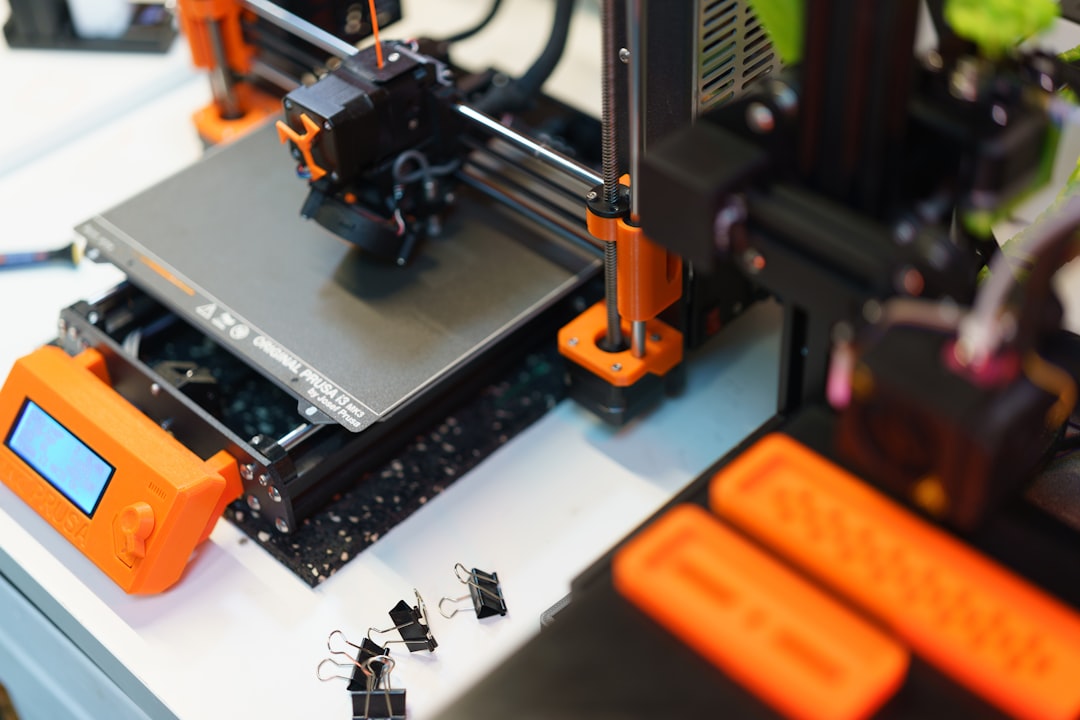
The "Shadow Inventory" strategy—leveraging 3D on-demand manufacturing (3D-ODM) to decouple product validation from capital-intensive mass production—is the modern architect’s blueprint for lean, seven-figure e-commerce. By maintaining a digital catalog of "shadow" products that only exist as physical objects when a customer completes a transaction, brands can bypass traditional warehousing risks, effectively turning the entire manufacturing supply chain into a just-in-time service. This model relies on algorithmic demand signaling, rapid prototyping, and automated fulfillment to eliminate overstock, reduce waste, and pivot product lines in response to real-time market sentiment.
The traditional e-commerce model is built on the graveyard of "best guess" inventory. Founders spend $50,000 on a container of custom-molded plastic phone cases, only to find the aesthetic has shifted or a competitor has released a functionally superior iteration, highlighting why top startups are replacing full-time CMOs with fractional experts to navigate these volatile market trends.
The 3D-on-demand movement disrupts this by treating the manufacturing process not as a batch event, but as a continuous, granular stream. When you operate a "Shadow Inventory" brand, your website acts as a high-fidelity digital twin of your capabilities rather than your current stock.
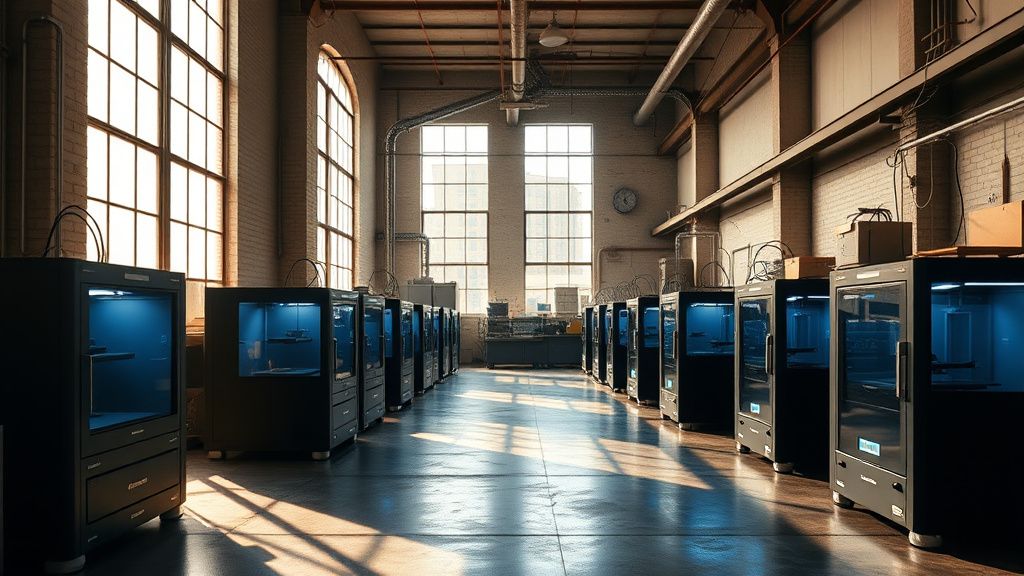
The Mechanics of the "Shadow" Shift
At its core, the shadow inventory strategy replaces the warehouse with an API connection to an additive manufacturing hub. Whether you are using internal server farms of printers or outsourcing to providers like Protolabs or additive-as-a-service networks, the logic remains identical: the physical object is a liability until it is sold.
- The Digital Catalog as a Sandbox: You upload 50 potential SKUs. You do not manufacture a single unit. You use high-fidelity, photorealistic renders—often indistinguishable from photography—to populate your storefront.
- Validation via Micro-Conversion: You run low-budget paid media traffic to these product pages. If a SKU gains traction, you greenlight it. If it doesn’t, it remains a "shadow." You haven’t lost a cent on inventory; you’ve simply collected data on what the market refuses to buy.
- Automated Triggering: Once an order hits the database, an automated workflow triggers a job request to your 3D printing cluster. By the time the customer receives their shipping notification, the product is being cooled and post-processed.
Engineering Compromises and the "Quality Trap"
The primary tension in this model is the inherent trade-off between speed and material fidelity. Professional-grade injection molding provides a level of surface finish and material consistency that additive manufacturing often struggles to replicate at scale.
On forums like the r/AdditiveManufacturing or the r/E-commerce subreddits, you will frequently find threads titled "The 3D printed look is killing my brand's perceived value." This is the "Shadow Inventory" bottleneck. If your products look like hobbyist projects—characterized by visible layer lines, inconsistent finish, or structural brittleness—you will never reach seven-figure scale.
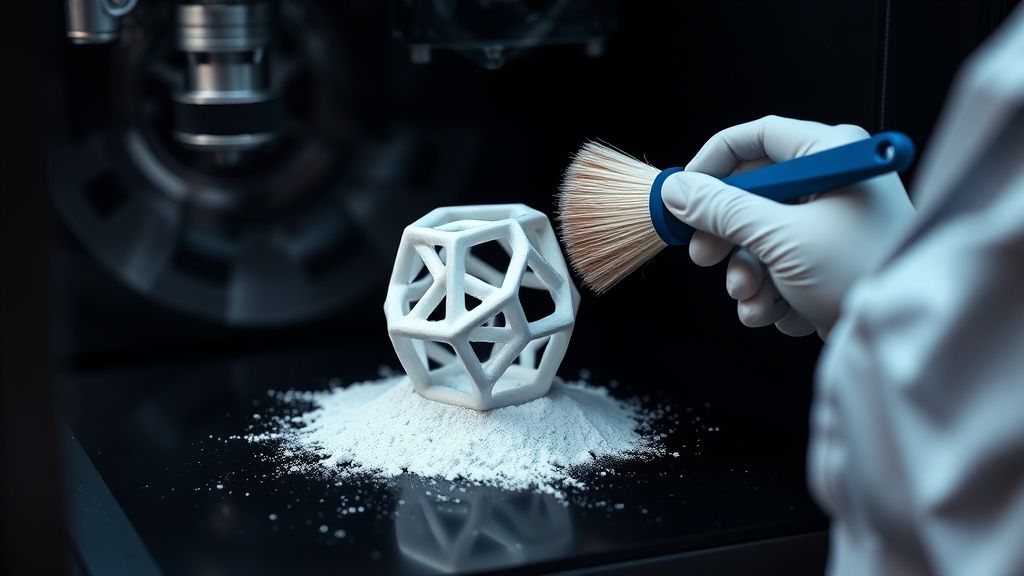
To overcome this, successful brands have moved away from basic FDM (Fused Deposition Modeling) toward SLA (Stereolithography) or SLS (Selective Laser Sintering) setups. These technologies, while more expensive per unit, yield a "factory-made" aesthetic that allows the brand to command a premium price.
Real Field Report: The Case of "Vertex Gears" (Case Study)
"Vertex Gears," a niche tactical gear accessory brand, provides the textbook example of the shadow inventory strategy in action. In 2021, the founder, a former mechanical engineer, launched a store featuring over 200 modular holster designs for niche camera equipment and tactical radios.
- The Problem: Traditional injection molding would have required a $150,000 investment in steel tooling before even knowing which of the 200 variations were desirable.
- The Execution: They built the catalog using high-end renders. They used a network of local 3D print farms to handle orders on-demand.
- The Failure Point: Scaling. When a TikTok influencer showcased one of their flagship belt clips, the company received 400 orders in 48 hours. Their print farm, designed for 20 orders a day, collapsed under the load. They had to pivot to "delayed fulfillment" messaging, which eroded customer trust.
The lesson: The shadow strategy is not a "fire and forget" system. It requires a tiered transition. Once a product crosses the "proven" threshold—say, 500 units per month—the operational imperative should be to shift that specific item from 3D printing to injection molding. This is the hybrid-scale model that truly defines the "seven-figure" tier.
The Hidden Costs of Digital Inventory
While the strategy eliminates the cost of unsold stock, it introduces "Operational Debt."
- QC Overhead: In a traditional factory, you quality-check a sample from a run of 1,000. In 3D-on-demand, every single item is a unique manufacturing event. This makes quality control an exponential task rather than a linear one.
- The API Fragility: Your entire business model relies on the uptime and reliability of your print-on-demand provider’s API. If their internal systems go down, your store is effectively "out of stock" without you even realizing it.
- Material Variability: Even with high-end printers, environmental factors like humidity in the print shop can alter the tensile strength of the parts.
As noted in a heated discussion on a prominent developer forum regarding Shopify API integration for manufacturing queues, one developer remarked: "You can build the most elegant front-end in the world, but if the manufacturing webhook fails and the customer gets an order confirmation for an item that is currently a failed print, your reputation is toast."
Counter-Criticism: Is it Actually "Sustainable"?
There is a loud contingent of industry analysts who argue that 3D-on-demand is fundamentally unsustainable at a massive scale due to electricity consumption and plastic waste (failed prints, support structures, and post-processing scrap).
Furthermore, from a competitive standpoint, once a 3D-printed product starts selling well, it becomes a target. If your product is easily replicable via 3D printing, a competitor can simply reverse-engineer your design and undercut your price once they have validated the market.
The Defense: The strategy isn't about selling a commodity; it's about selling a curated solution. If you are relying on generic, easily copied designs, you are already losing. The "Shadow Inventory" strategy succeeds when it is paired with deep, niche-specific intellectual property that is hard to emulate, or community-driven designs that change frequently enough that copycats can't keep up.
Building the "Hybrid" Pipeline
If you intend to scale to seven figures and beyond, you must accept that pure 3D printing has a ceiling. The real winners in this space use 3D printing as the "Innovation Engine" to:
- Test new SKUs with zero risk.
- Iterate on existing SKUs based on customer feedback (e.g., changing a clip design because users complained it was too tight).
- Bridge the gap while waiting for mass-produced batches to arrive from overseas.
By building a feedback loop where your "Shadow" customers are encouraged to leave detailed reviews—not just on star ratings, but on physical dimensions and material feel—you gain R&D data that traditional brands pay millions to focus groups to obtain.
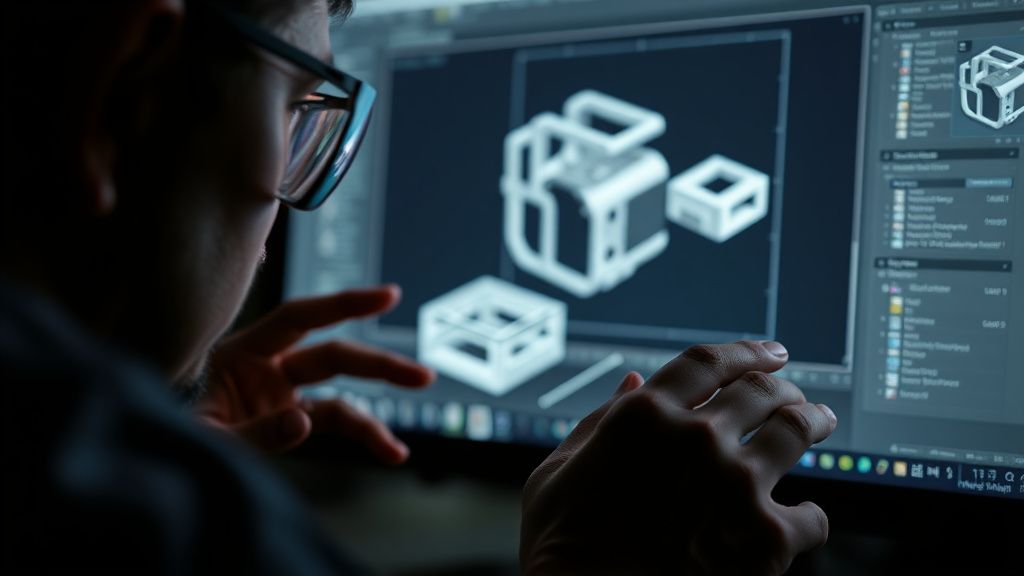
Operational Workflow for the Seven-Figure Brand
To survive the transition from a "side hustle" to a "brand," your workflow must be hardened against the chaos of digital production:
- The "Kill Switch" Mechanism: Program your system to automatically disable products that receive a return or a negative quality-based review. This prevents a bad design from spiraling into a customer service nightmare.
- The Redundancy Layer: Never rely on a single print provider. Distribute your print queue across different vendors or a mix of in-house printers and third-party services. When one machine goes down, your store stays open.
- The Feedback Loop: Implement an automated post-purchase email (at T+7 days) that asks specific technical questions about the product's function. This is your gold mine for future iterations.
How do I handle customer expectations when a product is on-demand?
Be brutally honest. Most customers, especially in niche enthusiast markets, are happy to wait an extra 3–5 days if they know the product is being custom-made for them. Position the "making" process as part of the brand’s value proposition. Use phrases like "Crafted to order in our local facility," which frames the lead time as a sign of quality, not a logistical failing.
What is the biggest failure point for new brands in this space?
The "Over-Engineering" trap. Many new entrepreneurs obsess over internal structural integrity for parts that will never be under stress. This bloats the print time and costs. Always optimize for the minimum viable physical specification. If it doesn't break under normal use, it’s good enough. Spend that saved time on design and marketing.
Does this strategy work for non-mechanical products?
It is extremely difficult. 3D printing is best suited for rigid, geometric objects (parts, tools, enclosures, accessories). Soft goods or complex electronic assemblies are much harder to scale with this model. If you are selling clothing or consumer electronics, this strategy will likely be limited to prototyping and custom add-ons, not your core product.
How do I protect my designs from being stolen once they are "out there"?
Acceptance is the first step. If a product is easy to 3D print, it is impossible to stop someone from copying it. Focus on building brand equity, fast iteration cycles, and customer loyalty. When a competitor copies your version 1.0, you should already be shipping version 2.0 based on the feedback you’ve collected.
Is the "Shadow Inventory" model actually profitable?
It has lower margins per unit compared to mass-produced items, but it has much higher capital efficiency. You are trading margin for risk reduction. At seven-figure scale, the goal is to shift your "winners" to traditional manufacturing to recoup those margins, while keeping your "innovation pipeline" running on the high-margin, low-risk shadow model.
The "Shadow" model is not for the faint of heart. It requires the mindset of a software developer—iterative, fast-moving, and data-obsessed—applied to the messy, physical world of atoms. You are not building a factory; you are building an information system that controls physical outcomes. When done correctly, it is one of the most efficient ways to bootstrap a brand because it removes the single biggest barrier to entry in e-commerce: the dead-weight risk of unsold inventory sitting in a dark, rented warehouse.