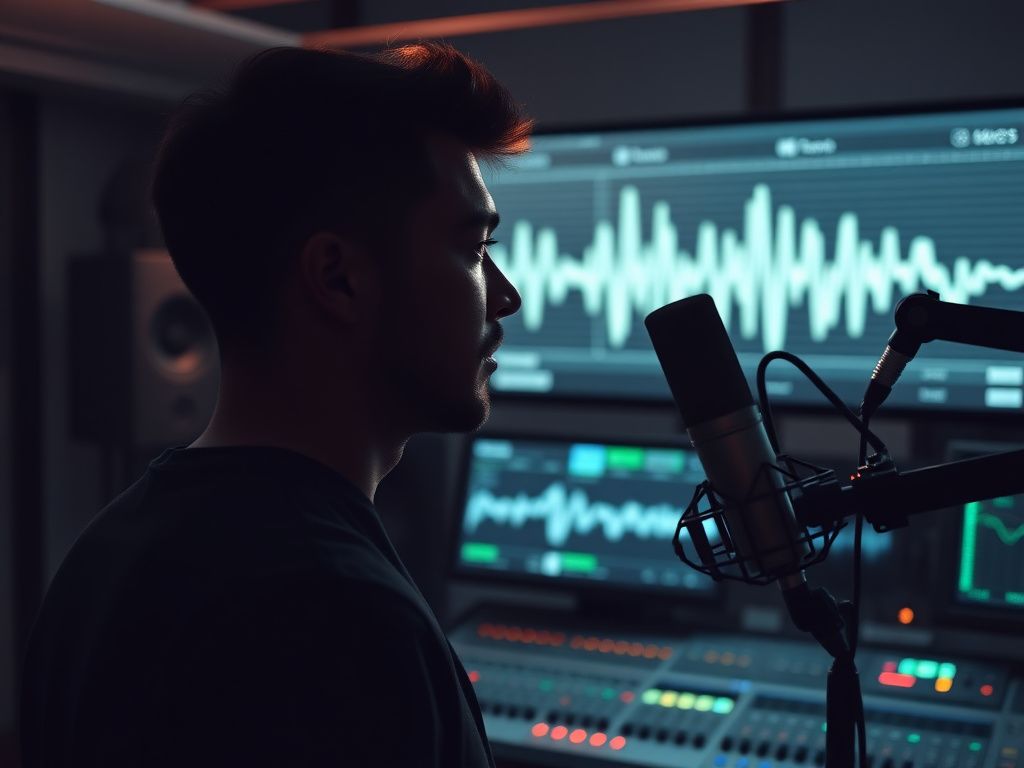
Licensing your AI voice is not a passive income dream; it is an exercise in high-stakes intellectual property management. To successfully lease your digital twin to global media agencies, you must treat your vocal identity as a corporate asset rather than a hobby. Success requires a rigorous balance of technical fidelity, aggressive legal shielding, and an understanding of the precarious "uncanny valley" logistics that currently plague the ad-tech industry.
The Anatomy of a Voice Asset
Before you approach an agency, understand what you are actually selling. It is not just an "MP3 file." You are providing a generative model—a weights-based representation of your acoustic signature.
The industry standard right now is moving away from basic TTS (Text-to-Speech) toward high-fidelity RVC (Retrieval-based Voice Conversion) and sophisticated end-to-end models like ElevenLabs or private enterprise stacks. When a media agency wants your voice, they aren’t just asking for a static sample; they want a synthetic engine that handles nuance, breath control, and emotional inflection without sounding like a robotic customer service IVR from 2012.
The Workflow Reality:
- The Dataset: You need 30-60 minutes of "clean, raw audio." Avoid the temptation to use processed studio audio. Engineers prefer raw waveforms so they can apply their own compression and mastering chains.
- The Licensing Contract: Never sign a "work-for-hire" agreement that gives away your vocal likeness in perpetuity. Ensure your contract specifies:
- Usage Scope: e-Learning? Yes. Political advertisements? Likely no.
- Term Limits: 12 to 24 months is standard.
- Termination Rights: A "kill switch" clause is non-negotiable. If you find your voice being used for AI-generated misinformation or low-quality clickbait, you need the right to demand the model be purged from their servers.
Navigating the "Workaround" Culture
If you spend time in developer Discords or on Hacker News threads discussing ElevenLabs’ latest API update or the stability of Tortoise-TTS, you’ll notice a recurring theme: the tech is great, but the ecosystem is messy.
Agencies often lack the internal infrastructure to manage "consent layers." They might have your license to use the voice for a specific shampoo commercial, but their creative team might "experiment" with your model for a different internal project without re-negotiating the fee.
"The hardest part isn't generating the voice; it’s policing where the model files end up once they leave your server." — Anonymous Voiceover Talent, r/VoiceActing discussion thread.
This is why you must insist on watermarking. Modern AI audio can be embedded with inaudible forensic watermarks. If an agency tries to "leak" your model to a third party, these forensic markers allow you to trace the specific licensing breach back to the source.
The Economic Paradox: Why Agencies Want You
Media agencies are moving toward AI voices not just to save money, but to solve the "Scale Problem." A global campaign might require a localized version of an ad in 14 languages. Hiring 14 different voice actors for minor localization shifts is an operational nightmare. If your licensed voice is versatile, you represent a one-stop-shop for global localization.
However, be warned: agencies will push for a "Buyout." They want to own the model. If you accept a buyout, you effectively retire your own voice. You are selling the rights to your vocal timbre to a machine that can work 24/7, for free, forever. Don’t do it. Opt for a "per-project" or "per-usage" royalty structure whenever possible.
Technical Infrastructure and Stability
When you provide your voice to a firm, they will likely ask for a "Voice Profile" upload.
- The Artifacts: Watch for "breathing artifacts." If your model gasps in the middle of a sentence where no human would, it’s a bad encode.
- The Latency: Some platforms struggle with real-time inference. If your agency is planning to use your voice for live-streamed, interactive chatbots, you need to ensure the latency is below 300ms. Anything slower feels like a "satellite phone call" and ruins the immersion.
If you are curious about the technical specifications of the hardware typically used to train these models locally, you might want to look into the performance requirements of various GPUs; you can check your own hardware potential using our Benchmark Tool.
When the System Breaks
The biggest risk in the AI voice economy isn't the technology failing—it's the moderation fallout. Imagine your voice is licensed to a reputable car brand, but a bad actor compromises their server and uses your voice to promote a scam. The public won’t blame the agency; they will blame you.
- Public Perception: Your voice is your brand. Ensure you have a PR clause that allows you to disavow specific uses of your synthetic persona if the agency deviates from your agreed-upon "moral compass" guidelines.
- Version Control: Agencies often iterate. If they update your model with new data without your permission, they are creating a "derivative" that you no longer control. Require that all model updates pass through your approval or a third-party auditor.
How do I know if my voice is "valuable" enough for licensing?
The value isn't based on your fame, but on your "acoustic versatility." Agencies look for voices that are neutral yet expressive. If your voice can sustain a consistent tone across 10,000 words without drifting into a monotone, you have a marketable asset.
Can I license my voice to multiple agencies at once?
Yes, but you must be careful with exclusivity clauses. Most agencies will ask for a 6-month exclusive window in specific territories. If you sign away exclusivity, you cannot easily switch providers if one agency offers a better royalty structure. Always read the "Exclusivity Radius" section of your contract.
What happens if I "retire" my voice?
If you have a well-structured contract, you can issue a "sunset notice." This requires the agency to delete the model from their production environment within 30 days. However, enforcing this is difficult if the model has already been distributed to third-party ad networks. Use a digital rights management (DRM) service if possible.
Is AI voice licensing killing traditional voice-over work?
It is shifting the market, not killing it. High-end, "human-first" narrative work remains premium. Licensing your clone is essentially "blue-collar" voice work—it handles the high-volume, low-margin tasks (instructional videos, generic product intros) that humans often find monotonous. Treat your clone as a tool to automate your grunt work while you keep the "human" slots for yourself.