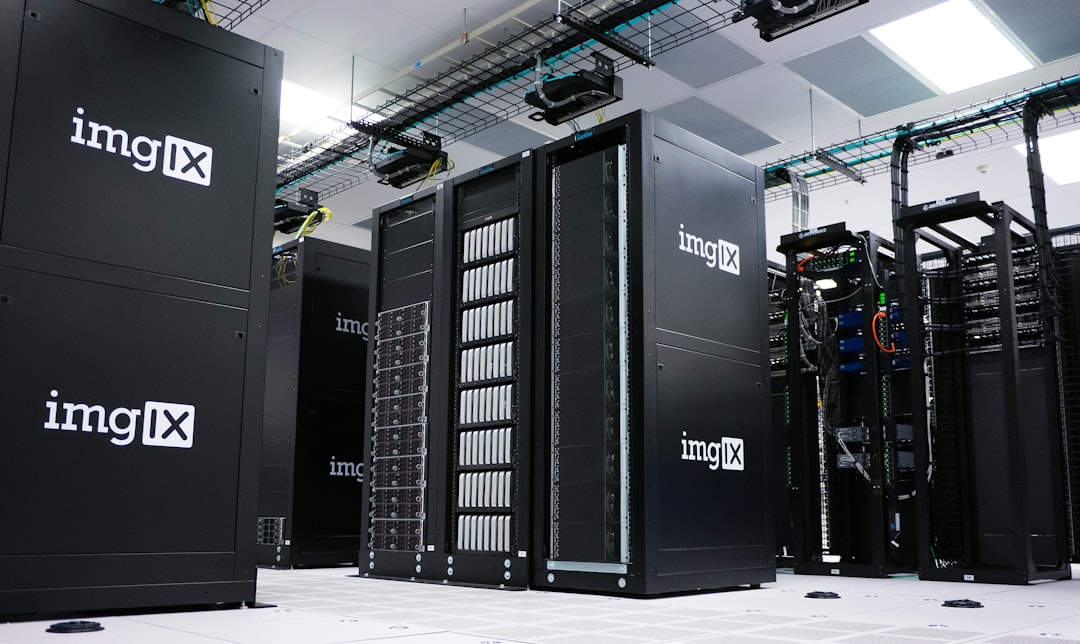
Optimizing DePIN (Decentralized Physical Infrastructure Network) nodes for 2026 requires moving beyond the "set it and forget it" mentality that defined the 2022-2024 era. Success now hinges on architectural resilience, proximity to network-heavy geographic clusters, and a nuanced understanding of dynamic staking mechanics that penalize idle or low-quality hardware. It is no longer just about owning a miner; it is about managing a distributed asset in a volatile, performance-gated market.
The dream of decentralized physical infrastructure—much like the vision behind Why Vertical Aquaponics Is the Key to Solving Global Food Security by 2030—is that individual homeowners could collectively out-compete monolithic giants, though it is currently undergoing its most brutal test. We have moved past the initial "gold rush" phase where early adopters were rewarded simply for showing up. In 2026, the protocols are becoming aggressively meritocratic. If you are running a DePIN node today, you are not just a crypto-enthusiast; you are a micro-datacenter operator. Your profitability is tied to uptime, latency, and the specific geographic demand for your node's services.
The Reality of Operational Friction
Early DePIN protocols marketed themselves with slogans like "Earn passive income," a concept many people now pursue through How to Build a High-Margin Subscription Community for Automated Passive Income. The reality is significantly more complex. In 2026, the primary challenge is not "passive" income; it is "active" infrastructure maintenance.
When you join a network like Helium (or its newer, more specialized successors), you aren't just plugging in a box. You are entering into a service level agreement (SLA) with a decentralized protocol. If your node suffers from excessive packet loss, jitter, or inconsistent power, the protocol’s proof-of-work/proof-of-coverage algorithms will silently deprioritize you. You won’t get a notification saying "you’re doing bad." You will simply see your staking rewards decay by 15-20% week-over-week.
The "Workaround" Culture
If you visit the subreddits or Discord servers for most major DePIN projects, you won't see threads about "how much I made today." You will see threads about:
- "How do I bypass CGNAT to ensure my node isn't stuck in a restricted network?"
- "My ISP throttled my traffic after 2TB of usage—how are you guys handling peering agreements?"
- "Has anyone successfully deployed an enterprise-grade load balancer for their node array?"
This is the "workaround culture." Users are being forced to act like network engineers. The barrier to entry has shifted toward technical expertise, forcing many operators to learn skills similar to those outlined in How to Build a Sustainable B2B AI Prompt Engineering Agency to manage their operations effectively.
Understanding the Staking Multiplier
In 2026, staking rewards are rarely a flat percentage. They are almost always tied to a "Quality of Service" (QoS) score. This is where most retail participants fail, often lacking the strategic oversight required in professional sectors like How to Scale Ergonomic Consulting for Remote Teams in 2026.
The staking equation typically looks like this:
Rewards = (Base Stake * Stake Multiplier) * QoS Score
If your QoS Score is 0.6 because your node is physically located in a saturated area (e.g., downtown San Francisco, where there are already 500 nodes) or your latency is above 100ms, it doesn't matter how much capital you lock up. You are fighting against the protocol’s internal incentive to prioritize "edge" nodes that provide unique coverage or compute capacity.

Case Study: The Failure of "Bedroom Mining"
Consider the case of a mid-tier decentralized compute provider that saw a mass exodus in Q3 2025. The protocol launched with high yields, prompting thousands of retail users to buy off-the-shelf mini-PCs and stick them in their living rooms.
The problem? The network didn't need thousands of unreliable machines, mirroring the inefficiency seen in legacy systems discussed in Why Traditional Cybersecurity Is Failing Enterprises in 2026. It needed enterprise-grade, high-bandwidth compute nodes. When the protocol updated its reward distribution logic to favor nodes with static IP addresses and 1Gbps+ symmetrical fiber, 70% of the network was essentially "orphaned." Those users didn't lose their tokens, but their staking rewards dropped to near zero. They were effectively priced out of the protocol they had invested in. This is a recurring theme: The protocol evolves, but the hardware stays stagnant.
Designing for Longevity: The 2026 Playbook
If you want to optimize your rewards, you must approach this like an investment in physical hardware.
- Geographic Arbitrage: Stop putting nodes where you live. Put nodes where the protocol lacks density. Use the project’s explorer maps to identify "hexes" or "zones" that are under-served but have high potential demand.
- Redundancy is Mandatory: If your node goes down for maintenance, you aren't just losing uptime—you’re losing your "reputation score." Consider dual-homed internet connections (ISP A + ISP B with a failover router).
- Power Management: In many parts of the world, electricity costs can negate staking rewards during peak hours. Use smart plugs to monitor consumption and, if the protocol allows, schedule heavy compute tasks for off-peak energy rates.
- Hardware Lifecycle: Do not buy the "official" branded hardware if you can build a more robust version yourself. Most "official" devices are marked up 300%. The secret to DePIN profitability is controlling your CAPEX (Capital Expenditure).
Counter-Criticism: Is DePIN Just "Crypto-Ponzi" with Extra Steps?
We have to be honest here. Critics often argue that DePIN is simply a way for protocol founders to sell hardware and tokens to retail investors who believe they are "decentralizing the internet."
Take, for example, the GitHub debate on a popular decentralized storage protocol. A contributor pointed out that while the network claimed to be storing petabytes of data, the actual "real-world" usage—outside of the protocol's own incentivized testing—was negligible. The argument was that the entire network was effectively a circular economy where users were subsidizing each other's storage costs, with no outside "customers."
This is the "Hype vs. Reality" gap. If you are building a node, you have to ask: Who is actually paying to use this network? If the answer is "no one, it's just other nodes," then your staking rewards are inflated by emissions that will eventually hit a cliff.
Security and The "Edge-Case" Nightmare
Security in a decentralized physical world is a nightmare. Physical access is the ultimate vulnerability.
Imagine you have a node running in a public location or a shared office space. If the device is stolen or tampered with, you aren't just losing hardware; you are potentially losing your private keys or the node’s identity. The "slashable" nature of staking means that if your node behaves maliciously—even because it was hacked—you could lose your entire stake.
We’ve seen reports on Discord channels of nodes being compromised because the owners left SSH ports open with default passwords. In the world of DePIN, you are the security team. There is no help desk to call when your node gets pwned.
The Institutional Drift
A major trend observed in late 2025 is the "professionalization" of the network. Professional infrastructure providers (who operate thousands of nodes across multiple data centers) are increasingly dominating the top-tier reward brackets. They have lower latency, better uptime, and massive economies of scale.
As a retail operator, how do you compete?
- Specialization: Focus on niche protocols that require specific geographic locations (e.g., decentralized mapping or local weather data) where professional data centers cannot compete.
- The "Community" Edge: Participate in the governance. The protocols that allow token-holders to vote on reward distributions are often more favorable to small, independent node operators who act as the "backbone" of the network, rather than massive data farms.

Final Analysis: The Fragility of Profit
The DePIN space is shifting from an "easy money" narrative to an "infrastructure operations" reality. You are no longer mining digital gold; you are providing a service. The protocols that survive to 2030 will be those that integrate seamlessly with existing web2 services.
If you are entering this space, do it with your eyes open. Calculate your hardware costs against a 24-month horizon, not a 3-month one. Expect your node to break, expect the protocol to change its rules, and expect to spend more time debugging network traffic than watching token price charts. The rewards are there for those who treat their node as a business, not a gambling ticket.