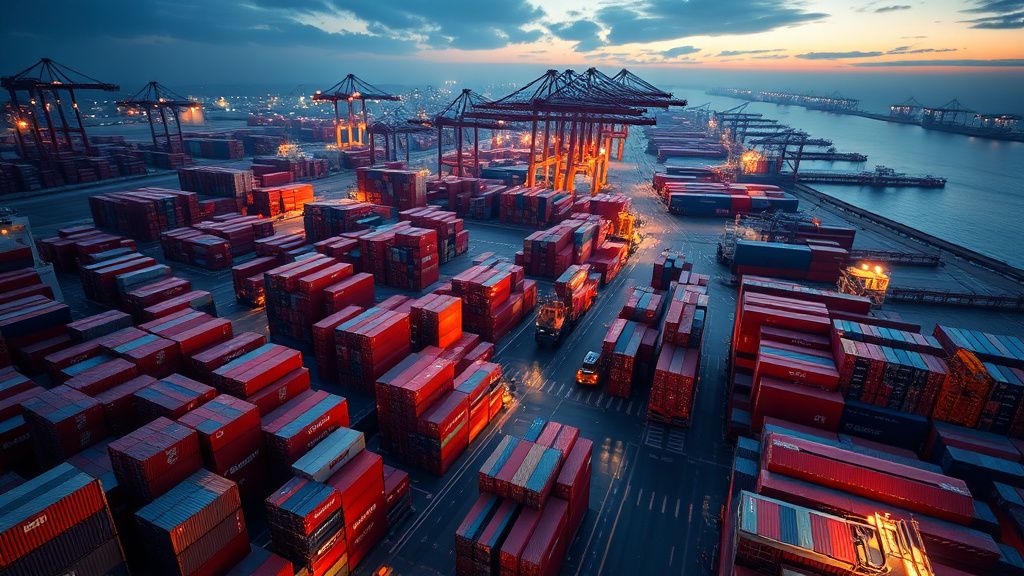
The promise of "global arbitrage" in the dropshipping sector has transitioned from a naive "buy low, sell high" mantra into a brutal, high-stakes infrastructure game. As we navigate the mid-2020s, the concept of AI-driven geo-arbitrage isn't about finding a cheap gadget on AliExpress and listing it on Shopify. That era—the era of low-friction, high-margin middleman work—is effectively dead, cannibalized by platform-integrated fulfillment and direct-to-consumer (DTC) maturity. Today, "scaling global arbitrage" means orchestrating complex, localized supply chains that leverage real-time data to exploit hyper-local price inefficiencies, regulatory gaps, and logistical bottlenecks, a strategy further explored in How B2B Exporters Use ERP Systems to Scale Margins Through Global Arbitrage.

The Death of the "Easy Button" Dropshipper
If you are still looking for a "winning product" to test via Facebook ads with a $50 daily budget, you are fighting a war that was lost in 2021. The operational reality of 2026 is one of Platform Consolidation. Marketplaces like Temu, Shein, and Amazon have turned consumer expectations toward near-instant, zero-shipping-cost fulfillment.
When you dropship, you are essentially borrowing inventory from a third party. The friction comes when the "geo" part of your arbitrage fails. If your supplier in Shenzhen has a localized weather event, or if your customs clearance in the destination country (e.g., France, with its aggressive VAT enforcement) hits a snag, your AI-driven automated store doesn't just stop selling; it starts bleeding reputation, chargebacks, and platform bans.
Operational Reality: The AI Paradox
The "AI" in AI-driven arbitrage is often misunderstood as a "set and forget" engine. In reality, it functions as an anomaly detection layer.
The sophisticated operators—those who aren't currently being banned from Stripe or PayPal—use LLMs and predictive analytics not to generate product descriptions (which is commodity-level work), but to model logistical fragility.
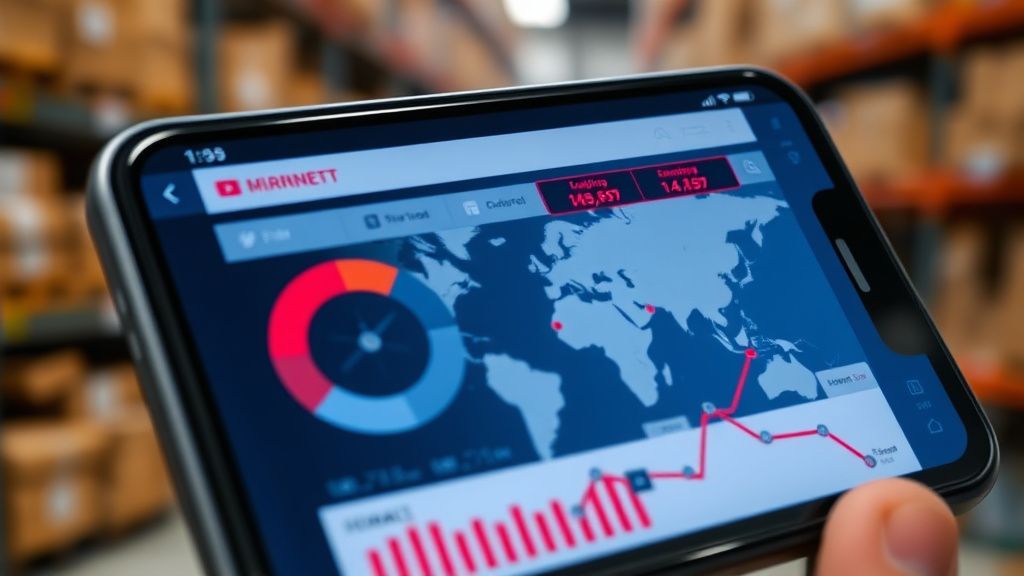
- Risk Scoring: AI agents monitor real-time shipping carrier performance, port congestion indices (like the FOS-BAL index), and local labor strike signals.
- Dynamic Pricing Buffers: Instead of fixed margins, algorithms now adjust pricing based on the "risk-adjusted cost of delivery" to a specific region.
- The Localization Trap: Most AI tools default to English. However, high-conversion geo-arbitrage requires deep linguistic and cultural nuance. If your AI agent pushes a campaign to a hyper-local market in Brazil or Vietnam without understanding that platform's specific "buy now" culture or payment preferences (like Pix or MoMo), you are wasting your ad spend.
Case Study: The Failure of Scaled Automations
Consider the "Auto-Dropship" cohort of 2024. These companies used automated scrapers to pull products from wholesale marketplaces, pushed them to 50+ localized storefronts, and let AI agents handle customer support.
The outcome? A massive wave of Platform Suspension. Why? Because the AI agents, when programmed to be "polite and helpful," often promised shipping timelines that the underlying supply chain couldn't sustain. When thousands of customers were hit with delays simultaneously, the platform algorithms flagged the merchant accounts for "coordination of fraudulent fulfillment practices."
The lesson here is simple: Automated systems are brittle. They require human "circuit breakers." You need a human in the loop to verify that the AI’s pricing logic isn't trying to exploit a currency fluctuation that actually stems from a banking failure or a sanctioned region.
The Geography of Arbitrage: It’s Not Where You Buy, It’s Where You Hold
The real "alpha" in 2026 is no longer about shipping from a factory directly to the end user. That is retail arbitrage. True geo-arbitrage is about strategic inventory positioning.
Top-tier players are moving beyond simple retail, often integrating diverse revenue streams like How Royalty-Backed Assets Are Changing Passive Wealth Creation or exploring autonomous Micro-SaaS Clusters to diversify their business model.ving toward micro-warehousing. By identifying high-demand clusters (e.g., specific metropolitan areas in Eastern Europe or South America), they are pre-positioning stock. The AI doesn't just calculate where to buy; it predicts where to store to avoid the "cross-border penalty"—the massive surge in shipping costs and customs complexity that kills margins.
Counter-Criticism: Is This Still Arbitrage?
Industry critics, particularly those writing for The Information or ProPublica, have rightly pointed out that "AI-driven arbitrage" is often just a fancy term for regulatory exploitation.
"When you are constantly searching for the cheapest regulatory environment or the lowest tax threshold for your supply chain, you aren't building a brand. You are building a parasitic layer on top of global commerce. When the regulators eventually close the gap, the entire business model collapses overnight." — Anonymous Logistics Analyst, Industry Forum.
This is the "Edge Case Problem." You might find a way to ship goods into a specific jurisdiction with zero duty for three months. But when that loophole closes, if your infrastructure isn't designed to handle standard customs, you aren't a business; you are a flash-in-the-pan.
The Hidden Costs of Scaling
If you decide to scale this, understand the "Tax of Scale":
- Moderation Drama: As you scale across multiple regions, local consumer protection groups will look at you. If your AI-generated product images are misleading, or your "hyper-local" support bots lack the empathy to solve a real human complaint, you will face class-action threats.
- Infrastructure Stress: When your API calls spike during a holiday window, your "automated" backend might fail. Every minute of downtime in a global setup is compounded by time-zone differences. Support teams working 24/7 are not optional—they are the only thing that keeps you from a total reputation blackout.
- Payment Processing Instability: This is the #1 killer. High-volume, low-trust dropshipping accounts are a magnet for chargebacks. If your AI detects a "high-margin" opportunity in a new region, but the payment gateway (like Stripe or Adyen) sees high fraud risk, your funds will be frozen.
Workaround Culture: How the Professionals Do It
The "grey market" of dropshipping thrives on what we call "Account Rotation and Reputation Fencing."
Developers in the space are spending more time on Platform Resilience Engineering—creating isolated infrastructure "cells" for different markets—than on marketing. They use proxy networks to ensure their operations appear localized, they maintain "warm" accounts with aged reputations, and they keep a "cold wallet" strategy for their capital to ensure a single payment dispute doesn't freeze their entire operating cash flow.
It is a messy, uncomfortable, and often paranoid way to run a business. It is the antithesis of the "passive income" dream sold by gurus.

The Future: From Arbitrage to Ecosystems
If you are looking for long-term survival, move away from pure arbitrage. Use the AI to identify demand in a region, but then pivot to Value-Added Distribution. Don't just ship the plastic gadget. Add the local manual, provide the local customer service (human-staffed), and guarantee the quality.
The AI is your scout. It tells you where the market is thirsty. But you, the operator, must be the one who digs the well.
FAQ
Is geo-arbitrage in 2026 still legal and ethical?
Why do most AI-driven dropshipping ventures fail?
How can I protect my payment accounts from being flagged?
Is it better to focus on one niche or use AI to scatter-shot many?
What is the biggest hidden technical cost?