The promise of "arbitrage" in global e-commerce has always been the siren song for those exploring the hidden economic gamble of remote work visas for small nations. By 2026, the mechanics of cross-border FBA have shifted toward high-stakes financial engineering, much like the strategic shifts seen in how corporations are moving manufacturing closer to home.
What was once a hobbyist’s strategy has matured into a complex enterprise where operators must understand the broader landscape, similar to how nations are currently managing the ocean floor gold rush and deep-sea minerals.
The Macroeconomic Mirage: Why "Arbitrage" is Now Financial Engineering
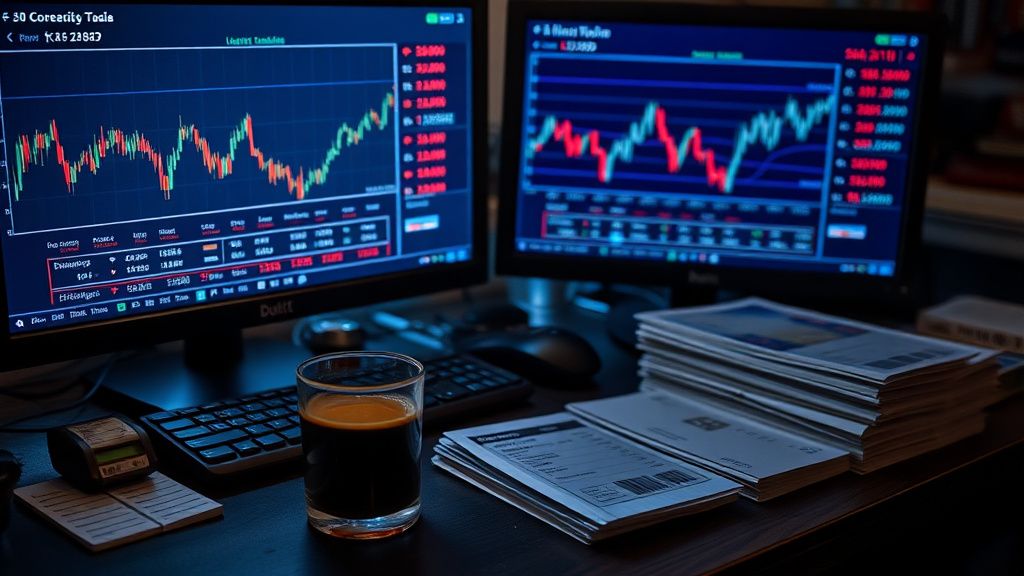
When you sell a product on Amazon.com, you are paid in USD. When you source in an emerging market, you pay in a local currency (TRY, BRL, ARS, IDR). The delta between the product cost and the retail price is your gross margin. However, by 2026, the real battleground is the currency conversion latency.
If you purchase inventory on Day 1, but it takes 60 days to clear customs, pass Amazon’s stringent QC, and finally sell, your profit is at the mercy of the currency markets. If your local currency strengthens against the dollar during that transit time, your margins vanish. Conversely, if the local currency devalues, your effective procurement cost drops further. Professional FBA sellers are no longer just merchants; they are amateur forex traders.
The Operational Reality: The Friction of Borderless Commerce
The narrative sold on YouTube—that you can just dropship from your couch—is a fantasy, largely because professional e-commerce is increasingly adopting sophisticated tools, similar to AI-driven content licensing for sustainable growth. Operating an FBA business across borders in 2026 involves navigating "logistical hell."
Consider the "Customs bottleneck." In many emerging markets, export documentation for consumer goods is increasingly scrutinized. If you are buying bulk unbranded goods from local wholesalers, you often lack the necessary export certificates, REACH compliance documentation (for Europe), or FDA approvals (for the US).
Many sellers fall into the trap of using "courier forwarders"—companies that claim to handle export for a flat fee, often lacking the transparency required to manage complex risks like those addressed by parametric insurance for supply chain resilience. The reality? Many of these are intermediaries who misclassify goods to bypass tariffs. When Amazon triggers a "Product Authenticity" investigation or Customs intercepts a shipment because it’s mislabeled, your FBA inventory isn't just sitting idle—it’s being liquidated or destroyed while you continue to pay monthly storage fees.
The "Ghost Inventory" Problem: A Technical Analysis
Scaling an arbitrage operation usually hits a wall at the "Product Listing" phase, forcing many entrepreneurs to look at alternative business models like micro-SaaS clusters to diversify their revenue streams. In 2026, Amazon’s A9 algorithm is aggressively shadow-banning accounts that display "fragmented sourcing." If your supply chain isn't vertical—if you’re buying from multiple different local marketplaces and cobbling them together into one FBA SKU—your listing will inevitably suffer from quality inconsistency.
Users on private Slack groups and Discord servers for high-volume sellers frequently complain about the "Review Death Spiral." You source a batch of home goods from a factory in Izmir, ship them to FBA, and they sell well. You reorder, but this time, the supplier sends a slightly different variant or uses cheaper materials. The customers notice. The negative reviews hit. The algorithm downgrades the listing. By the time you realize the issue, you have 500 units of "low quality" inventory trapped in a fulfillment center that you cannot easily retrieve or dispose of without massive cost.
"The hardest part isn't finding the product. It’s the constant, grinding maintenance of the supply chain. You spend 30% of your time sourcing and 70% of your time fighting with logistics companies that promise 'door-to-door' but stop communicating the second the shipment hits the harbor." — Anonymous Seller, FBA-Elite Community Forum
Field Report: The Brazil-to-US Arbitrage Experiment (Q3 2025)
A case study conducted by a mid-sized seller group attempted to leverage the BRL (Brazilian Real) volatility against the US market in late 2025. The strategy: sourcing high-end artisanal leather goods. The initial margins looked incredible—nearly 200%.
The failure points were systemic:
- Logistics: The cost of air freight from Brazil spiked due to regional fuel surcharges, erasing 40% of the projected margin.
- Regulatory: Brazilian export taxes for "artisanal" goods required a specific licensing process that the small workshops didn't understand, leading to a 3-week delay at the border.
- Currency: While the BRL devalued, the cost of the raw materials (leather, hardware) was pegged to USD, effectively neutralizing the currency advantage.
By the time the products hit the Amazon shelf, they were competing against established private-label brands that had optimized their supply chain years ago. The "arbitrage" opportunity had been priced out by the sheer weight of overhead.
Counter-Criticism: The "Arbitrage is Dead" Argument
Industry analysts argue that as Amazon moves toward a more "brand-centric" model (moving away from the "everything store" clutter), pure arbitrage is becoming a liability. The "Buy-Box" algorithm now prioritizes FBA sellers with high "Brand Health" scores, which are nearly impossible to achieve if your source inventory is fragmented and inconsistent.
Critics point out that the reliance on currency fluctuation is effectively gambling, not business strategy. If you rely on the devaluation of a currency to make your product profitable, you are building your business on the backs of an economic crisis in your source country. When that crisis stabilizes, your entire business model collapses.
The Workaround Culture: How Sellers Survive
Despite these headwinds, a "workaround culture" persists. Sellers are increasingly moving toward "hybrid arbitrage":
- Micro-Private Labeling: Instead of buying off-the-shelf, sellers use their arbitrage contacts to add minor branding (custom packaging, laser etching, unique bundle combinations) to differentiate the product.
- The "Forwarder Network": Rather than trusting large, faceless logistics firms, high-level sellers now maintain private relationships with local forwarders in emerging markets who specialize in "gray channel" compliance—essentially, paying higher fees to ensure the paperwork is "clean" enough to pass Amazon’s automated checks.
- Hedging via Stablecoins: To avoid currency risk, some sophisticated sellers are now forcing suppliers to accept payments in stablecoins (like USDC), effectively removing the local currency volatility from the equation. This, however, introduces legal complexity and tax reporting hurdles that vary wildly by jurisdiction.
Infrastructure Stress: When Systems Break
The most significant risk in 2026 is "Platform Drift." Amazon updates its TOS (Terms of Service) and seller central interface with little warning. In 2025, there was a massive wave of account suspensions related to "unauthorized sourcing." Thousands of sellers who had been sourcing from retail arbitrage or non-vetted wholesale channels suddenly found their accounts locked with funds held for 90 days.
This is the hidden cost of the business: the "Platform Risk." When you build a business on Amazon, you are a guest. You don't own your customer relationship, you don't own the platform, and you certainly don't have a direct line to a human support agent who can resolve a complex policy dispute.
Economic Motivations and the Power Balance
Why do people keep doing this? It’s the potential for high-velocity returns. In a world where traditional investments yield 5-8% annually, successful cross-border arbitrage can return 20-30% on capital in a single 90-day cycle. It is high-risk, high-reward.
The power balance is skewed entirely toward the platform. Amazon wins regardless of whether you profit or fail. They collect the referral fees, the FBA fulfillment fees, the storage fees, and the advertising spend. Arbitrage sellers provide the volume, the variety, and the testing ground for new products—and when a product succeeds, Amazon’s own internal brands often swoop in to replicate it with cheaper sourcing and "Amazon's Choice" placement.
The Path Forward: Professionalism or Exit
For those looking at this for 2026 and beyond, the era of the "lone wolf" arbitrageur is closing. If you want to sustain this, you must treat it like a traditional manufacturing business:
- Vet your suppliers as if you were Walmart. If they cannot produce a paper trail for their goods, don't buy them.
- Understand your landed cost to the penny. Use custom software to track currency conversion fees, storage spikes, and returns.
- Diversify your channels. Don't keep all your inventory in FBA. Look at Shopify/Direct-to-Consumer as a safety valve. If your Amazon account gets dinged, you need a way to move your inventory without the platform's permission.
The volatility of the world economy isn't going away, and as long as there is a discrepancy between the buying power of a dollar in the US and the manufacturing power of a developing economy, arbitrage will exist. But in 2026, the edge belongs to those who view the arbitrage not as a trick, but as a logistical operation that must survive in an increasingly hostile, algorithm-driven environment.