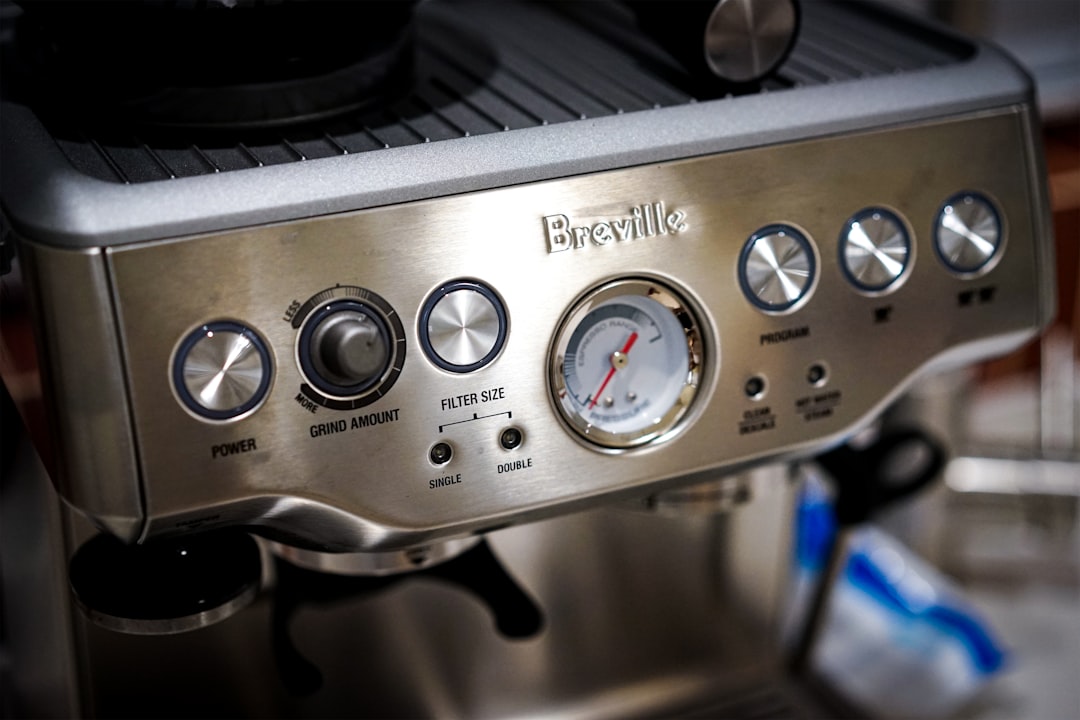
The Breville Barista Express (BES870XL) is the quintessential "gateway" machine for home espresso enthusiasts. Because of its massive install base, it has become the gold standard for the "flip" market—buying broken units for $50–$100, performing strategic repairs, and reselling them for $350–$450. The two most common points of failure that render these machines "broken" but easily salvageable are the vibration pump and the analog pressure gauge. Mastering these specific repairs allows for high-margin flipping—much like how entrepreneurs use strategies from Scaling Micro-Farms: How to Turn Vertical Hydroponic Systems into Profitable Urban Businesses to optimize their ventures—provided you understand the nuance between a minor clog and a catastrophic component failure.
Problem Nedir (What is the Problem?)
When a Breville Barista Express enters a state of failure, it typically manifests as either a complete lack of flow (the pump hums but no water exits the group head) or a complete lack of pressure registration (the needle stays at zero despite the pump running). The pump is a mechanical vibratory solenoid—specifically, the Ulka EX5 or E5 series—which utilizes a spring-loaded piston to displace water. Over time, the internal plastic O-rings swell or degrade, and the check valve fails, causing the pump to lose its ability to generate the 9 bars of pressure required for true espresso. The pressure gauge, conversely, is a capillary tube-fed analog instrument. It fails either through physical blockage (calcium buildup in the narrow copper tube) or mechanical diaphragm fatigue.
Belirtileri (Symptoms)
If you are evaluating a unit for purchase, look for these specific indicators of a failing pump or gauge:
- Pump Failure: The machine produces a loud, chattering, or irregular "dry" noise when the brew button is pressed. If the machine is quiet or vibrates heavily without moving water, the pump is likely seized or the solenoid valve is blocked.
- Pressure Gauge Failure: The pump engages and water flows, but the needle stays pinned at zero or barely moves off the peg. Conversely, if the needle jumps erratically or leaks moisture around the display, the capillary connection or the gauge itself is compromised.
- Systemic Leaking: A "dead" machine often has a pool of water in the drip tray originating from the internal silicone lines, usually due to backpressure caused by a faulty OPV (Over Pressure Valve) or a failing pump manifold.
Olası Nedenler (Possible Causes)
The Barista Express is a victim of its own design: high-heat, high-pressure, and mineral-rich water—a reminder that managing resources effectively is as critical in home appliances as it is in solving the 2026 water crisis.
- Calcification (Scale): The number one enemy; if the user didn't use filtered water, the tiny capillary tube feeding the pressure gauge becomes a rock-solid deposit of calcium carbonate, proving that smart maintenance is just as essential as the technology used in HVAC smart sensor retrofitting.
- Pump Fatigue: The Ulka pump has a duty cycle, much like the efficiency thresholds discussed in AI-driven inventory hedging. Continuous, long shots or "pre-infusion" abuse leads to the plastic check valve inside the pump snapping, losing the "seal" required to build pressure.
- OPV Malfunction: The Over Pressure Valve is designed to bleed off excess pressure. If it is set too high or if the spring has weakened, the pump may look like it’s failing when, in fact, it’s just bypassing water back to the tank prematurely.
- Firmware/Relay Issues: Rarely, the PCB mainboard fails to send voltage to the pump—a technical headache that, unlike the Philips Air Fryer E03 error, often requires advanced board-level troubleshooting. This is often misdiagnosed as a pump failure by novices.
Quick Fixes (Hızlı Çözümler)
Before you tear the machine apart, perform these "Quick Wins" to determine if a full teardown is necessary, ensuring your time is as well-spent as those optimizing their 2026 wealth strategies.
- The Backflush Test: Place a blind basket (rubber disc) in the portafilter. If the machine builds pressure to 9+ bars, your pump is fine—your issue is likely a clogged group head screen or an exhausted portafilter basket.
- The Decalcification Cycle: If the pressure gauge is acting erratically, run a professional-grade descaling solution (like Dezcal) through the system twice. Sometimes, this dissolves the blockage in the gauge's capillary tube without requiring a physical replacement.
- Reseat the Water Tank: The Barista Express has a reed switch that detects the tank. If the magnet is loose, the pump won't fire. Check the tank sensor before assuming the board is dead.
Advanced Fixes (İleri Düzey Çözümler)
If the Quick Fixes fail, you are entering the territory of the "Pro Flip."
Replacing the Vibration Pump:
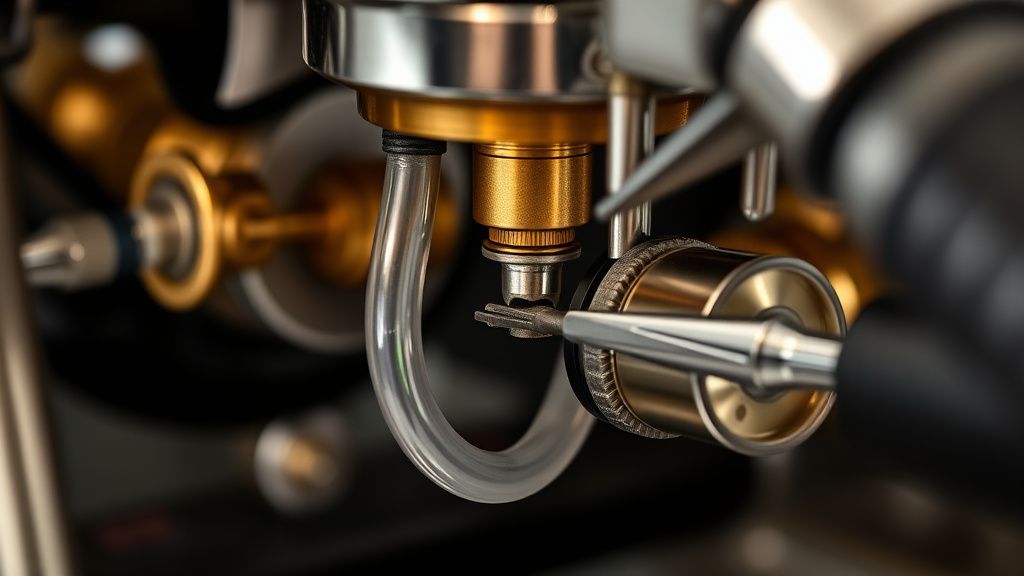
- Dismantle: Remove the top warming tray, the rear panel, and the right-hand side panel. You will see the Ulka pump encased in a rubber sound-dampening sleeve.
- Disconnect: Use a pair of needle-nose pliers to remove the spade connectors. Pro-tip: Take a photo of the wiring before removal.
- Swap: Remove the brass outlet fitting from the old pump and move it to the new one. Ensure you use fresh Teflon tape (PTFE) on the threads. Do not over-tighten, as the plastic threads on the pump are brittle.
- Prime: After reassembly, the new pump will be air-bound. Run the hot water tap for 30 seconds to force the air out of the lines.
Replacing the Pressure Gauge:
- Access: You must remove the front faceplate. This requires removing the group head and several hidden screws behind the steam knob.
- Extraction: The gauge is held in by a small retaining bracket. Disconnect the capillary tube carefully.
- Clearing the Line: If you don't have a replacement gauge, try blowing compressed air through the capillary tube to clear the scale. If the gauge needle doesn't reset to zero, replace the gauge unit entirely.
Factory Reset (Fabrika Ayarlarına Döndürme)
The Breville Barista Express does not have a "digital" factory reset in the traditional sense, but you can reset the PID (temperature) and the volumetric shot settings.
- PID Reset: With the machine off, press and hold the 'Program' button and the 'Two-Cup' button simultaneously, then press the 'Power' button. The machine will beep, and the lights will flash to indicate the temperature has been returned to the default 200°F (93°C).
- Volumetric Reset: With the machine off, press and hold the 'Program' button, then press the 'Power' button. The machine will flash its LEDs to confirm the factory default volumes have been restored.
When to Replace (Ne Zaman Yenisiyle Değiştirilmeli?)
Know when to walk away. If you find the following, the machine is a "parts donor," not a project:
- Mainboard Burnout: If you smell ozone or see black charred components on the PCB (printed circuit board), the cost of a new board often exceeds the resale value of a refurbished unit.
- Boiler Corrosion: If you see white "snow" or crusting around the heating element connections, the boiler is likely compromised. Repairing a thermocoil is tedious and rarely worth the labor hours.
- Chassis Rust: If the internal frame has deep oxidation, the machine has been neglected in a humid environment. Structurally, it will never hold up to the vibrations of a new pump.
Real Field Reports (Gerçek Saha Raporları)
In my experience flipping these units, I once encountered a machine that consistently blew a 10-amp fuse every time the pump engaged. The previous owner had replaced the pump twice, thinking it was the culprit. Upon teardown, I discovered a pinhole leak in the internal solenoid valve that was spraying a micro-mist onto the mainboard’s power trace. By replacing the $20 solenoid valve and cleaning the board with 99% isopropyl alcohol, I saved a machine that would have been scrapped for $40. Always check the solenoid valve; it’s the most common "silent" killer.
Counter-Criticism/Debate (Karşılıklı Eleştiri)
There is a significant debate in the repair community regarding "generic" vs. "OEM" pumps. Purists argue that only genuine Breville-branded pumps should be used. However, professional flippers argue that the Ulka EX5 is the OEM part used by Breville, and buying it from a generic component supplier saves you $30 per flip. Critics argue this devalues the "refurbished" status, but I maintain that if the pump meets the pressure specifications, the performance is identical. Don't pay the "Breville Tax" if you don't have to.
FAQ
Can I upgrade the pressure gauge to a digital one?
Is the pressure gauge accurate?
Why does my pump make a loud, grinding noise?