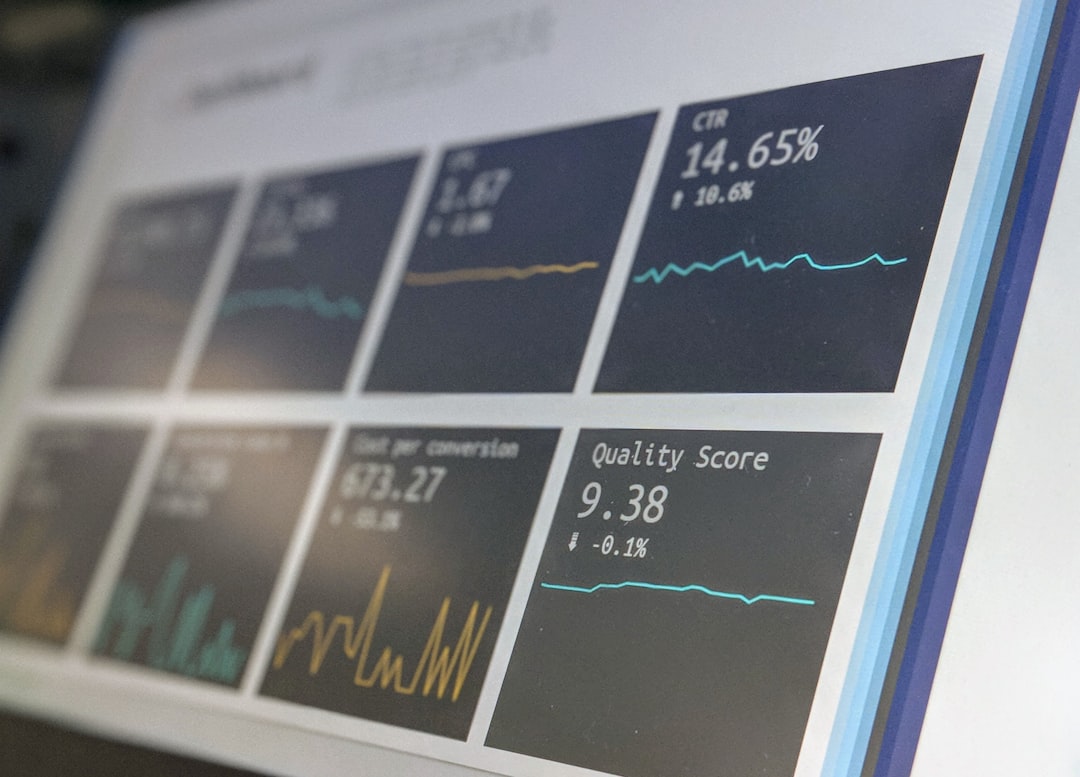
AI-powered inventory hedging is no longer a futuristic buzzword for 2026; it is the blunt-force instrument used by global retailers to survive, much like how AI-Driven Algorithmic Arbitrage is Reshaping Global Freight Logistics. By leveraging predictive analytics to shift capital allocation across geographies—anticipating lead time disruptions and currency fluctuations before they manifest—businesses are effectively turning their warehouses into financial instruments. This is less about "predicting the future" and more about aggressively minimizing the cost of being wrong.
The Mechanics of Algorithmic Hedging in 2026
At its core, AI-driven inventory hedging is a sophisticated balancing act between carrying costs and stockout risk. In the traditional model, a merchant would rely on a quarterly spreadsheet and a "gut feeling" seasoned by last year’s data. Today, that is a recipe for bankruptcy. Modern systems ingest disparate data streams: port throughput delays in Singapore, regional labor strikes in the Midwest, shifting consumer sentiment on social platforms, and real-time cargo insurance premiums.
When the system detects a high probability of a disruption in a specific lane, it doesn’t just alert a manager. It autonomously initiates a "re-balance." This might mean rerouting shipments from a slow-moving ocean freight vessel to a faster, albeit more expensive, air cargo route, or—more critically—hedging the inventory itself, a strategy that is becoming increasingly important as Why Cross-Border Amazon Arbitrage is Changing in 2026 demonstrates.
The Operational Reality: More Friction than the Brochure Suggests
There is a stark disconnect between the marketing decks of logistics software vendors and the "on-the-ground" reality. Talk to any supply chain engineer on GitHub or read the Hacker News threads on warehouse management systems, and you’ll find a consistent theme: integration is a nightmare.
Most companies are still running on a Frankenstein architecture. They have a legacy ERP system from the early 2010s that refuses to talk to the new, shiny "AI-native" hedging dashboard. Consequently, the "autonomous" re-balancing often relies on manual data exports and CSV uploads. The "AI" is frequently nothing more than a glorified regression model being sold as "Deep Neural Network Forecasting."
When an edge case hits—like a sudden geopolitical shift or the volatility explored in The 2026 Space Crisis: Why Orbital Gridlock Is the New Geopolitical Battlefield—these systems often fail catastrophically. We have seen instances where algorithms, optimized for margin, liquidated safety stocks of low-margin but high-frequency items, leaving shelves bare and infuriating core customer segments during peak demand.
The Human Element: The "Workaround" Culture
The reliance on these tools has created a new class of "logistics operators" who spend their days fighting the software rather than the market. We call this the Workaround Culture. Because the automated hedging logic is often a black box, inventory managers maintain "shadow spreadsheets," mirroring the complexities found when you How to Architect and Exit Your Micro-SaaS in 2026.
If the AI decides to slash inventory in the North American region to maximize margins in the EU, a human operator will often override it, keeping hidden safety buffers that the AI doesn't know about. This creates a hidden operational cost: the cost of distrust. When the system thinks it has $5 million in stock but the humans are holding back $1 million in "unauthorized" safety stock, the hedging model loses its precision. It is effectively optimizing against a lie.

Real Field Report: The Case of the "Optimized" Inventory Collapse
In late 2025, a mid-sized consumer electronics distributor attempted to automate 100% of their replenishment logic across four continents. The goal: a 12% increase in net margins via aggressive inventory hedging and dynamic rerouting, an optimization level that parallels how firms use Smart Thermostat Energy Arbitrage to Cut Utility Bills by 15%.
For the first six months, it worked. The system perfectly anticipated a minor container shortage in the Red Sea and moved inventory into inland storage a week early. The board was ecstatic. Then came the "black swan"—not a massive disaster, but a series of minor, interconnected failures: a port software update in Los Angeles, a localized truck driver shortage, and a sudden viral trend in Tokyo that spiked demand for a specific SKU.
The AI, optimized for historical margin, interpreted the Tokyo spike as a temporary anomaly and refused to divert stock from the North American pipeline, prioritizing "cost efficiency." By the time the stock arrived, the trend was dead. Simultaneously, the US warehouse hit a "stockout" on a low-margin accessory that was essential for bundle sales. The result? A 15% revenue drop in one quarter. The system didn't "fail" in the technical sense—it functioned exactly as it was coded to—but it lacked the "contextual wisdom" to prioritize long-term brand health over short-term margin expansion.
The Counter-Criticism: Is Complexity the Enemy?
Critics from within the logistics sector argue that we are over-engineering the supply chain. The "Scaling Global Trade" narrative assumes that with enough data, we can eliminate the "chaos" of trade. However, there is a school of thought suggesting that volatility is a feature of global commerce, not a bug.
- Fragmentation: As we move toward more automated hedging, we are creating a fragmented ecosystem where small players cannot afford the entry cost of these AI stacks, while large players are becoming "too big to fail" but "too rigid to adapt."
- Trust Erosion: When a vendor or a internal team hides the logic of a hedging decision behind "proprietary algorithms," it erodes the relationship between the front-line workers and the technology.
- The "Bullwhip" Effect 2.0: AI-driven hedging can actually worsen market volatility. If every major player is using the same three or four foundation models to hedge their inventory based on similar macroeconomic inputs, they will all make the same move at the same time, creating massive artificial supply crunches and price spikes.

Why Users Are Leaving "All-in-One" Platforms
We are seeing a trend in developer forums like GitHub Issues and GitLab where teams are abandoning bloated, AI-native SaaS platforms in favor of "composable" microservices.
The primary complaints are:
- Vendor Lock-in: Once you plug your entire inventory logic into a specific provider's API, you are trapped. Migrating your data structure when the platform inevitably raises prices or changes its model is a logistical nightmare.
- Black-Box Moderation: Many platforms now use "proprietary moderation" to hide why a certain hedging decision was made. If an enterprise can't audit the decision-making path, they can't defend it to their stakeholders.
- Support Nightmares: When an API integration breaks during a peak sales period (e.g., Black Friday), support tickets on these "AI-first" platforms often go unanswered for days. The promise of "autonomous logistics" vanishes the moment the server returns a 500 error.
The Path Forward: Pragmatic AI Integration
If you are a logistics leader in 2026, the strategy should not be "AI over everything." It should be "Human-in-the-loop, AI-as-an-advisor."
- Transparency is mandatory: If you cannot explain the logic of a hedging move to a non-technical manager in under three minutes, the logic is too complex and potentially dangerous.
- Build for Resilience, Not Just Efficiency: Sometimes, the best hedge is not a complicated algorithm, but a simple, diversified vendor list. AI should identify where you are vulnerable, but humans should decide how much redundancy to buy.
- Audit Your Data Lineage: Before trusting your margins to an AI model, ensure that the data it is consuming is clean. "Garbage in, garbage out" is a cliché for a reason. If your local warehouse managers are still using pen-and-paper for inventory counts, your fancy AI model is just guessing.

The Economic Reality: The "Margin Squeeze"
We must acknowledge that the drive for AI-powered hedging is largely born out of economic desperation. Global commerce margins are thinner than ever. With rising labor costs, energy fluctuations, and interest rates making the cost of capital expensive, inventory is no longer just "stock"—it is a liability that needs to be managed for yield.
This is the central contradiction of the 2026 e-commerce era: companies are forced to use hyper-advanced technology to solve problems that were created by their own pursuit of unsustainable, hyper-efficient global supply chains. We built a global system that breaks under the slightest stress, and now we are buying expensive, complex software to patch those cracks.