
If your Ninja Foodi 8-in-1 is failing to heat, the issue is almost always a tripped thermal fuse, a scorched heating element connection, or a failing NTC thermistor. Before dismantling, perform a hard power cycle. If the display remains unresponsive or displays a "SHUT" or "ERR" code, you are likely looking at a component-level repair involving a multimeter and a replacement of the thermal cutoff assembly.
The Ninja Foodi 8-in-1 is a marvel of modern kitchen engineering, but it’s also a perfect example of what happens when high-wattage hardware meets the reality of "planned obsolescence-adjacent" manufacturing. As a technician who has spent 15 years knee-deep in the guts of everything from high-end Miele appliances to cheap big-box store air fryers, I can tell you: the Ninja Foodi isn't designed to be repaired. It’s designed to be used, forgotten, and replaced.
When you open one of these up—and I’ve opened hundreds—you see the friction between engineering intent and operational reality. The heating element is the heart of the beast. It’s a standard nichrome coil, but the way it’s wired into the main PCB (Printed Circuit Board) through a series of daisy-chained thermal fuses is a recipe for long-term failure.
Thermal Fuse Cascades and Circuit Board Fragility
The primary failure point in the Ninja Foodi 8-in-1 is rarely the nichrome element itself; it’s the safety architecture. To prevent your kitchen from turning into a pyre, manufacturers install thermal cutoffs. These are sacrificial components designed to blow if the ambient temperature exceeds a specific threshold (usually 180°C–240°C depending on the location).
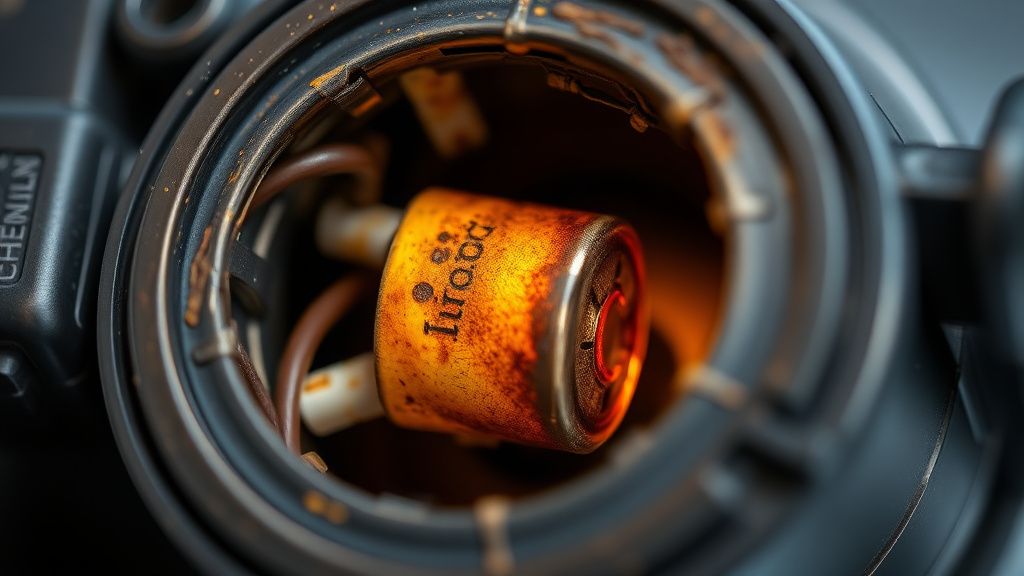
The problem isn't that they exist; it’s that they are often crimped or poorly soldered into high-vibration areas. Over time, thermal cycling causes micro-fractures in the solder joints. Once a joint creates resistance, it generates heat. Heat causes oxidation. Oxidation increases resistance. Eventually, the circuit is broken, and your $200 appliance becomes a very expensive paperweight.
The Myth of the "Easy Reset"
You’ll find hundreds of forums—Reddit’s /r/airfryers, various Facebook enthusiast groups—where users swear by the "hold the start button for 10 seconds" reset. While this works for software-level hangs, it does absolutely nothing for a blown thermal fuse or a fried triac on the power board.
Operating at 1700W, these units push the absolute limit of standard residential household wiring. When the fan motor slows down due to grease accumulation—a reality of cooking fatty proteins—the heat builds up faster than the sensor can report it to the microcontroller, often leading to a Ninja Foodi fan error and eventual failure. The result? A "silent death." The unit looks fine, the lights turn on, but the element remains stone cold.
Field Report: The "Grease Migration" Failure
I recently serviced a unit that had been in daily use for 22 months. The owner complained that the "Air Fry" function wouldn't start. Upon disassembly, I found that vaporized cooking oils had migrated past the internal shielding and coated the main PCB. This is an engineering oversight: in an effort to keep the air fryer compact, the airflow path is too close to the sensitive electronics.
This "grease migration" creates a conductive bridge on the PCB, leading to phantom signals. In this case, the thermistor (the NTC sensor that tells the board the temperature) was providing inaccurate readings, a common issue that can lead to an E1 error due to thermistor sensor failure. The controller, seeing an "impossible" temp, defaulted to a safety lockout to prevent fire.

Diagnostic Procedures: Beyond the Manual
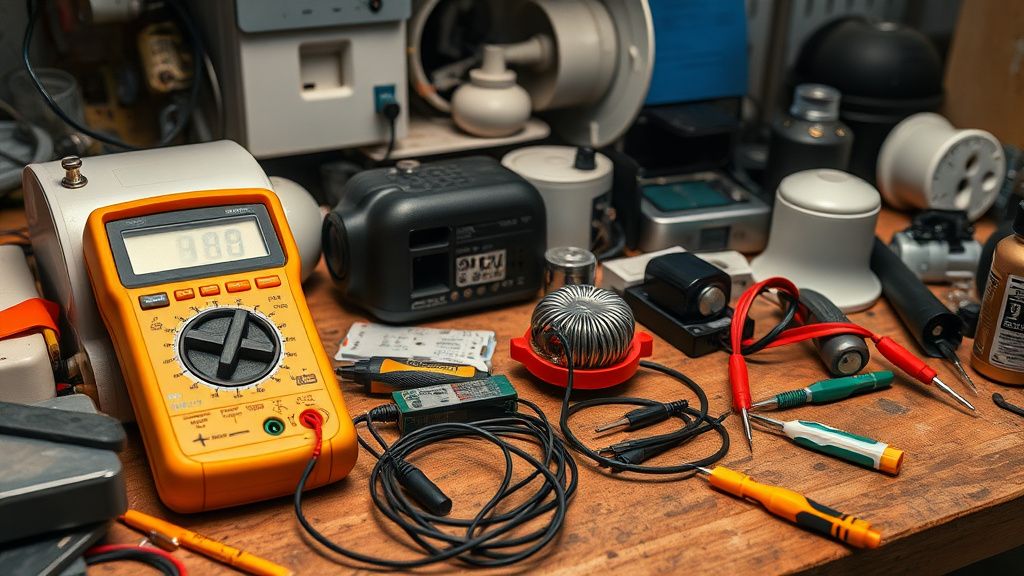
If you want to fix this, you need a multimeter. Period. Forget the warranty—if you’re reading this, you’re likely already out of the coverage window.
- Isolation Testing: Unplug the unit. Remove the bottom casing (usually T20 or T25 Torx security screws).
- Continuity Check: Test the heating element leads for continuity. If you have "OL" (Open Loop), your element is physically broken (rare) or the thermal fuse is blown (common).
- The Thermistor Test: NTC thermistors are notoriously unreliable over time. Check the resistance of the sensor at room temperature. If it reads as an open circuit or is way off the expected kOhm rating provided by the manufacturer's data sheets, replace it.
The Controversy of Proprietary Parts
The biggest hurdle for the DIY repair community is that SharkNinja doesn't sell individual internal components. They sell "replacement units." This is a classic example of ecosystem fragmentation. You can buy a whole new control board on secondary markets, but you cannot buy just the thermal cutoff or the specific NTC sensor.
This forces a "workaround culture." Experienced hackers often source generic thermistors from electronics supply houses like Digi-Key or Mouser and use heat-shrink tubing to marry them to the original wire harnesses. It’s effective, but it effectively voids any remaining liability. From a legal standpoint, you are now the manufacturer. If it catches fire, that’s on you.
Why Scaling Affects Reliability
When Ninja scaled the production of these units to meet the massive demand surge in 2020-2022, quality control took a back seat. We saw a spike in "Cold Element" reports on GitHub and community forums. Users noted that units manufactured in specific batches had thinner gauge wiring on the high-voltage side.
This is a classic "engineering compromise." To hit a price point while maintaining a 1700W rating, the manufacturer squeezed the margins of safety. It works fine for the first year. By the second year, the constant heat-cool-heat cycle causes the crimp connectors to loosen.
Troubleshooting the "ERR" Codes: A Breakdown
- ERR 1/2: Usually indicates a communication failure between the control board and the display. Check the ribbon cable. It’s incredibly fragile and often gets pinched during assembly.
- SHUT: This is the machine telling you it’s overheating. If it happens when the unit is cold, your thermistor is faulty. If it happens after 10 minutes of use, your internal fan is likely failing or air vents are blocked.
- Blank Screen: Before you throw it out, check the primary fuse at the AC input. It’s often a ceramic cartridge fuse buried under a heat-shrink wrap near the power entry.
The Human Element: Why We Keep Fixing Them
Why do we bother? It’s not just about the $200 price tag. It’s a rebellion against the "buy-toss-buy" cycle. The Ninja Foodi is a great tool, but it's an environment-choking piece of plastic and metal if we don't fix it.
I’ve seen engineers, librarians, and retirees on Discord servers mapping out the entire pinout of the Ninja control boards just so they can avoid throwing a functioning chassis into a landfill. It’s a beautiful, messy, and technically complex community effort that the official support channels completely ignore.
The Future of Smart Kitchen Repair
We are moving toward a future where "smart" appliances are locked behind firmware. Imagine if your Ninja Foodi required a server handshake to turn on the heating element. It sounds like science fiction, but with the current trend of IoT integration, it’s a reality we’re flirting with.
For now, the Ninja Foodi 8-in-1 remains a "dumb" device, which makes it repairable. Don't let the lack of official documentation stop you. The physical world obeys the laws of physics, not the policies of a corporation. If the electricity isn't getting to the coil, follow the copper path until it stops. That’s your failure point.