If your Cosori Dual Blaze is sounding like a jet engine preparing for takeoff, you aren't alone. In most cases, the "rattling" or "grinding" noise isn't a mechanical failure but a resonance issue caused by debris in the dual-heating element housing or a slightly misaligned fan shroud (similar to issues where a Tower Vortx Air Fryer Is Making a Loud Grinding Noise). Immediate fixes involve deep-cleaning the rear vent exhaust, checking the basket seating, and ensuring the unit is on a perfectly level, heat-resistant surface to prevent vibration amplification.
The Cosori Dual Blaze (CAF-P581 series) is marketed as the "no-shake" revolution of the air fryer world. By placing heating elements both above and below the food basket, Cosori effectively killed the mid-cycle shake required by older basket-style units. However, engineering a dual-element system in a compact chassis introduced a thermal management challenge. The internal cooling fan, tasked with protecting the PCB (Printed Circuit Board) from the heat soak generated by the bottom element, is a high-RPM unit prone to acoustic fatigue, a challenge faced by many multi-zone air fryers, sometimes leading to a Ninja Foodi Dual Zone Fan Error.
The Acoustic Physics of the Dual Blaze Chassis
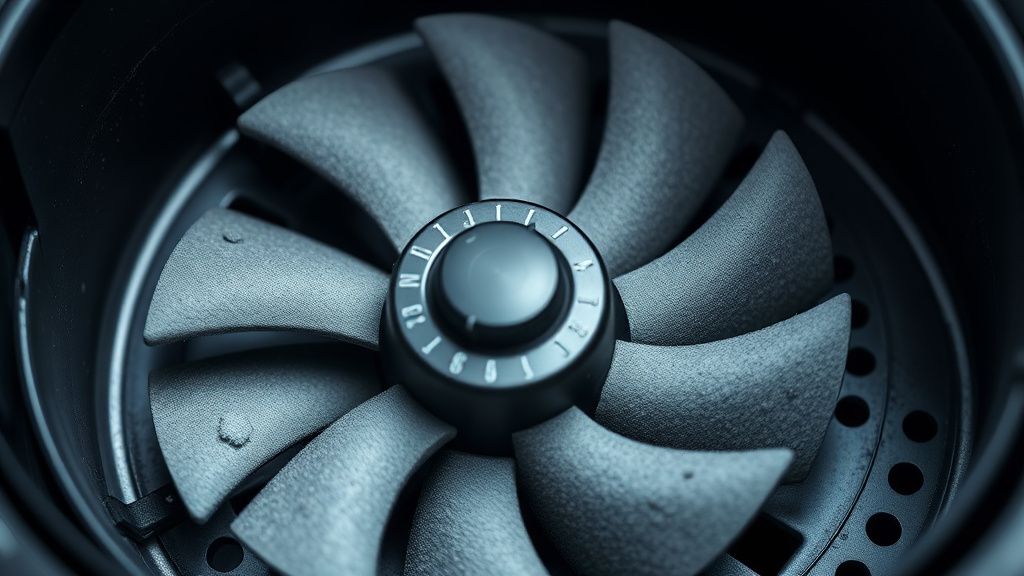
When users report "noise," they are often hearing one of three things: harmonic vibration, motor bearing wear, or airflow turbulence. Because the Dual Blaze utilizes a 360-degree heat circulation path, the internal airflow dynamics are significantly more complex than a standard single-element model.
If you have spent any time in the r/airfryer subreddit or trawling through GitHub issues regarding smart appliance firmware, you’ll notice a recurring theme: users confuse thermal expansion noise with fan motor failure. When the metal casing heats up, the tolerance gaps shift. If the internal fan shroud is even 0.5mm off-center, the fan blades will "click" against the plastic casing as the metal expands. This isn't a broken motor; it is a manufacturing tolerance issue that scales poorly over thousands of hours of operation.
Analyzing the "Broken Bearing" Myth vs. Reality
Most support tickets filed under "loud fan" result in a recommendation for a full unit replacement, a common outcome for various appliance issues, including fixes for a Cosori Dual Blaze E6 Error. From a service technician's perspective, this is corporate risk management. Replacing a cooling fan requires breaking a permanent seal on the chassis, which voids the warranty.
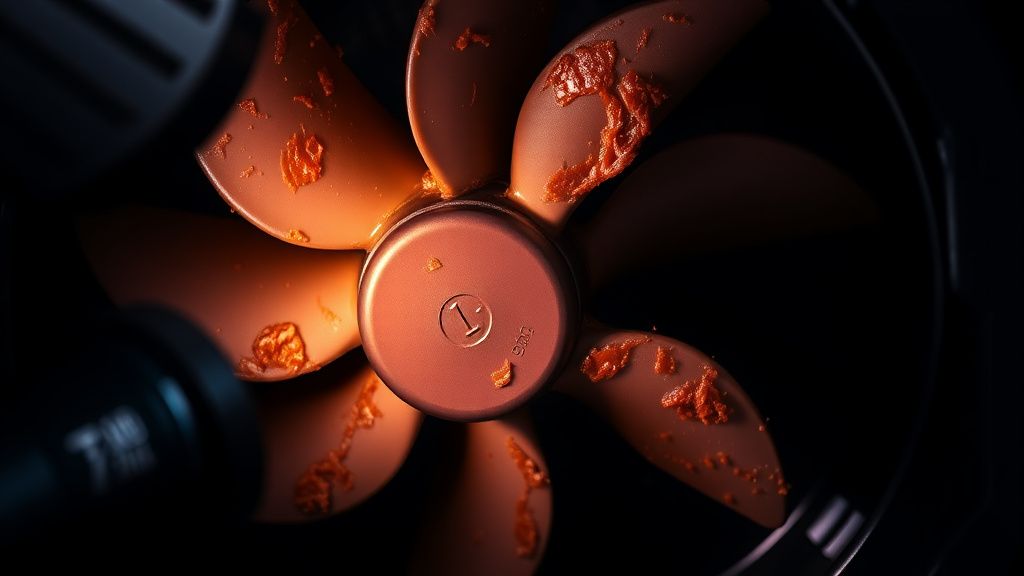
However, looking at the teardown data from units that have crossed the two-year mark, the actual failure rate of the motor bearings is surprisingly low. The issue is usually carbonized grease buildup on the fan spindle. If you cook high-fat foods—bacon, chicken wings, or marinated salmon—the aerosolized oils eventually bypass the grease trap and settle on the cooling fan. As this layer builds up, it imbalances the blades. The result? A rhythmic "thrumming" that sounds exactly like a bearing failing, but is actually just a physics problem of uneven mass distribution.
Real Field Reports: The Community Sentiment
The sentiment in long-term owner threads is polarized. There is a distinct divide between "The appliance is a tank" and "The unit died after 14 months with a loud screech."
- The Pro-Maintainer Camp: Users on DIY forums like iFixit have documented that cleaning the internal intake mesh—which is notoriously difficult to reach—solves 80% of reported noise issues. They argue that the "noise" is simply the sound of the fan working harder against restricted airflow caused by lint and grease.
- The Skeptical Consumer: A common complaint found on Twitter/X support threads is that the noise begins immediately after a firmware update. While it sounds like a software-triggered bug, the logical explanation is that the firmware update tweaked the PID (Proportional-Integral-Derivative) controller to run the fan at higher speeds during the pre-heat cycle to compensate for the dual-element heat ramp-up. It’s not the firmware; it’s the increased workload on the hardware.
Strategic Troubleshooting: How to Silence the Racket
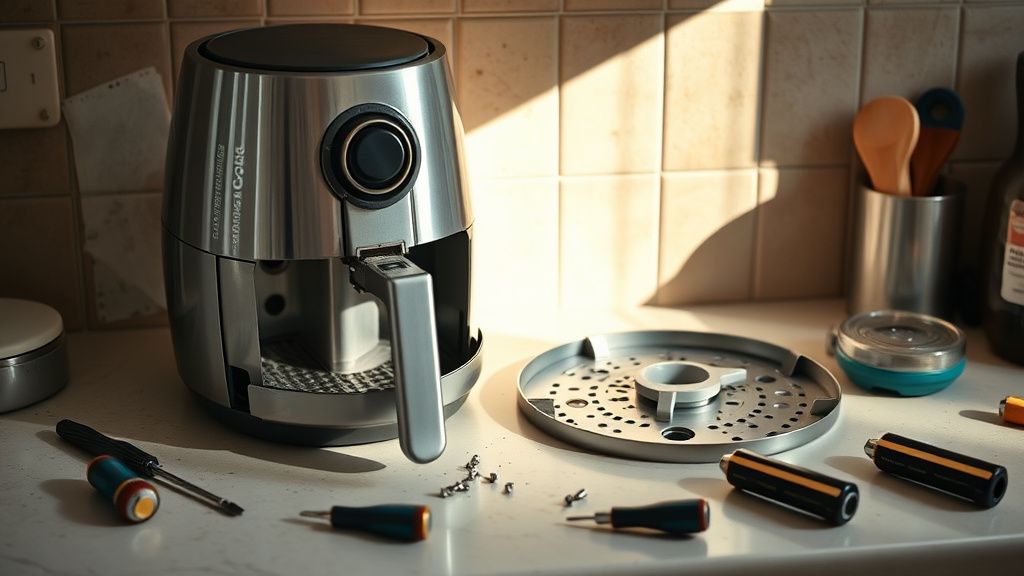
Before you pull the trigger on a warranty claim or a replacement, perform these three diagnostic steps in order.
1. The Leveling Protocol (Surface Resonance)
The feet on the Cosori Dual Blaze are relatively firm rubber. If your countertop is uneven—or worse, if you have the unit sitting on a thin mat or a sliding tray—the vibration from the fan will resonate through the countertop, acting as a speaker diaphragm.
- Fix: Place the unit on a heavy cutting board. If the noise stops, the problem isn't the fan; it’s the surface physics of your kitchen.
2. The Back-Vent Debris Inspection
Use a high-intensity LED flashlight and look into the rear exhaust vents. You are looking for a fine mesh screen. If you see brown, crystallized spots, that is baked-on oil.
- The Workaround: Do not use water. Use a thin, dry paintbrush or a can of compressed air. With the unit unplugged, blow out the dust from the inside out. You’ll be surprised at how much debris acts as a "noise muffler" that turns into a "noise amplifier" once it crystallizes.
3. The "Basket Seating" Check
The Dual Blaze uses a complex latch mechanism to ensure the basket is perfectly flush. If the latch is loose, the basket will vibrate against the frame at high fan speeds.
- Technique: Apply firm pressure to the handle while the unit is running. If the noise subsides, the issue is the locking mechanism, not the motor. You can "fix" this by tightening the screws on the basket latch assembly using a standard Phillips head.
The Institutional Reality of Modern Appliance Design
Why do these devices get noisy? The industry is currently locked in a "race to the bottom" regarding BOM (Bill of Materials) costs. To keep the Dual Blaze at its competitive price point while offering dual-element heating, engineers had to prioritize the heating efficiency over the acoustic insulation of the cooling system.
When you read a review on a site like The Verge or Wirecutter, you are getting a test of a unit that has been run for 20 hours. You aren't seeing the state of that unit after 800 hours of grease-laden air circulation. The "noise" is an inevitable byproduct of the trade-off between compact, powerful, low-cost engineering and high-end industrial noise dampening.
Counter-Criticism: Is the Dual Blaze Inherently Flawed?
There is a significant debate among long-term owners about the longevity of the Dual Blaze. Detractors argue that the dual-element design creates "thermal trapped zones," where the internal temperature exceeds the rating of the fan's plastic housing. This causes the plastic to warp, which in turn leads to the infamous "fan scraping" sound.
The Counterpoint: Most owners who follow the "deep clean" schedule—once every 30 days, including a wipe-down of the internal cavity—never experience this. The problem arises when users treat the air fryer as a "set and forget" appliance. It is a high-heat, high-airflow convection oven. If you cook oily foods without a parchment liner or a proper grease-catching tray, you are effectively atomizing fat and coating your cooling fan with a layer of insulation that prevents the motor from cooling itself properly.
When to Give Up and Call Support
If you have performed the cleaning, leveled the unit, and checked the chassis bolts, and the noise is still a high-pitched "screech" (indicating a dry bearing) or a "clunk" (indicating a broken blade), stop using the machine.
A fan failure in a dual-element system is a fire hazard. If the cooling fan stops, the heat from the bottom element will reflect back into the PCB, potentially causing the relay switches to weld shut—a failure mode that keeps the heater running indefinitely.
Why does my air fryer make a loud grinding sound after I cook bacon?
This is almost certainly grease buildup on the cooling fan blades. The fat atomizes and gets pulled into the fan housing. Once it cools, it becomes a sticky, hardened layer that unbalances the fan, causing it to vibrate against the housing as it spins.
Is it safe to use the unit if the fan is just making a low hum?
A low hum is generally acceptable—it's the sound of airflow. However, if the hum is accompanied by a vibration you can feel through your kitchen counter, your unit is likely misaligned. Check the rubber feet to ensure none have fallen off or become compressed.
Does the "no-shake" technology cause more wear on the fan?
Yes and no. The fan has to run more consistently to move air through the bottom element, but it doesn't necessarily wear out faster than a standard air fryer fan. The issue is heat management. The dual elements generate more ambient heat in the chassis, which can dry out the lubricant in the fan motor faster than in a single-element unit.
Can I spray the fan with WD-40 to stop the noise?
Absolutely not. Do not spray lubricants into the internal vents of an air fryer. This will attract more dust, create a thick sludge, and potentially pose a fire risk when the heating elements reach full temperature. Stick to compressed air and dry brushing.
Why does the noise start only when the unit is pre-heating?
Thermal expansion. As the metal housing heats up, the dimensions of the internal components shift. If your fan shroud was installed with tight tolerances, the heat expansion causes the metal to press against the fan blades. This is a common manufacturing inconsistency that usually appears within the first 100 hours of use.
Should I open the unit to fix the fan myself?
Unless you are out of warranty and comfortable with basic electronics repair, no. Opening the chassis is difficult because of the way the external casing is clipped together; you will likely break the plastic tabs during disassembly. If it is still under warranty, leverage that policy before attempting a hardware hack.
Are there any DIY sound-dampening mods that work?
Avoid them. Adding foam or insulation inside the chassis will restrict airflow and trap heat, which will kill your PCB or melt the internal wiring. The noise is a mechanical reality of this specific design; the only way to manage it is through aggressive maintenance and ensuring the unit is placed on a vibration-absorbing surface.
How often should I clean the internal fan area?
If you are a heavy user (4+ times a week), aim for a visual inspection every month. Use a strong flashlight to check the rear intake. If you see discoloration, use a long, thin, dry brush to clear the dust. Never use damp cloths, as they push the grease deeper into the motor mechanism.