
If your Sage Barista Express steam wand has stopped producing pressure or is sputtering milk instead of creating foam, you’re likely dealing with a calcified solenoid valve or a dried milk-fat plug in the tip. Most fixes require a simple soaking in descaling solution, a pin-clearing maneuver, or, in worst-case scenarios, a partial teardown of the internal brass plumbing.
The Sage Barista Express (known as the Breville Barista Express in North America) is a masterclass in compromise. It’s a machine that occupies the weird, liminal space between "entry-level appliance" and "prosumer entry point." When the steam wand clogs—and it will clog if you don't purge it religiously—you aren't just dealing with a mechanical failure; you’re fighting the physics of thermo-block heat exchangers and the inherent design choices Breville made to keep the machine's footprint small.
Understanding the Internal Plumbing and Solenoid Valve Dynamics
The Barista Express uses a thermoblock heating system, which is notorious for its quick heat-up times but equally infamous for its sensitivity to scale. When you steam milk, the wand’s tip acts as a restrictor. If you don't purge the wand immediately after steaming—meaning you blow steam through it for 2-3 seconds—milk proteins and fats are sucked back into the wand via a vacuum effect as the thermoblock cools down.
Technically, you aren't just fighting a "clog." You are fighting a chemical reaction. Inside that narrow stainless steel tube, hot milk turns into a polymerized plastic-like substance that acts as a gasket. Once this happens, the steam pressure cannot overcome the blockage. If you continue to force it, you risk putting unnecessary back-pressure on the pump and the solenoid valve, which can lead to larger issues like low pressure in your Breville Barista Express.
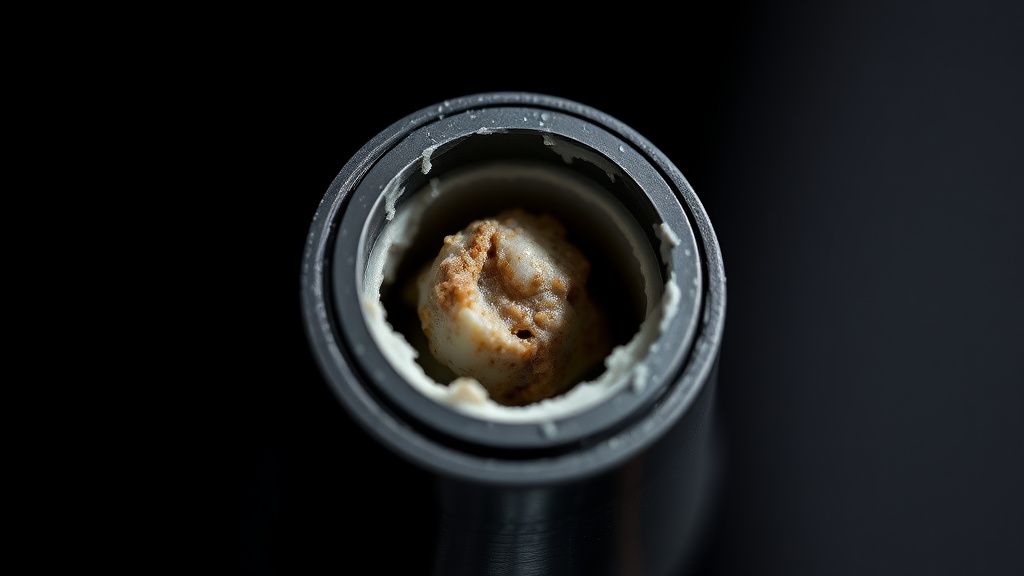
The "Pin and Purge" Operational Reality: Field Insights
The official manual tells you to use the provided cleaning tool. In the field, that tool is often useless once the clog is hardened. If the wand is completely blocked, the "needle" method is standard, but you have to be precise.
The Hierarchy of Fixes:
- The Purge (Preventative): If you hear a high-pitched whistle or uneven sputtering, you have a partial blockage. Use a high-temperature damp cloth to wipe the wand, then purge it into a pitcher of cold water. The thermal shock often breaks up the soft blockage.
- The Tip Soak: Unscrew the tip. If it’s stuck, do not use pliers without a protective rubber shim; you will warp the threading. Soak the tip in a citric acid-based descaler. Avoid vinegar if possible, as the acetic acid smell lingers in the machine for weeks.
- The Internal Clearing: If the wand is cold and the steam doesn't emerge, the clog is higher up in the wand assembly. This is where users start to panic.
Why the "Descaling Routine" Often Fails to Clear Wand Clogs
One of the biggest myths in home espresso maintenance is that a standard descaling cycle will clear a steam wand clog. It won't. Descaling solutions are designed to remove calcium carbonate (limescale) from the water path. They are not necessarily enzymatic cleaners designed to break down long-chain proteins found in milk.
If your wand is blocked, you need an alkaline cleaner or a specialized milk system cleaner like Urnex Rinza. These are surfactants that specifically target milk fat. If you just run descaler, you’re trying to use an acid to wash off fat. It’s like trying to wash butter off your hands with lemon juice—it’s not going to work.
The Engineering Compromise: Why the Wand Feels Fragile
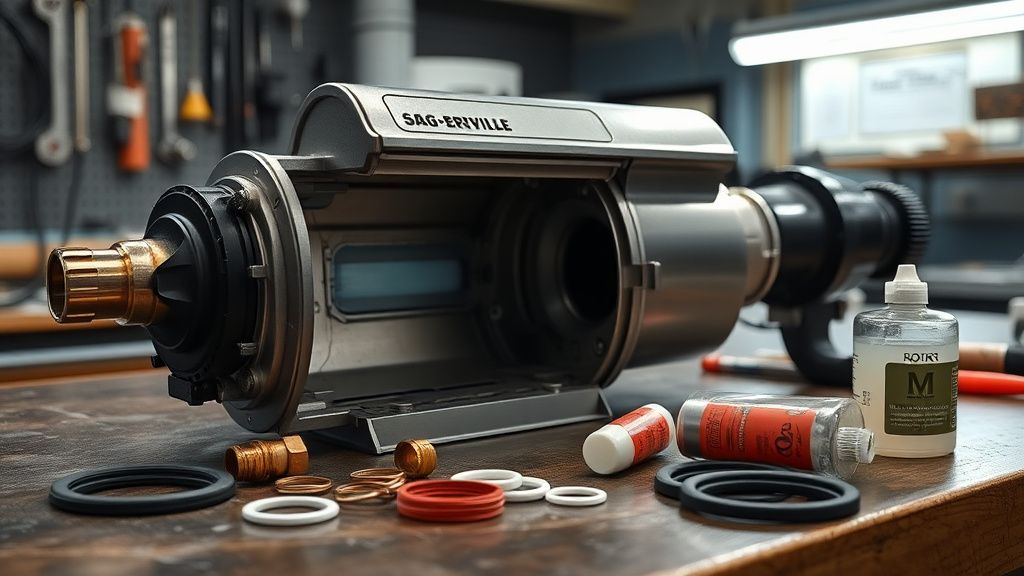
I’ve spent 15 years tearing these things down. The Barista Express has a ball-joint assembly that is the bane of my existence. It allows for great range of motion, but it relies on two tiny O-rings to maintain a seal. When users pull on the wand too hard, these O-rings deform. Once they deform, steam leaks at the joint, reducing the pressure at the tip, a common issue also seen in other models, such as a leaking KitchenAid Pro Line steam wand.
Many users complain that their machine is "losing power." Often, it’s not the pump dying; it’s the air being drawn in at the ball-joint because the user never lubricated the swivel mechanism. If you feel steam escaping from the hinge, you have to replace the O-rings. You can find these in standard plumbing kits (metric sizing), but Breville's proprietary service parts are notoriously hard to source without paying a premium.
Real Field Report: The "Solenoid Death" Syndrome
A common thread on Reddit’s /r/espresso or various coffee forums involves users reporting that their steam wand is "totally dead" even after cleaning. In the field, I often find that these users have been aggressively backflushing their machines, which can sometimes dislodge scale that then migrates into the steam solenoid valve.
- The Issue: The solenoid valve sits between the thermoblock and the wand. If a chunk of scale gets stuck in the valve’s plunger, the valve won't fully open.
- The Fix: This requires a partial teardown. You have to remove the top housing, locate the solenoid, and manually disassemble it. It’s not for the faint of heart.
- The Controversy: Some DIY guides suggest tapping the solenoid with a screwdriver handle to "shake" the obstruction loose. I’ve seen this work, but I’ve also seen users crack the plastic housing of the valve. It’s a "brute force" solution that reflects how little trust users have in the repairability of modern appliances.
Assessing the Economic Impact of Repair vs. Replace
The Barista Express is at a dangerous price point. It’s expensive enough that you don't want to throw it away, but cheap enough that a shop labor bill for a "wand overhaul" can cost 30% of the machine’s value. This is why the "workaround culture" exists.
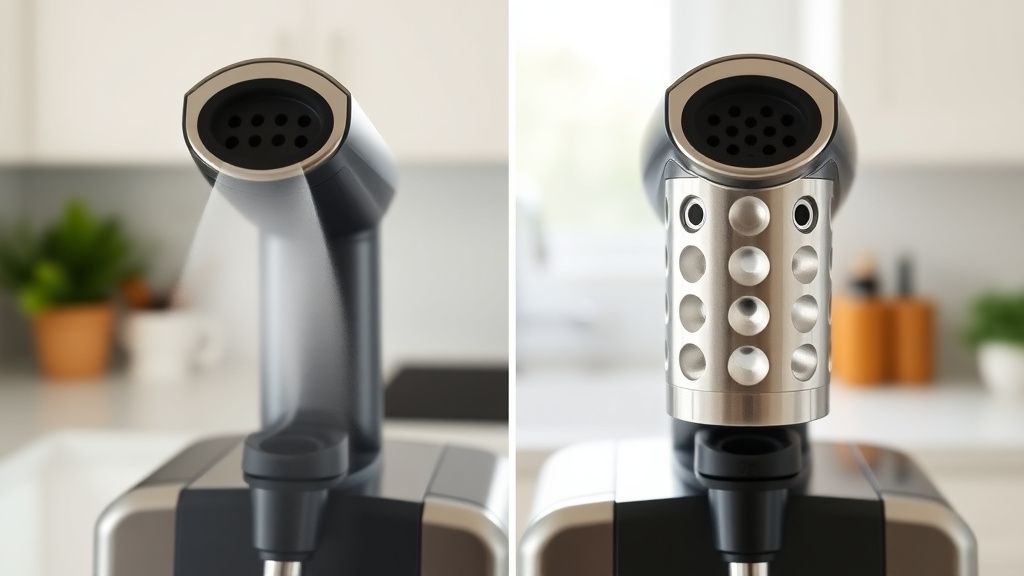
Users have started using 3D-printed adapter kits to replace the proprietary steam wand tips with commercial-style tips. While this improves the steam quality significantly, it often voids the warranty. You see the conflict here: the manufacturer builds a machine that is hard to service, and the community responds by hacking the hardware, which then creates a new set of failures (like steam pressure dropping because the new tip is too restrictive for the thermoblock).
Navigating the "Broken Promise" of Home Espresso
There is an inherent dishonesty in the marketing of consumer espresso machines. They are sold as "Barista" level, but they are built with domestic-grade solenoids and thin copper/brass tubing. When a user experiences a steam wand clog, they feel betrayed by the machine. They bought into the "coffee shop at home" dream, and now they are stuck in a support thread on a forum, trying to understand why they need to spend $50 on a proprietary wrench to reach an internal fitting.
If you are currently dealing with a clog, stop trying to use a paperclip. You are scratching the interior of the stainless steel tube. Once you scratch the inside, milk protein adheres to that scratch much faster, creating a "seeding" point for future clogs. Use a wooden toothpick or a specialized nozzle reaming tool.
Troubleshooting Flowchart: When to Give Up
If you have tried the following and still have zero pressure, you have a mechanical failure, not a clog:
- Purged with surfactant: Did nothing.
- Removed tip and checked aperture: Aperture is clear.
- Steam knob position: The valve stem behind the knob is rotating, but there is no sound of air/steam moving through the internal lines.
- Pump health: The water side works fine (extraction), but the steam side is silent.
If these four conditions are met, your solenoid valve is likely stuck or burnt out. At this point, the "pro fix" is not to tinker further, but to inspect the valve’s resistance with a multimeter. If the coil is open, you need a new solenoid block.
Why Community Knowledge Often Outperforms Manufacturer Support
If you search the Breville/Sage support pages, they will point you to a standard descaling video. It’s generic, safe, and often useless for the edge cases. Contrast this with a 20-page thread on a niche coffee forum where a user has mapped out the electrical impedance of the steam solenoid.
The "institutional knowledge" of the internet is where the real maintenance manual exists. I suggest checking the Home-Barista forums for specific model revisions, as Breville often changes the solenoid part numbers mid-production run without updating the documentation.
The Maintenance Mindset: A Final Word
The Barista Express is an appliance that demands a relationship. If you treat it like a toaster, it will fail. If you treat it like a car—where you change the oil, check the filters, and purge the lines—it can run for a decade. The steam wand clog is the ultimate test of this relationship. It is the machine's way of reminding you that you are not just a consumer; you are an operator.