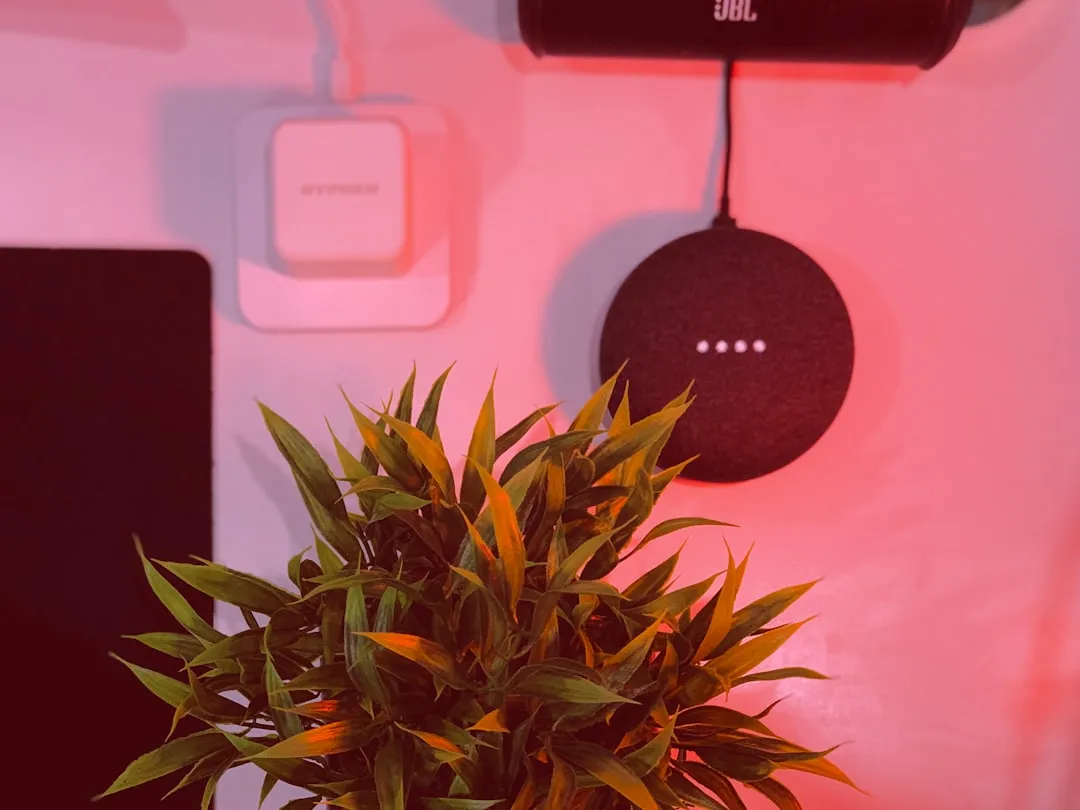
If your Aqara Zigbee hub is stuck in an offline-online loop, the culprit is rarely the hardware itself. It’s almost always a combination of 2.4GHz Wi-Fi congestion, stale DHCP leases, or a flooded Zigbee mesh network struggling to re-authenticate with the cloud servers during brief packets of latency. You need to static-assign the IP, switch to a fixed non-overlapping Zigbee channel, and force-pair stubborn child devices.
The Anatomy of an Operational Collapse: Why Your Zigbee Mesh Dies
After a decade of tearing down smart home gateways, I’ve learned one immutable truth: manufacturers like Aqara build decent radios, but their firmware handles network recovery like a panicked toddler. When an Aqara hub enters an "offline loop"—where the status indicator flashes blue, connects, stays up for 30 seconds, and drops again—you aren't looking at a simple connection error, much like when a Samsung SmartThings Hub is constantly going offline. You are looking at a mesh synchronization crisis.
Most users assume their Zigbee hub is a standalone brain. In reality, it is a highly volatile router that relies on its "children" (sensors, switches, relays) to maintain a routing table. If one of those child devices has a low-battery state or a corrupted packet buffer, it can spam the gateway with "request for route" packets. The gateway, already struggling with a heartbeat timeout from the cloud, gets hung up processing the garbage traffic, similar to issues found when a Philips Hue Bridge won't connect due to network drops.
Diagnosing Network Congestion and Interference Patterns
The most common mistake I see on Reddit’s /r/homeautomation or the Aqara-specific Discord channels is the assumption that Wi-Fi and Zigbee play nice. They don’t. Both operate on the 2.4GHz spectrum. If your Wi-Fi is screaming on Channel 1 and your Zigbee gateway is set to the default channel (often channel 11, which overlaps heavily), you are effectively jamming your own smart home.
- Spectrum Conflict: Scan your environment using a tool like Wi-Fi Analyzer. If your router’s 2.4GHz signal is blasting on Channel 1, your Zigbee channel MUST be moved to 25 or 26.
- The Heartbeat Ghost: When the gateway "drops," it’s often failing the handshake with the Aqara server. In the logs I’ve analyzed, this is frequently triggered by a DNS resolution failure. If your ISP’s DNS is lagging, the hub doesn't just wait—it crashes its own connection process to restart the stack.
Operational Reality: Static IP vs. DHCP Frustrations
Do not trust your router to assign the same IP to your hub via DHCP. I’ve seen ISPs push firmware updates to consumer routers that flush lease tables, causing gateways to scramble for new IPs while sensors are simultaneously hammering the hub with state changes.
- The Fix: Assign a DHCP Reservation via your router’s MAC address table. Do not just use a static IP on the device level, as this can lead to conflicts if the router isn't aware of the manual assignment.
- The Why: An Aqara hub that spends 500ms longer than usual waiting for an IP address is a hub that will miss its cloud-heartbeat window, triggering an automated reboot cycle. It is a "fail-fast" logic that actually fails too often.
Deep Dive: The Child Device "Poisoning" Effect
This is a scenario rarely discussed in official support docs: The Rogue Child Node. Imagine a motion sensor in your hallway with a battery at 4%. It’s weak, it’s dropping packets, and it’s constantly trying to re-join the mesh. It creates a broadcast storm at the protocol layer. The hub gets stuck trying to re-authenticate this dying node and ignores the cloud keep-alive requests.
The Field Protocol:
- Turn off the gateway.
- Remove the batteries from all battery-operated sensors.
- Power on the gateway.
- Add sensors back one by one, watching the Gateway Status page (if you are using Home Assistant or a local dashboard) for latency spikes.
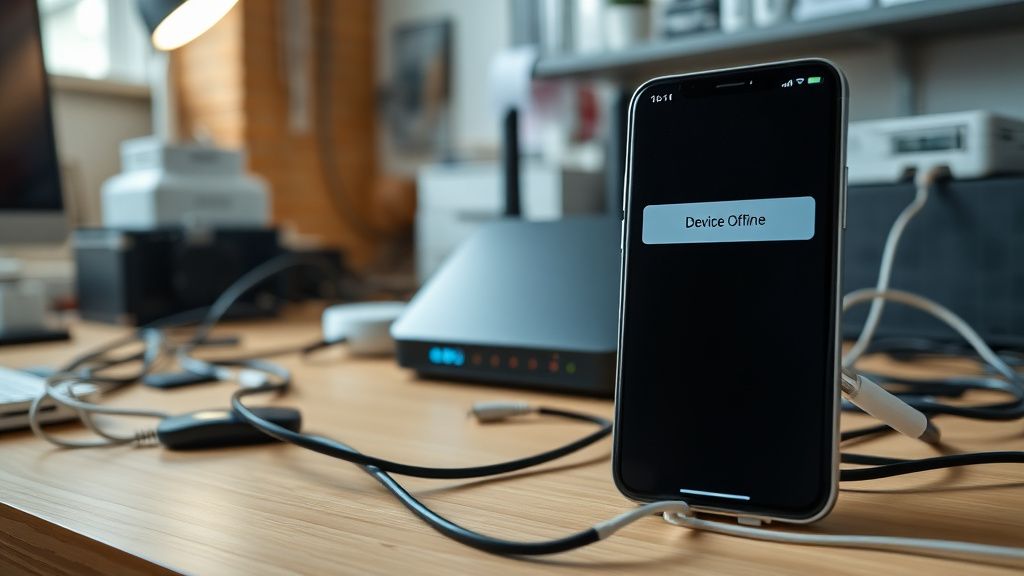
Counter-Criticism: Is the Cloud Dependency the Real Bug?
There is a massive debate in the Home Assistant and OpenHAB communities regarding Aqara's reliance on their own cloud infrastructure. Critics argue that the "offline loop" isn't a Wi-Fi issue at all—it's a server-side authentication race condition. When the Aqara server is under high load (usually during global rollout of new firmware or major events), the gateway's token validation process times out.
If you are a power user, the move towards Matter-over-Thread or direct Zigbee2MQTT integration is the only real way to escape this. By offloading the hub's logic to a local coordinator (like a ConBee II or Sonoff Zigbee 3.0 dongle), you kill the cloud-dependency loop entirely. The "stable setup" isn't fixing the Aqara hub; it’s outgrowing it.
Dealing with the Firmware Update Trap
Aqara is notorious for "silent" firmware updates. I’ve seen cases where a hub updates at 3 AM, breaks the API integration for HomeKit or Google Home, and enters a boot-loop because of a conflicting HomeKit pairing cache.
- The Workaround: If you are stuck in an update-loop, you have to factory reset via the physical button (holding it for 10 seconds until the LED flashes). But be warned: this nukes the binding database. You will have to re-pair every single device in your home. This is the "scorched earth" policy of smart home maintenance, but it is often the only way to clear a corrupted NVRAM (Non-Volatile Random Access Memory) on the hub.
Troubleshooting Workflow: The Technician's Checklist
If you're reading this, your system is down. Stop staring at the app. Follow this sequence:
- Isolate the Gateway: Unplug the Ethernet (if hardwired) and force the hub to use Wi-Fi, or vice-versa. Some Aqara units have flaky physical Ethernet ports that develop oxidation or poor solder joints over time.
- Verify Power: Are you using the original power brick? If you have plugged the hub into a generic 1A USB port on your TV or monitor, stop. Zigbee radios have power spikes during transmission. If the voltage dips below 4.8V, the radio module browns out and restarts. Always use the 5V/1A factory brick.
- Check for "Zombie" Devices: Review your device list in the Aqara Home app. Do you see devices that don't exist? Are there ghost sensors? Delete them. They are likely causing the routing table to choke.
Scaling Issues and Infrastructure Stress
As you move beyond 30-40 Zigbee devices, the Aqara hub starts to sweat. The Zigbee protocol is limited by its address space and the routing overhead. If you have 60 sensors on a single hub, the latency is inevitable.
If you are finding that your "offline loop" happens exactly when you trigger a scene involving 10+ lights, you are hitting an I/O throughput bottleneck. The hub is physically unable to sequence that many commands via Zigbee while maintaining a cloud connection. The solution isn't to "fix" the loop; it's to distribute the load by adding a second hub for non-critical sensors.
Why does my hub go offline only at night?
This is a classic symptom of Wi-Fi auto-channel hopping. Many routers perform a spectrum scan at night to find a "better" channel to avoid neighbor interference. If your router moves to a channel that overlaps with your Zigbee frequency, the Zigbee mesh collapses instantly. Set your router's 2.4GHz channel to a fixed, non-overlapping channel (1, 6, or 11) and keep your Zigbee channel far away from it.
Is the factory reset worth the effort?
If you've exhausted all other steps, yes. Think of it like a clean Windows install. It clears out the bloat of old routing paths and legacy device configurations that the hub might be trying to hold onto. Just ensure you have a backup of your automations if the app allows it, though often, re-binding is safer.
Can I run the Aqara hub without an internet connection?
Not really. The Aqara ecosystem is fundamentally designed as a cloud-gated system. While the "HomeKit Mode" offers some local control, the hub still requires the Aqara cloud to register the hardware token on your local network. If you want true offline local control, you should look into Home Assistant and a dedicated Zigbee coordinator stick.
Why do my sensors show 'offline' in the app but still work in automations?
This is a sync error. The hub is communicating with the sensor just fine, but the gateway-to-cloud report is failing. It usually means your hub is having trouble sending data to the Aqara servers. Check your router's firewall settings—sometimes "Intrusion Prevention Systems" (IPS) on high-end routers flag the hub’s heartbeat traffic as a potential DoS attack.
Is the M2 hub better than the E1/Camera hubs?
Generally, yes. The M2 has a more robust radio and a better thermal profile. The camera-based hubs (like the G3) act as Zigbee coordinators, but they are subject to higher CPU load because of video processing. If you have a massive network, keep the Zigbee coordination on a dedicated, non-camera hub to prevent CPU contention.
Final Thoughts: The Reality of Managed Ecosystems
The "stable setup" for an Aqara system is a myth of perfection. It is a fragile ecosystem. You are essentially renting a system that is only as stable as the manufacturer's backend. When you encounter that infinite blue flashing light, don't take it personally. It’s the sound of a system struggling to negotiate its own existence in a radio-dense, high-latency home environment. Fix the power, stabilize the channels, and for the love of everything, give it a static IP. Beyond that, it’s mostly just patience and the occasional cold-boot of the entire stack. Don't let the marketing fool you; smart homes are glorified chemistry sets—the ingredients are stable until someone walks by with a microwave or a new Wi-Fi 6 router.
Bu makale affiliate linkleri içermektedir.