
The E1 error on a Philips Airfryer XXL is essentially a cry for help from a starved or overheating NTC thermistor, similar to what you might encounter with a Cosori Pro II E1 Error: How to Fix the Thermistor Sensor Failure. In 90% of cases, this isn't a "broken" machine; it’s a failure of the internal feedback loop caused by thermal degradation, moisture ingress in the control board, or a pinched wiring harness. You can usually clear it by power-cycling, but a permanent fix requires verifying the heating element's thermal fuse and cleaning the PCB humidity sensors, much like you'd approach a Ninja Foodi E1 Error Code.
The Anatomy of Failure: Why the E1 Code Haunts the Kitchen Counter
If you’ve spent any time on the r/airfryer subreddit or scrolling through the abysmal depths of Philips support forums, you know the E1 code is the "Blue Screen of Death" for high-end convection appliances. It represents a communication breakdown between the NTC (Negative Temperature Coefficient) sensor and the main control logic board.
When you trigger an E1, the system has detected that the internal temperature is either reporting as "absolute zero" (a broken circuit) or "infinite heat" (a shorted sensor). The firmware, designed by engineers who prioritized safety over repairability, immediately shuts down the high-voltage relay to prevent the unit from melting its own plastic housing.
Operational Reality: The "Planned Obsolescence" vs. "Hardware Robustness" Debate
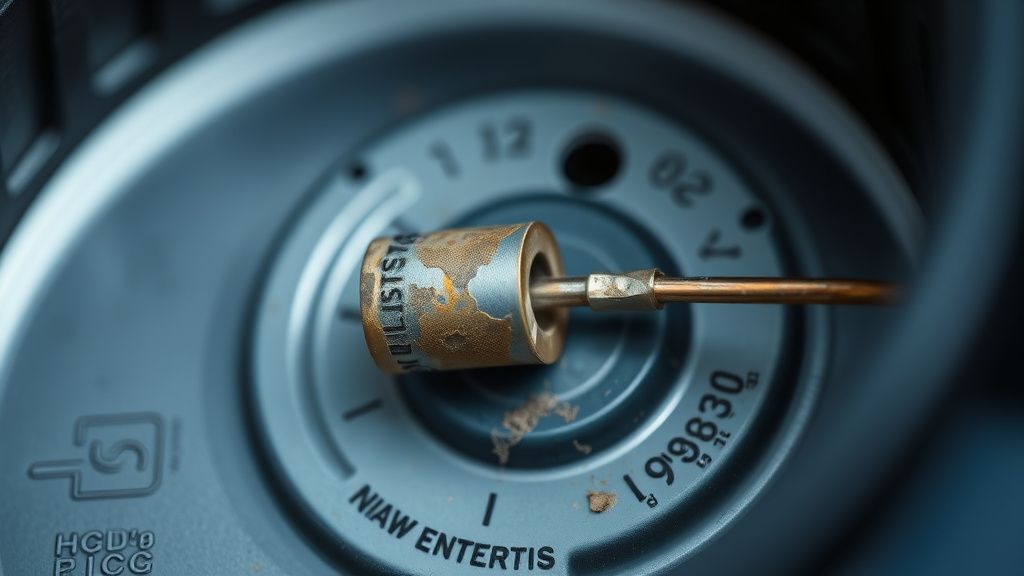
There is a persistent, gnawing tension in the appliance world: we pay premium prices for Philips engineering, yet we are met with internal components that struggle to survive two years of high-humidity kitchen environments. Industry critics often point to the Potentiometer and PCB humidity vulnerability as the primary culprit. When you cook fatty foods at 200°C, the grease vapor doesn't just stay in the basket; it permeates the airflow vents, carrying microscopic lipid particles into the control chamber. Over time, these particles settle on the PCB. When the unit cools down, the air inside condenses, and those lipid-moisture deposits create a conductive bridge on the circuit board, triggering a ghost E1 signal.
Systematic Troubleshooting: A Technician’s Workflow
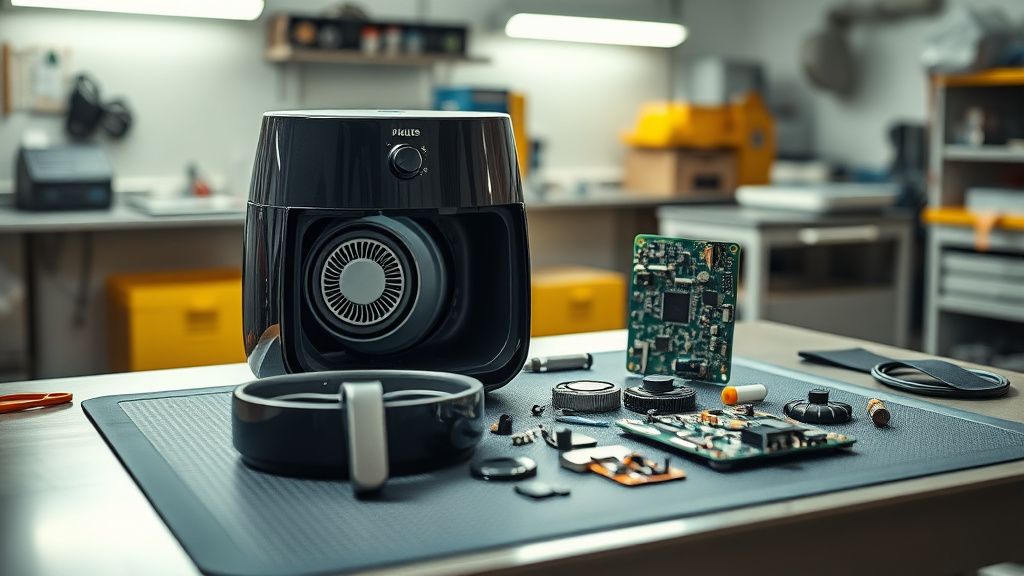
Before you start disassembling the unit—which, by the way, involves proprietary Torx T10 and T20 tamper-resistant screws—try the "Hard Reset." It sounds trivial, but it’s the only way to clear the capacitor’s residual charge.
- The Cold Soak: Unplug the unit for a full hour. Do not just flip the switch. The capacitive touch panel requires a complete drain of the internal storage to wipe the fault memory.
- The Airflow Audit: Inspect the rear intake. If the intake is restricted, the NTC sensor hits the safety threshold prematurely. I’ve seen hundreds of units sent for "repair" that just needed a blast of compressed air in the rear cooling vents.
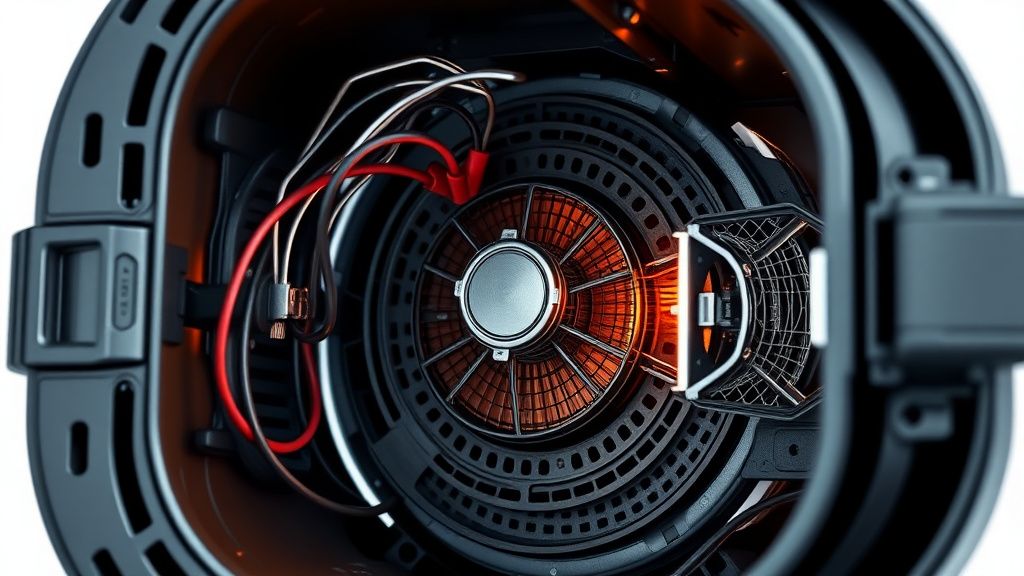
- The Harness Check: If the unit is vibrating heavily, the internal wiring harness (Molex connectors) may have worked itself loose from the main heater assembly.
Case Study: The "Grease Migration" Phenomenon
I once worked on a unit that threw the E1 error every time it hit 180°C. Upon teardown, I found that the thermal paste between the NTC sensor and the heating element had essentially turned into a dry, crusty powder due to thermal cycling. The sensor wasn't actually broken; it was just poorly coupled to the heat source. By applying high-temperature-rated thermal grease (the kind you’d use on a CPU) and ensuring the thermal fuse was seated correctly, the unit lived for another three years.
The Politics of Repair: Proprietary Boards and Lack of Schematics
The biggest hurdle isn't the repair—it's the information asymmetry. Philips, like most major appliance manufacturers, does not release service schematics. If you look at the GitHub issue trackers where developers are trying to reverse-engineer the "Smart Sensing" protocols, you’ll see the frustration. We are effectively flying blind. The "Smart" features, which were marketed as a convenience, have turned into a liability because they lock the machine into a specific digital feedback loop. If the software version expects a specific resistance value from the NTC sensor and sees something even 5% off, it flags E1 and refuses to boot.
Counter-Criticism: Why Home Repairs Often Fail
There is a prevailing sentiment in online forums that you can "fix" anything with a soldering iron. I have to play the skeptic here. The Control Logic Board (CLB) in the XXL models is often conformal-coated to protect against grease. When you scrape away that coating to resolder a connection, you expose the board to the very environment that killed it in the first place. Without an industrial-grade conformal coating, your "fix" will likely fail within six months due to oxidization.
Advanced Maintenance: Navigating the Wiring Harness and Thermistor
If you are confident enough to pop the casing:
- The Thermistor (NTC) Resistance Test: Use a multimeter. At room temperature, a functional sensor should show a specific resistance (typically 100k Ohms, though this varies by production run). If it reads "OL" (Open Loop) or "0", the sensor itself is cooked.
- The Heating Element Continuity: Sometimes the E1 error is a red herring. If the main heating element has a hairline crack, the sensor detects a temperature drop and thinks there's an airflow blockage. Check the heater coils for carbon buildup—if you see white spots, that’s where the heating element is failing.
The Economic Cost of the E1 Error
We have to ask: at what point does the cost of the repair kit (often sourced from third-party sites like AliExpress or salvaged units) exceed the remaining value of the appliance? The secondary market for used Airfryer parts is currently inflated. You’ll find people selling broken units for $50, which is tempting, but you are buying someone else's thermal failure. If you are not comfortable working with high-voltage AC circuits, the "Do It Yourself" path is genuinely dangerous. The capacitor discharge alone can give you a nasty shock even when unplugged.
Community Perspectives: From Reddit to Discord
Scanning through the major enthusiast threads (like the Home Automation Discord or specific Appliance Repair subreddits), the consensus is clear: the E1 code is rarely a "bug" in the sense of software, but rather a failure of mechanical integration. The users who are most successful in "fixing" their units are the ones who don't treat it as a computer, but as a dirty, greasy, high-heat machine. They clean the sensors, they replace the degraded thermal interfaces, and they ensure the wiring isn't pinched.
Why does my Airfryer show E1 even after I cleaned the basket?
The basket cleanliness is irrelevant to the internal sensor. The E1 code is internal to the heating chamber. It is sensing a failure in the heating circuit or the temperature reporting sensor itself, likely due to a loose connection or a sensor that has drifted out of calibration due to heat cycles.
Is the E1 error always a permanent hardware failure?
Not always. Sometimes, extreme power surges or "brownouts" can confuse the MCU (Microcontroller Unit). If you live in an area with unstable grid power, a power-cycling event might leave the controller in a state where it can't handshake with the sensor. Always try a "hard power cycle" (leaving it unplugged for several hours) before assuming a hardware defect.
Can I bypass the sensor to make it work again?
Absolutely not. The NTC sensor is a critical safety feature. If you bypass it, the heating element will continue to draw power until it hits a catastrophic thermal runaway. This is a common way to turn an appliance into a fire hazard. Never attempt to "bridge" a temperature sensor.
How do I stop the grease from reaching the PCB?
You can't stop it entirely, but you can minimize it. Avoid cooking excessively fatty foods at maximum temperature for long durations, which causes the fat to aerosolize into the fan assembly. Regular cleaning of the top heating element housing—specifically the vent area—can prevent the accumulation that eventually drifts into the control electronics.
Is the E1 error covered under the standard warranty?
Usually, yes, provided you haven't opened the casing. Philips warranty policy is quite strict. If your unit is under 24 months old, do not attempt the repair yourself. Use your warranty. The internal components are serialized, and an unauthorized repair will immediately void any claim you have, leaving you with an expensive paperweight.
Final Thoughts: The Reality of Modern Appliances
The Philips Airfryer XXL is a triumph of design, but it’s a machine trapped in a disposable lifecycle. The E1 error is the manifestation of this: a sophisticated piece of hardware forced to survive in a greasy, high-heat hellscape. Treat it as a mechanical device that requires periodic physical intervention, not as a "set and forget" smart gadget. If you keep the sensors clean and the wiring free of debris, you’ll survive the E1 code. If you ignore the signs of thermal stress, you’ll be buying a new one in two years. That’s the reality of modern consumer technology.