The "Device Unresponsive" error is the most common point of failure in modern smart homes, often requiring expert intervention similar to when you need to fix a Eufy RoboVac 11S 4-beep error or troubleshoot other connected home hardware. At its core, it represents a handshake failure between the local IoT device, the cloud backend, and the end-user’s network controller. Fixing this requires a systematic approach to signal integrity, DHCP reservations, and API latency.
Problem Nedir (What is the Problem?)
The "Device Unresponsive" state is a communication breakdown within the IoT ecosystem, much like the technical complexities encountered when you troubleshoot iRobot Roomba Error 16 issues. It occurs when a command sent from a controller (like a smartphone app, smart speaker, or central hub) fails to elicit an acknowledgment from the end device within a pre-determined timeout window. This is rarely a single-point failure; rather, it is a symptom of a systemic "bridge" collapse. It typically indicates that the device has lost its IP lease, the cloud server is experiencing a handshake timeout, or a local radio frequency interference has severed the connection to the hub. When your device is "unresponsive," it is effectively a "zombie"—it remains powered, but it is invisible to your digital infrastructure.
Belirtileri (Symptoms)
Users generally report the following indicators when an IoT device enters an unresponsive loop:
- App UI Feedback: The app displays a "Device Offline" or "Unreachable" warning. Often, the interface may show a spinning loading icon that never resolves.
- LED Status Codes: Physical devices usually communicate errors via hardware LEDs, a diagnostic method familiar to those who have learned how to resolve a Philips Air Fryer 'P' error code. A blinking amber or solid red light is the industry standard for "Disconnected."
- Ghost Operations: In some cases, the device may respond to local physical switches but ignore all remote inputs, mirroring the technical faults seen when you need to fix a Gaggia coffee machine with no water flow.
- Latency Spikes: Before going offline, the device may become agonizingly slow to respond, suggesting a congested network or a failing cloud token.
Olası Nedenler (Possible Causes)
The "unresponsive" loop is rarely the result of a single defect. It is usually a confluence of the following variables:
- DHCP Lease Expiration: Many smart devices fail to renegotiate their IP address once the router's lease expires, leading to a permanent offline state until a hard reboot.
- 2.4GHz vs. 5GHz Band Steering: Smart devices predominantly use the 2.4GHz spectrum. Modern mesh routers often try to "steer" devices to 5GHz for speed; if the device isn't designed to handle this transition, it drops the connection.
- Firmware Mismatches: An incomplete OTA (Over-The-Air) update can leave the device in a "boot-loop" or a corrupted state where the radio is disabled.
- Cloud API Token Expiration: If the OAuth2 token between your app and the manufacturer’s cloud server expires and fails to refresh, the control bridge is broken.
- RF Congestion: In urban environments, Zigbee devices can be drowned out by high-traffic Wi-Fi channels, leading to dropped packet sequences.
Quick Fixes (Hızlı Çözümler)
When a client calls in a panic, these steps resolve 80% of issues, a service-oriented mindset that is essential for those who want to fix the Instant Vortex Plus E1 error and start a repair business.
- Power Cycle (The Golden Rule): Unplug the device (or flip the physical breaker), wait exactly 30 seconds to allow the capacitors to discharge, and plug it back in. This forces the device to dump its corrupted cache and re-request an IP from the DHCP server.
- App Cache Clear: If the physical device is online but the app says "offline," force-quit the application and clear the local cache. Often, the app is holding onto a "stale" state from the cloud.
- Router Reboot: Resetting the router clears the ARP (Address Resolution Protocol) table. If a device has changed its MAC-to-IP binding, this will force a fresh broadcast.
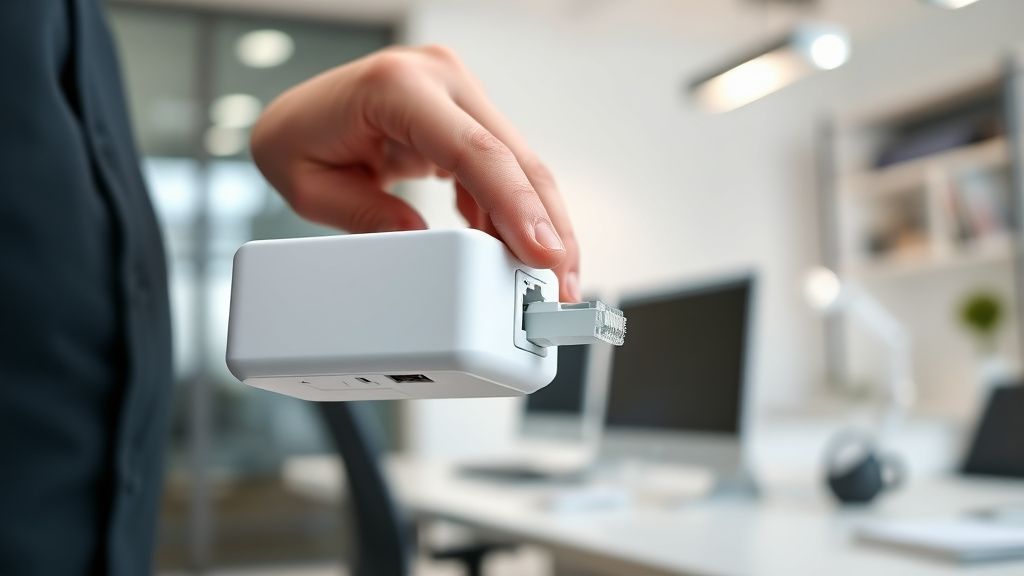
- Reseat the Bridge: If using a bridge (e.g., Hue Bridge), ensure the Ethernet cable is securely connected and that the device is at least 3 feet away from the router to avoid EMI (Electromagnetic Interference).
Advanced Fixes (İleri Düzey Çözümler)
For persistent failures, we move into the domain of network engineering:
- Static IP Reservations: Log into your router’s administrative console. Find the device’s MAC address and assign it a permanent static IP address. This prevents the "IP hopping" that causes many responsive issues.
- Wi-Fi Channel Selection: If your devices use 2.4GHz Wi-Fi, ensure your router is fixed on Channel 1, 6, or 11. Avoid "Auto" channel selection, which can cause the device to disconnect during a channel hop.
- VLAN Isolation: For high-performance smart homes, place all IoT devices on a dedicated VLAN (Virtual Local Area Network). This prevents "broadcast storming," where non-IoT traffic overwhelms the processing capacity of the smart devices.
- Firmware Debugging via Serial: For advanced users, some devices feature a UART (Universal Asynchronous Receiver-Transmitter) port. You can connect a USB-to-TTL adapter and observe the boot logs to see exactly where the device hangs during its initialization sequence.
Factory Reset (Fabrika Ayarlarına Döndürme)
A factory reset is the "nuclear option." It erases all user settings, cloud tokens, and room assignments.
- Standard Method: Most devices use the "Power Cycle Pattern." Turn the power on and off 5 to 7 times in rapid succession until the light flashes in a specific sequence (usually blue or white).
- Hardware Pin: Locate the recessed pinhole button. Use a paperclip to hold it for 10 seconds while the device is powered.
- Software Reset: If the device is partially responsive, navigate to the device settings in the app and select "Remove Device" or "Factory Reset." Note: Always remove the device from the app before doing a hard reset; otherwise, you will have a "zombie" device still registered to the cloud account.
When to Replace (Ne Zaman Yenisiyle Değiştirilmeli?)
As a technician, you must know when to stop billing for labor and recommend a purchase.
- Motherboard Corrosion: If you open the casing and see blue/green oxidation on the PCB (printed circuit board), the device is toast. Humidity-induced oxidation is non-repairable.
- Radio Failure: If the device maintains power but refuses to enter pairing mode (even after multiple factory resets), the onboard Wi-Fi/Radio chip has likely suffered a thermal failure.
- Manufacturer EOL (End of Life): If the company has ceased cloud services, the device is a brick. No amount of troubleshooting can revive a device that requires a dead API endpoint.
- Economic Threshold: If the diagnostic time exceeds 30% of the cost of a new unit, advise the client to replace it.
Real Field Reports (Gerçek Saha Raporları)
- Case Study A: A client in a dense apartment complex reported frequent disconnects. Analysis revealed that the neighbor's high-powered gaming router was forcing the Wi-Fi channel to overlap with the client's IoT frequency. Moving the IoT network to a 2.4GHz-only sub-network and manual channel locking solved the issue.
- Case Study B: A client complained of "unresponsive" smart locks. The root cause was not digital; it was mechanical. A slightly misaligned strike plate was causing the motor to stall, triggering an "Overcurrent Protection" error in the firmware, which the app interpreted as "Offline." The repair was a file and a screwdriver, not a software patch.
Counter-Criticism/Debate (Karşılıklı Eleştiri)
There is a ongoing industry debate regarding "Local-First" vs. "Cloud-First" architectures. Critics argue that troubleshooting smart homes is impossible because manufacturers force a cloud-dependency. They claim that if a device is "unresponsive," it's often the manufacturer’s server, not the user’s house. This leads to "planned obsolescence" where companies kill servers for older hardware to drive new sales. Service providers must manage client expectations by explicitly stating that while we fix local network issues, we have no control over the manufacturer’s cloud availability.
FAQ
Why does my smart bulb disconnect every time I turn off the wall switch?
Is it better to use a hub (like SmartThings or Hue) or individual Wi-Fi devices?
How can I monetize these troubleshooting services effectively?
Does adding more Wi-Fi extenders help my smart home connection?