
If your Dreame L20 Ultra is bleeding water onto your hardwood floors, you aren't alone; this is a classic failure point in high-end autonomous mopping systems. The issue usually stems from a clogged water channel, a misaligned internal gasket (a common culprit in leaking fluid systems requiring seal repair), or a faulty solenoid valve. Most fixes involve a deep manual clean of the dock’s washboard or checking the internal flow rate via the App settings.
The Anatomy of Failure: Why High-End Cleaning Systems Leak
After 15 years in the trenches of consumer robotics, I’ve learned one immutable truth: the more complex the fluid handling system, the higher the probability of a "wet mess" event. The Dreame L20 Ultra is an engineering marvel that tries to compress an industrial floor-cleaning apparatus into a residential footprint. When we talk about leaks, we aren't just talking about a loose hose. We are talking about the intersection of pressurized peristaltic pumps, sensor-driven valve timing, and the often chaotic reality of household dust, hair, and hard-water mineral buildup.
The L20 utilizes a closed-loop water management system. It draws clean water from the reservoir, pumps it through an internal manifold, and distributes it to the mop pads. If the water stops where it should be moving, or moves where it should be static, the physics of gravity takes over, much like when an Ecovacs Deebot T20 Omni stops mopping due to water flow errors. That’s when your smart home becomes a soggy liability.
Analyzing the Docking Station: The Washboard Clog Syndrome
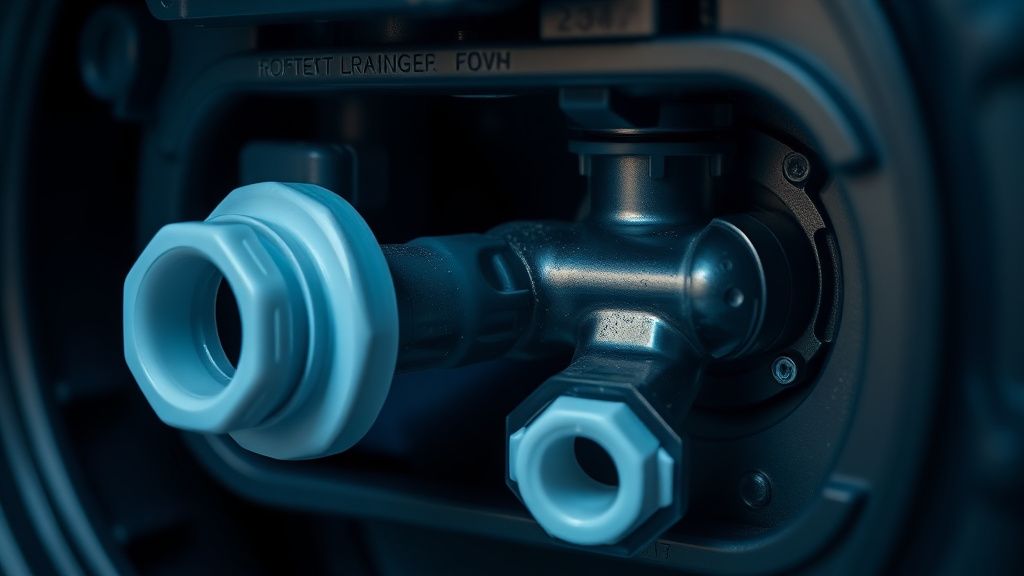
The most frequent "leak" isn't a leak at all; it’s an overflow. Users often report water pooling at the base of the Dreame dock. This is almost always caused by a failure in the Washboard Drainage Channel, a problem that echoes similar base station clogs in other Dreame models.
The L20 Ultra cleans its mops by vibrating them against a washboard. If the drain path—the tiny, serpentine channel leading to the dirty water tank—is occluded by a mass of pet hair and floor gunk, the water used to clean the mops has nowhere to go. It rises, spills over the edge, and ruins your baseboards.
- The Culprit: Biofilm. It builds up in the drainage exit.
- The Fix: Pull the washboard tray completely out. You need to inspect the drain port at the back of the dock. If you see a thick, gray sludge, you’ve found your problem. Use a small pipe cleaner or a high-pressure spray nozzle to clear the debris.
- The Reality: Manufacturers rarely tell you that you need to deep-clean the dock every 14 days. They market "Self-Cleaning," which is a euphemism for "we delay the inevitable."
Technical Diagnostics: The Solenoid Valve and Pump Integrity
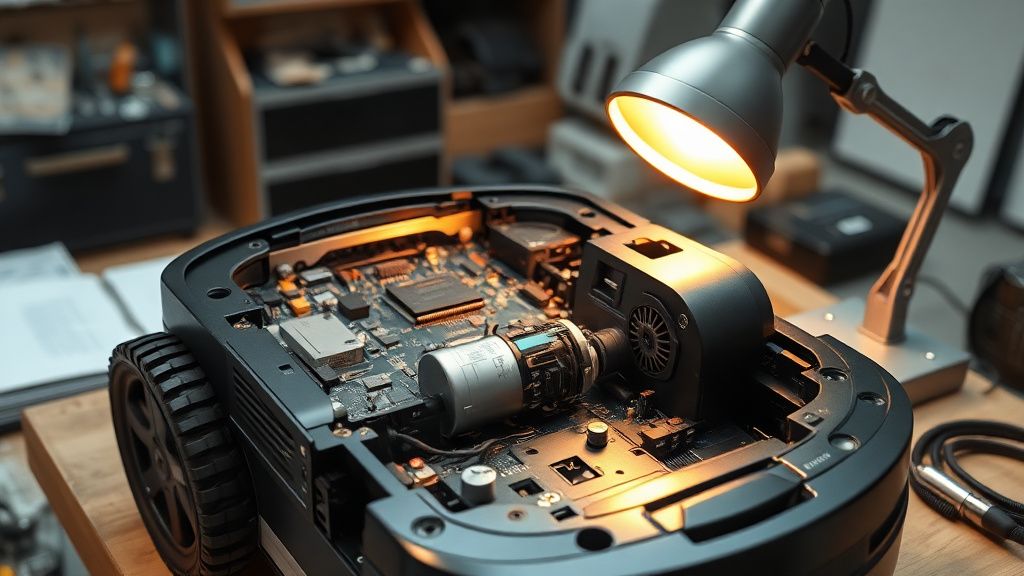
If the leak is occurring while the robot is undocked or in the middle of a room, the failure is internal. The L20 uses a solenoid valve to regulate water flow to the mops. If this valve fails in the "open" position—often due to a small piece of grit lodging in the seat—the robot will effectively perform a continuous leak throughout the house.
This is a critical failure point. If your robot leaves a wet trail that doesn't disappear, stop the unit immediately. If you try to run it while the solenoid is jammed, you risk burning out the pump motor.
- Check the Firmware/Logic: Occasionally, a bad update causes the pump to override the sensor state. Check your
Log Filesvia the maintenance menu if accessible, or observe if the pump makes a stuttering noise. - The Peristaltic Pump Stress: These pumps use rollers to squeeze a tube. Over time, the tube can develop micro-fractures. If you smell ozone or see moisture near the internal chassis, the pump assembly likely needs a full replacement.
The User Experience: Support Nightmares and Warranty Frustrations
We see the same patterns on Reddit’s r/Dreame_Tech and various GitHub maintenance threads. Users report that "Support told me to reboot it," which is the universal sign that the company is overwhelmed by the sheer volume of hardware support requests.
The "Scaling Issue" is real. Dreame, like Roborock or Ecovacs, produces these machines in massive batches. When a specific batch has a sub-par batch of gaskets (the rubber seals that keep water in), the support queues become flooded. If you are reading this, don’t hold your breath for a quick fix from official channels. Most hardware technicians—myself included—recommend that if you are under warranty, you push for an RMA (Return Merchandise Authorization) immediately. Don't waste time trying to seal a pressurized tank if the internal plastic housing is cracked.
Field Reports: When Engineering Meets Household Chaos
- The "Hard Water" Scenario: In regions with high calcium content, the L20's fine spray nozzles become calcified. This changes the backpressure on the pump. I’ve seen three different units where the increased pressure blew the gasket off the manifold.
- The "Pet Hair" Exploit: Hair wraps around the mop-drive gear. This creates a tiny gap in the seal near the mop attachment point. The water drips down the gear shaft and pools inside the gear box. This is a design flaw: the gear box should be isolated from the water circuit, but in many of these models, they share a chassis wall.
Counter-Criticism: Are We Expecting Too Much?
There is a heated debate in the industry right now. Is it the manufacturer's fault for making fragile machines, or the consumer’s fault for expecting a device that can navigate pet hair, floor wax, and human spillages without breaking?
Critics argue that these robots are marketed as "set and forget," which is a lie. The operational reality is that an L20 Ultra is a "high-maintenance appliance," not a "consumer electronic." You wouldn't expect a car to never need an oil change, yet users act shocked when a machine that sprays water under pressure needs a gasket check or a nozzle cleaning. The friction comes from the marketing disconnect—the gap between the "lifestyle" video and the "dirty screwdriver" reality.
Advanced Workarounds: Maintenance Culture
If you're out of warranty, you are in the "Workaround Culture" zone.
- The "Silicone Grease" Trick: If you find a rubber seal is leaking, do not use superglue. Use high-quality food-grade silicone grease (plumber’s grease). It seals the rubber and prevents it from drying out.
- The Bypass Hack: Some enthusiasts on Discord servers have successfully rerouted the water lines to use an external bottle, bypassing the internal, failure-prone reservoir. Warning: This voids your warranty and turns your vacuum into a science experiment.
FAQ
Why does my Dreame L20 leak only when it's charging?
Can I use vinegar to clean the water lines?
My robot says "Water Tank Empty" but it’s full. What now?
Is the leak dangerous for the electronics?
How often should I check the water seals?
Final Thoughts on Institutional Responsibility
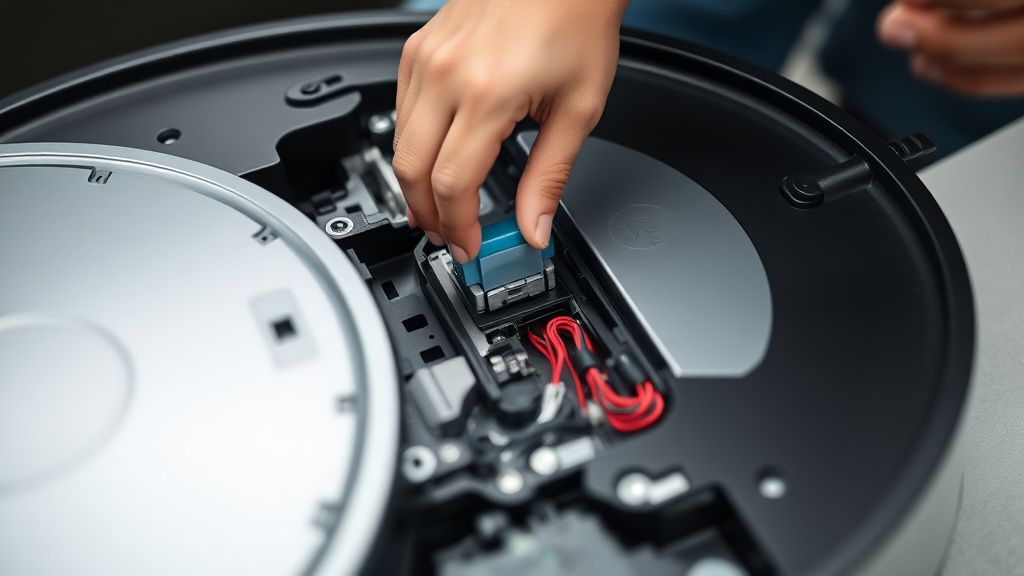
The industry is at a breaking point regarding right-to-repair. When these companies lock down their firmware and design machines with proprietary, glue-heavy internals, they shift the cost of their poor design onto the user. If your L20 is leaking, don't just blame yourself for the mess. Understand that you are operating a piece of hardware that was designed for performance, not longevity. Keep your tools sharp, your workspace clean, and if the machine refuses to cooperate, don't be afraid to demand a replacement rather than settling for a patch-job. The "messy reality" is that we are all just beta testers for the next iteration of floor-cleaning robotics.