Problem Nedir
The "Offline" status or persistent latency in Ring Doorbells is almost exclusively a networking-layer issue born from the constraints of the 2.4GHz ISM (Industrial, Scientific, and Medical) band. Unlike high-bandwidth appliances, your Ring device is a low-power, wide-area IoT sensor that relies on consistent, low-latency packet transmission to initiate video streams. When the 2.4GHz spectrum—which is shared with microwaves, Bluetooth, neighbors' Wi-Fi, and legacy smart devices—becomes saturated, your Ring device experiences "packet collisions," a common headache for tech enthusiasts who might otherwise focus on optimizing high-margin businesses, such as how to build a high-margin business restoring mechanical keyboards. This results in the doorbell timing out during the handshake phase, failing to send an "I am here" signal to the Ring cloud servers, effectively dropping it from the network—an unstable connection that stands in stark contrast to the robust systems needed for how to build a high-ticket AI automation agency that actually lasts.
Belirtileri
You are experiencing signal degradation if you observe the following technical markers:
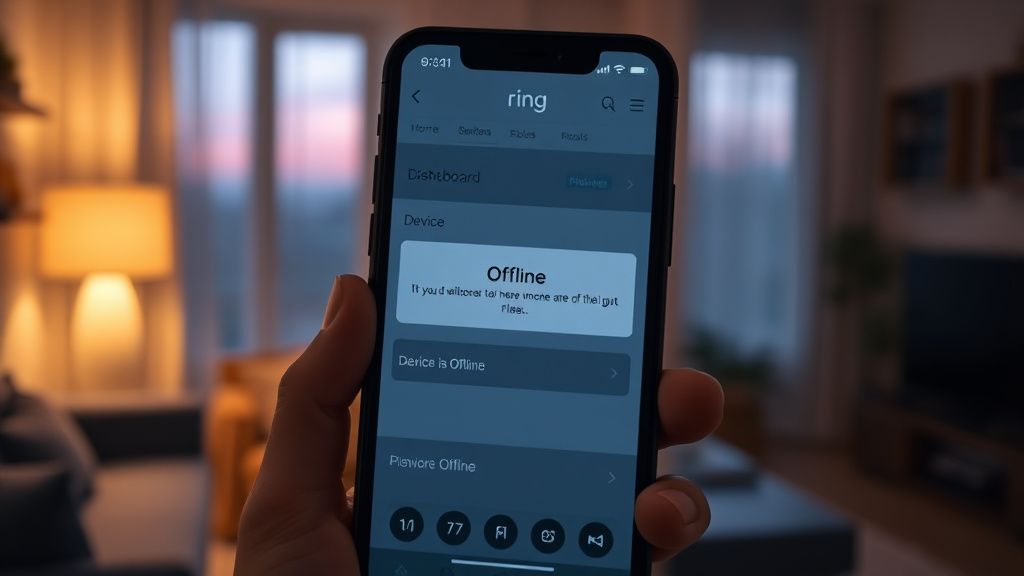
- The "Spinning Wheel of Death": The Ring app hangs on the "Activating Device" or "Loading Live View" screen for more than five seconds.
- Erratic LED Patterns: The device flashes a white circular pattern (indicating a reconnection attempt) followed by a red flicker (connection failure).
- Event Gaps: The timeline shows missed motion events or recordings that start mid-way through an interaction, which is far from the precision required when building automated portfolio rebalancing engines in 2026.
- Audio Desync: If a connection is established, the audio feed lags behind the video, or the two-way talk feature suffers from severe jitter, indicating high packet loss.
- In-App RSSI Values: Navigating to Device Health in the app reveals an RSSI (Received Signal Strength Indicator) value higher than -65dBm (e.g., -70dBm or -80dBm), signaling a weak connection.
Olası Nedenler
The 2.4GHz frequency is a "noisy" neighbor. Much like navigating the complexities of logistics, where you must understand why cross-border Amazon arbitrage is changing in 2026, the primary technical culprits for connection issues include:
- Co-Channel Interference: Your neighbors' routers are likely broadcasting on the same channel (1, 6, or 11), causing your doorbell’s signal to be drowned out by "traffic" from adjacent networks.
- Physical Signal Obstruction: Exterior walls containing stucco, wire mesh (common in older builds for lath-and-plaster), or large bodies of water (like fish tanks or water pipes) act as effective Faraday cages for the 2.4GHz wavelength.
- Bluetooth Collision: Bluetooth devices operate in the same 2.4GHz frequency. If a smart lock or a neighbor’s speaker is placed directly near the doorbell, it will physically interfere with the doorbell’s antenna.
- Firmware/Cloud Desync: Sometimes, the issue isn't the signal strength, but the device’s attempt to connect to an outdated gateway or a misconfigured DNS server provided by your ISP.
- Power Starvation: While not strictly Wi-Fi related, an insufficient voltage drop (common in older doorbell transformers) will cause the internal Wi-Fi radio to reset repeatedly as the device attempts to preserve power for basic operations.
Quick Fixes
Before tearing into your network infrastructure, perform these immediate steps, which are crucial as we navigate an era defined by the ocean floor gold rush and deep-sea minerals and the need for scaling micro-farms for urban profits.
- Hard Power Cycle: Remove the Ring device from its mounting plate. If battery-powered, remove the battery for 60 seconds. If hardwired, flip the circuit breaker connected to the doorbell for one minute. This clears the temporary cache of the internal Wi-Fi chipset.
- RSSI Audit: Open the Ring app, go to Device Health. Check your RSSI. If it is -65 or higher, the issue is signal strength. If it is -40 or lower, the issue is network congestion or interference.
- The "Bridge" Approach: If your router is more than 20 feet away, buy a Ring Chime Pro. It serves as a dedicated Wi-Fi extender specifically optimized for the Ring's communication protocol.
- Channel Check: Log into your router’s admin page. Ensure your 2.4GHz channel is manually set to 1, 6, or 11—do not use "Auto" mode, as routers often flip channels frequently, causing the doorbell to drop.
Advanced Fixes
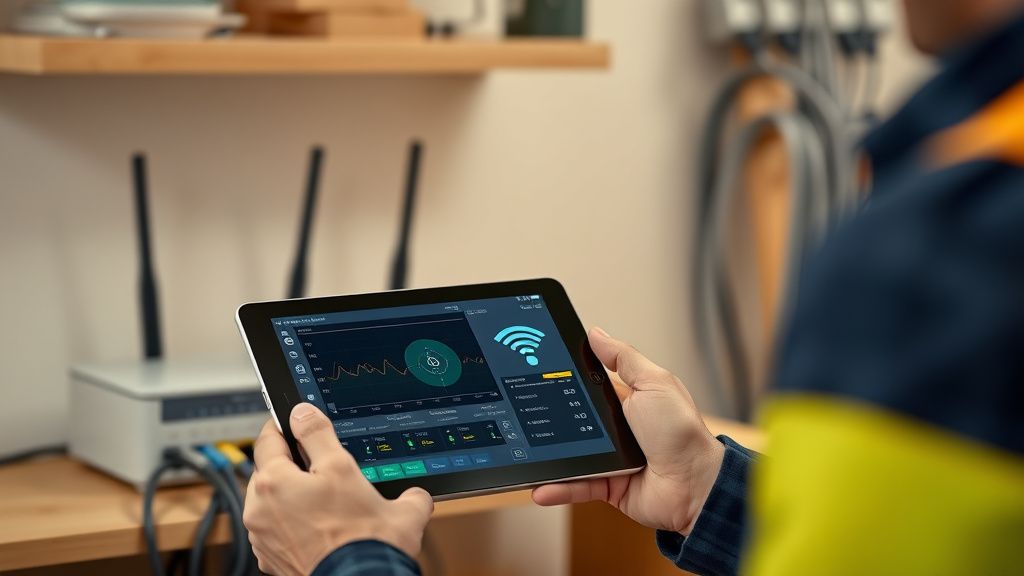
When basic resets fail, you must treat your home network as an enterprise environment.
1. Frequency Isolation (The SSID Split): Most modern routers use "Band Steering," forcing 2.4GHz and 5GHz devices onto the same SSID. This is disastrous for IoT devices. Log into your router, disable Band Steering, and rename your 2.4GHz network to something unique (e.g., "Home_IoT_2.4"). Force the Ring device to connect only to this SSID. This prevents the doorbell from getting confused between frequency switching.
2. Packet Prioritization (QoS): Access your router’s Quality of Service (QoS) settings. Assign your Ring device's MAC address the "Highest" priority. This ensures that when your router is busy streaming 4K Netflix content or gaming, it reserves a "lane" for your doorbell’s small but critical video data packets.
3. Address Reservation: Assign a Static IP address to your Ring device via the router's DHCP reservation list. This prevents the "IP Lease Negotiation" delay that often occurs when a device tries to reconnect after a signal drop.
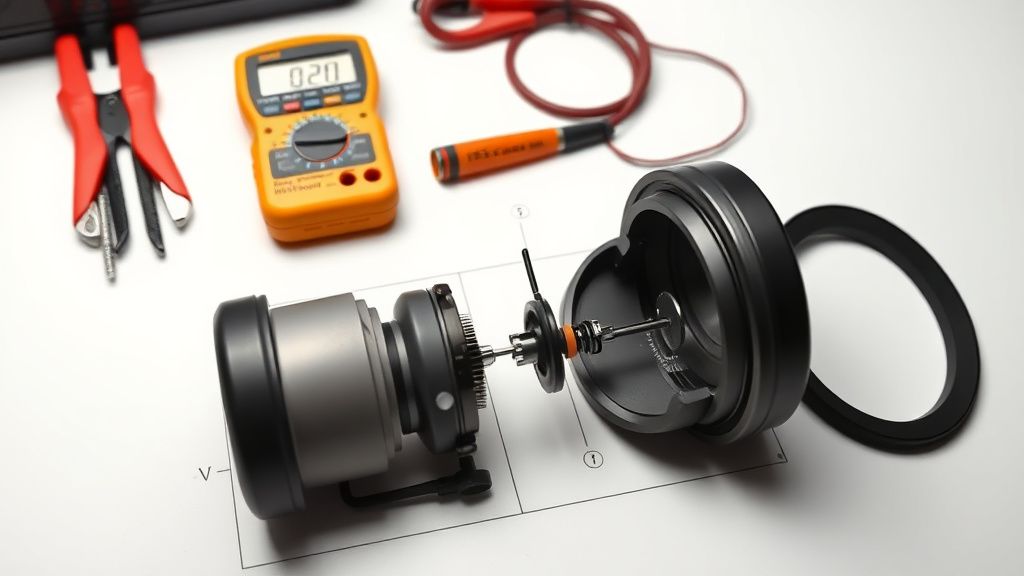
4. External Antenna Modification (Pro Level): For extreme cases, if you have a Ring model with a removable backplate, some technicians install external high-gain antennas. Warning: This voids your warranty. However, it physically overcomes structural obstacles like brick walls.
Factory Reset
A factory reset should be your last resort, as it requires re-configuring all Motion Zones and Snapshot captures.
- Locate the reset button on your device. On most Ring models, this is a small orange or black button under the faceplate or on the back of the unit.
- Press and hold the button for 20 full seconds.
- Release the button. The device will pulse its light ring, indicating it is entering "Setup Mode."
- Delete the device from your Ring app before attempting to re-add it. This ensures the cloud profile is fully purged of the old connection settings.
When to Replace
Sometimes, the hardware has simply reached its end-of-life. Replace your device if:
- The Radio is "Deaf": If you bring the device two feet away from your router and it still shows an RSSI worse than -50dBm, the internal Wi-Fi antenna or radio chipset has likely suffered a thermal failure or capacitor degradation.
- Voltage Dropout: If you are hardwired and the device stays offline while the transformer is confirmed to provide 16-24V AC, the internal power management circuitry is likely fried.
- The "Ghost" Cycle: If the device enters a boot loop (rebooting every 30 seconds) despite a full battery and a reset, the NAND flash memory is likely corrupted. Repairing this requires proprietary tools not available to consumers; buying a new unit is economically more sensible.
FAQ
Does a 5GHz router help with my Ring Doorbell problems?
Can my neighbor's Wi-Fi really stop my Ring from working?
Is the "Chime Pro" just a gimmick?
Are there any legal or ethical debates regarding Wi-Fi interference?