
The pursuit of a "High-Ticket AI Automation Agency" (AAA) in 2026 is less about deploying chatbots and more about functioning as a digital systems engineer for legacy industries. The market has shifted: the novelty of "AI wrappers" has evaporated, replaced by a brutal demand for ROI, reliability, and security compliance. If your value proposition is merely "we use ChatGPT," you will be cannibalized by internal departments leveraging advanced tools, such as those discussed in Why AI-Driven Content Licensing Is the New Gold Standard for Affiliate Marketing. Success now requires vertical specialization, particularly as How AI-Driven Algorithmic Arbitrage is Reshaping Global Freight Logistics creates new demands for experts in complex cold-chain and supply chain distribution.

The Death of the Generalist Agency
The 2023-2024 era was defined by the "everything-to-everyone" agency model, a flawed strategy compared to modern approaches like the Copy-Trading Agency Model for Algorithmic Alpha. These firms promised to solve "everything with AI," leading to a graveyard of abandoned Make.com scenarios, broken Zapier zaps, and hallucinating customer support bots that cost companies more in reputation than they saved in salary.
By 2026, the industry has matured. Clients are now asking for "Proof of Performance." They aren't looking for a subscription; they are looking for a business process re-engineering overhaul. If you aren’t deeply familiar with regulatory nuances or the operational infrastructure required to mitigate risks—such as those explored in Why Parametric Insurance Is Replacing Traditional Claims for Supply Chain Resilience—you cannot sell a high-ticket integration. You are no longer selling "AI"; you are selling "Reduced Operational Friction."
The Operational Reality: Complexity vs. Hype
When you enter a client’s environment, you rarely find a "blank canvas." You find a "tech stack graveyard." There are orphaned databases, legacy CRM systems, and a workforce wary of automation—challenges that require the same strategic foresight needed when Scaling a Hardware Upgrade Business: Balancing High Margins and OEM Risks.
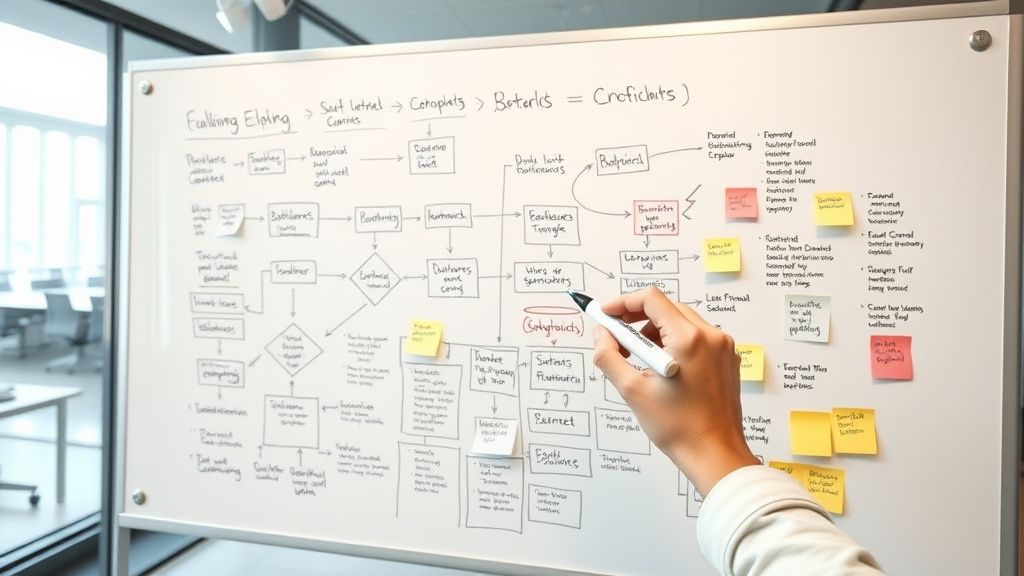
The Workflow Audit Lifecycle:
- The Shadow IT Assessment: You will discover that employees are already using unauthorized AI tools to do their jobs. Map these. They are your best clues for where the pain points lie.
- Infrastructure Debt: Real-world clients don't use clean, modern APIs. You will spend 70% of your time scraping legacy web portals or navigating insecure database connections via VPNs.
- Human-in-the-Loop (HITL) Design: High-ticket clients require auditability. If an AI agent makes a decision that impacts a client’s finances or legal status, the system must have a human sign-off trigger. Selling this as a "feature" rather than a "limitation" is where the agency’s true expertise lies.
Real Field Report: The "Case of the Ghost Middleware"
In late 2025, an automation agency attempted to integrate an LLM-based triage system for a mid-market healthcare provider. The project failed within three weeks. Why? The agency treated the hospital’s EMR (Electronic Medical Record) system as a standard API, ignoring the fact that the system had strict, internal rate-limiting on API calls that would trigger an automatic lockout for the entire department if exceeded.
The agency had performed no stress testing on the production environment. The fallout was a four-hour system outage. The takeaway: Always build a sandbox. If you cannot replicate their environment, you have no business touching their production database. High-ticket clients will sue you for outages; hobbyists get blocked on Slack. Know the difference.
The Economics of High-Ticket Pricing
Pricing in 2026 is no longer based on "hours worked," as agencies shift toward models that mirror How Royalty-Backed Assets Are Changing Passive Wealth Creation by tying income to realized value. It is based on Value Realized.
- Fixed-Price Discovery Phase: Charge $5,000–$10,000 for a deep-dive operational audit. This filters out the "tire kickers" and provides you with the documentation needed to build an accurate quote.
- Implementation Fee: This covers the engineering, fine-tuning of models, and the "glue code" required to make systems talk to each other.
- Maintenance & Retainer: This is your recurring revenue. In 2026, models drift. Prompts that worked in Q1 might become "lazy" in Q3. You are selling "Model Maintenance."

Counter-Criticism: Is the Agency Model Dying?
There is a growing sentiment in the developer community—specifically on Hacker News and specialized subreddits—that the "AI Agency" is a temporary bubble. Critics argue that as internal enterprise AI tools become more robust (e.g., Salesforce’s Agentforce, Microsoft’s Copilot Studio), the need for third-party "glue" agencies will diminish.
- The Counter-Argument: This ignores the "Long Tail" of software. Enterprises might standardize their CRM, but they also have 40 other proprietary tools that were built internally or by small, defunct vendors. These will never be integrated into a "one-size-fits-all" Copilot. There will always be a requirement for specialized "systems integrators" who understand the business logic of a vertical, not just the code.
Scaling Without Breaking
The biggest mistake agencies make is trying to scale before standardizing their "Internal Stack." If every client project uses a different architecture, you cannot scale.
The Standardization Blueprint:
- Tech Stack: Standardize on one vector database (e.g., Pinecone/Weaviate), one orchestration framework (e.g., LangChain/LlamaIndex), and one deployment architecture (e.g., AWS Lambda/Serverless).
- Template Libraries: Build a repository of "pre-verified" workflows for your specific vertical. If you are doing law firm automation, you should have a library of RAG (Retrieval-Augmented Generation) setups for discovery documents.
- Moderation Layers: Never output raw LLM responses to a client. Implement a "guardrail" layer (e.g., NeMo Guardrails) to filter for toxicity, hallucinations, or data leakage before the output hits the UI.

Technical Debt and the "Black Box" Problem
The most significant risk in 2026 is the "Black Box" problem. When an AI makes an error, it is notoriously difficult to debug. Was it the prompt? The temperature setting? The data chunking strategy? The semantic search retrieval quality?
If your client asks, "Why did the AI say this?", and your only answer is "It's a black box, it just decided to," you will lose the contract. You must build Observability into your agents. Every decision, every document retrieved, and every thought process must be logged. Tools like LangSmith are mandatory for professional agencies. Without observability, you are effectively flying a plane without an altimeter.
Trust Erosion and Security
Data privacy is the single biggest barrier to entry for high-ticket clients. You cannot suggest that client data be used to train OpenAI’s base models. You must implement "Private LLM" strategies or use enterprise-grade API tiers with zero-data-retention agreements. If you treat data privacy as an afterthought, you won't just lose a client; you’ll face professional liability that could sink your agency.
Final Thoughts on Longevity
The agency of the future is not an "AI Agency." It is a Business Automation Consultancy. AI is just the current, most effective tool in your kit. If you treat yourself as a service provider that solves business pain, you will survive the inevitable AI hype cycle. If you treat yourself as a "chatbot shop," you will be out of business by 2027.