Taking a short walk around the neighborhood can turn into a disorganized scramble if children wander toward driveways or dart ahead. A simple observation checklist gives four- to eight-year-olds a structured way to explore without picking up roadside debris or running toward intersections. Official pedestrian safety guidance from the National Highway Traffic Safety Administration (NHTSA) and Safe Kids Worldwide stresses that children under age 10 cannot reliably estimate vehicle speeds or stopping distances, meaning direct adult accompaniment is required on every walk. Clipping a single grid sheet to a firm piece of scrap cardboard keeps a child's eyes oriented toward their surroundings while preserving non-negotiable street-safety routines. This guide explains how to format a basic nine-box spotting grid, set sidewalk boundaries, manage stops at driveways, and lead a calm neighborhood loop that keeps safety at the center.
Sheet Layout for Early Readers and Beginners
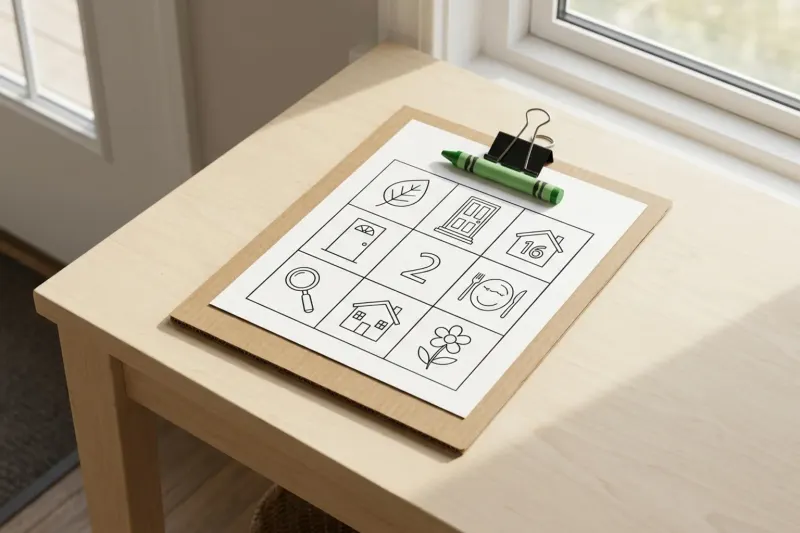
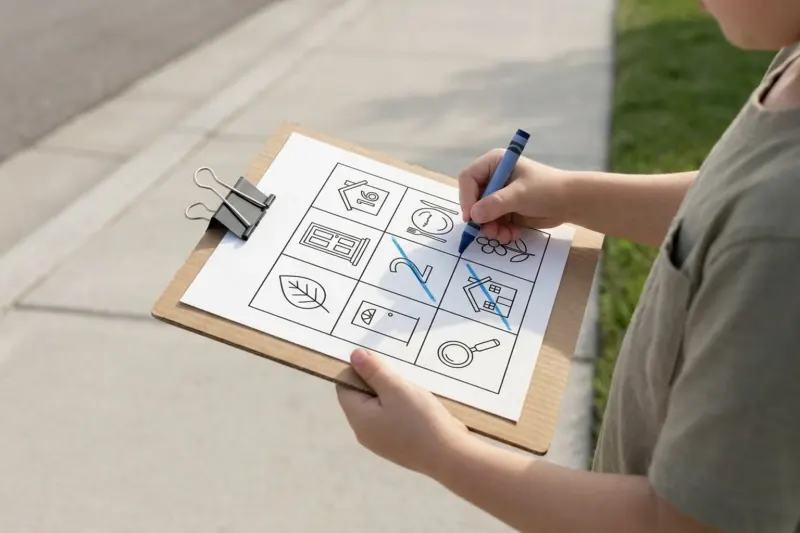
Designing an observation sheet for four- to eight-year-olds requires balancing simple visuals with introductory print. Ohio State University Extension materials suggest pairing clear line drawings or color blocks directly beside short words so emerging readers can participate at their own comfort level. A four-year-old can identify a red front door or a yellow dandelion by the picture alone, while a seven-year-old can read the label and practice simple tallying. Printing a three-by-three grid on a standard 8.5 by 11-inch (21.6 by 27.9 cm) sheet creates nine distinct targets, which offers enough variety for a short walk without overwhelming younger children. Useful targets include common fixtures like a green recycling bin, a square window pane, a house number, or a fire hydrant. To keep the sheet from blowing into the street during a breeze, fasten it to a 9 by 12-inch (23 by 30 cm) scrap of stiff corrugated cardboard using a 1-inch (2.5 cm) metal binder clip or an ordinary office clipboard. Avoid tying markers or pencils to the board with strings, yarn, or cords, as dangling cords present tangling hazards around brush and clothing. Instead, tuck a single thick, washable crayon under the wire arm of the binder clip, or carry the marking tool in an adult pocket until a child stops to mark a square.
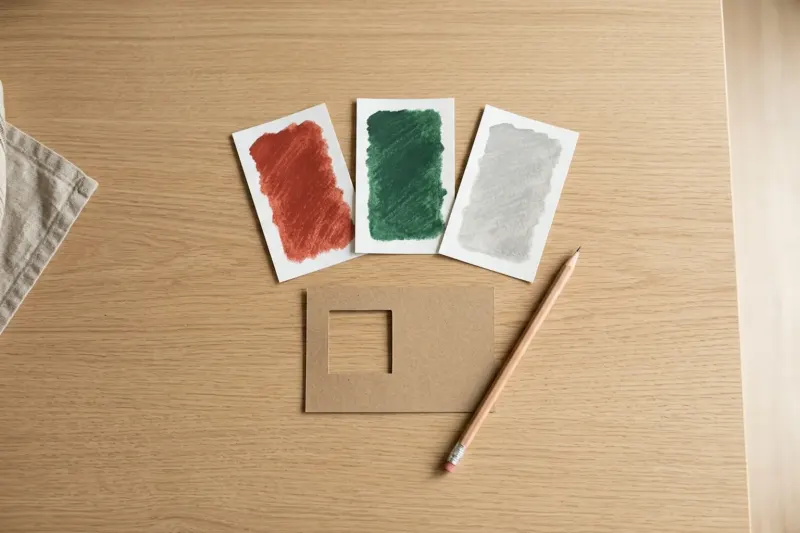
Related guide: Color-and-Pattern Walk: A Neighborhood Noticing Game
Sidewalk Rules and Driveway Safety
Walking along residential streets requires continuous adult supervision and consistent boundary habits. The NHTSA and Safe Kids Worldwide emphasize that children under age 10 should never cross streets unattended and must walk on sidewalks or dedicated pedestrian footpaths whenever they are present. When a neighborhood route lacks sidewalks, NHTSA safety rules instruct pedestrians to walk on the far left side of the street facing oncoming traffic, remaining as far out on the road shoulder as conditions permit. Driveways represent one of the greatest hazards in residential areas because reversing drivers face substantial blind zones behind passenger vehicles. Establish a firm protocol before stepping outside: every walker must stop at least two paces before reaching any driveway apron, private alley cut, or garage entrance. At each driveway, the adult and child pause together, listen for running vehicle engines, and look for white reverse backup lights or tailpipe exhaust before stepping across. When crossing a street, stop fully at the curb or corner. Guide the child through the NHTSA crossing rule: look left, look right, and look left again, maintaining an active scan while walking. Adults must hold hands with children ages 4 to 6 and stay within arm's reach of children ages 7 and 8. Scavenger sheets should be held flat against the chest or carried by the adult while crossing so everyone's attention remains entirely on approaching traffic.
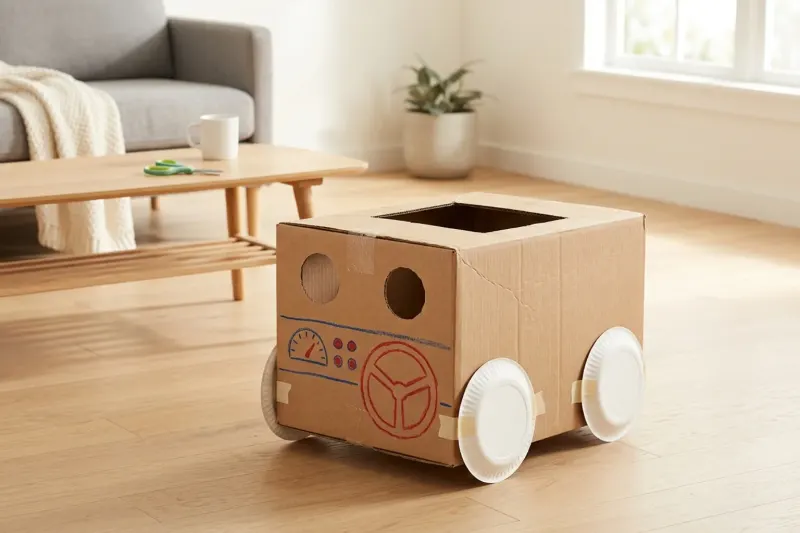
Related guide: Single-Box Cardboard Builds for Ages 4–8
Spotting Rules Without Roadside Collecting
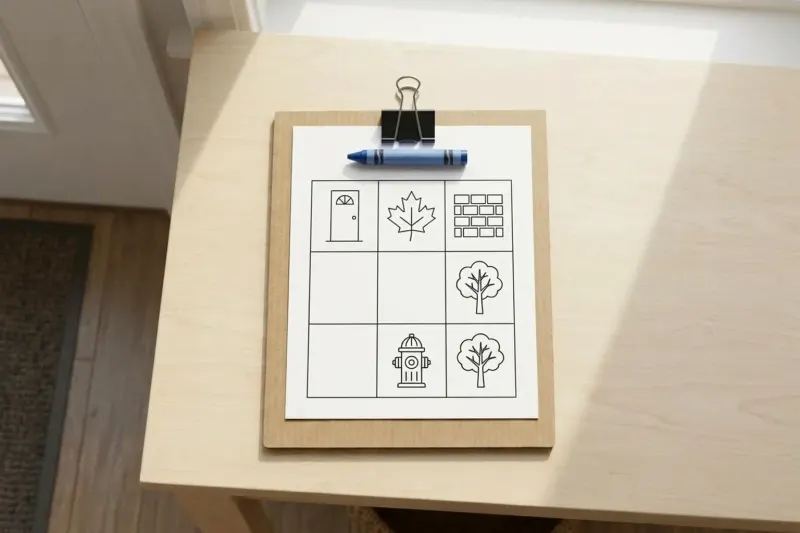
Outdoor scavenger hunts stay orderly and safe when conducted strictly as looking games rather than physical gathering exercises. Collecting items along streets introduces hazards including broken glass, rusted nails, trash, and skin-irritating plants such as poison ivy. Leaving natural items where they sit also respects the Leave No Trace ethic, which protects neighborhood greenery and avoids disturbing local plants, rocks, and wildlife. Set explicit rules before departing: an item only counts when a child spots it with their eyes, points it out, names it aloud, and marks the board while standing on the sidewalk. Touching parked vehicles, opening private gates, or stepping onto private lawns is strictly off-limits. Marking can be as simple as making a single diagonal slash across the box using a crayon. If two children participate and spot the same object—such as a brick chimney or a utility pole—both mark their cards simultaneously. Eliminating speed races prevents children from running toward curbs or competing to reach an item first, keeping everyone walking together at a predictable, relaxed pace.
Related guide: 10 No-Prep Indoor Games for Kids Ages 4–8
Managing Sidewalk Stops and Movement
Looking for specific visual targets can prompt children to stop suddenly, which can cause tripping or cause them to drift toward the roadway curb. To manage movement safely, use an inside sidewalk rule where active walking happens in the center of the walkway, and all marking takes place against the inner lawn edge. Whenever a child spots a target on their sheet, use a brief reminder phrase such as 'step to the grass side' so they move away from the street curb before looking down at their paper. Never allow a child to mark their board while crossing a driveway apron, walking through an intersection, or standing at a street curb. If an item on your grid is not present on your specific block, swap it out verbally for an alternative feature, such as spotting an evergreen shrub instead of a pinecone. Keeping the route to a familiar residential loop of approximately 20 to 30 minutes prevents physical fatigue from compromising a young child's attention to pedestrian rules.
Selecting Practical Neighborhood Targets
Choosing targets that are readily visible from public walkways keeps children focused on the hunt without encouraging them to trespass or search through dense vegetation. Select items that sit at or slightly above eye level along standard residential blocks. Architectural and utility features work especially well: mailboxes, brick textures, circular manhole covers, sewer grates, crosswalk paint lines, and street name signs. Nature targets should focus on prominent, non-hazardous elements, such as textured tree bark, dandelion blooms in sidewalk cracks, fallen pine needles along the public path, or birds resting on utility wires. Avoid listing targets that invite reaching into bushes or private garden beds, such as specific garden flowers, berries, or bird nests. Remind children that observation is a visual activity: everything must be spotted and confirmed entirely from the public sidewalk while accompanied by an adult.
Checklist and Safety Choices by Walking Route
| Situation | Consider | Why |
|---|---|---|
| Walking with mixed-age siblings (ages 4 and 7) | Pair simple line illustrations directly with written words and optional tally marks. | Emergent readers identify visual symbols independently while older children read text and tally multiples without requiring separate sheets. |
| Route includes multiple unsignalized driveways or alleyway cuts | Enforce a mandatory pause two paces before every driveway apron to check for vehicles. | Pausing before driveways allows the supervising adult to confirm that vehicles are not reversing, idling, or turning into the footpath. |
| Damp pavement, light mist, or breezy weather conditions | Slip the paper checklist into a clear plastic sheet protector and mark with a washable wax crayon. | Prevents paper from tearing or blowing toward the roadway while keeping markings legible in damp conditions. |
| Narrow sidewalks bordering active residential traffic | Position children on the lawn side while the supervising adult holds the clipboard and marker. | Keeps children's hands completely free to hold hands with the adult and keeps their focus directed on roadway safety. |
Hypothetical Route and Materials Walkthrough
A caregiver organizes an illustrative 4-block neighborhood walk covering an estimated distance of 0.5 miles (0.8 km) with a typical duration of 20 to 25 minutes. Supplies consist of one standard letter-size sheet of paper (8.5 by 11 inches or 21.6 by 27.9 cm), one scrap piece of shipping cardboard trimmed to 9 by 12 inches (23 by 30 cm), a single 1-inch (2.5 cm) metal binder clip (hypothetical cost around $0.20), and a thick washable crayon held directly beneath the clip wire arm. The hunt grid features nine printed squares: a yellow front door, a green recycling cart, rough tree bark, the numeral 4, a sewer drain grate, a triangular roofline, a blooming dandelion, a bird on a wire, and a circular manhole cover. The supervising adult walks along the road side of the sidewalk, keeping a 5-year-old child to the inside lawn edge. At every driveway apron, the pair stops two paces back to check for backup lights or running engines before proceeding.
- Cardboard Backing (23x30 cm)
- Top Binder Clip (4x2 cm)
- Printable Grid Sheet (21.6x27.9 cm)
- 9-Box Observation Grid (18x18 cm)
- Clipped Crayon in Clip Arm (2.5x9 cm)
When this approach is not a good fit
This observational walk format is unsuitable along roadways lacking sidewalks or wide pedestrian shoulders, along streets with speed limits exceeding residential levels, during peak traffic hours, or during low-visibility conditions such as dusk, heavy rain, or fog. It is also unsuitable as an independent, unsupervised activity for any child under age 10, as young pedestrians require continuous adult direction to manage traffic hazards, driveways, and street crossings.
PUT THIS GUIDE TO USE
Find an activity for your family
Sources & further reading
AI-assisted writing and concept images. Sources and automated checks support the process; an adult should check materials and adapt activities to their child.
How we create our guides · Suggest a correction