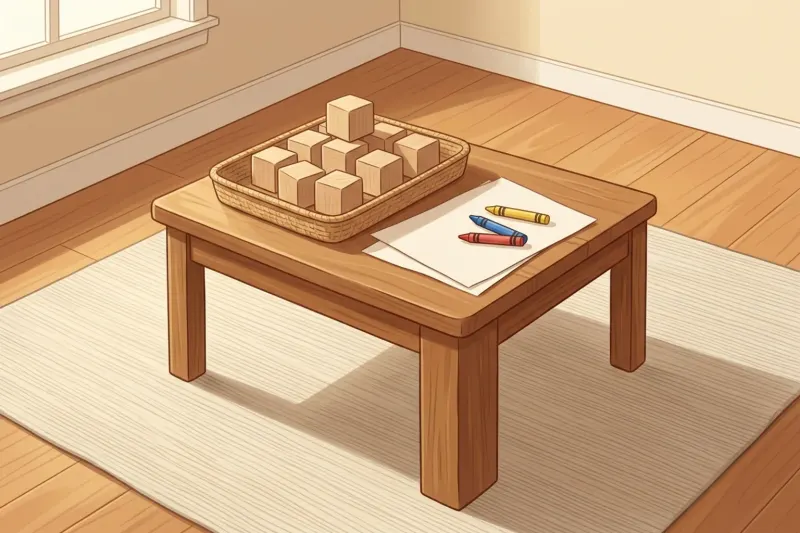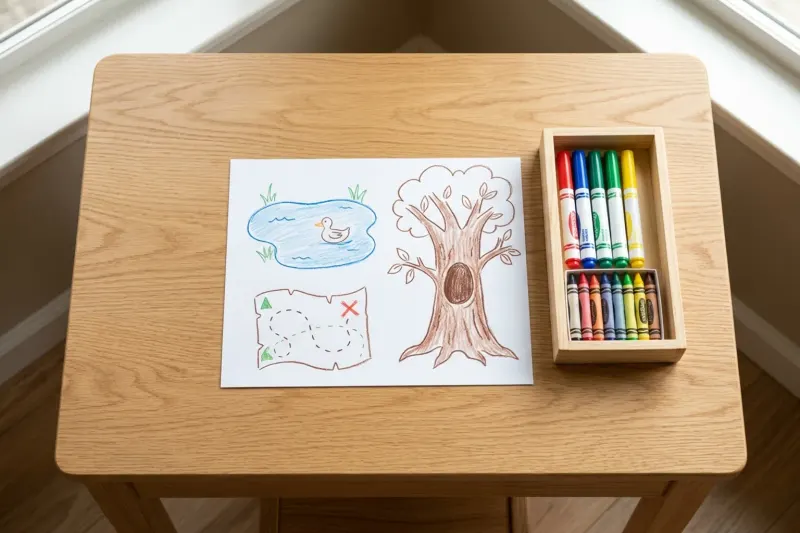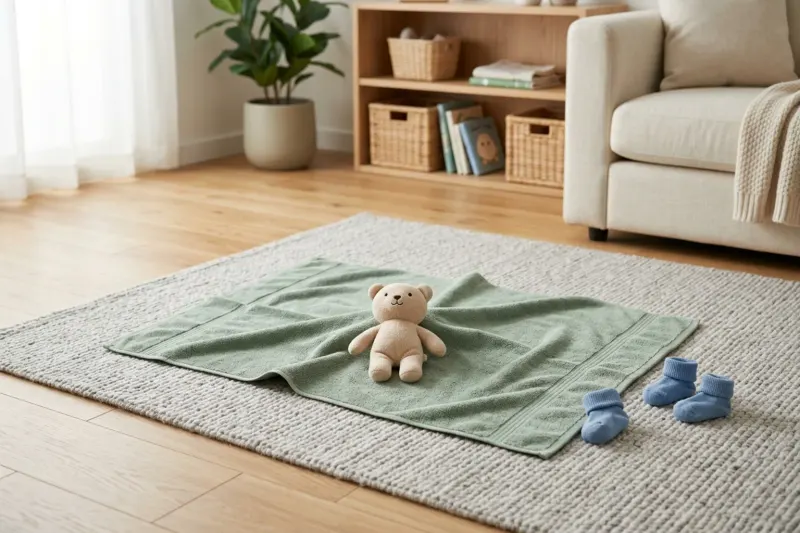
When organizing indoor play for two children of differing ages—such as a four-year-old and an eight-year-old—the most practical approach is to replace winner-take-all competition with cooperative goals. Traditional party games frequently frustrate a younger child whose physical timing is still emerging, while leaving an older child underchallenged. You do not need specialized athletic gear or intricate rules to create a successful play session. By choosing games where both children contribute to a single shared count, establishing clear floor boundaries away from hard furnishings, and using lightweight household fabrics or purpose-made soft toys, you can create balanced, screen-free indoor activities that keep both participants actively involved under adult supervision.
Replace Elimination Rules with Shared Objectives
Standard children's games frequently rely on rapid elimination: whoever drops an object, moves too slowly, or steps out of bounds sits out until the next round. When pairing children with an age spread of two to four years, elimination formats consistently generate frustration. An eight-year-old generally demonstrates faster reaction speeds and more consistent gross motor control, whereas a four-year-old is still coordinating multi-step physical movements and spatial pacing. Public educational reviews on cooperative learning structures, such as research indexed in the Educational Resources Information Center (ERIC, ED617666), show that activities designed around mutual interdependence—where participants coordinate actions to reach a joint goal—sustain participation across differing capability levels without zero-sum friction. Similarly, physical activity resources published by the British Columbia Ministry of Health emphasize that active games for mixed-age early childhood groups should remove 'outs' and avoid single-winner contests. As an optional suggested adaptation, replace elimination rules with a shared tally. Instead of competing to see who drops an object first, both children work as a pair to pass a soft item back and forth, counting how many successful exchanges they can complete before resetting the tally together.
Related guide: 10 No-Prep Indoor Games for Kids Ages 4–8
Select Safe Materials and Avoid Airway Hazards
Mixed-age domestic play requires strict attention to object selection, because materials that an eight-year-old handles without incident can present acute airway hazards to a four-year-old. Many casual indoor activity lists suggest using latex balloons or small bouncy balls. Federal safety data show that these items require strict avoidance or controlled substitution. The U.S. Consumer Product Safety Commission (CPSC Publication 5087) warns that latex balloons are a leading product cause of pediatric suffocation fatalities. Children under eight years old can inhale uninflated balloons or broken rubber pieces, which conform tightly to the trachea and completely seal airflow. Because active indoor play can pop a balloon without warning, latex balloons must be excluded entirely from these games. Furthermore, federal small-parts regulations (16 CFR Part 1501 and CPSC guidance) identify any ball with a diameter under 1.75 inches (44.4 mm) as a severe choking hazard for young children. However, caregivers must not establish choking safety solely from a single diameter cutoff or assume that an item is safe simply because a child has reached four years of age. Meeting a dimensional threshold does not guard against materials that unravel, tear, or compress into an airway. Rather than relying on improvised small loose parts, select purpose-made, age-appropriate play objects: durable cloth beanbags with reinforced double seams, lightweight chiffon or silk play scarves that drift slowly through the air, or medium plush animals measuring 6 to 8 inches (15 to 20 cm) with fully embroidered features and no plastic button eyes. An adult must supervise play to inspect seams and ensure objects remain intact.
Related guide: A 15-Minute Calm Play Routine for Ages 4 to 8
Run the Cooperative Towel Toss
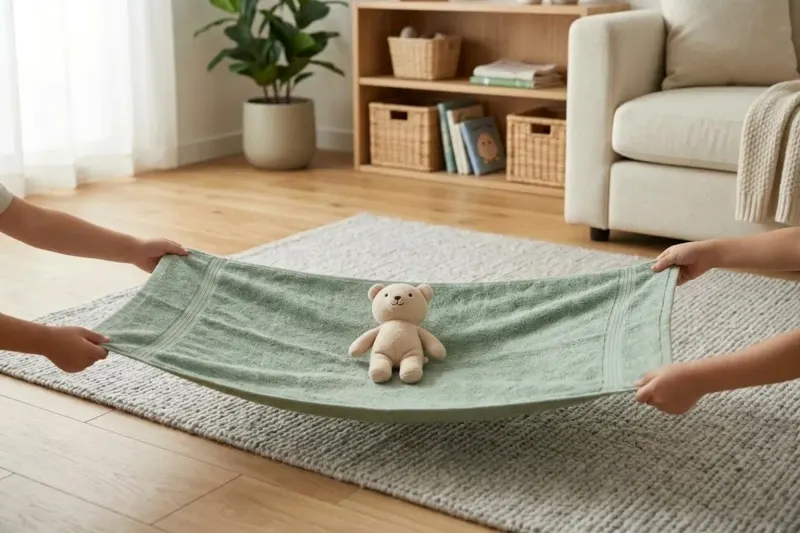
The cooperative towel toss is an adaptable, non-competitive indoor game derived from group parachute activities, such as those documented in early childhood resources from Gowrie NSW. In this two-player format, both children hold opposite ends of a shared cloth rectangle to launch and catch a soft item together. As a suggested setup, provide a clean cotton bath towel measuring approximately 28 by 51 inches (70 by 130 cm). Avoid slick synthetic fabrics or loose knit blankets that stretch unpredictably and slip from smaller hands. Have each child stand facing the other, grasping the two corners on their side. The older child typically holds their end near waist height, while the younger child holds their corners near chest height to maintain a level surface. Place a soft plush toy (approximately 6 to 8 inches or 15 to 20 cm, free of hard plastic parts or loose pellets) in the center of the towel. Guide the children to establish a spoken rhythm by counting aloud: 'One, two, three, lift!' On three, both raise their arms upward to send the plush toy into the air, then immediately lower the towel together to catch it. This cooperative mechanic naturally balances the physical disparity between ages. An eight-year-old cannot fling the towel upward with maximum force without pulling the fabric out of the four-year-old's grip or overshooting the catch. Both players must adjust their strength, maintain visual contact, and coordinate timing to keep the toy landing safely on the towel.
Related guide: Draw-a-Story: A Cooperative Paper Game
Structure Alternating Movement Challenges
When children want to move without handling tossing objects, gross-motor mimicry provides an equipment-free format that allows each child to take the lead. As noted in the British Columbia Ministry of Health active play guidelines, rotating leadership roles gives older children an outlet for more complex coordination while letting younger children direct the action without pressure or penalty. In this suggested activity, children alternate as the movement leader for intervals of approximately 60 to 90 seconds. In round one, the older child (age 7 to 8) demonstrates a stable, low-impact action, such as a slow bear crawl, a heel-to-toe walking line, or a steady one-foot balance pose. The younger child mimics the general body shape, but their posture is not graded, judged, or penalized. In round two, the younger child (age 4 to 5) chooses a movement, such as two-footed bunny hops, gentle marching with high knees, or broad arm circles. To maintain engagement and introduce an appropriate challenge, the older child must replicate the younger child's movement in slow motion. Because the game includes no elimination, an accidental stumble does not end the round; the pair simply pauses for a three-second reset. Applying a slow-motion requirement to the older child during the younger child's turn prevents rushing and keeps both participants safely within the designated play space.
Set Space Boundaries and Active Supervision Protocols
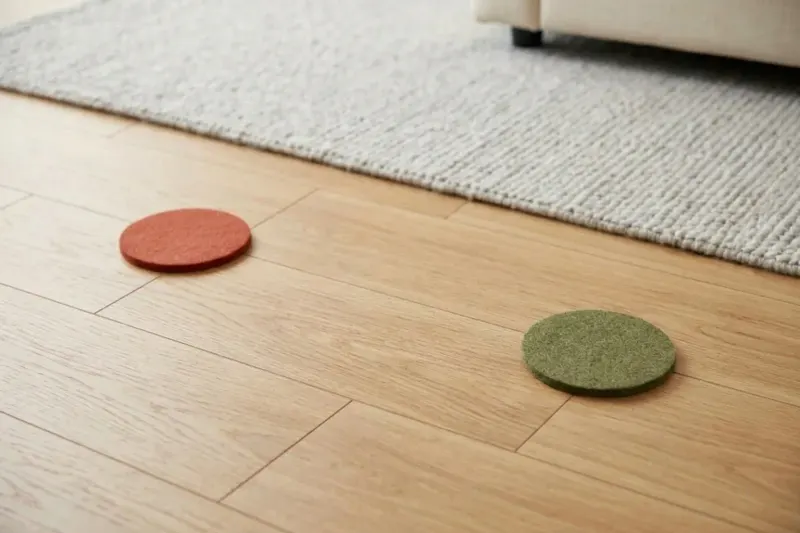
Even gentle cooperative games can drift across a room as children become engaged. Active adult supervision is essential to maintain safe boundaries, inspect play objects, and ensure children do not slip. Before starting, establish an open circular zone of at least 8 to 10 feet (2.4 to 3.0 meters) across on a low-pile area rug or carpeted floor. Move coffee tables, floor lamps, cords, and hard-edged furniture completely outside this perimeter. Do not allow children to play in smooth cotton socks on polished wood, tile, or laminate flooring, as this creates a significant slip-and-fall hazard; require bare feet with clean floor contact or non-skid socks with rubber grip treads. The supervising adult must actively observe play rather than leaving the room, watching for signs of physical fatigue or loss of control. Establish a clear verbal pause signal, such as 'Freeze Frame.' When the adult or either child calls the pause word, both participants must stop immediately, place the towel or markers on the floor, and take five slow breaths together. This protocol allows the adult to evaluate whether to continue the cooperative toss, switch movement roles, or transition smoothly to a calm, seated activity.
Choosing Activities by Space, Energy, and Group Dynamics
| Situation | Consider | Why |
|---|---|---|
| Children have high physical energy and at least 8 to 10 feet (2.4 to 3.0 m) of clear floor space. | Cooperative Towel Toss with a soft plush toy. | The shared towel requires synchronized physical lifting, compelling the older child to match speed and height with the younger partner. |
| Floor space is constrained or furniture cannot be moved to create an open perimeter. | Alternating Movement Leadership using fixed floor spots. | Children remain near designated floor markers, eliminating running across the room while providing gross-motor movement and shared leadership. |
| One or both children exhibit frustration with physical mistakes or skill gaps. | Shared-count cooperative challenges instead of timed competition. | A joint goal shifts focus away from individual errors, turning a missed catch into a collaborative counter reset rather than an elimination. |
Hypothetical Worked Session: 20-Minute Mixed-Age Indoor Play Plan
In this hypothetical planning example, an adult arranges a 20-minute indoor session for two siblings aged 4 and 8 in an apartment living room. Space clearance: The adult clears an illustrative 10 by 10 foot (3.0 by 3.0 meter) area on an existing low-pile area rug by shifting a coffee table against the perimeter wall. Materials: One standard household cotton bath towel measuring approximately 28 by 51 inches (70 by 130 cm) and one purpose-made plush toy measuring 7 inches (18 cm) with stitched eyes and double-stitched seams ($0 using existing household items). Schedule: The session opens with 8 minutes of the Cooperative Towel Toss, where both players attempt to complete 10 consecutive catches. If the plush toy drops, the counter resets without penalty. At minute 8, the adult calls a 2-minute seated rest break. From minutes 10 to 18, the children transition to Alternating Movement Leadership, rotating 1-minute turns between the older child demonstrating balance walks and the younger child leading slow-motion hops. The final 2 minutes are reserved for putting away the towel and plush toy together. All durations, room dimensions, and material weights are hypothetical examples for planning and not certified requirements.
- Safety Buffer to Furniture
- Younger Child Station (Age 4)
- Cotton Towel & Plush Toy
- Older Child Station (Age 8)
- Cleared Floor Clearance
When this approach is not a good fit
This cooperative activity framework is unsuitable when either child shows extreme exhaustion, acute emotional distress, or physical aggression requiring individualized adult support; in rooms where immovable hard-edged furnishings leave less than 6 feet (1.8 meters) of unobstructed floor clearance; or in settings where active adult supervision is not available.
PUT THIS GUIDE TO USE
Find an activity for your family
Sources & further reading
- CPSC Balloon Safety Warning
- CPSC Small Parts Regulations
- BC Ministry of Health Active Play Guide
- ERIC Cooperative Games in Education
- Gowrie NSW Cooperative Play Ideas
AI-assisted writing and concept images. Sources and automated checks support the process; an adult should check materials and adapt activities to their child.
How we create our guides · Suggest a correction