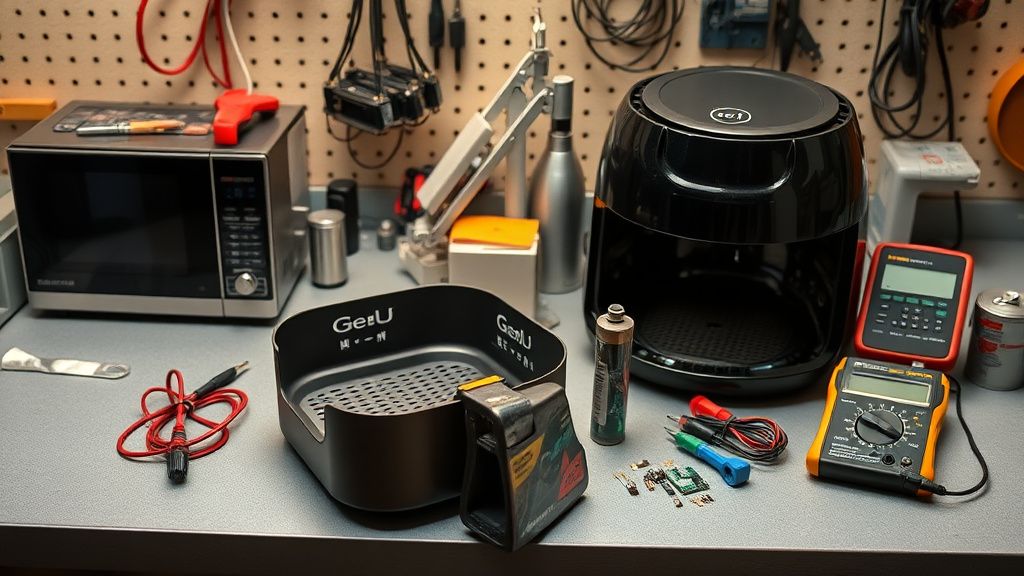
The Philips Air Fryer E3 error represents a critical thermal safety shutdown. In almost all cases, this code indicates that the internal temperature monitoring system has detected an open circuit, usually caused by a tripped or blown thermal fuse. When this fuse fails, the appliance enters a lockout state to prevent potential fire hazards, effectively rendering the unit unresponsive until the faulty component is replaced and the circuit is restored.
Problem Nedir (What is the Problem?)
The E3 error on a Philips Air Fryer is a definitive diagnostic code signifying a failure in the heating element’s thermal protection circuit. Modern Air Fryers are equipped with multi-layered safety systems, including NTC (Negative Temperature Coefficient) thermistors and physical thermal cut-off fuses.
When the control board (PCB) senses that it cannot receive a resistance reading from the heating element or detects a break in the high-voltage path, it triggers the E3 alert. Unlike a simple sensor glitch, an E3 error is almost always hardware-dependent. The thermal fuse is designed as a "sacrificial" component; it is meant to melt or break its internal connection if the unit exceeds a pre-set temperature limit (often due to blocked airflow or a failed fan motor). Once this fuse "pops," it does not reset itself. It remains an open circuit permanently, necessitating a manual replacement to restore functionality.
Belirtileri (Symptoms)
Users experiencing the E3 error typically encounter the following progression of symptoms:
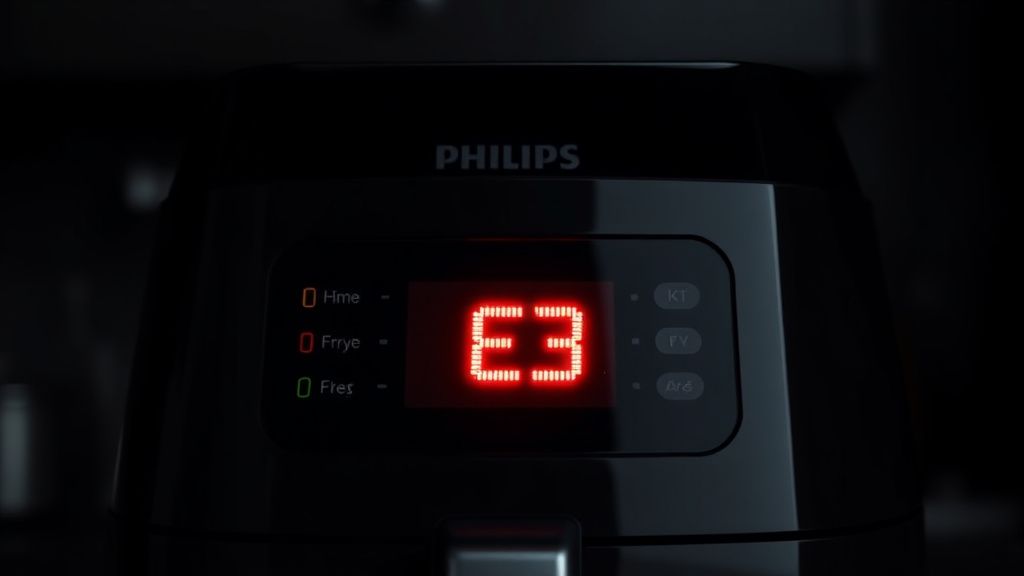
- Display Lockout: The digital interface shows a blinking or static "E3" code, often accompanied by a persistent beeping or an inability to initiate a cooking cycle.
- Total Heating Failure: Even if the fan (blower) turns on, the heating element remains cold to the touch because the power supply to the coil has been severed at the fuse level.
- Fan Operation: In many units, the convection fan may still spin, leading users to believe the issue is software-related. However, the lack of heat confirms the safety circuit has been triggered.
- Reset Refusal: Standard power cycling (unplugging for 10 minutes) fails to clear the code, confirming that the hardware path is physically compromised.
Olası Nedenler (Possible Causes)
Understanding why these fuses fail is the cornerstone of building a profitable repair business, much like mastering the techniques found in our Shark IQ Robot Err 6: Professional Fixes and Diagnostic Guide. It is rarely "bad luck"—it is usually a systemic failure, similar to how Cosori Air Fryer E3 Error: Easy Fixes for Sensor Malfunctions helps identify recurring hardware malfunctions.
- Airflow Obstruction: This is the #1 cause. Users placing the Air Fryer too close to a wall, or failing to clean the top air intake, forces the unit to work harder to maintain temperature, causing the internal chamber to overheat and trip the thermal fuse.
- Degraded Fan Motor: If the cooling fan slows down due to grease buildup or bearing wear, the thermal fuse will blow because the heat is not being distributed, causing a "hot spot" inside the housing.
- Faulty NTC Sensor: Occasionally, the thermistor (which tells the board the current temperature) fails, providing an incorrect reading that forces the heating element to run indefinitely, triggering the secondary thermal fuse.
- Voltage Spikes: While rare, a massive surge can weld or blow the internal fuse, although this usually results in a completely dead unit rather than an E3 code.
- Grease Accumulation: Over years of use, vaporized oil settles on the heating element and the sensor housing, creating an insulating layer that forces the appliance to compensate by overheating.
Quick Fixes (Hızlı Çözümler)
Before dismantling the unit, perform these 30-second troubleshooting steps to rule out simple sensor-board communication errors:
- Hard Reset: Unplug the device from the wall outlet. Press and hold the "Start/Pause" button for 30 seconds while the unit is unplugged. Plug it back in. This clears the capacitors on the mainboard.
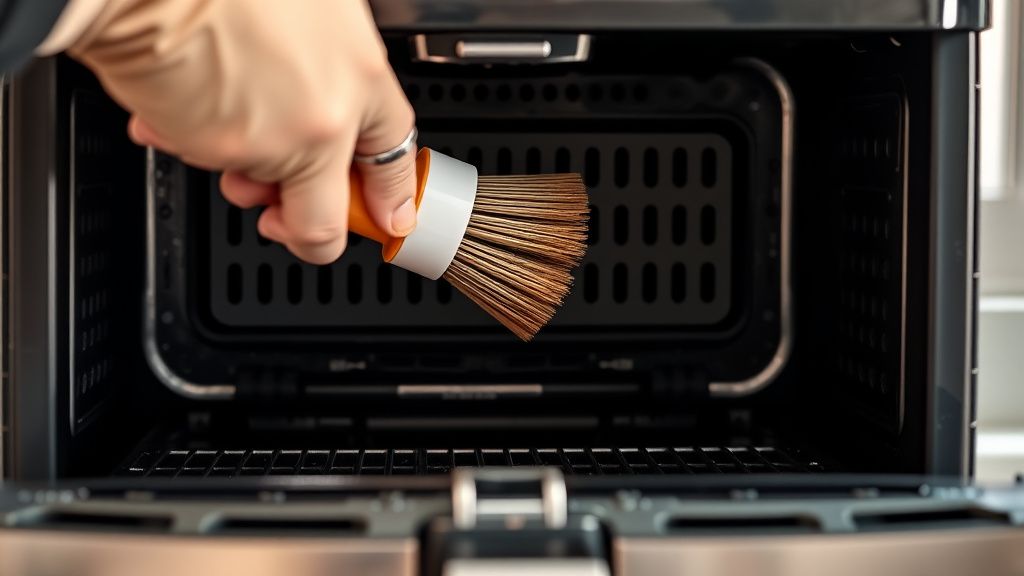
- Deep Clean: Inspect the rear exhaust vent. If it is caked with grease, use a degreaser and a soft brush to clear the airflow path. A "suffocating" unit will trip its own safety limits.
- Check Placement: Ensure the unit has at least 10cm of clearance on all sides. Air fryers are convection ovens; they require a constant intake of ambient air to regulate internal temperatures.
Advanced Fixes (İleri Düzey Çözümler)
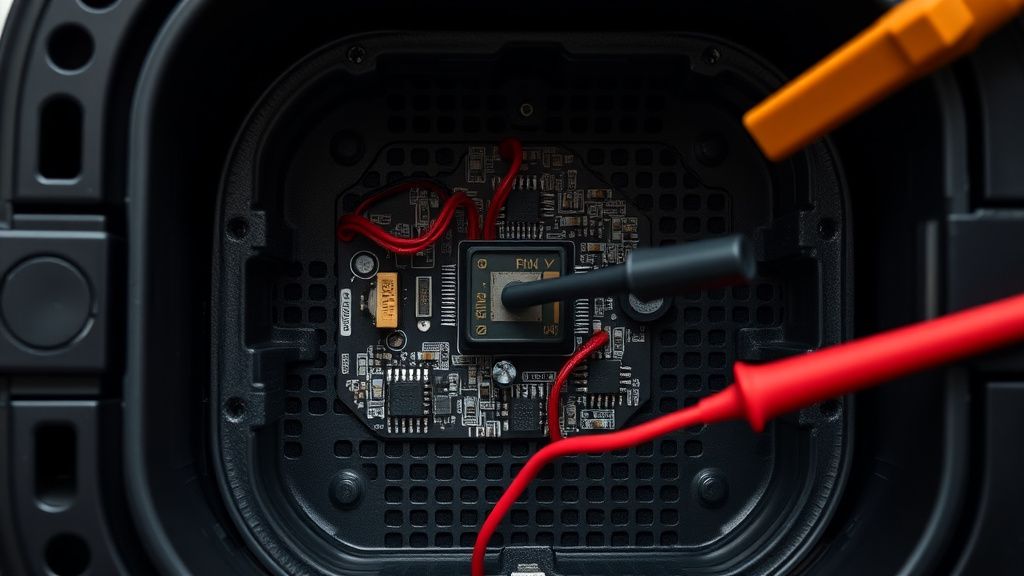
If the Quick Fixes fail, you are entering the territory of a professional teardown. This requires a digital multimeter (DMM) and a basic understanding of electrical circuits.
Step 1: The Disassembly
Remove the screws at the base and rear. Most Philips models use hidden screws under rubber feet or behind the control panel label. Use a plastic pry tool to prevent marring the casing.
Step 2: Testing the Thermal Fuse
Locate the thermal fuse (usually a small cylindrical component wrapped in heat-resistant fiberglass sleeving, located near the heating element).
- Set your DMM to Continuity Mode (Beep).
- Probe both ends of the fuse. If you hear a beep, the fuse is good. If there is no beep, the fuse is blown.
- Pro Tip: Always check the NTC sensor resistance. At room temperature, it should read approximately 10k to 50k Ohms depending on the specific model.
Step 3: Component Replacement
When replacing the fuse, do not use a standard soldering iron if you can avoid it. Use high-temperature crimp connectors (ceramic or high-temp steel). Solder melts at a much lower temperature than a thermal fuse is rated for; if you solder it directly, you may cause a cold joint that fails again in a month.
Factory Reset (Fabrika Ayarlarına Döndürme)
While most consumer air fryers do not have a "software" factory reset, you can force the firmware to re-calibrate:
- Plug in the unit.
- Press and hold the "Temperature" and "Time" buttons simultaneously for 10 seconds.
- The display should flash, indicating the onboard computer has entered its diagnostic mode.
- If the E3 code persists, it is a hard-coded hardware error that cannot be bypassed via firmware.
When to Replace (Ne Zaman Yenisiyle Değiştirilmeli?)
As a technician, you must know when the "cost of repair" exceeds the "value of the appliance."
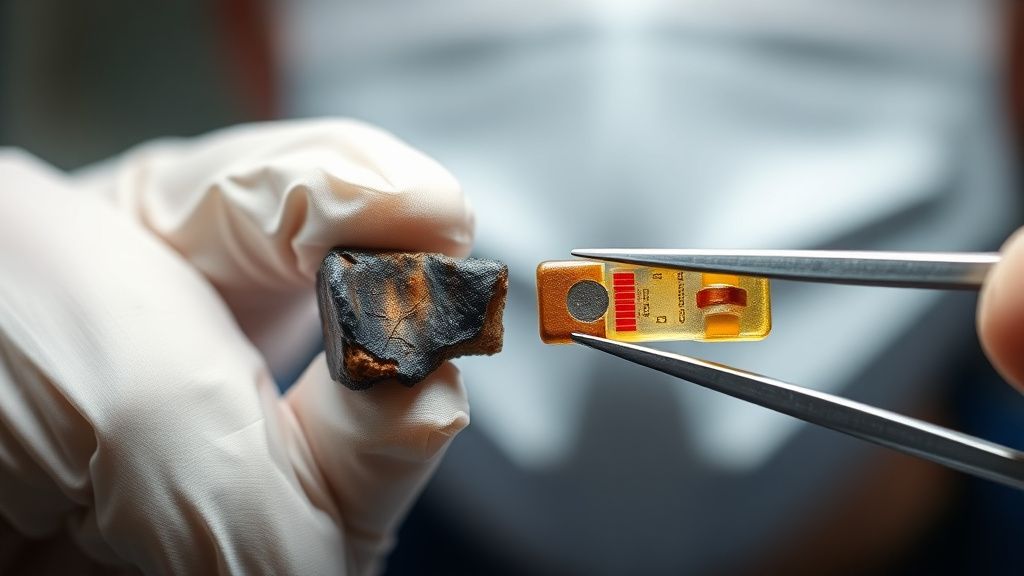
- Damaged Main PCB: If you replace the thermal fuse and the unit immediately blows a new one or displays the E3 code again, the MOSFET on the main control board that switches the heating element is likely shorted. Replacing the main board often costs 70% of the price of a new unit.
- Corroded Internal Wiring: If you open the casing and find the wiring harness is melted or brittle due to chronic overheating, do not attempt to patch it. Fire risk is too high.
- Cracked Heating Element: If the quartz or metal heating element is visibly cracked or sagging, the unit has reached its structural end-of-life.
FAQ (Sıkça Sorulan Sorular)
Can I bypass the thermal fuse by connecting the wires together?
NEVER DO THIS. The thermal fuse is the last line of defense against an electrical fire. Bypassing it turns your appliance into a potential fire starter. If the unit overheats, the plastic casing will melt, potentially setting your kitchen counter on fire. Always replace a blown fuse with one of the exact same temperature rating (usually printed on the side of the fuse).
Why does my Air Fryer show E3 even when it's cool?
The circuit is permanently open. Because the thermal fuse is a one-time-use safety device, once it trips, it stays tripped. It does not matter if the air fryer is cool; the "connection" that sends electricity to the heater is physically broken.
Can I use a soldering iron to fix the thermal fuse?
Not recommended. Solder has a lower melting point than the fuse itself. During normal operation, the area around the heating element can reach temperatures that soften standard solder, leading to a loose connection. Use high-temperature mechanical crimp sleeves or specialized spot-welding if possible.
Is there a "Real Field Report" on why these fail so often in certain regions?
Yes. Field data suggests that in regions with high humidity and significant air pollution (large cities), the grease inside the air fryer combines with fine particulate matter. This creates a thick "gunk" that acts as an insulator for the sensors, leading to frequent false-positive temperature readings and subsequent thermal fuse failures. Regular deep cleaning isn't just cosmetic; it's a structural necessity for the longevity of the device.
Real Field Reports and Industry Debate
In the repair industry, there is a recurring debate regarding the quality of thermal fuses used by major appliance manufacturers. Some veteran technicians argue that the "E3" error is often a programmed obsolescence feature—that the fuses are rated for just enough cycles to survive the warranty period.
Counter-Criticism: Critics of this theory point out that the legal liability of a house fire far outweighs the profit gained from selling a replacement unit. They argue that the E3 error is actually a highly effective safety feature that has prevented thousands of kitchen fires globally. As a technician, I fall in the middle: the fuses are indeed engineered to be the "weakest link," but that is a design necessity for a high-temperature device in a residential setting.
When running your own repair service, transparency is your best marketing tool. Show the customer the blown fuse. Explain the "why"—that they were likely pushing the unit against a wall or failing to clear the air vents. When you educate the customer on preventing the next E3 error, you move from being a "fix-it guy" to an "appliance expert." This builds trust, generates word-of-mouth referrals, and keeps your service profitable.