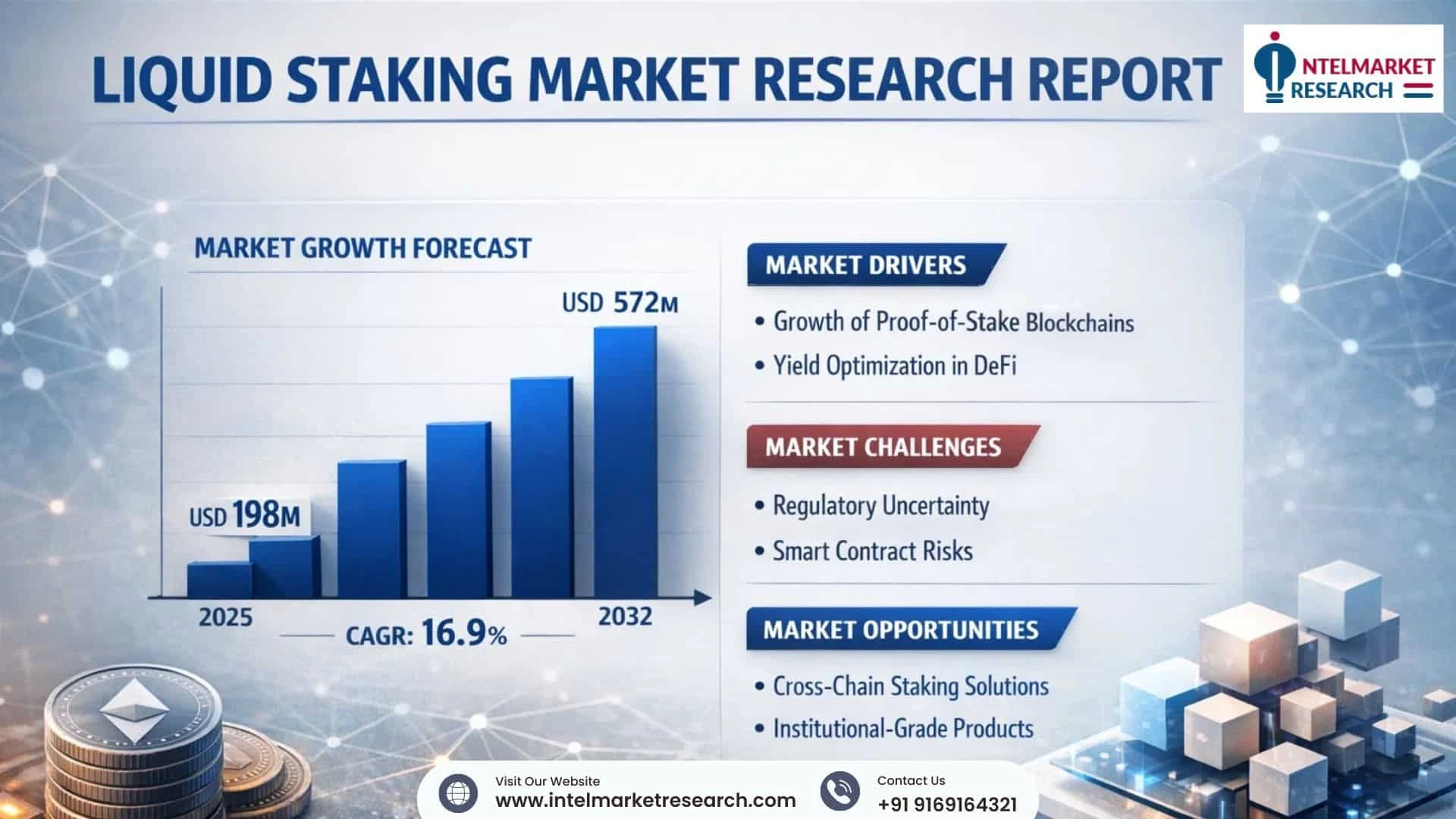
The shift away from traditional dividend-paying equities toward Liquid Staking Derivatives (LSDs) is no longer a fringe movement for crypto-natives. By the second quarter of 2026, the migration has hit institutional desks, fueled by a simple, brutal arithmetic: real-world interest rates on bonds remain stagnant, while the underlying yield of the Ethereum consensus layer has become the new "risk-free" benchmark for a generation that finds the NASDAQ's 2% dividend yield almost insulting.
Yet, to label this simply as "yield chasing" is to miss the operational messiness that defines the current landscape. We are witnessing the decoupling of capital from legacy corporate structures in favor of protocol-level emission schedules.
The Erosion of "Trust" in Dividends
For decades, the dividend aristocrat was the safe harbor. But in 2026, the retail investor—scorched by the inflationary cycles of the mid-2020s—views a 2% corporate payout as a rounding error. When you can liquid-stake your capital via protocols like Lido, Rocket Pool, or the newer modular eigen-layer-based vaults to pull 4-7% in ETH-denominated yields, the decision-making logic changes.
The critique surfacing on forums like r/investing and Hacker News is telling:
"Why bother holding a legacy utility stock with a 1.8% yield and a legacy board that doesn't understand their own digital footprint, when I can hold a derivative that represents the base layer of the internet's financial infrastructure? It’s not just the yield; it’s the lack of 'middle-man' risk."
However, this "lack of middle-man risk" is the industry's greatest delusion. What users are actually doing is swapping the risk of a corporate board’s poor decision-making for the risk of a smart-contract audit failure.
The Operational Reality: "Duct Tape and Audits"
The marketing for LSDs in 2026 is polished, featuring clean UI dashboards and "one-click" integrations into institutional custody solutions like Fireblocks or Copper. Behind the curtain, the story is far more fragmented.
The technical debt in these protocols is mounting. We’ve seen at least three "near-miss" events in the last six months where minor configuration errors in re-staking logic threatened to slash the underlying collateral of major LST (Liquid Staking Token) providers. When you query the developer Discord channels, you don’t get corporate slogans. You get thread IDs like issue#942 where maintainers are debating whether a specific slashing condition was "an expected edge case" or a "catastrophic failure of state logic."
The "workaround culture" here is profound. Investors are increasingly moving away from single-provider LSDs toward "LSD-aggregators"—platforms that split your stake across multiple providers to hedge against a single smart contract failure. This creates a recursive complexity: you aren't just staking your assets; you are staking your assets into a protocol that stakes into a protocol, which then delegates to a validator set of unknown reliability.
Why the Migration is Sticking
The move isn't just driven by yield. It’s driven by the liquidity trap. In the traditional stock market, selling a large position can move the price, and settling a trade takes T+1 or T+2 days. In the LSD ecosystem, the tokenization of the stake allows for immediate secondary market liquidity. If you need your capital, you sell the LST on a decentralized exchange. You don't wait for a clearinghouse.
This velocity of capital is addictive. Institutional desks are now building "delta-neutral" strategies around these tokens, essentially treating them as high-yield cash equivalents. The result? A massive concentration of risk in a few core protocols. If one of the "big three" staking providers were to face a consensus-level bug, the contagion would not be limited to the crypto ecosystem; it would bleed into the portfolios of mid-sized family offices that have quietly allocated 10-15% of their "conservative" fixed-income buckets into LSTs.
The Scaling Failure and Policy Contradictions
We are currently seeing the limits of this migration. As these protocols scale, they are encountering severe governance centralization issues. Most "decentralized" governance tokens are held by a handful of venture firms and early whales.
When a major update is proposed—like the recent, messy shift in withdrawal queue logic—the community feedback on GitHub and X is chaotic. The discourse is polarized:
- The Devs: "The protocol must remain performant under load; we can't allow individual users to prioritize their withdrawal over system stability."
- The Users: "We aren't stakeholders in a server; we are owners of capital. If we can't pull our money when we want, it’s not an LST, it’s a locked bank deposit with higher risk."
The industry is effectively reinventing fractional reserve banking, but without the central bank backstop. Every time a protocol experiences a "slashing incident" due to a validator bug, the community rhetoric shifts from "code is law" to "we need a bailout fund." The contradiction is blatant, and the trust erosion is silent but steady.
Is the Hype Justified?
The transition toward LSDs is real, but it is not the "risk-free" dividend revolution that Twitter influencers are selling. It is a transition from institutional opacity (where you trust a board of directors) to code opacity (where you trust an anonymous developer’s audit).
For the 2026 investor, the math works—right up until it doesn't. We are living in a period of high financial experimentation where the infrastructure is being stress-tested in real-time with billions of dollars of live capital. The "dividend stock" isn't dead, but its hegemony is over. In its place, we have built a faster, more transparent, and significantly more fragile system. Whether that system holds when the next major market contraction hits is a question no amount of yield-farming can answer.